

If anyone ever tells you that football was once an honorable game played by honorable men using honorable methods, tell them they don’t know what they are talking about. Then, point them to The Line Man’s Bible: A Football Textbook of Detailed Instruction, published by Ernest Graves in 1921. I picked up a print copy of his tome, but you can download the book here if interested.
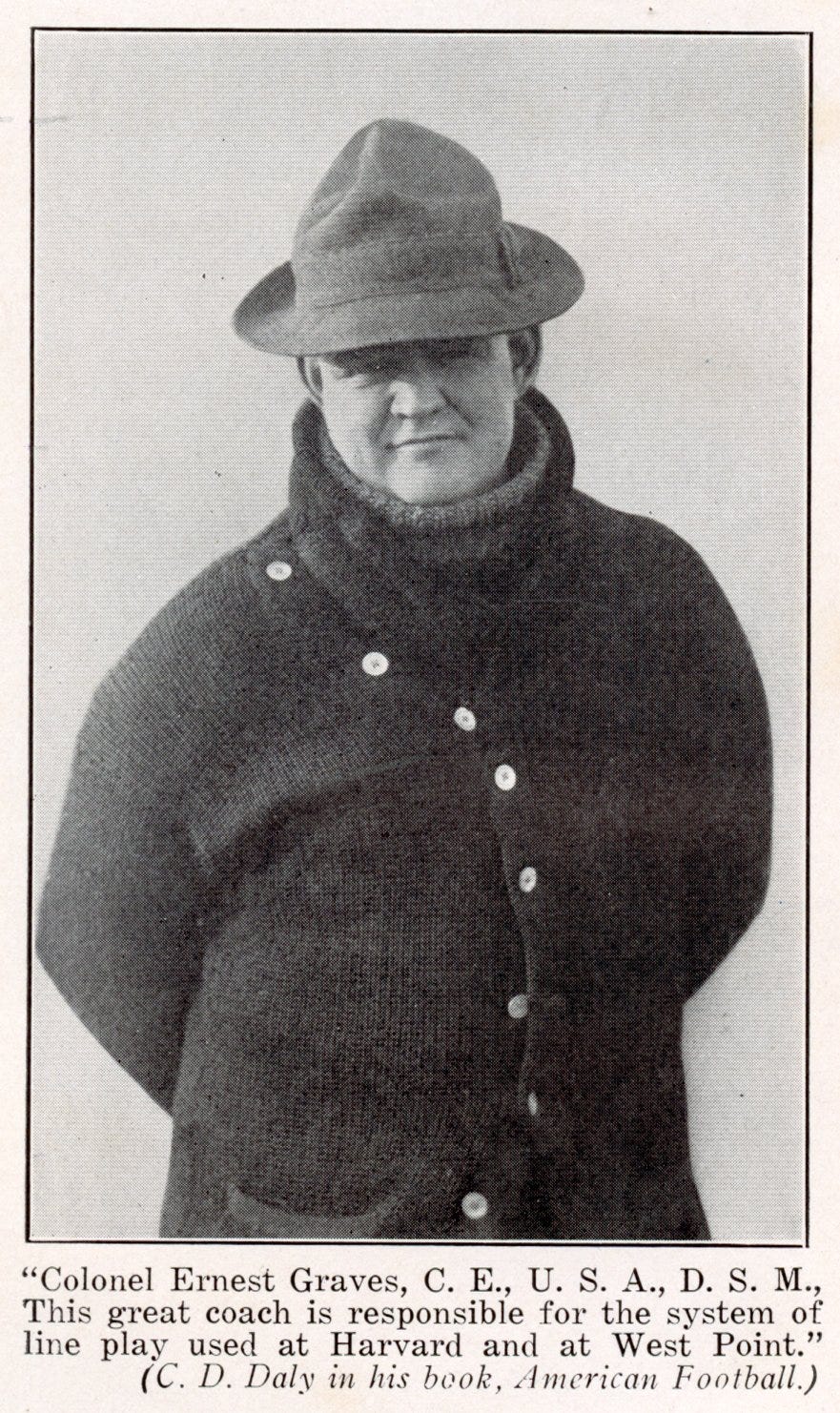
His views on football and line play were firmly grounded in the smashmouth style that preceded the forward pass, and he was a proponent of wedge blocking. In that era, offensive linemen crouched low, aligned foot to foot, and charged out hard, with only occasional cross-blocking.
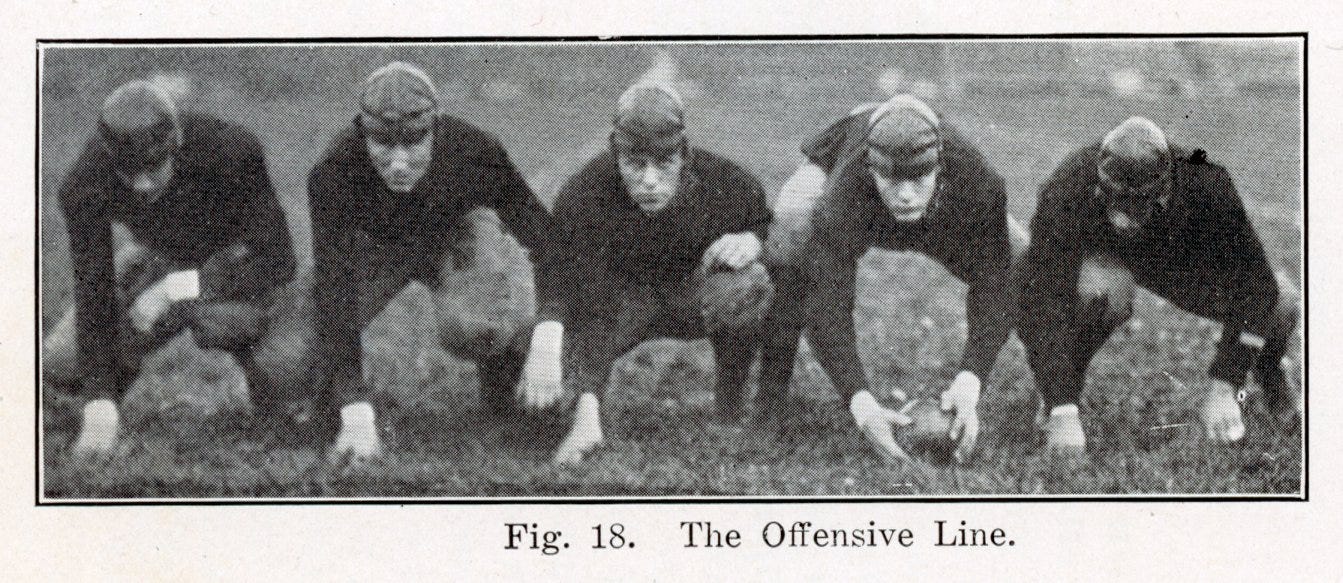
Graves’ discussion of the “roving center,” a defensive center who backed off the line into a linebacker-like position, is one of his few acknowledgments of the passing game. He does not address pass-blocking techniques in the book, though that was not unusual for the time, since most pass plays came off play-action or from kick formations.
Graves’ Line Man’s Bible is among the earliest books focused on line play. His descriptions and accompanying images show that line play was not for the faint of heart or the fair of face, particularly since few players wore nose guards in 1921 and face masks had not yet arrived.
Let’s focus on a few defensive line techniques or stunts for which Graves offers instructions—several of which are named after players who invented or perfected them.
The first two are the Straight Arm Charge and the Hogan Fore Arm Charge. The straight arm charge is similar to today’s bull rush, except Graves tells us to charge with both hands, aiming for the opponent’s face or their shoulders. The first image below shows one hand in the face and the other on the shoulder.
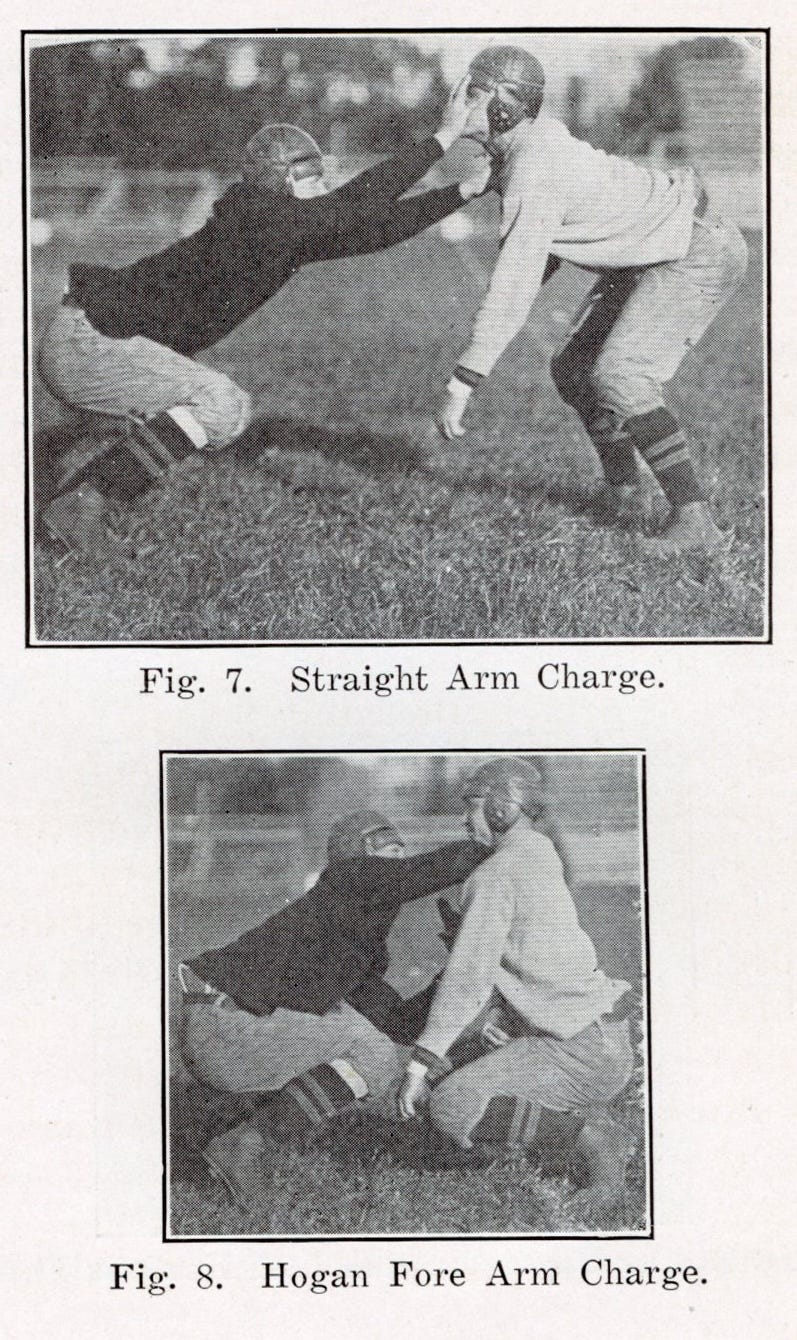
The Hogan Fore Arm Charge, named after James Hogan of Yale, is today’s forearm shiver, though Graves stresses that “One forearm can be followed with the other hand so if it misses the chin, the other hand will catch it.”
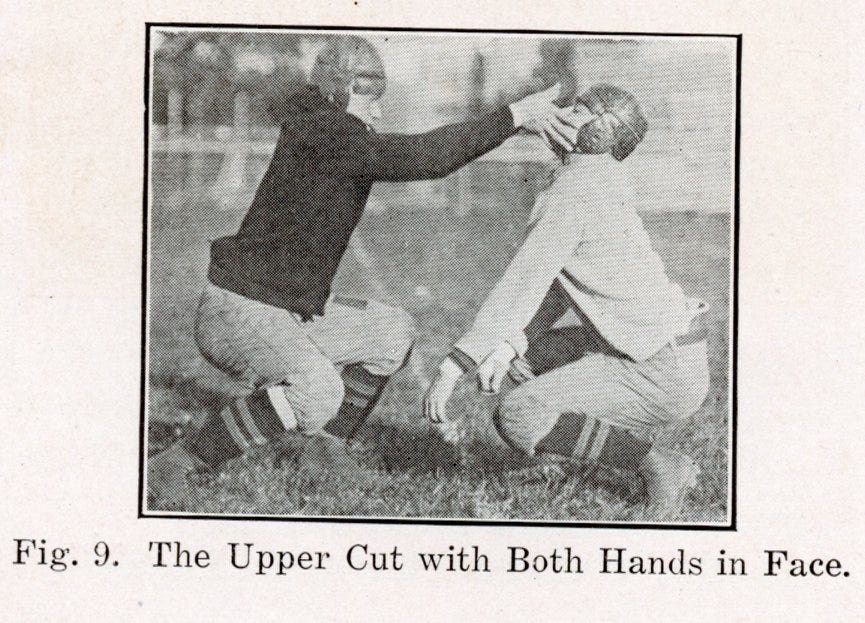
Next, we have the Upper Cut with Both Hands. When executing this friendly greeting, one brings “both hands (not locked) up into the face of the opponent and lift him, follow with the feet.”
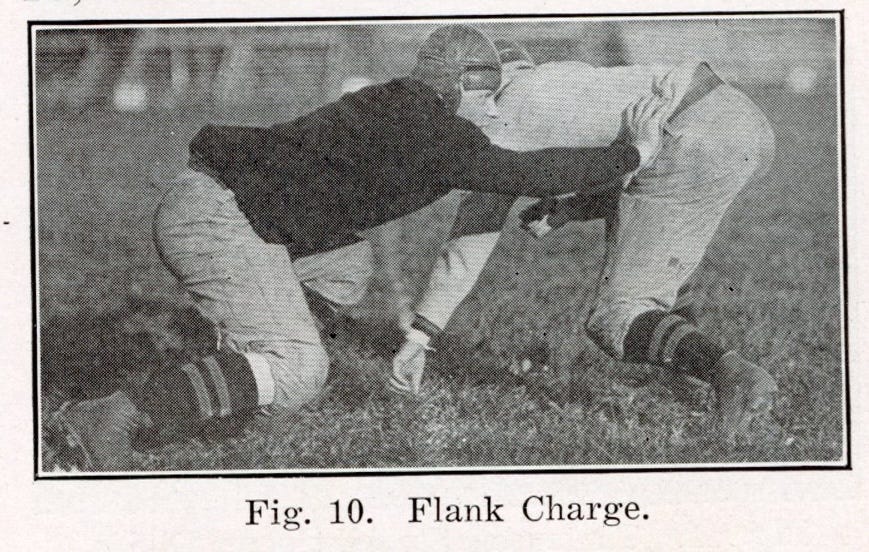
Of course, a good defensive lineman perfects multiple moves to keep the opponent off balance and guessing, so mixing in a Flank Charge now and again makes sense. One flanks a charging opponent by striking them in the neck and the hip before tossing them aside.
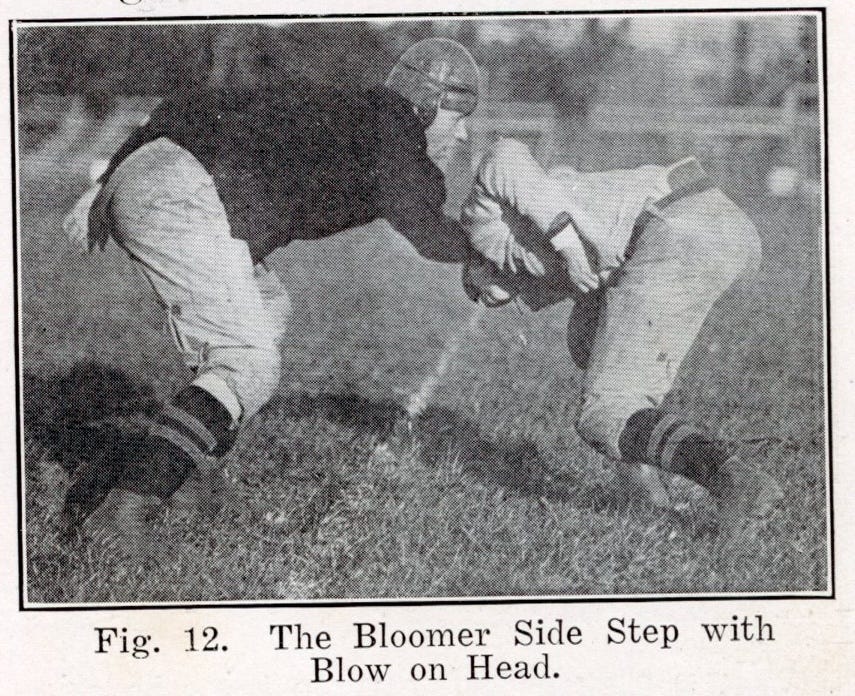
Long before Deacon Jones made the Head Slap famous, James Bloomer of Yale introduced the Bloomer Side Step with Blow to the Head. Graves’ instructions for the move are to “Deliver a blow to the side of the head with either hand, knock the opponent to one side, and go through.”
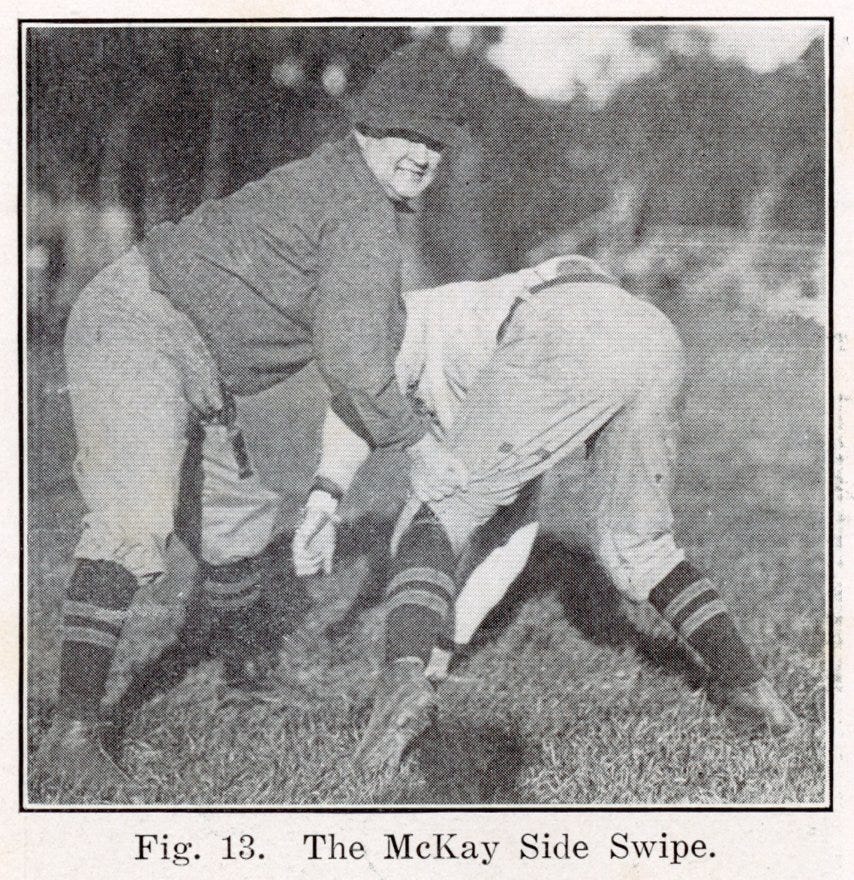
The McKay Side Swipe is another favorite. Named for Harvard’s Robert McKay, the Side Swipe involved grabbing a charging opponent by the neck and knee before pushing them aside.
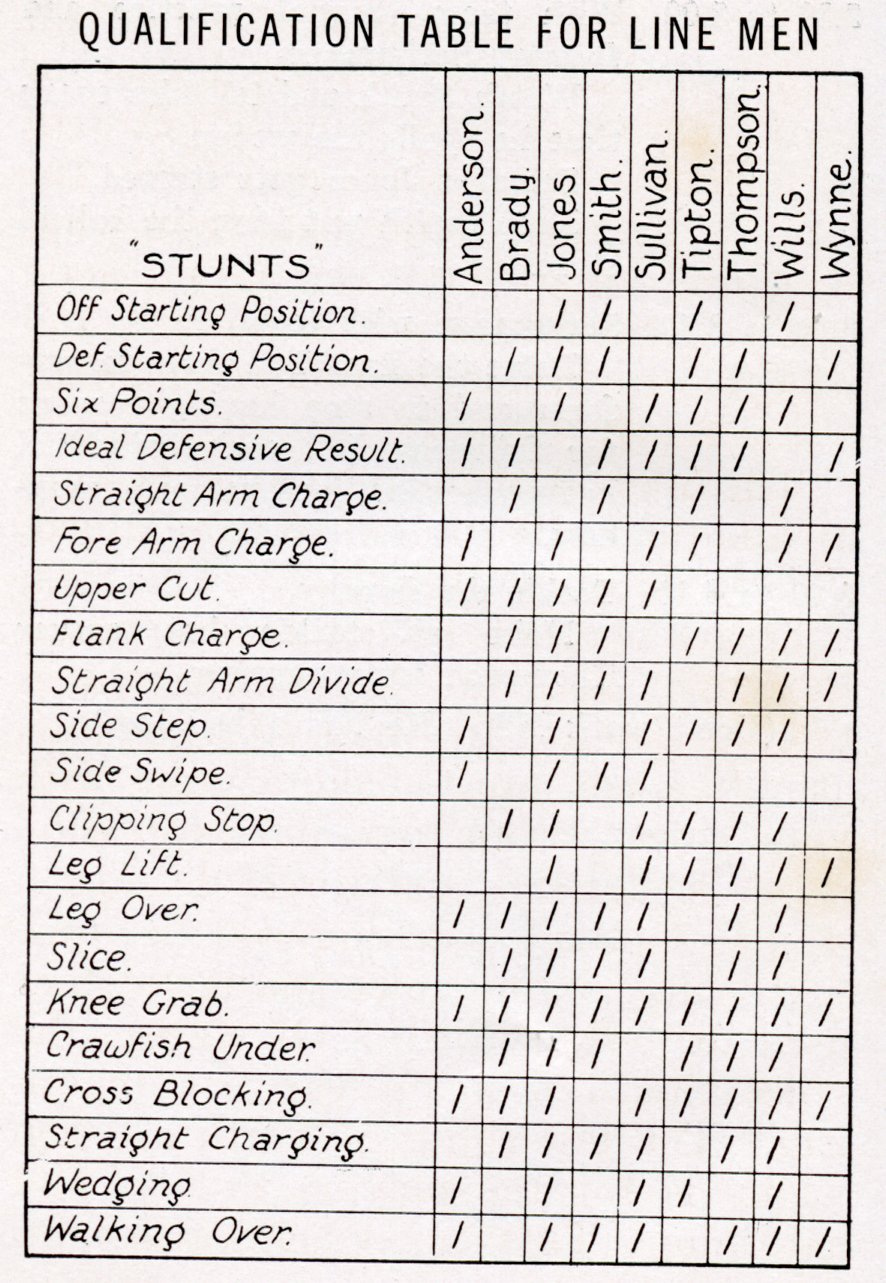
Graves offers another five or six stunts that players should have in their toolkits, and found it valuable to keep an inventory of which players were proficient in these and other skills. He included the example form in his book.
Graves clearly did not consider these moves dirty, and they were not illegal as long as they did not involve punching the opponent. Of course, the game has changed dramatically, and the stunts involving blows to the head are now illegal across football. Still, don’t let anyone tell you that football was a gentleman’s sport back then. It clearly wasn’t.

With the holidays approaching, now is the time to add one or more books to your holiday lists. Make yourself and others merry.

Was it common to spell "lineman" as two words then?
Graves was so important to Percy Haughton that Percy petitioned Harvard fan Theodore Roosevelt to have Graves reassigned from his military base in Washington, D.C. to Boston during the football season. Of course T.R. acceded. I mean, there are priorities!