
Football’s First Numbers on Jersey Fronts

The first teams to wear numbers on their football jerseys during a game were Drake and Iowa State, in their 1905 season-ender, when both teams wore numbers only on the back of the jersey. Pitt picked up on the idea over the next few seasons and was the first team to wear numbers on the back consistently.
Coaches opposed numbering players since it stank of individualism, and it aided scouts and opposing players in identifying who was who. Through the late 1920s, selected coaches refused to number their players or met the letter (or number) of the law by putting their teams on the field wearing four-digit numbers or Roman numerals. Greater specificity by the Rules Committee solved that problem, but what about teams wearing numbers on the front of their jerseys? The NCAA did not require numbers on the front of jerseys until 1937, so which team was the first to wear them?
If I gave you a month of Saturdays to guess the team, I’d bet you would get it wrong, though I’ve written about this team on multiple occasions. Nonetheless, following esteemed practice used on Jeopardy, please write your answer in question form: “Who is (team name)?”
“Do do do do do do do....”
I’ll give you a hint. The answer appears among the teams listed on the fun illustration of the 1928 Pacific Coast Conference schedule:
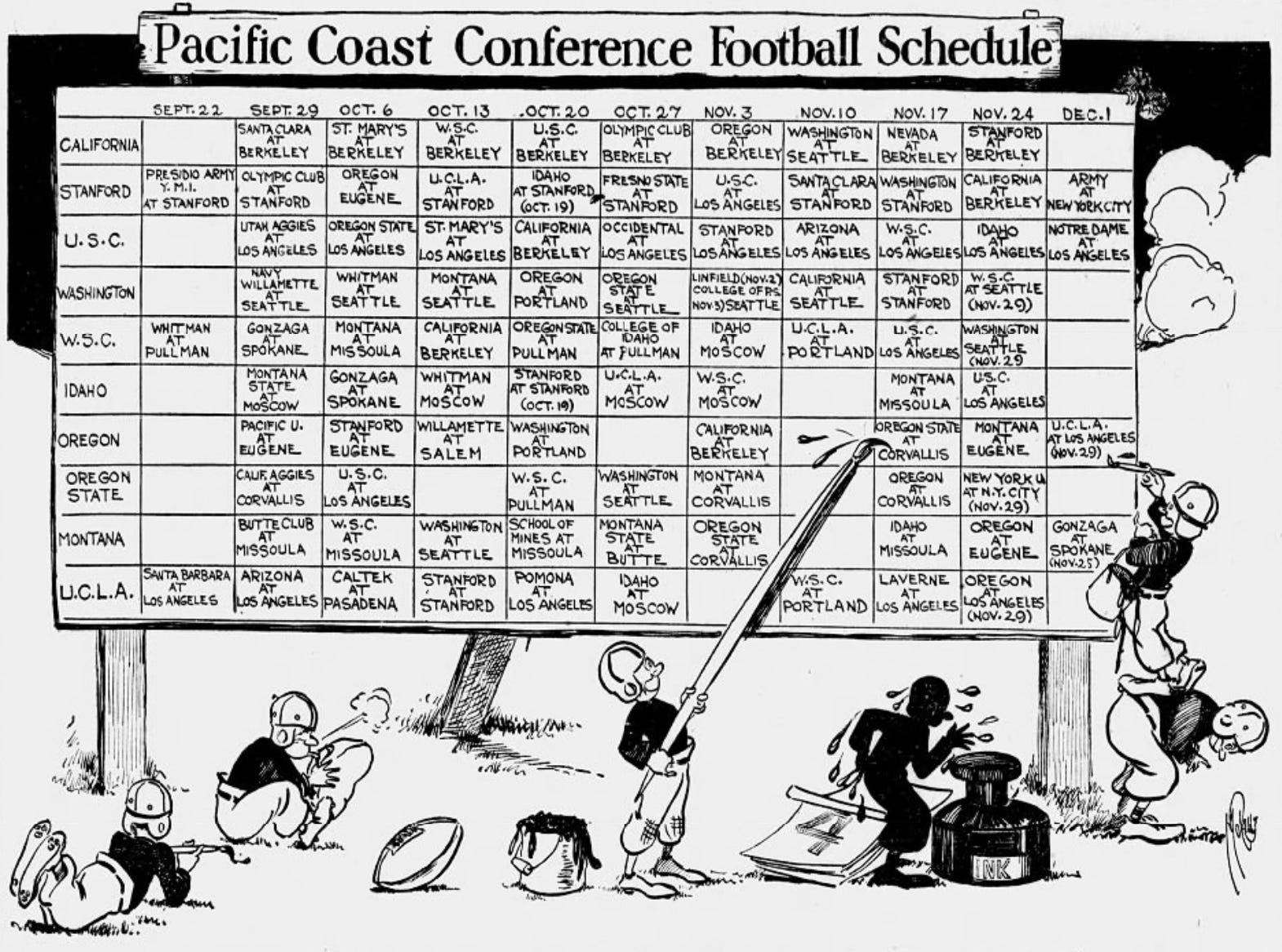
Yes, my friends, the answer is the San Francisco Presidio (Ninth Corps Area) football team, often referred to as West Coast Army, a team of active-duty soldiers stationed on the West Coast that played college teams and finished their season with a game against the Pacific Fleet on Armistice Day.

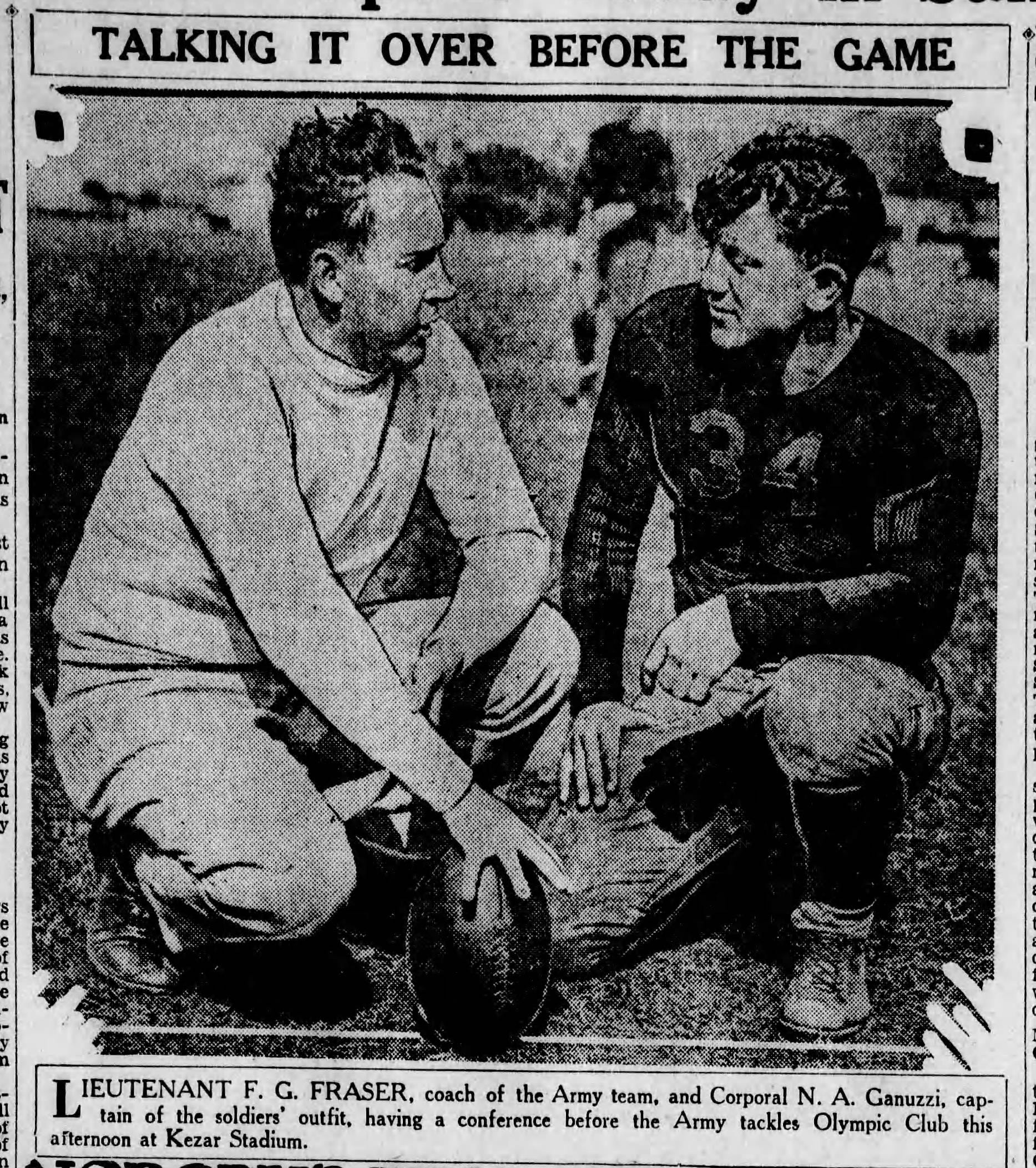
Although the idea of wearing numbers on the front and back, what they initially called double numbers, seems obvious today, it was not until the start of the 1928 season that the soldiers pulled it off. They started the season on September 15, playing the San Francisco Olympic Club at Kezar Stadium. The image below shows their coach talking to the team captain before the game, and the captain wears a number on the front of his jersey, making this the earliest known image of a football player wearing a number up front.
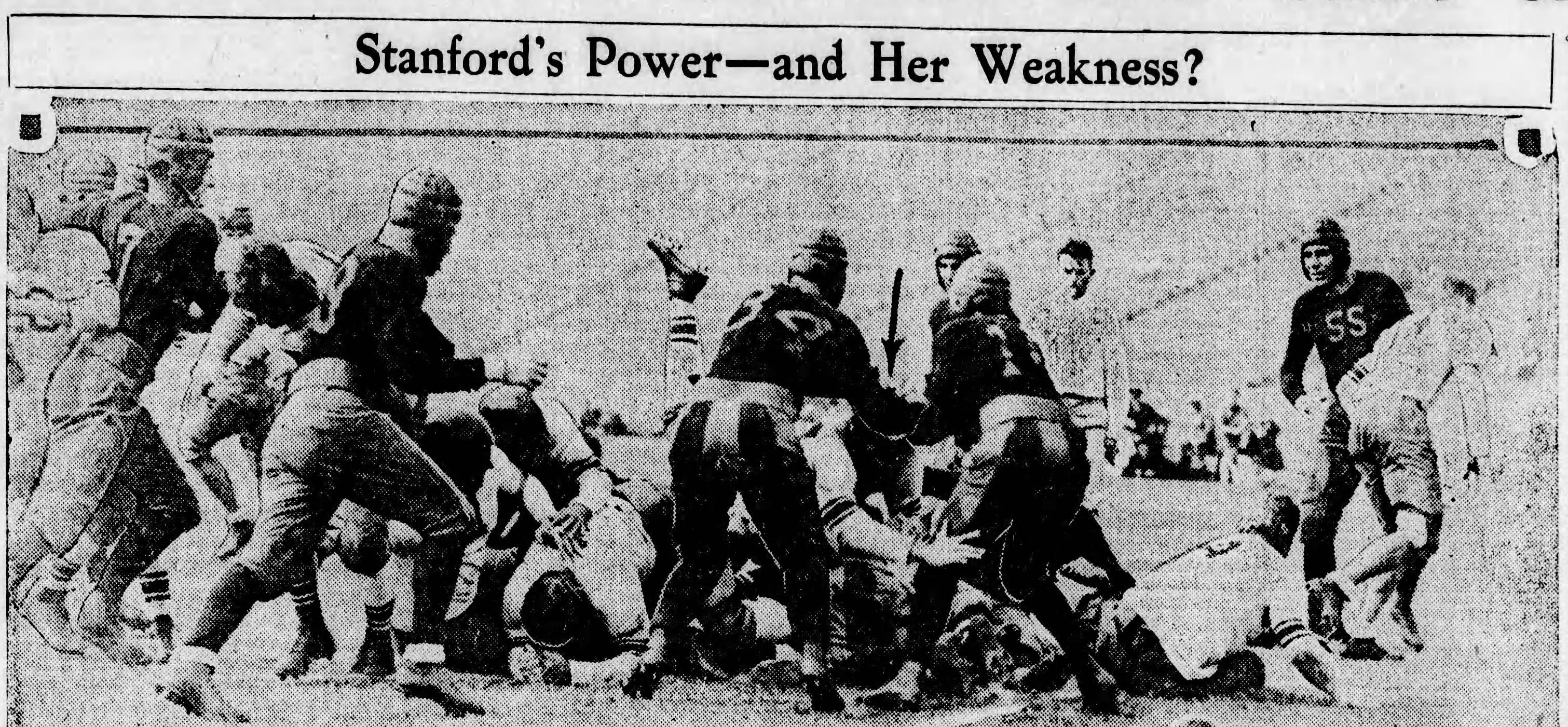
They played Stanford the following week in the back end of Stanford’s season-opening doubleheader, when Stanford beat them 21-8. Stanford heard of the West Coast Army innovation and Pop Warner liked the idea, so they wore numbers the next week as well, marking that game as the first in which both teams wore front numbers.
A few days later, Washington State announced plans to wear numbers on the front of their jerseys, and they followed through with those plans.
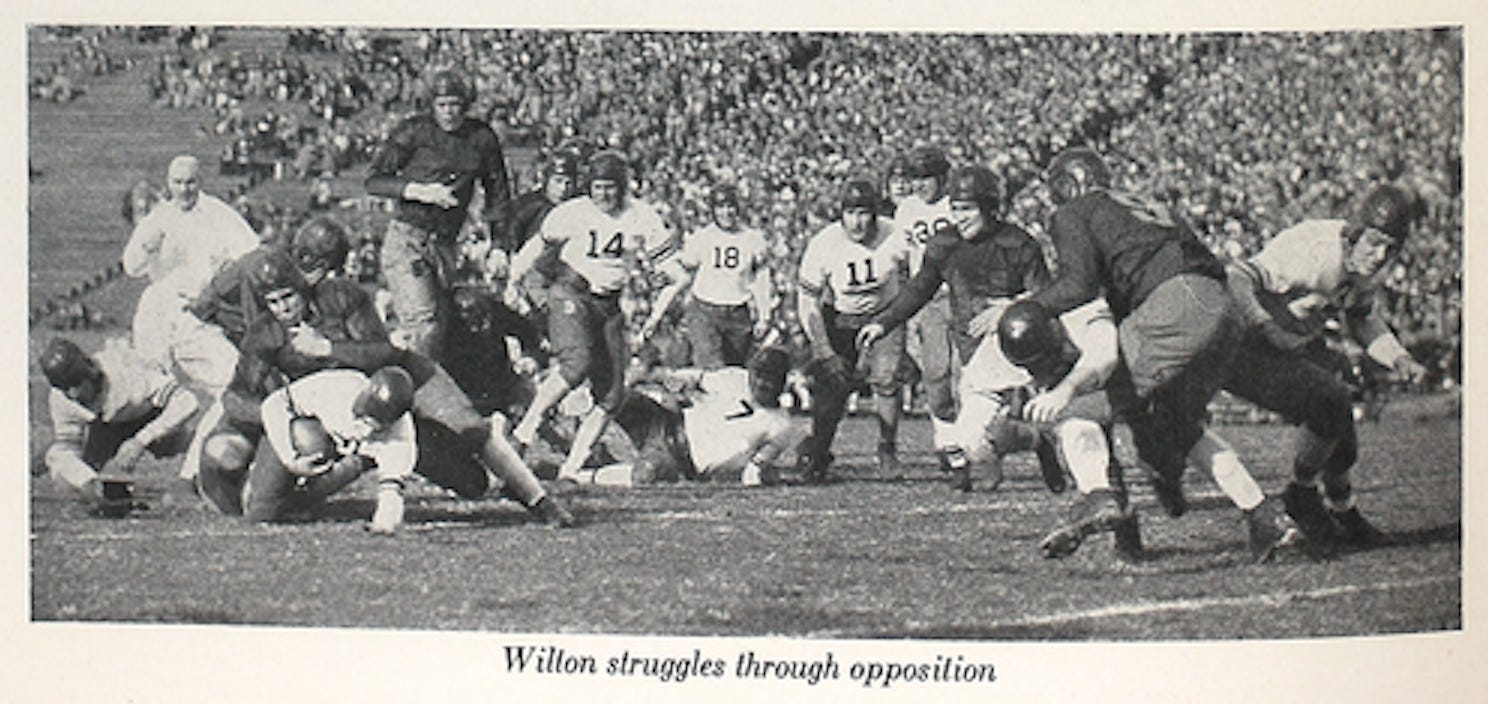
Below are a few images of Stanford wearing front numbers, followed by Washington State doing the same.
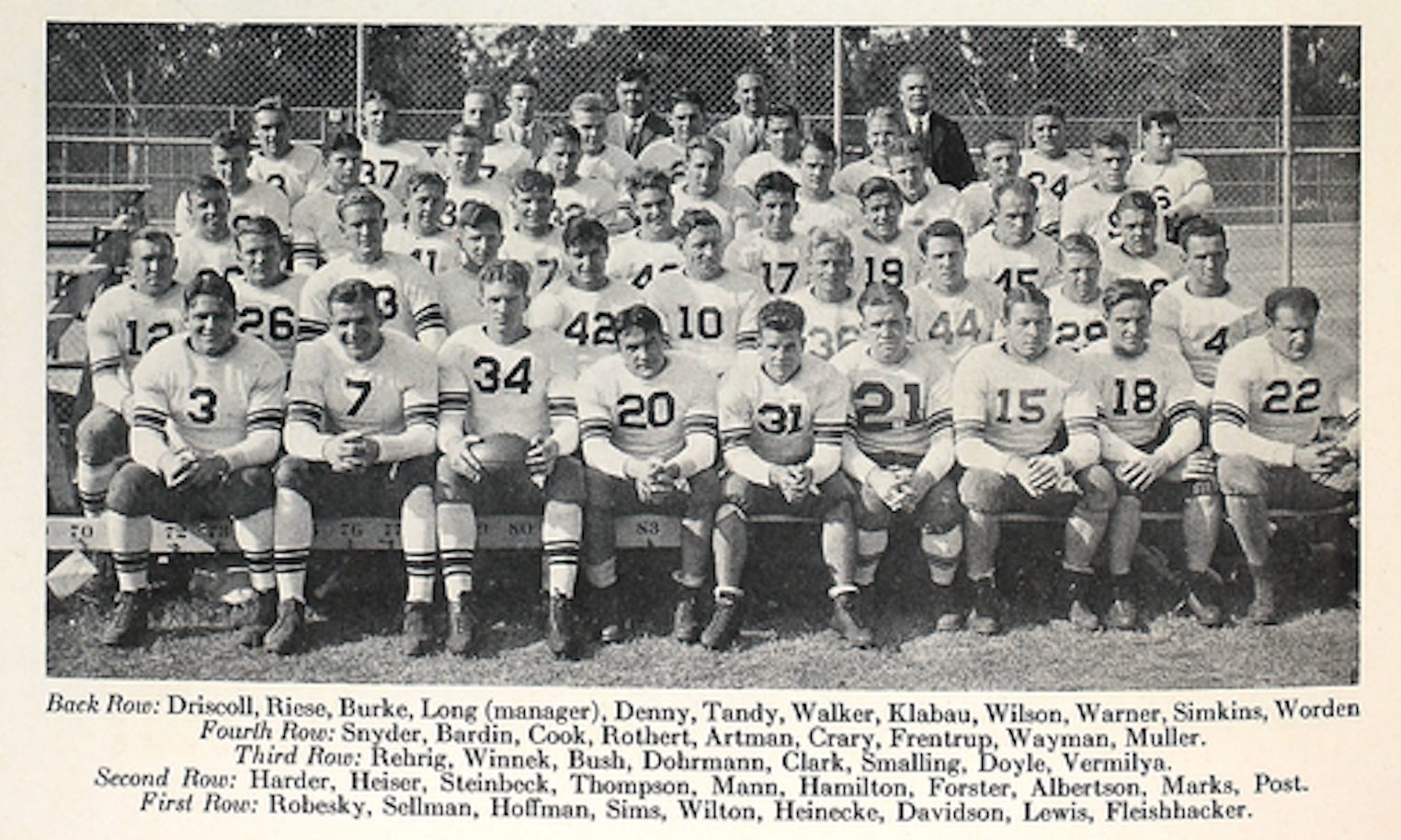
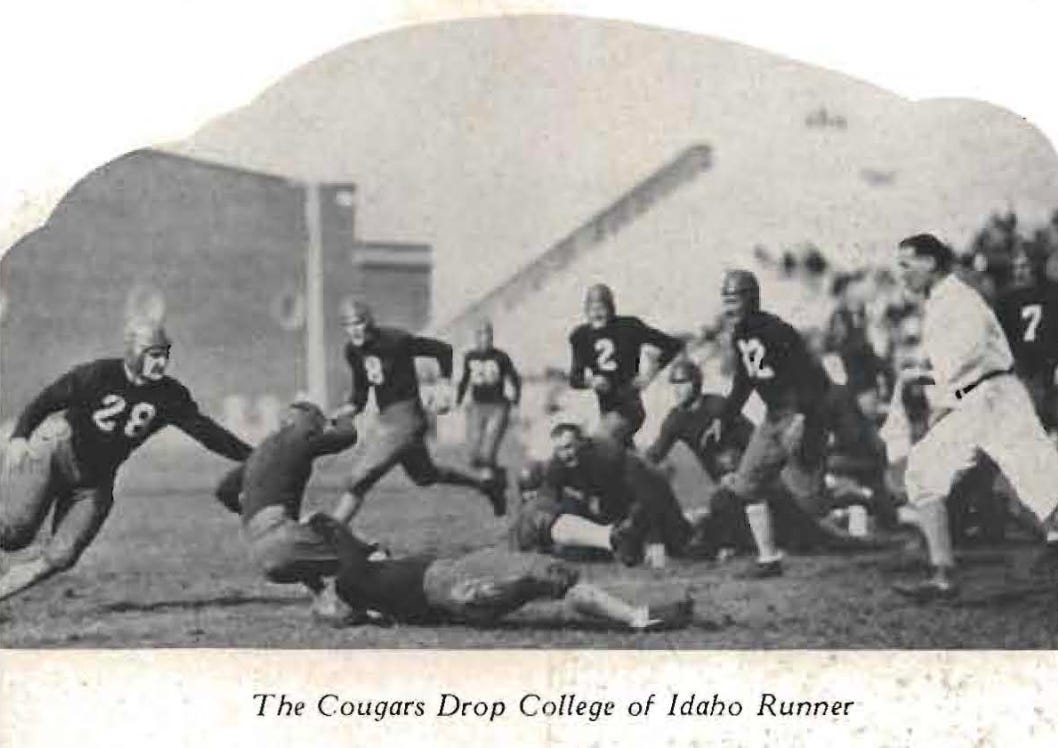
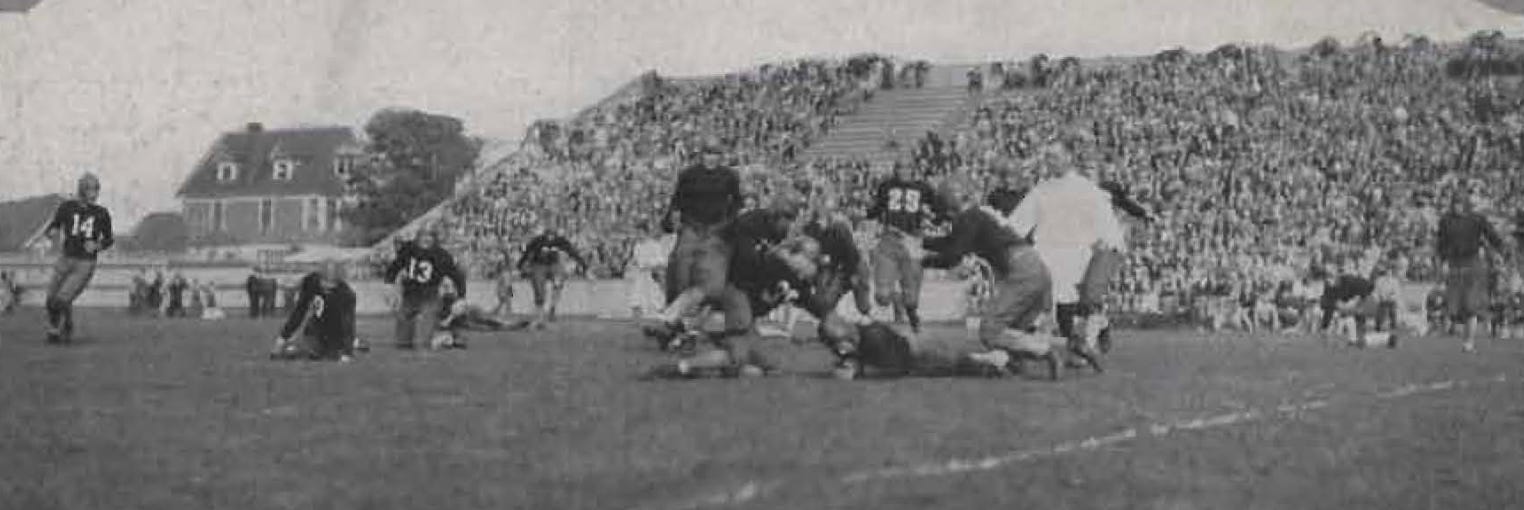
Wearing numbers on the front of jerseys received lots of positive publicity from members of the press, who previously needed a team manager or two to act as spotters to inform them of who ran the ball or made the tackle. More pressure for wearing front numbers came from the announcers on the still emerging practice of radio broadcasting, who liked to inform their listening audience of who was carrying the ball, even when the runner was coming toward the press box, not just away from it.
Front numbers appeared at the 1928 Army-Navy game and the 1929 East-West Shrine game. The 1929 season was a banner year for front number adoption. Among those picking up the habit were: Northwestern, NYU, Penn, Duke, Ohio State, Santa Clara, St. Mary’s, Cal, Furman, Villanova, Penn State, Oklahoma, and the NFL’s Buffalo Bisons.
The standard eventually developed that football jersey front numbers should be smaller than those on the back, but Washington State had not heard that news when they donned front-number unis for the second season in 1929.
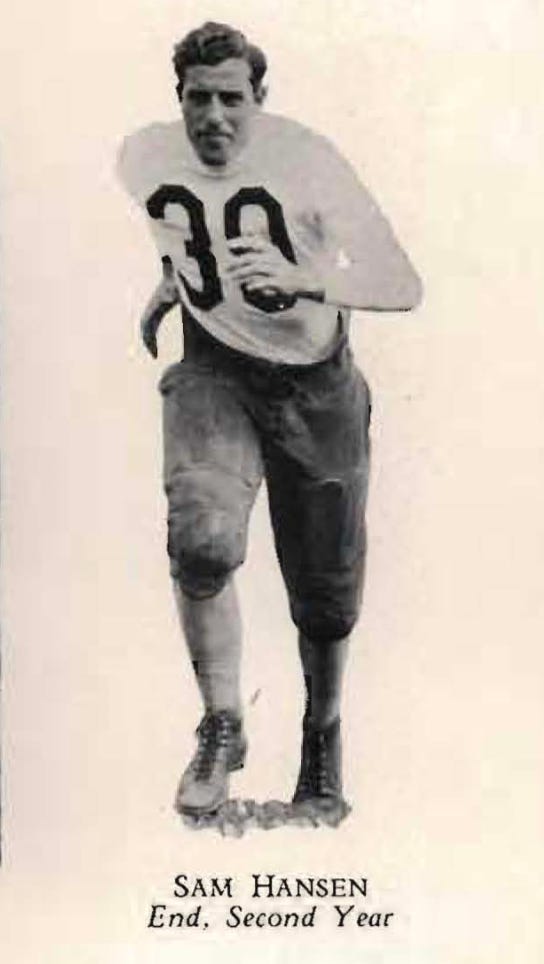
There you have it. That is the story of how football’s front numbers came to be. We have the West Coast Army team to thank for the innovation, though we don’t know who came up with the idea and made it happen.
If you enjoy Football Archaeology and are not a paid subscriber, consider buying me a cup of coffee now and again. You can also buy a paid subscription or purchase one of my books.

