
Georgia Tech Students Ride The Bus To The 1929 Rose Bowl

I’ve written several times about how football fans of the past traveled to games. Generally, the stories involved travel by train or air, before commercial airline flights were as readily available as they are now. Whether traveling by train or air, travel times were far longer than today, such that trips from the Midwest to Pasadena might take four days by train.


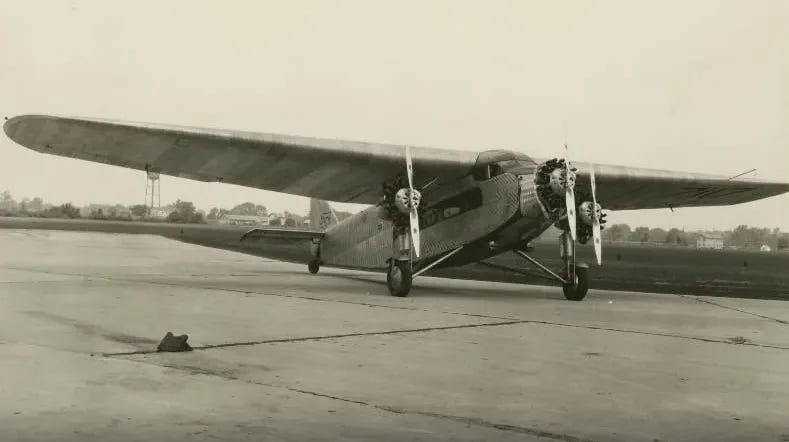
While long-distance travel by rail could be arduous back in the day, it also cost a pretty penny, so when Georgia Tech gained an invitation to the 1929 Rose Bowl, people made arrangements. Many Georgia Tech fans traveled to Pasadena on one of two special trains. One left on the 22nd and the other on the 26th. There was even a group planning to fly via Ford Tri-Motor, assuming they could get 10 people to charter the plane.
Train and air travel were relatively costly in 1928, which led a sizable group of Golden Tornado students to travel to SoCal by chartered bus for only $60 round trip, or $1,133 today. One hundred students came up with the $60 fare for the cross country journey. Google AI tells us:
The driving distance from Georgia Tech in Atlanta, GA, to the Rose Bowl in Pasadena, CA, is approximately 2,150 to 2,200 miles, typically taking around 31–33 hours of driving time. The fastest route generally follows I-20 West to I-10 West, spanning a significant cross-country journey.
I don’t know about you, but driving 31 to 33 hours does not sound that bad to me, especially to see my college play in the Rose Bowl. However, I-20 and I-10 are part of the Interstate Highway System, whose funding passed in 1956. The best motorists could hope for in 1928 was to travel part of the distance on the United States Numbered Highway System, aka the Federal Highways, which began in 1926; so much of the route consisted of municipal, county, and state roads, without bypasses to avoid city congestion. Many roads in Alabama, Mississippi, and Louisiana were muddy and had sizable potholes, making for a long, strange trip, parts of which they documented with a motion picture camera.
[The video clips embedded below includes portions of a film available at Internet Archives. Roll over each clip to see the length noted in the lower left.]
Besides the roads being in poorer shape, buses were not as reliable then as now, which is why trailing the four buses was a car with four mechanics when they left Atlanta with 100 students on December 21st. Only two of the four buses made it to Montgomery on the 22nd. One broke a drive shaft, and another had engine trouble, but they caught up with their pals, so all four made it to Dallas on the 24th.
The itinerary was supposed to include the Grand Canyon, though it is unclear whether that happened. They made it to San Diego, where they took taxis into Tijuana on the afternoon of the 30th. After that excursion, they headed to LA, with most enjoying their first ocean sunset as they ended their 8-day bus ride to Pasadena.
After the long bus ride, the rooters spent Monday, the 30th, sailing to Catalina Island for the day. New Year’s Eve saw them atop Mt. Lowe, northeast of LA.
On New Year’s Day, they enjoyed the sights in Pasadena, including the Tournament of Roses Parade.
Then there was the ball game, which Georgia Tech won 8-7, largely thanks to one of football’s most famous plays, the “Wrong Way” Riegels run, which appears in the video shortly after the pre-game events.
The Georgia Tech students celebrated that evening before boarding the bus headed home. Some buses took the direct route back to Atlanta, while others did some sightseeing along the way.
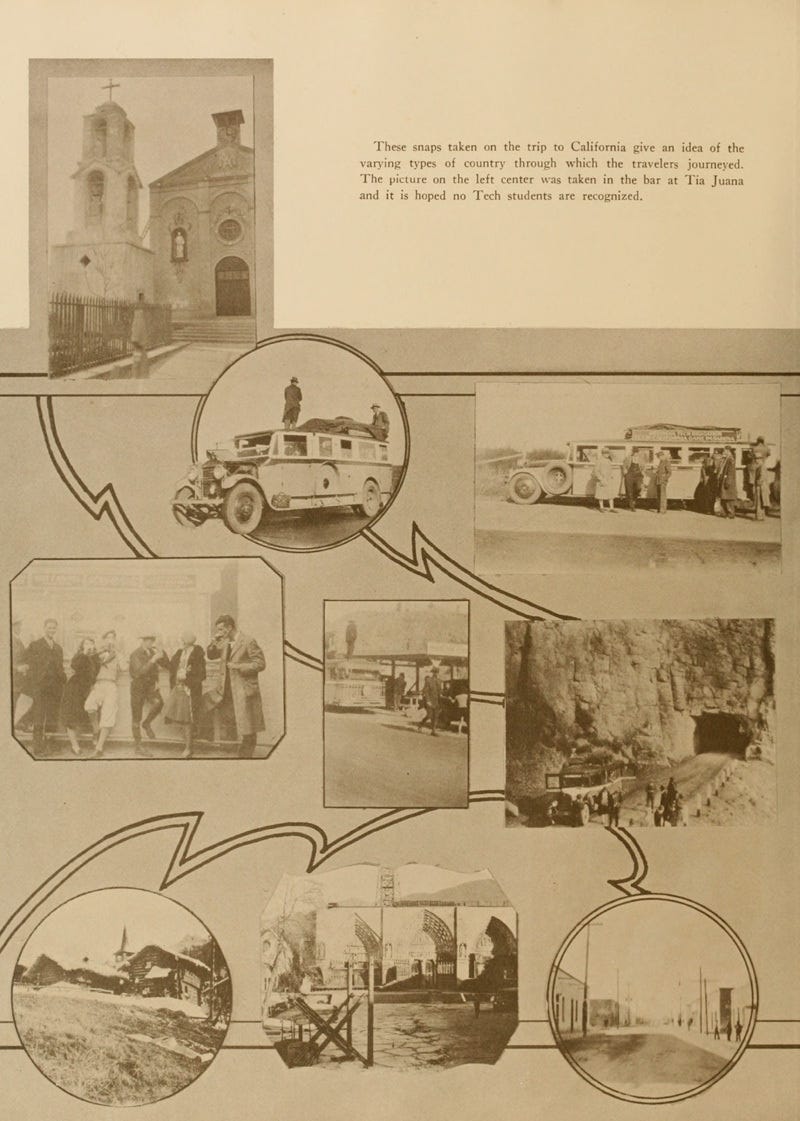
Besides the film, the 1929 Georgia Tech yearbook documented the bus trip with a collage of images.
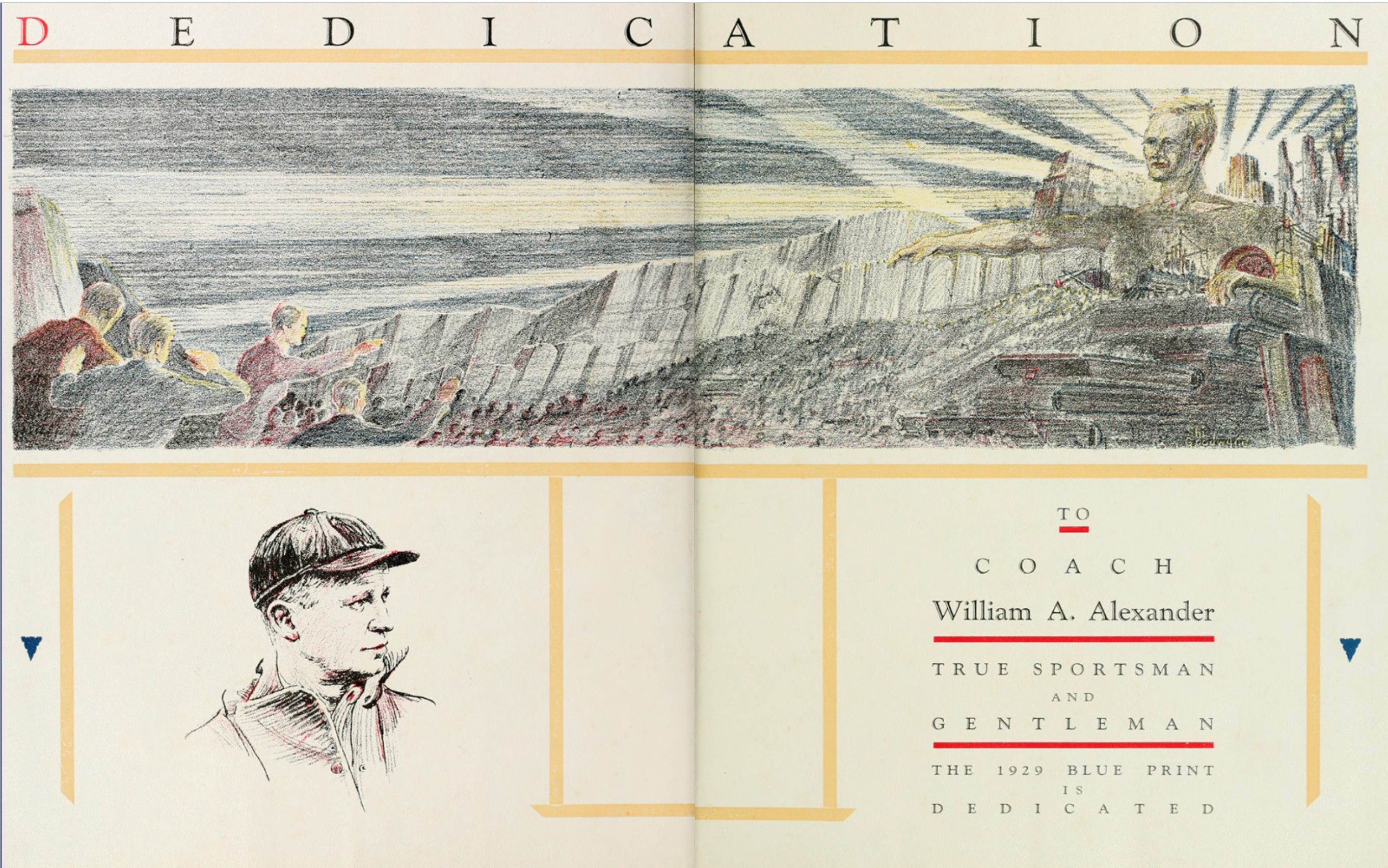
And, they dedicated the yearbook to Coach Bill Alexander for providing the students and community with the thrill of a lifetime, which turned out to be Georgia Tech’s only trip to Pasadena and the Rose Bowl.
Regular readers support Football Archaeology. If you enjoy my work, get a paid subscription, buy me a coffee, or purchase a book.


Thanks for the article! I always have wondered about the travel experiences of teams and fans before more modern transportation was available. The film clips are fascinating windows into a different time.