
Hank Crisp, As Tough As They Come

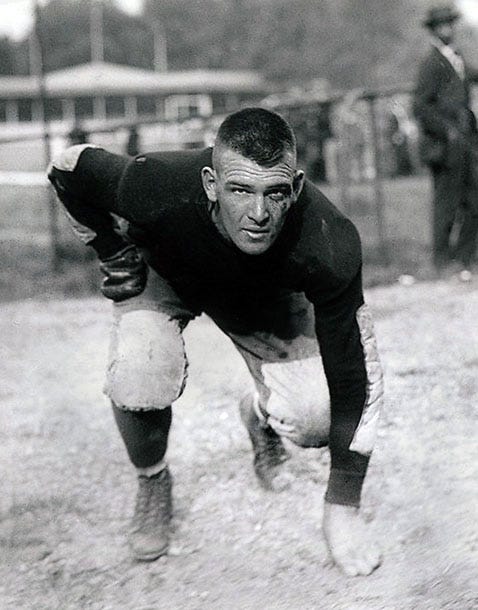
Born in 1896 and growing up on a farm in North Carolina, Henry “Hank” Crisp’s life was like many others until he lost his right hand in a threshing machine at 13. The accident never held him back, however, as he entered Hampden-Sydney and played several sports under Charlie Bernier in 1915.
When Bernier took the Virginia Tech job before the 1917 season, Crisp followed him there, earning four football letters, three in basketball, and one in track.
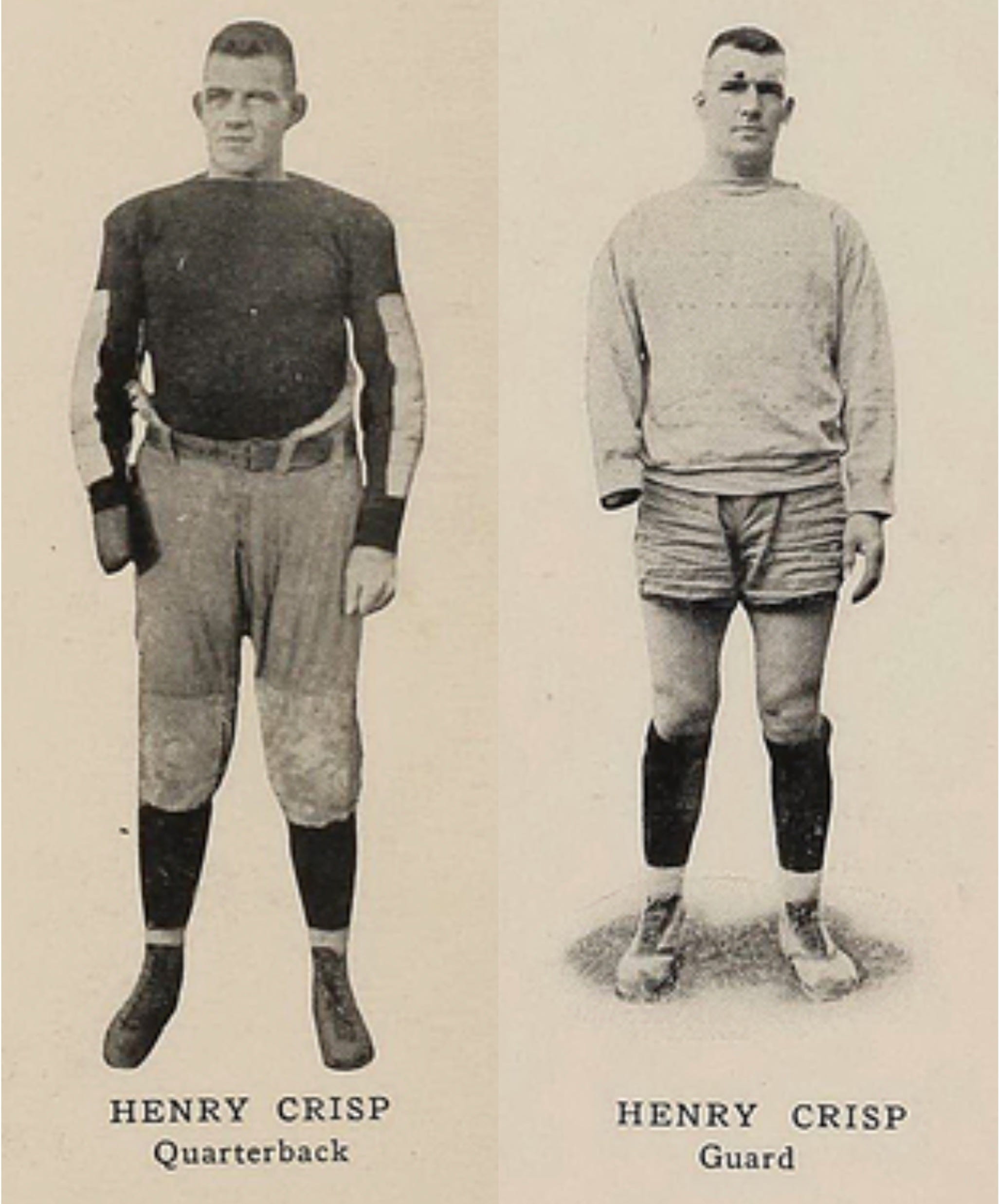
On the football field, he played tackle as a sophomore and fullback as a junior, and was named the South Atlantic conference MVP when he led his team in scoring as a runner and kicker.
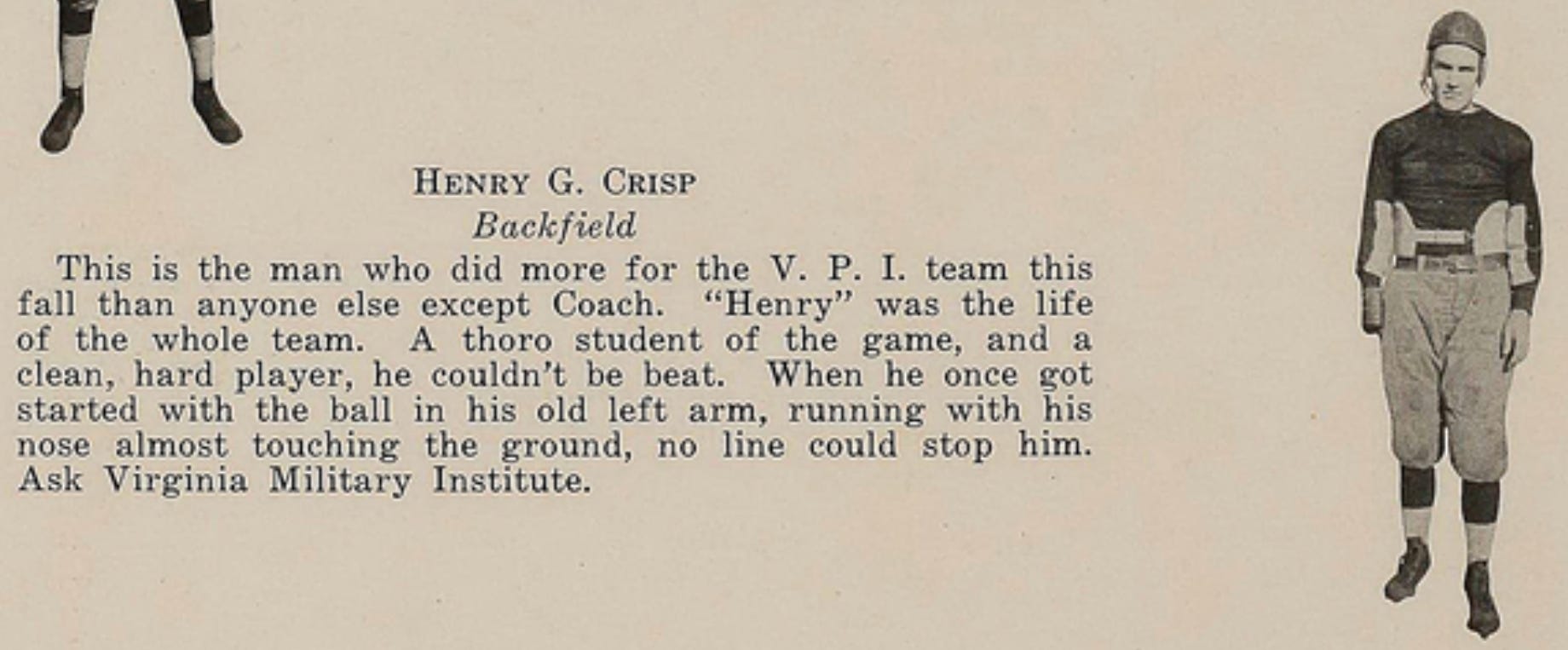
He started his senior season at quarterback, and, after one too many fumbles, he returned to the line and earned all-conference honors at guard.

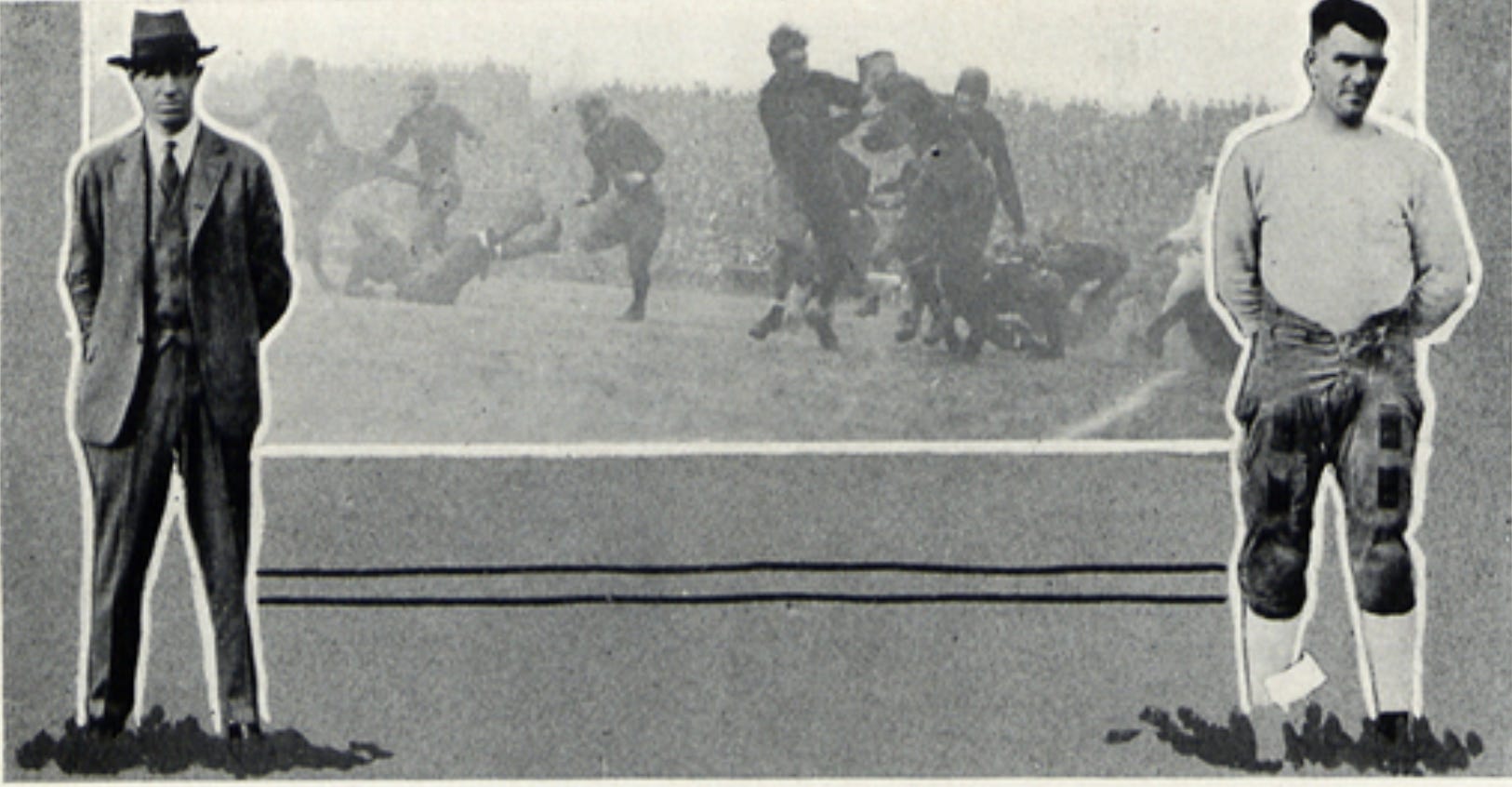
After Charlie Bernier became Alabama’s athletic director, he hired Crisp as Bama’s track coach, a position he held from 1921 to 1927. He also became the football line coach in 1921 and the head basketball coach in 1924, where he won two-thirds of his games through 1942, and again from 1945 to 1946. Plus, he was Bama’s AD for two stints spanning 15 years.
Despite his success with basketball, we’ll focus on his role in football, since he became a core part of Alabama football under head coaches Xen Scott, Wallace Wade, Frank Thomas, Red Drew, and J.B. Whitworth. During that time, the Crimson Tide played in six Rose Bowls, two Cotton Bowls, and one Orange Bowl.
Following the 1930 season, Crisp went on a recruiting trip to offer scholarships to a pair of teammates at Arkansas state champion Fordyce High. While there, he spotted a third player and offered him on the spot. The third player, Paul “Bear” Bryant, gained some fame himself at Alabama over the years.
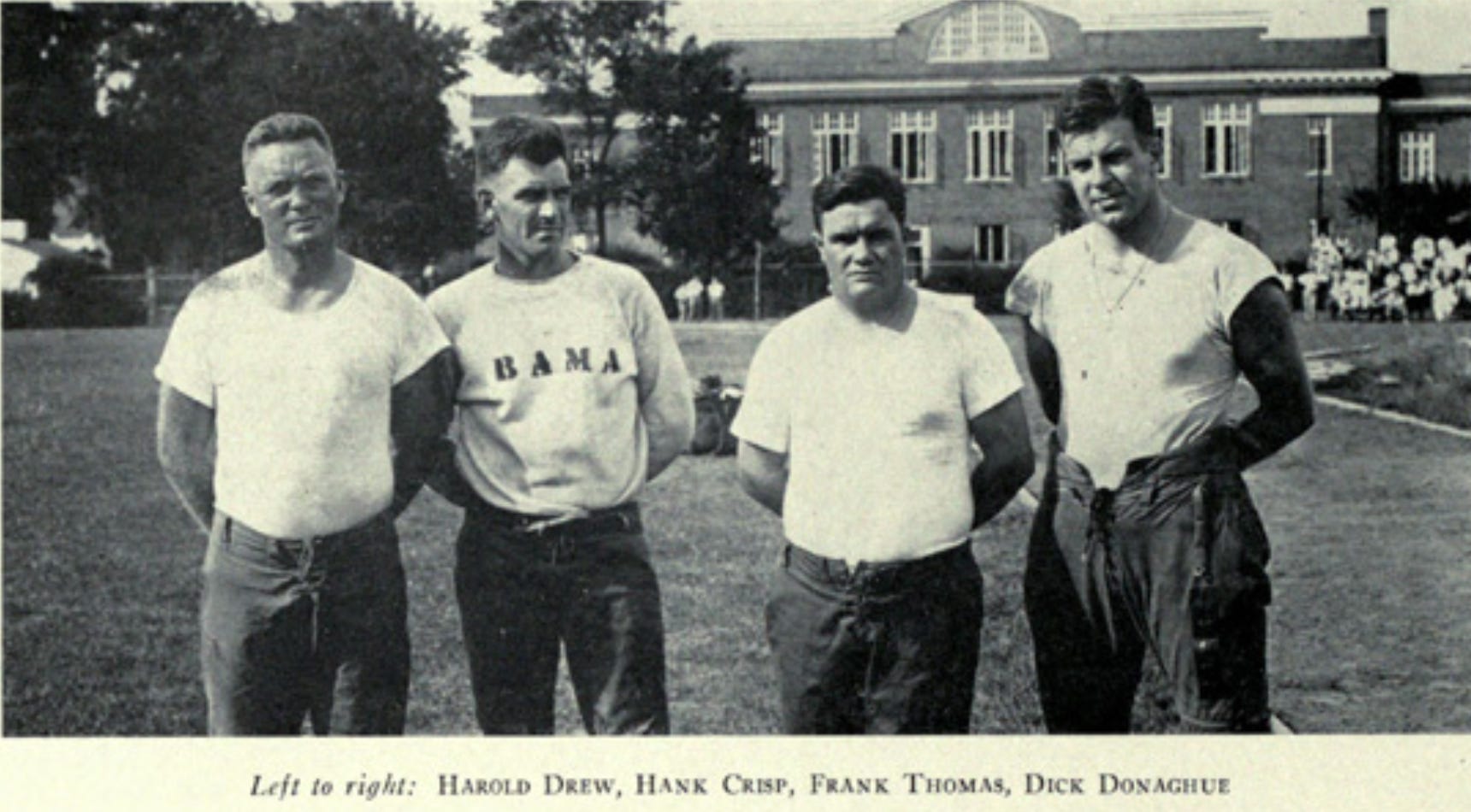
Crisp often acted as the trainer for his teams, and was said to be a keen diagnostician, but he was also tough as nails and demanding on the field. Jim Whatley, an All-SEC tackle in 1935, told of being poked in the eye during a game at Georgia, leading Whatley to walk in circles, moaning. When Crisp reached Whatley, he asked what was wrong, and Whatley said, “I can’t see out of my right eye.”
Crisp responded, “Well, what the hell is wrong with your left eye?”
Crisp left Alabama during WWII, serving as a civilian assistant football coach at Georgia Pre-Flight, when they beat Alabama 35-19 in 1942. He coached in the AAFC in 1946, then for a few years at Tulane, before returning to his old roles as Bama’s line coach and AD through the 1957 season.
Despite decades of highlights, life had a final, unfortunate surprise for Crisp. In January 1970, he was selected for the Alabama Football Hall of Fame for his role as an assistant coach at the university. While attending a reception shortly before the ceremony, Crisp suffered a massive heart attack and passed away.
In a final show of family toughness after Crisp passed, his son left the hospital, returned to the ceremony, and accepted the Hall of Fame plaque in his father’s name.
Regular readers support Football Archaeology. If you enjoy my work, consider a paid subscription, buy me a coffee, or purchase a book.


Holy cow - that is one tough guy!
Wow. What a life of overcoming obstacles