
Kansas City's Stadiums of the Future are Things of the Past

The news tells me the Kansas City Chiefs are vacating Arrowhead Stadium and their home state, Missouri, for greener pastures in Kansas. Apparently, a private, for-profit enterprise demanded that taxpayers fund all or part of the cost of a new stadium to line the pockets of a gazillionaire or two. While the residents on the Missouri side of the border ultimately told the gazillionaires to shove it, those on the Kansas side of the border opened their arms and pockets so a pro football team could call Olathe, Kansas, home.
This is not the first time the Kansas City area embraced a dumb idea related to a football stadium. In fact, the original plan for Arrowhead Stadium in the late 1960s involved a dumb idea, but it all worked out in the end.
Back then, Kansas Citians got excited about a massive roof that would roll between and over the soon-to-be Arrowhead Stadium and its soon-to-be neighbor, Kauffman Stadium. Thankfully, before moving the first shovel full of dirt, the Show Me folks recognized the error of their ways and dropped the rolling roof idea, only to have it roll through town again nearly 40 years later.
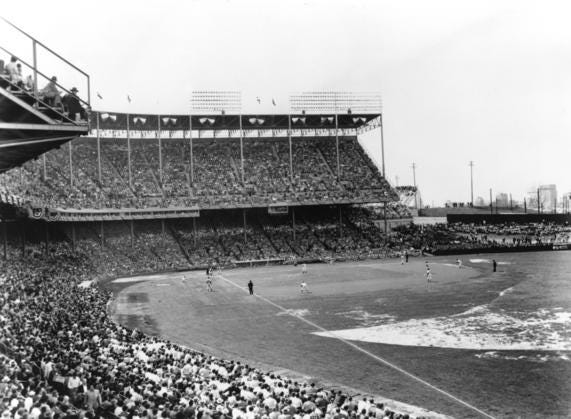
Let’s set the scene. Back in the mid-1960s, Kansas City was home to the Charlie Finley-owned Athletics and the AFL’s Kansas City Chiefs, both playing at the unremarkable Municipal Stadium. Charlie Finley had a wandering eye, which is why the Athletics ultimately moved to Oakland in 1968, though they now play in Sacramento, and will soon gamble their future on Las Vegas.
The Chiefs, on the other hand, started as the AFL’s Dallas Texans, moved to Kansas City a few years later, and were a central force in the AFL, becoming competitive with, and ultimately merging with, the NFL.
Both the As and the Chiefs thought they deserved better than Municipal Stadium, and the local chieftains agreed, hoping to make the Chiefs happy and retain the As, or attract an MLB expansion team.
At the time, other cities built multi-purpose stadiums shared by their football and baseball teams. Houston even covered the Astrodome in 1965, but multi-purpose stadiums never suited football well, leading the practical-minded folks in Kansas City to look to build something that made plain old sense without breaking the bank. Soon after, the good people of Kansas City and Jackson County approved funding for the stadiums in 1966.
With the A’s move and the NFL-AFL merger still in the future, Kansas City engaged Charles Deaton of Denver as the design architect for the Truman Sport Complex. Now, design architects sometimes come up with appealing but entirely impractical ideas, and Deaton filled that role in this instance.
His initial design for Arrowhead Stadium looks much like the stadium they eventually built, except there was one huge difference, actually two.
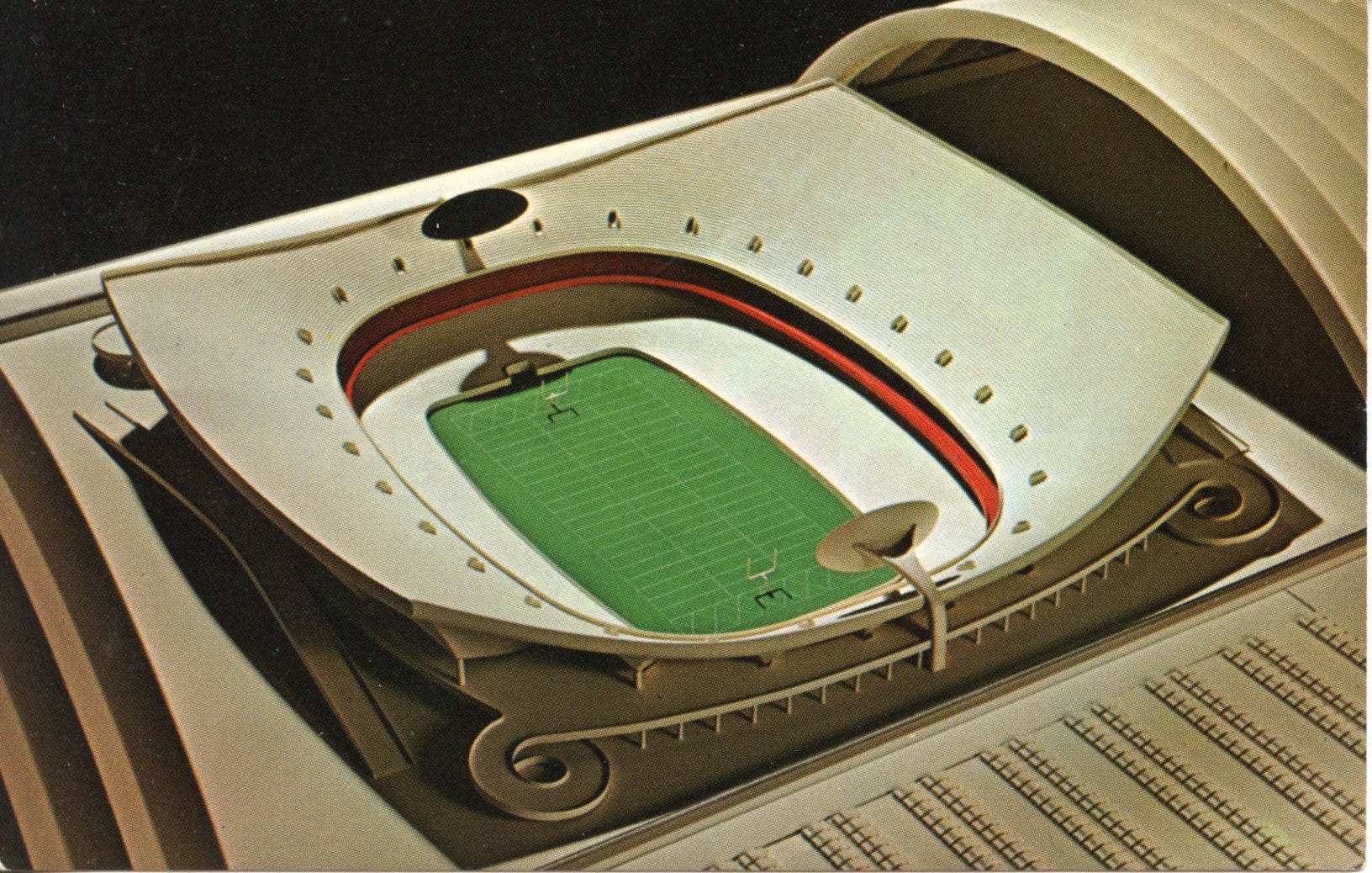
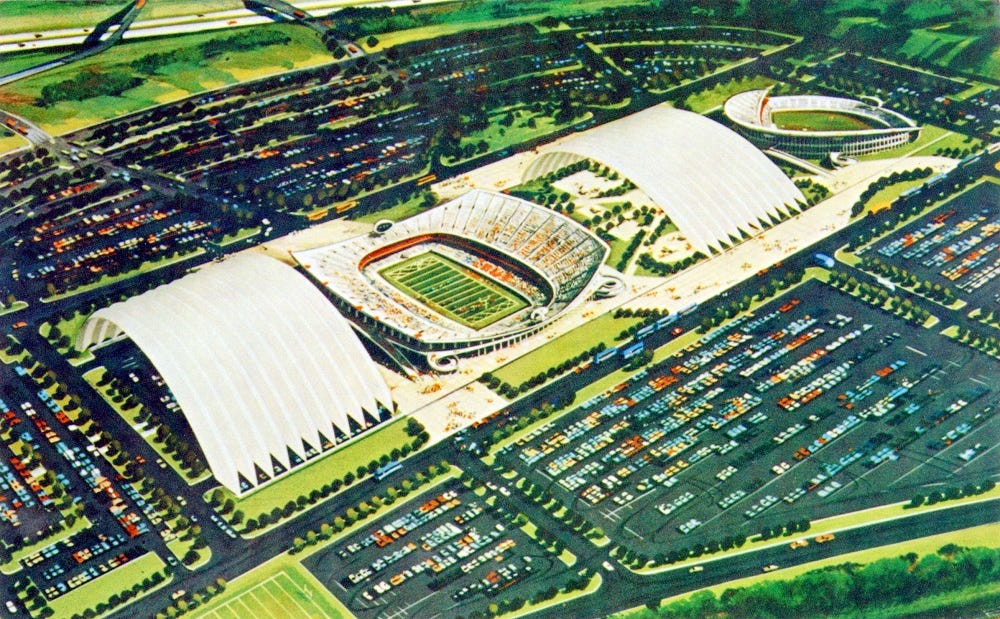
The right side of Deaton’s design shows a massive arch overlooking Arrowhead. St. Louis had opened its Gateway Arch in 1965, a structure that serves no practical purpose, so did the Kansas Citians intend to copy their in-state rival? Of course not, they would be far more practical. They would build two arches, and those arches would move.
#/media/File:Kansas_City_Municipal_Stadium_1955.jpg)
Kansas City would have two massive arches on wheels measuring 800 by 750 feet combined and covering 14 acres. The rolling arches could keep Kauffman Stadium’s diamond dry, cover Arrowhead Stadium on rainy days, or roll to the sides on sunny game days.
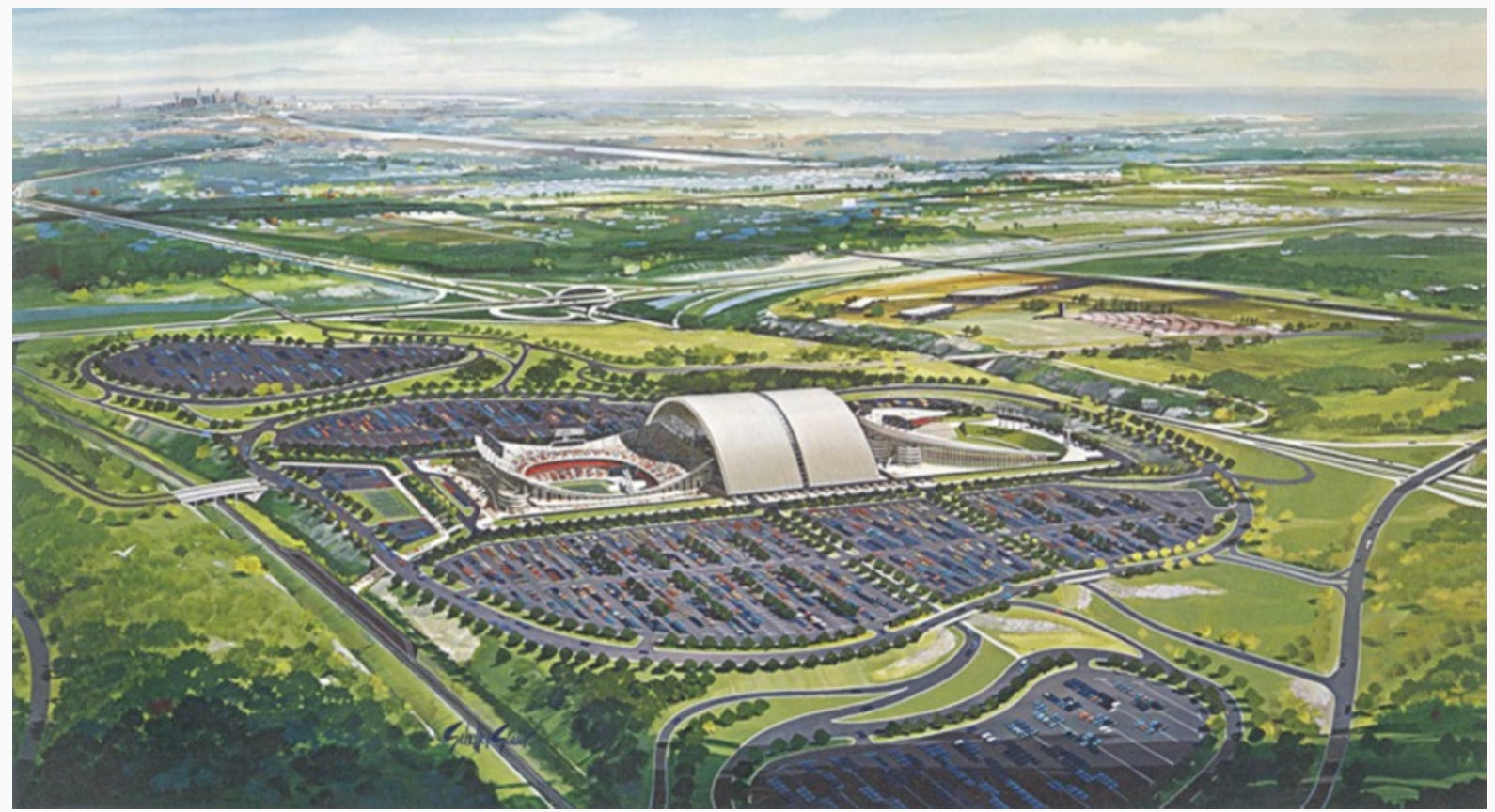
The local sports pages loved the idea, as did those in other cities considering new stadiums.
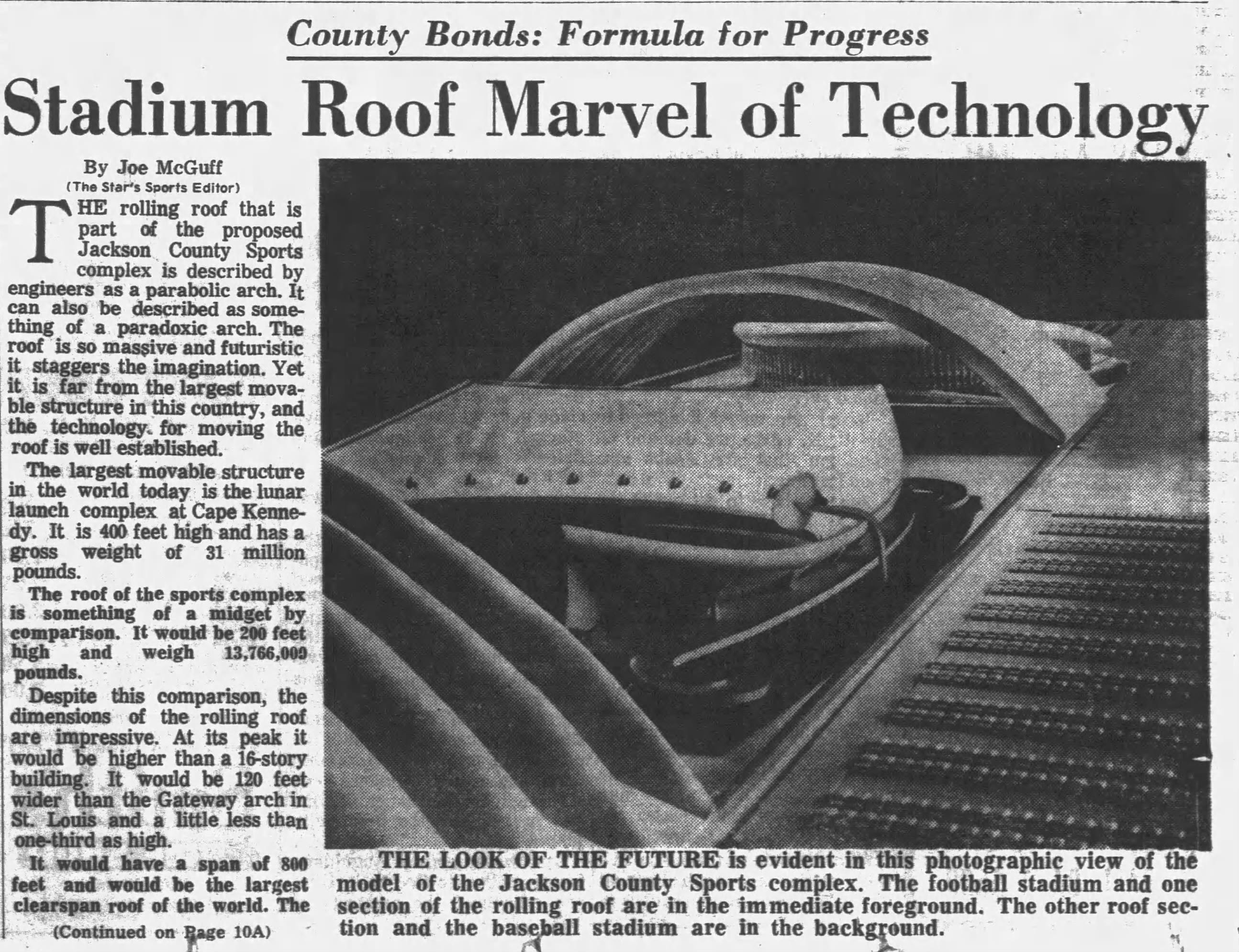
Rolling roofs made horse sense. NASA’s Cape Kennedy Space Center moved massive rockets by rail, and if they could plan on sending a man to the moon, we could cover our sports stadiums with arches, right? Unfortunately for the burghers of Kansas City, moving arches do not come cheap, and they raise safety concerns, so they shelved those plans and built a pair of open-air stadiums.
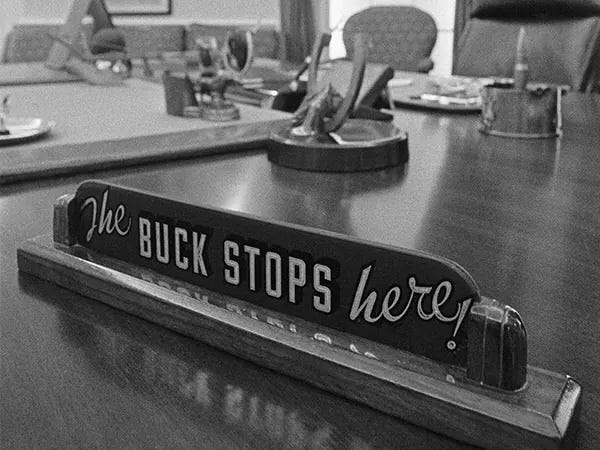
The rolling roof idea resurfaced in 2005 when Major League Baseball awarded Kansas City the All-Star Game and the NFL awarded Kansas City a future Super Bowl, the latter contingent on having a covered stadium. Given the expense involved, they once again went to the voter, who approved funding to renovate Arrowhead and Kauffman, but the bucks stopped there. They voted “No” on financing the rolling arches.
Looking back now, the people of Kansas City were right on both counts. While multi-purpose stadiums saved money in the short term, they were suboptimal in the long term. No one builds them anymore. And while their enthusiasm for a movable roof was faulty, they correctly chose not to fund such a folly. They never built one, neither has anyone else, and now it appears no one ever will.
Regular readers support Football Archaeology. If you enjoy my work, support me with a paid subscription, buy me a coffee, or purchase a book.


Have you never been to Seattle? The baseball stadium has a rolling roof