
Non-Football Gear in the 1910 Spalding Catalog

Some old sporting goods catalogs are dedicated to football products, though most include gear for other sports. Either way, when I get a new-to-me, old catalog, I generally scan only the football-related pages. Today was a different day, however, as I pored through the pages of the 1910 Spalding Fall and Winter catalog, taking in seldom-seen beauties from other sports worlds, and decided to share some of them with you.

While other sports clearly are not as wonderful as football, they have their place, and reviewing their old equipment reminds us that football was not the only sport to use archaic, oddball goods. Below are some favorites on sale 116 years ago.
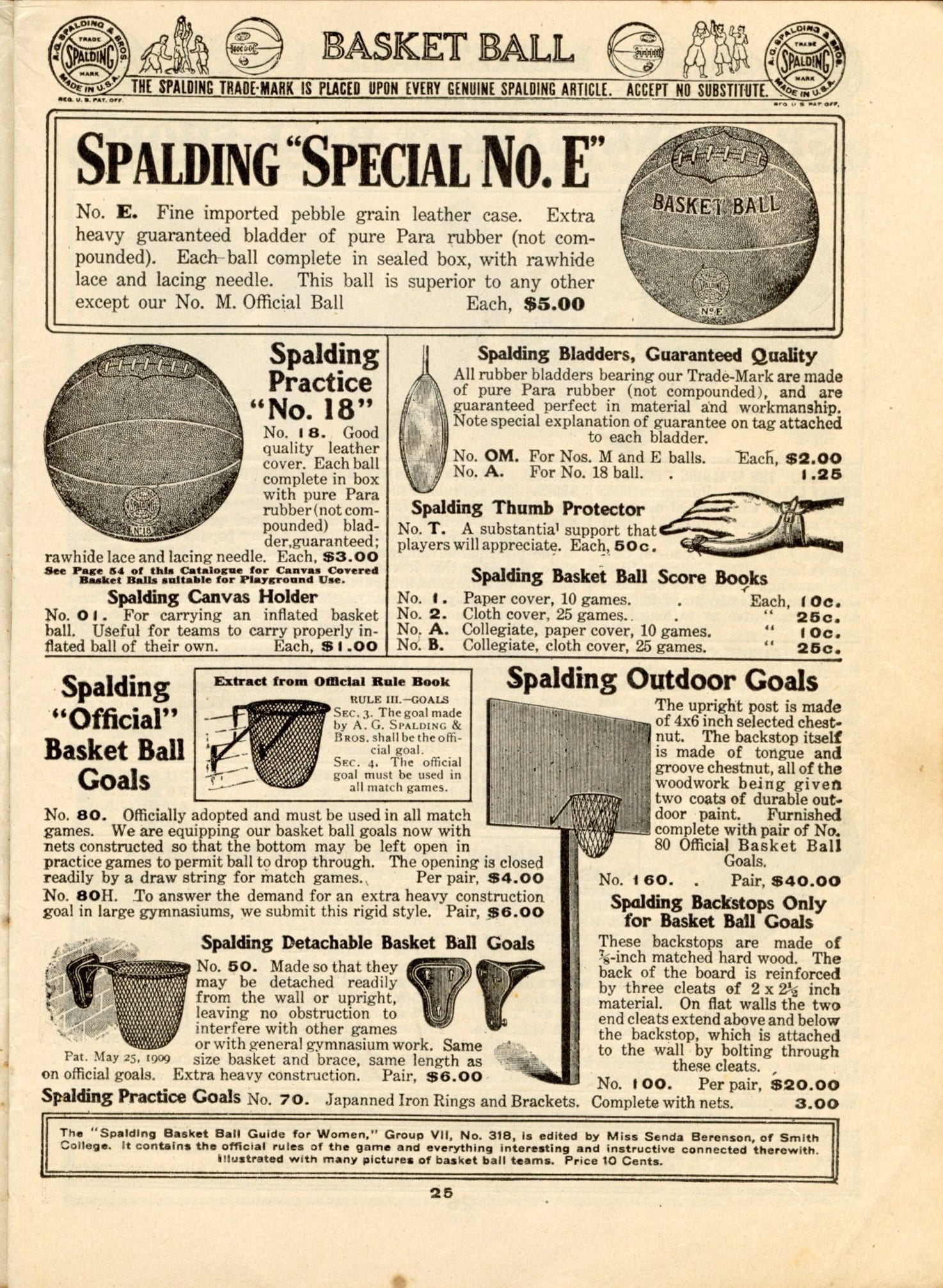
The relatively new sport of basketball had balls with laces and nets with bottoms. Just like footballs of the time, basketballs had to be unlaced to be reinflated, and each new basketball was shipped uninflated, requiring the user to lace it themselves using the supplied needle.
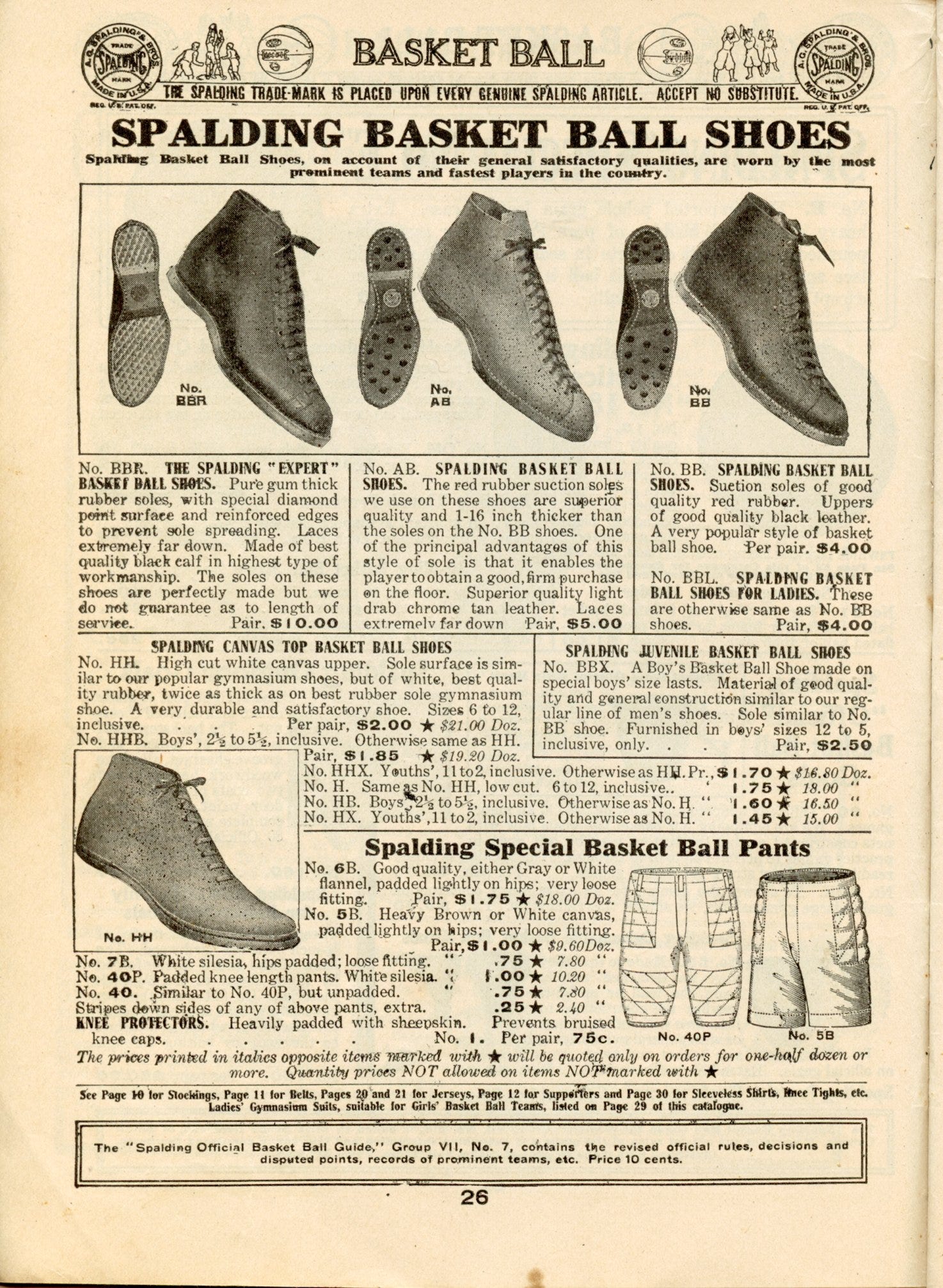
Likewise, basketball shoes came with either treads or suction cups on the soles, while the pants were padded
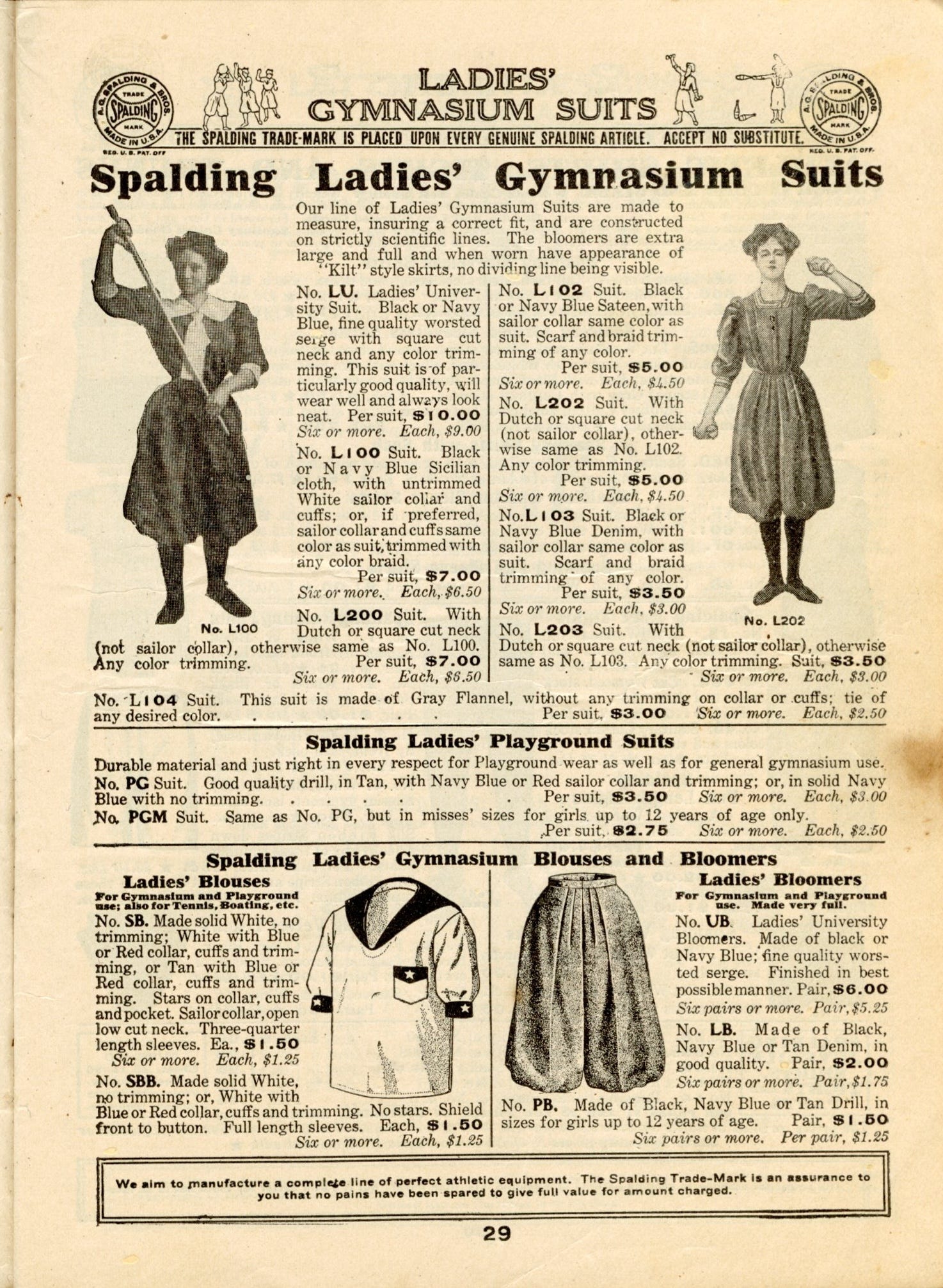
Spalding did not ignore the needs of American women, since they offered a line of scientifically designed gymnasium suits featuring bloomers that were “large and full,” which was just what a girl needed in those days.
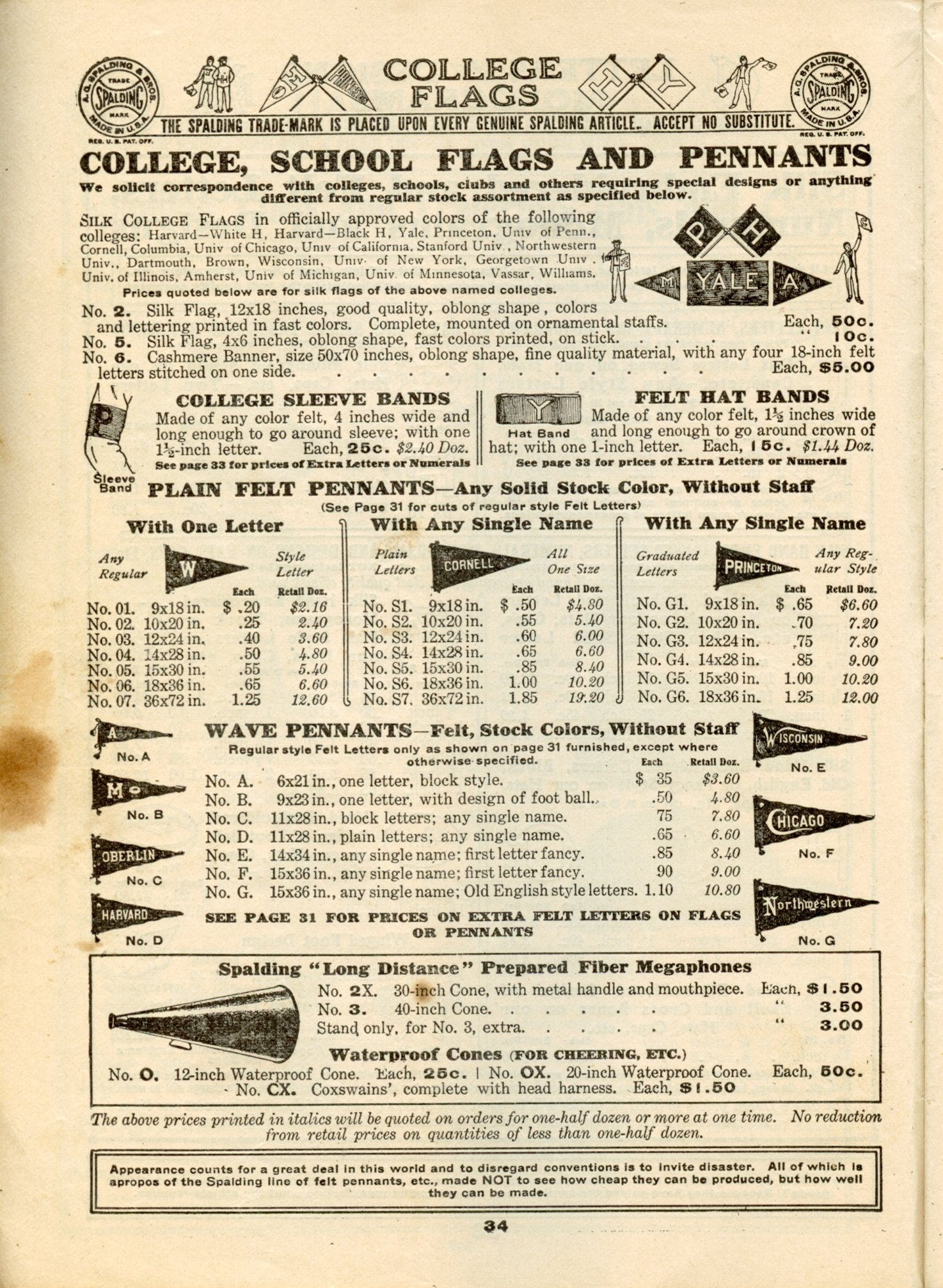
When advertising school pennants and flags, Spalding opted to include examples for major Eastern and Midwestern programs, including the usual cast of characters: Princeton, Harvard, Yale, Cornell, Michigan, Wisconsin, Northwestern, and, of course, Oberlin.
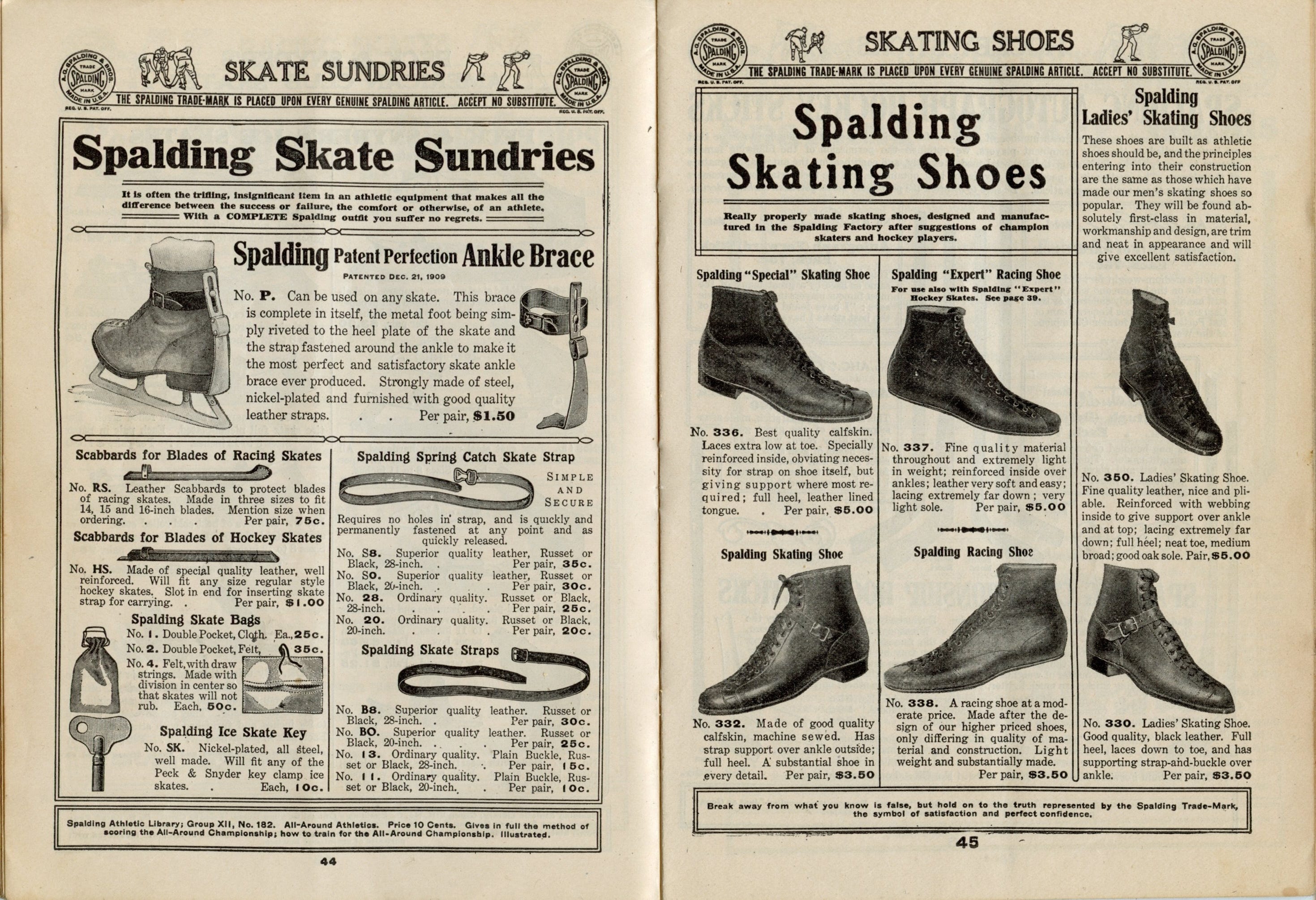
Just as ski shoes and skis are separate items, so were ice skating shoes and blades. Also notice on the left-hand page that the ice skate blade guards were called scabbards.
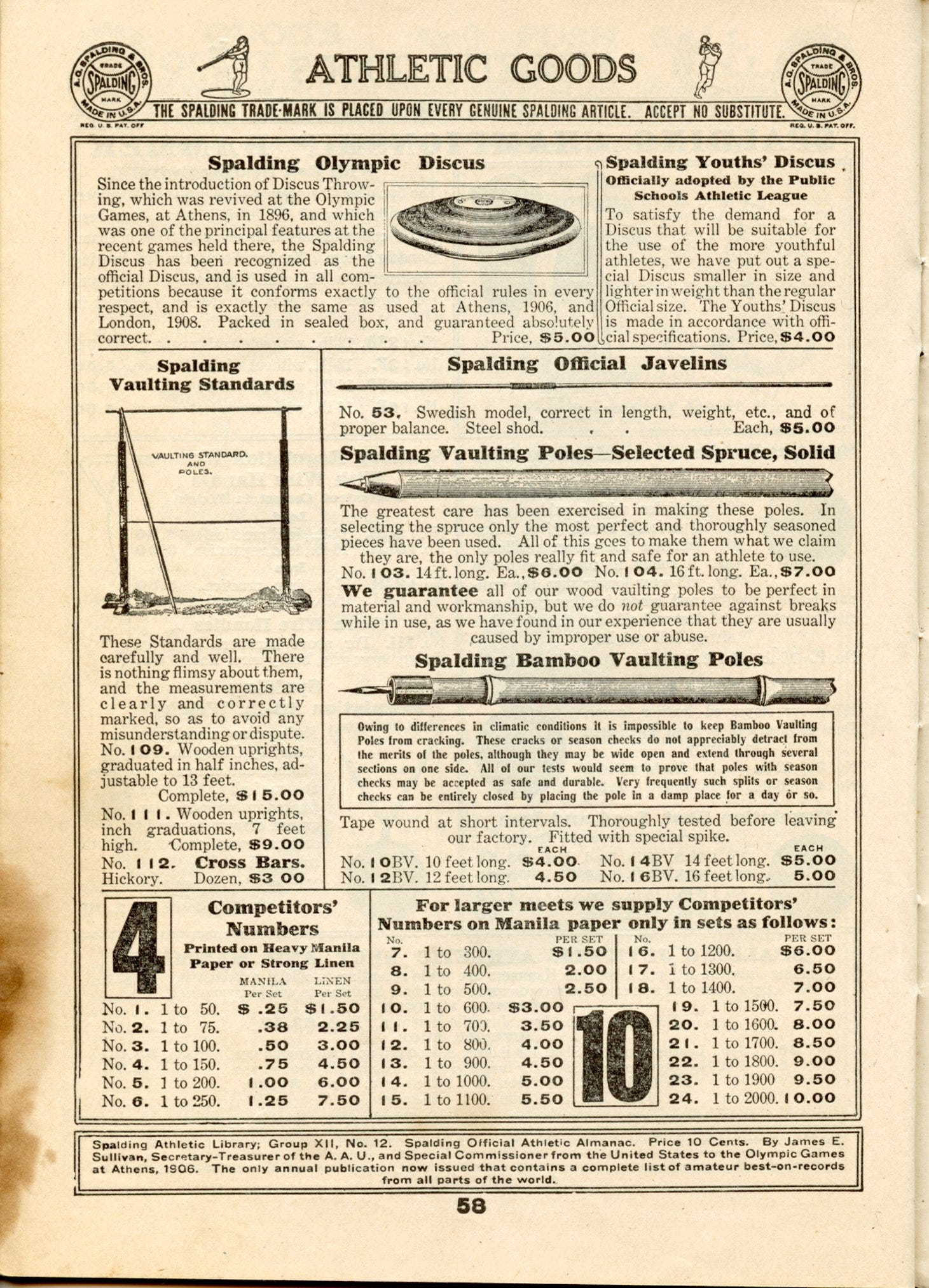
As we know, pole vaulting can be dangerous today with their fiberglass and carbon fiber poles, but the poles of 1910 had two notable differences. First, they were bamboo, and second, they had steel points at the planting end, one of which looked like the world’s largest hypodermic needle.
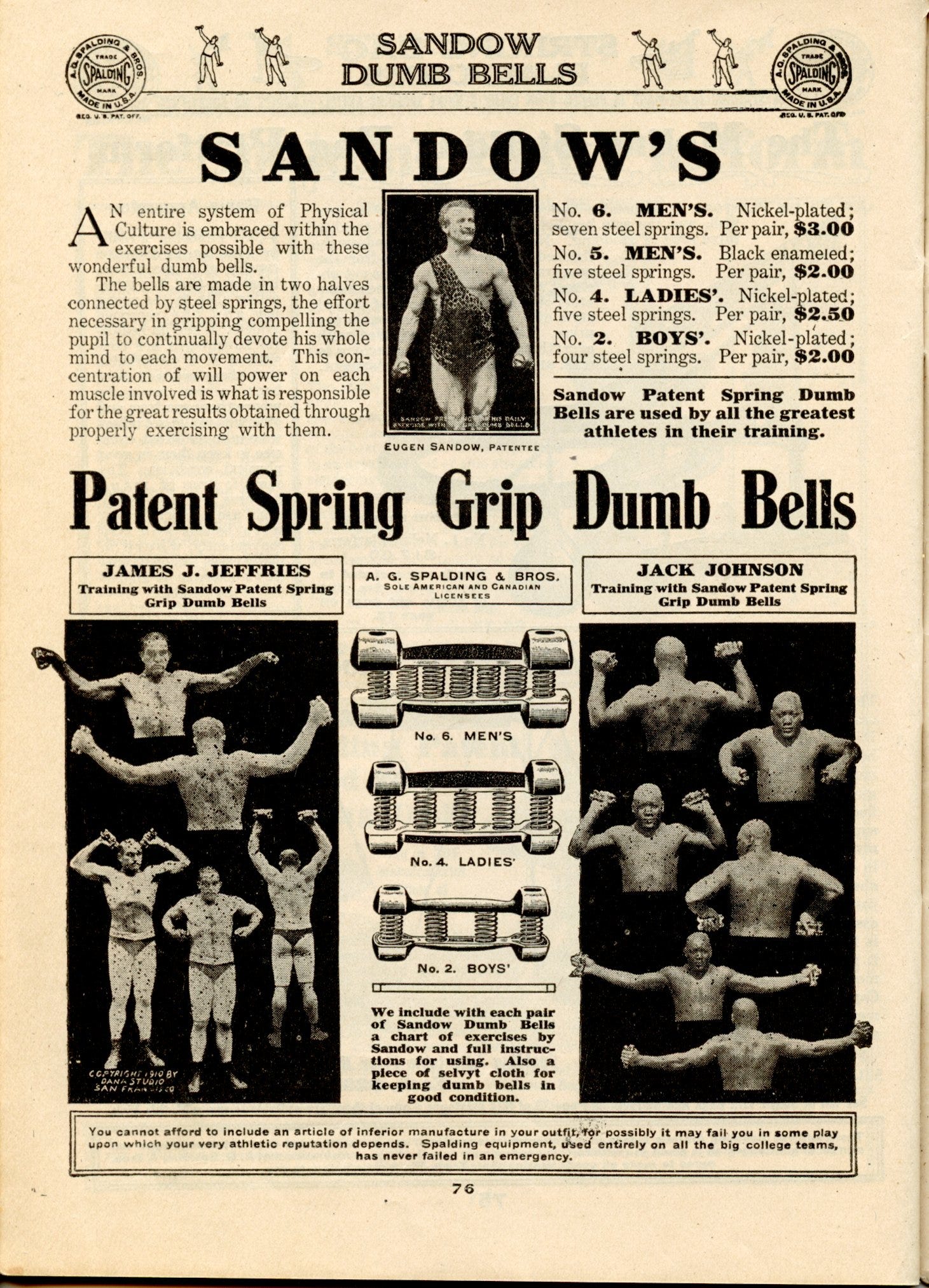
Want to know who put the dumb in dumb bells? I’m thinking it was Eugen Sandow, who patented dumb bells that improved your grip and your strength.
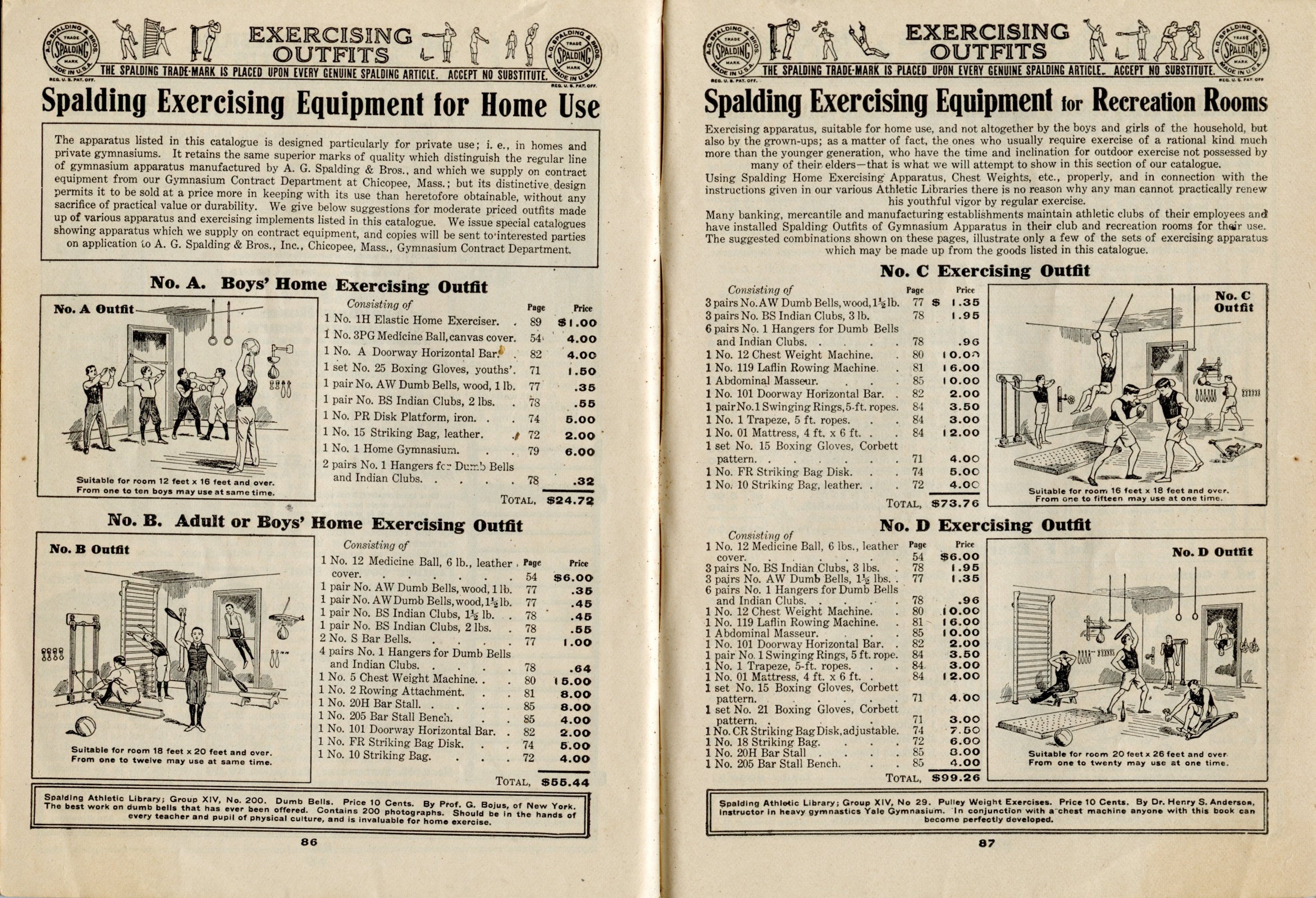
Last, and certainly not least, was their home gym equipment. You might think that home gyms are a new thing, but those aspiring to physical fitness in 1910 could just do it by slapping down $24 to $99 in gold-backed currency and quickly achieve an Adonis-like physique.
That’s it for now.
If you enjoy Football Archaeology and are not a paid subscriber, consider buying me a cup of coffee now and again. You can also buy a paid subscription or purchase one of my books.


Spalding was well prepared to serve nearly every sport's needs.