
Pioneering Asian and Pacific Islander Football Players

America is complicated. Our country has a history of enslavement, ethnic cleansing, and discrimination, while at the same time embracing people of all origins and beliefs. Football has shown both tendencies, essentially banning African Americans from playing White Americans until the 1960s, yet showing a fascination with the play of the Carlisle Indians a half century earlier.
While I have previously written about the emergence of Black and Native American players in football, I don’t recall writing about Asian American and Pacific Islanders (AAPIs), but that came to mind recently when I came across a 1928 broadside for a game between the Chicago Bears and the Dayton Triangles that touted two members of the Triangles team.
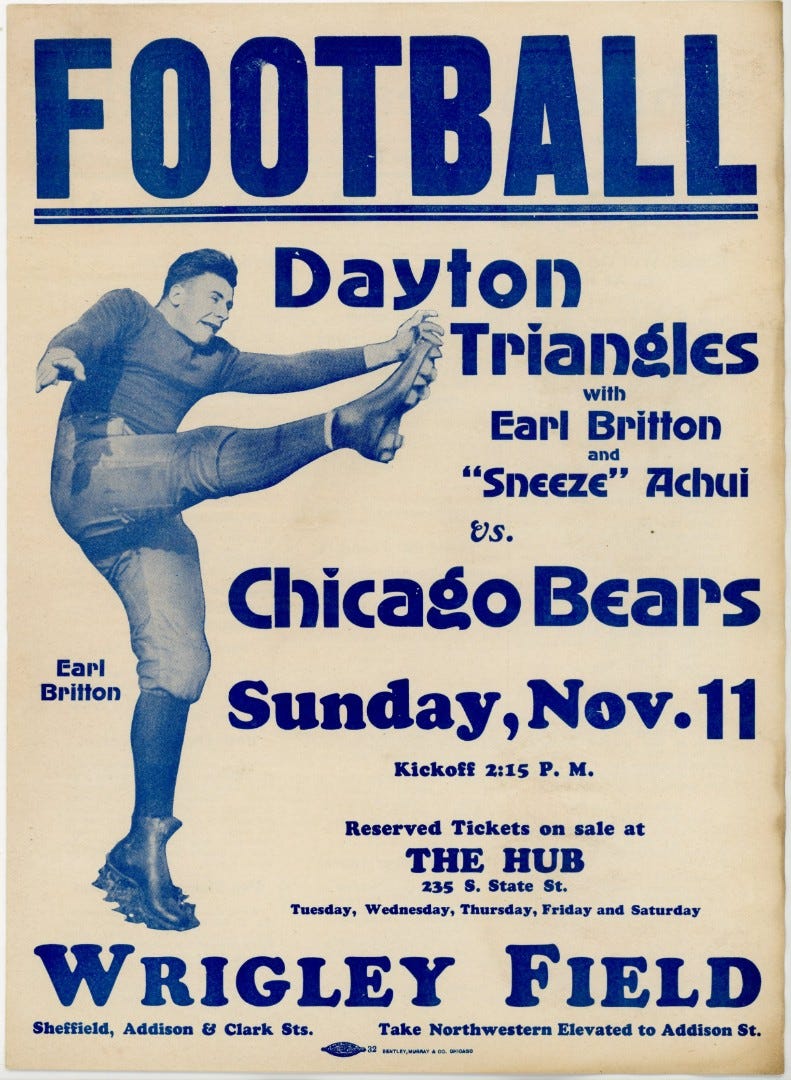
One, Earl Britton, gained fame as Red Grange’s fullback at Illinois, so focusing on him made sense for a game in Chicago. The second player, “Sneeze” Achui (actually Achiu), played at the University of Dayton and was distinctive primarily for having a Chinese father and a Native Hawaiian mother, making Achiu the NFL’s first player of Asian and Pacific Island descent.
We’ll return to Achiu’s story tomorrow, but to better understand his experience, I looked into pre-1920s AAPI players in the college ranks. No database tracks the ancestry of college football players, so I relied on newspaper archive and web searches. I surely missed some players, but Asian and Pacific Islander football players were curiosities and received publicity for their ethnicity more than their play on the field. The newspapers commonly described them using terms considered slurs today, most of which I omitted from the article. (Note: The research excluded the players at the University of Hawaii because they played their first intercollegiate game in 1920.)
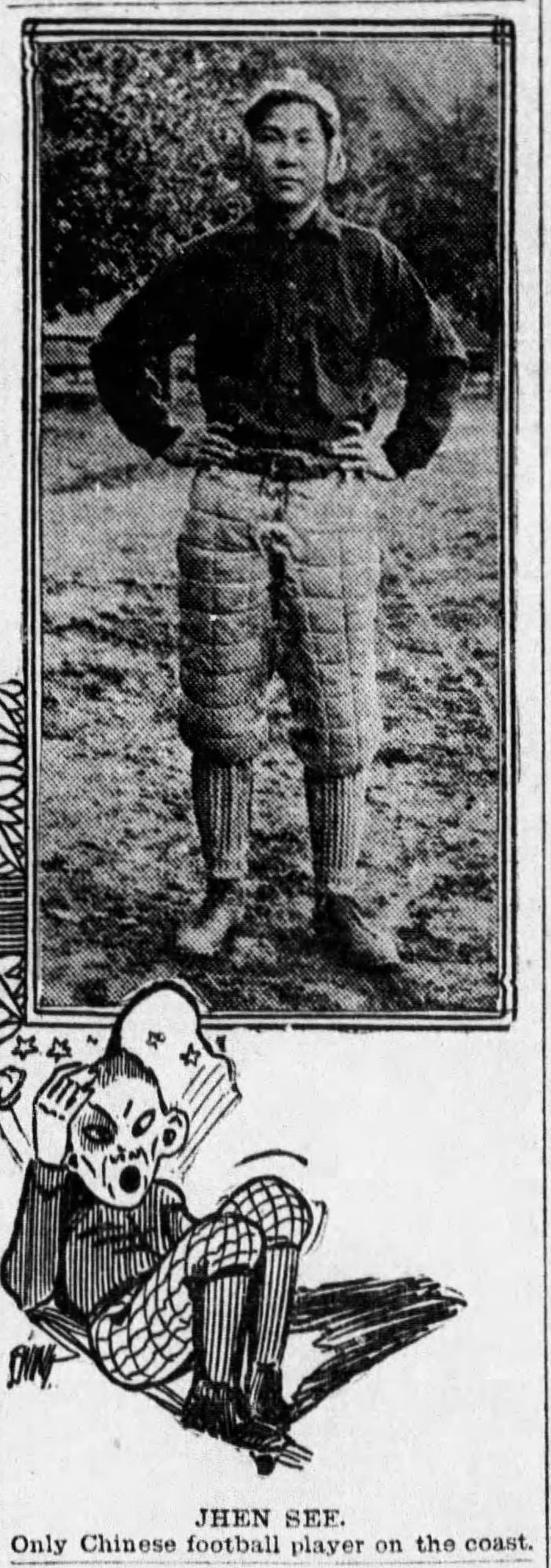
Based on what I found, there were a handful of White Hawaiians on college teams in the 1890s, and several Asian American high schoolers on the West Coast in the first years of the new century, but the first college player of Asian descent appears to have been Jhen See of Pomona College. Like some others, it isn’t easy to determine whether See was a Chinese citizen or a Chinese American, since newspaper coverage often treated them as the same.
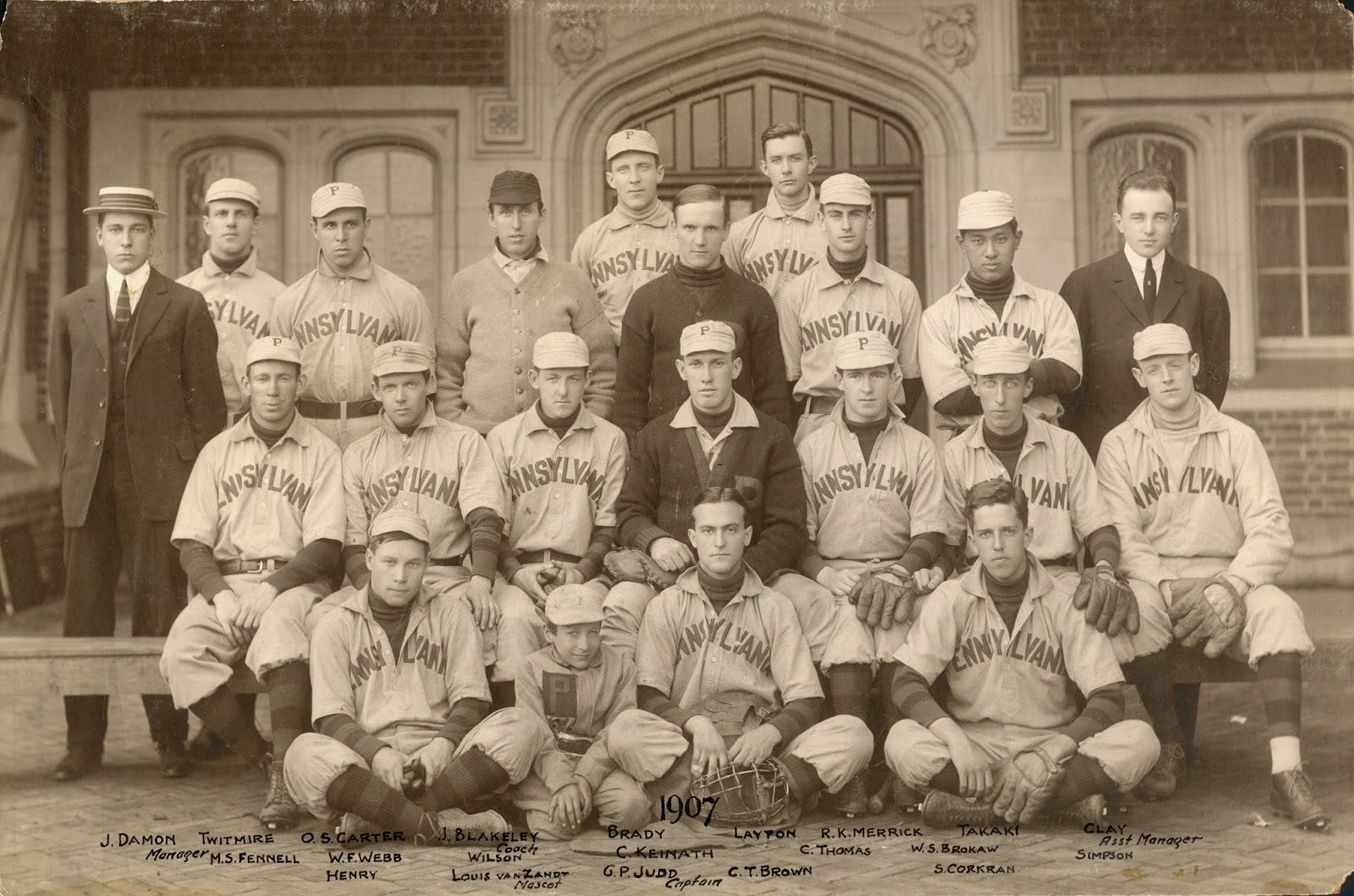
The following year, there were reports of Ting Chai Chen playing for West Point and Shunzo Takaki for Penn. Although information on the West Point player proved elusive, Takaki received significant coverage for excelling on the tennis court and baseball diamond, and to a lesser extent, the football field. A native of Tokyo, Takaki saw action at left end during the 1906 season and expected more in 1907 before being diagnosed with an enlarged heart, which seems to have ended his playing career. He was Penn’s starting second baseman as well, and is considered the first Asian player in college baseball.
The next report of an AAPI college football player involves Teru Hico Hirasawa, a San Franciscan and the first person of Japanese ancestry to earn his numerals at Stanford. Since Stanford dropped football in 1906, Hirasawa earned his numerals on the rugby field, which still counts, sort of.
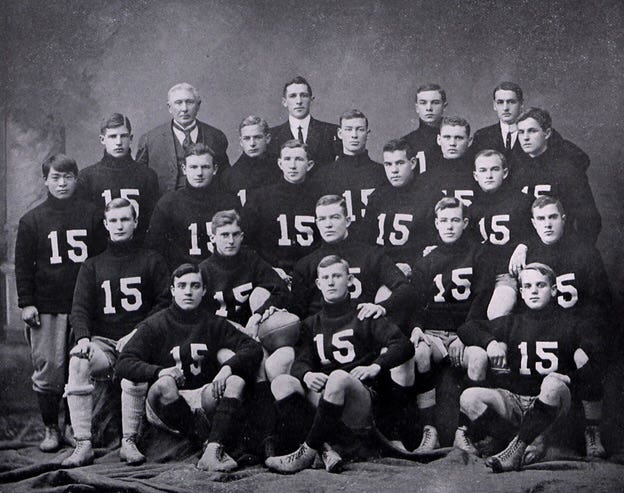
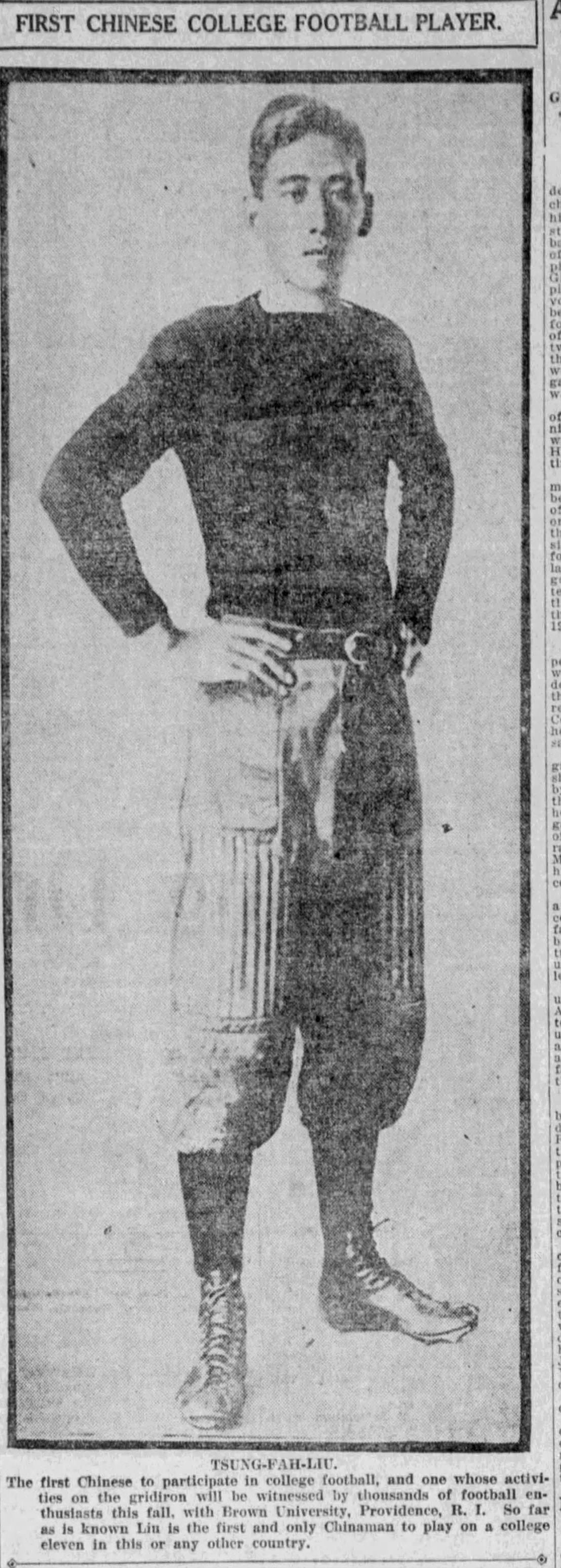
The same year, Tsung Fau Liu appeared at Brown, after playing football at a California high school and at Exeter. Like others before and after him, they called him the “first” of his ethnicity to play football, though we must forgive their sins, since the internet was still in its early stages then.
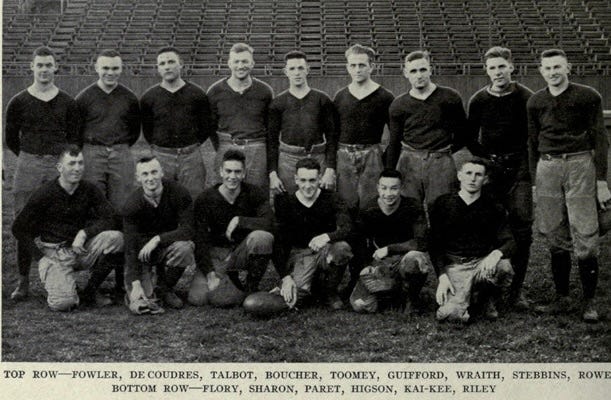
Creighton had a Japanese player, Tamisiea, in 1912; the Case Institute had two Chinese players in 1914, S. W. Schon and W. P. Wang; and Cal’s 1916 freshmen team included Samuel Kai Kee, who got extended playing time, scoring on a 60-yard pick-six versus Nevada.
Shiro Akahoshi (surname was commonly misspelled) was a part-time starter on Penn’s 1918 and 1919 teams, though a broken arm ended his 1919 season early. After graduating, he returned to Tokyo and became an influential golf course designer after WWII.
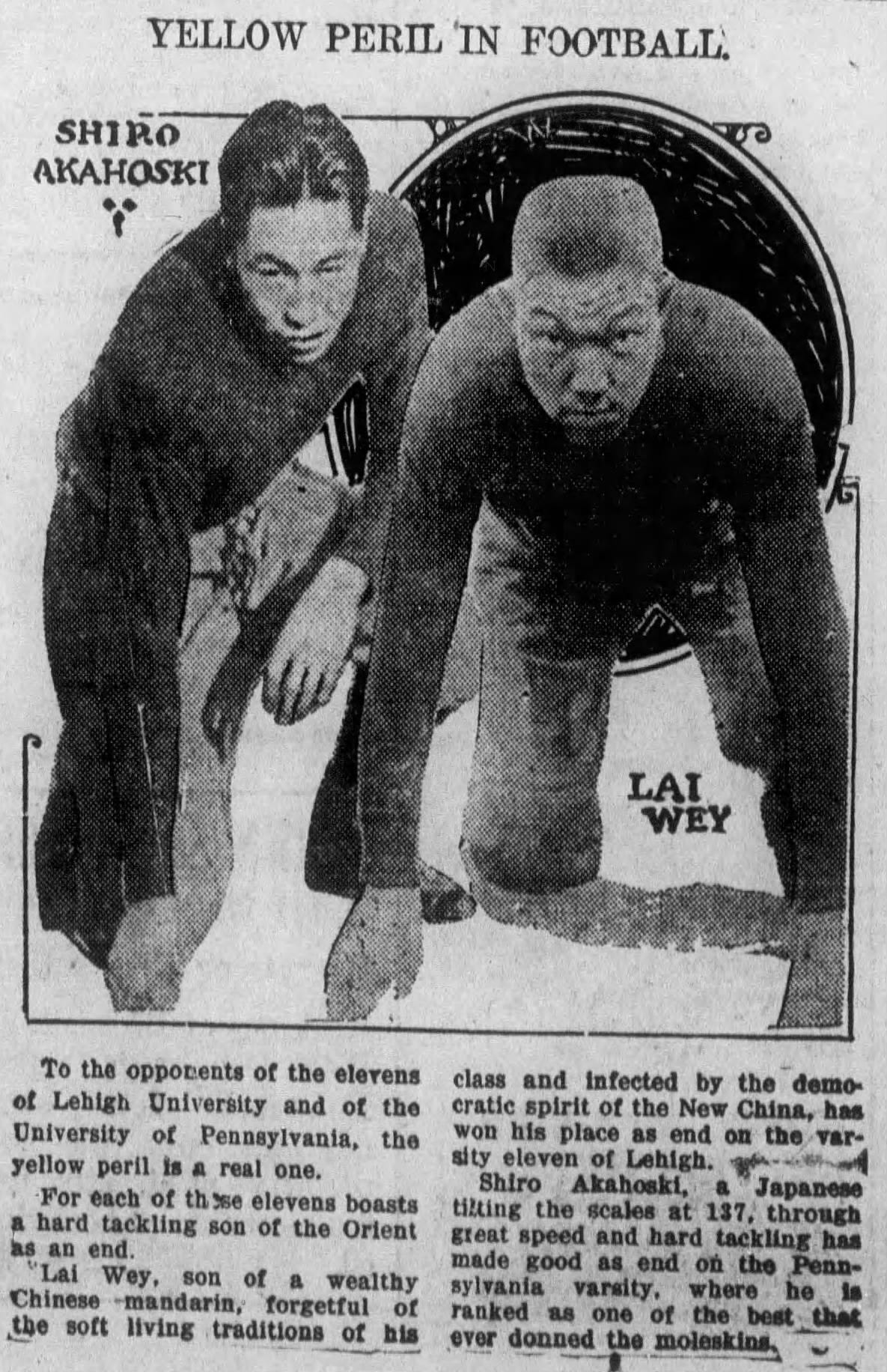
Lehigh’s Lai Wey also contributed as a part-time player, though he appears to have earned more playing time on the lacrosse team.
I did not identify any Pacific Islander college football players before 1920, which seems odd given their prominence in today’s game. The situation likely stems from most of the Chinese and Japanese football players at American colleges coming from prominent families with the means to send their sons to the United States. That was less likely the case with Native Hawaiians and Samoans of the time.
None of these players mentioned above was a star football player, though several, like Takaki, were superior athletes who made greater contributions in other sports. My sense is that their coaches and teammates viewed them much like the high school foreign exchange student who goes all in on experiencing America by joining the football team, and to everyone’s surprise, they prove to be solid, though unremarkable players.
Walter “Sneeze” Achiu was different in that regard, as he was a college star and good enough to play in the early NFL. We’ll cover his story tomorrow.
Regular readers support Football Archaeology. If you enjoy my work, support me with a paid subscription, buy me a coffee, or purchase a book.


Tim Peeler wrote about NC State's (A&M) QB from the 1890's. https://gopack.com/news/2010/9/1/PEELER_QB_of_the_Rising_Sun
Awesome.