
Ralph Siewert: Pro Football and Basketball’s First 7-Footer

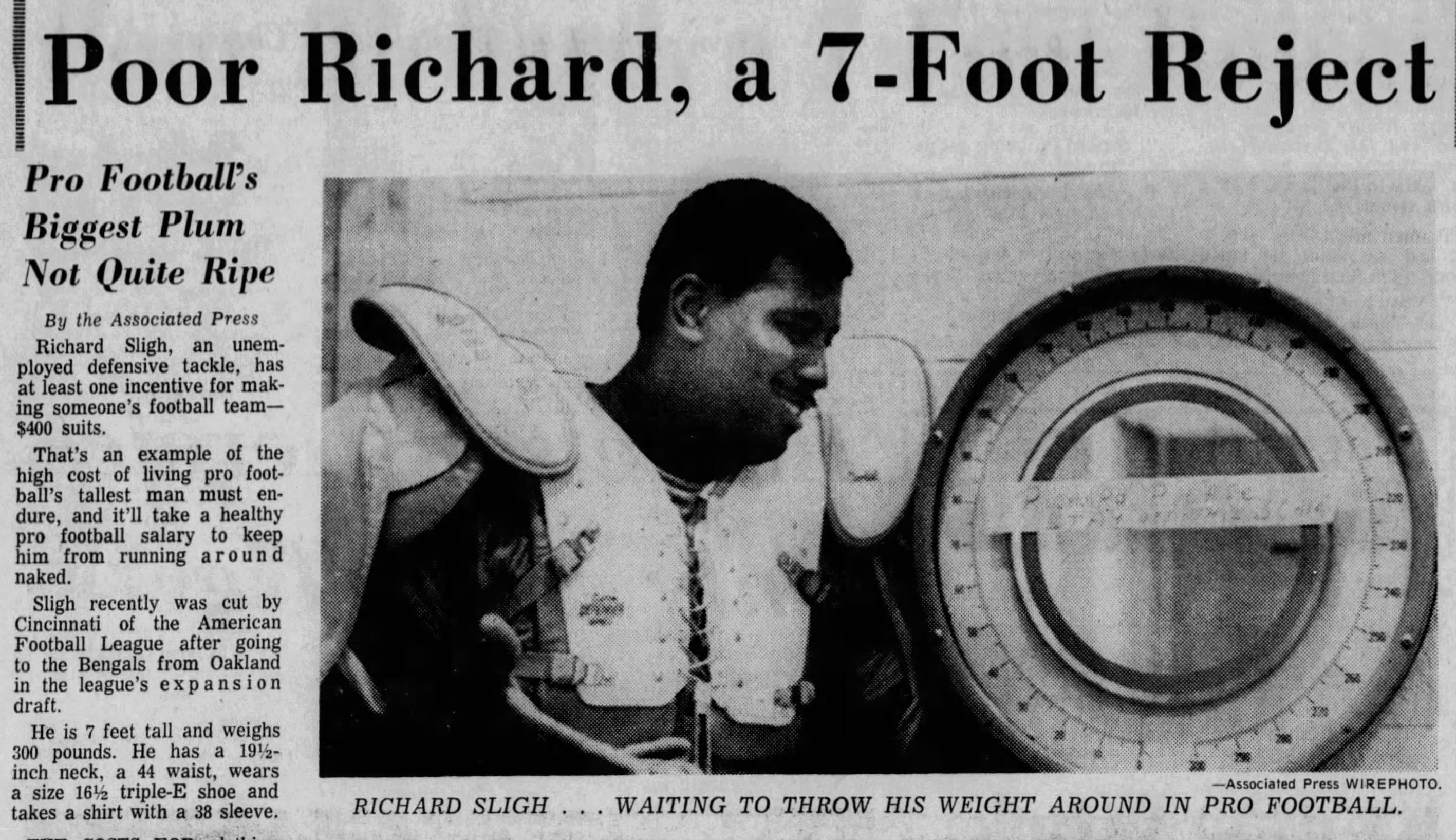
If one searches for the “tallest player in professional football history,” one learns of the heights reached by Richard Sligh, an 7’ 0” 300-pound offensive tackle out of North Carolina Central who played for the 1967 Oakland Raiders.
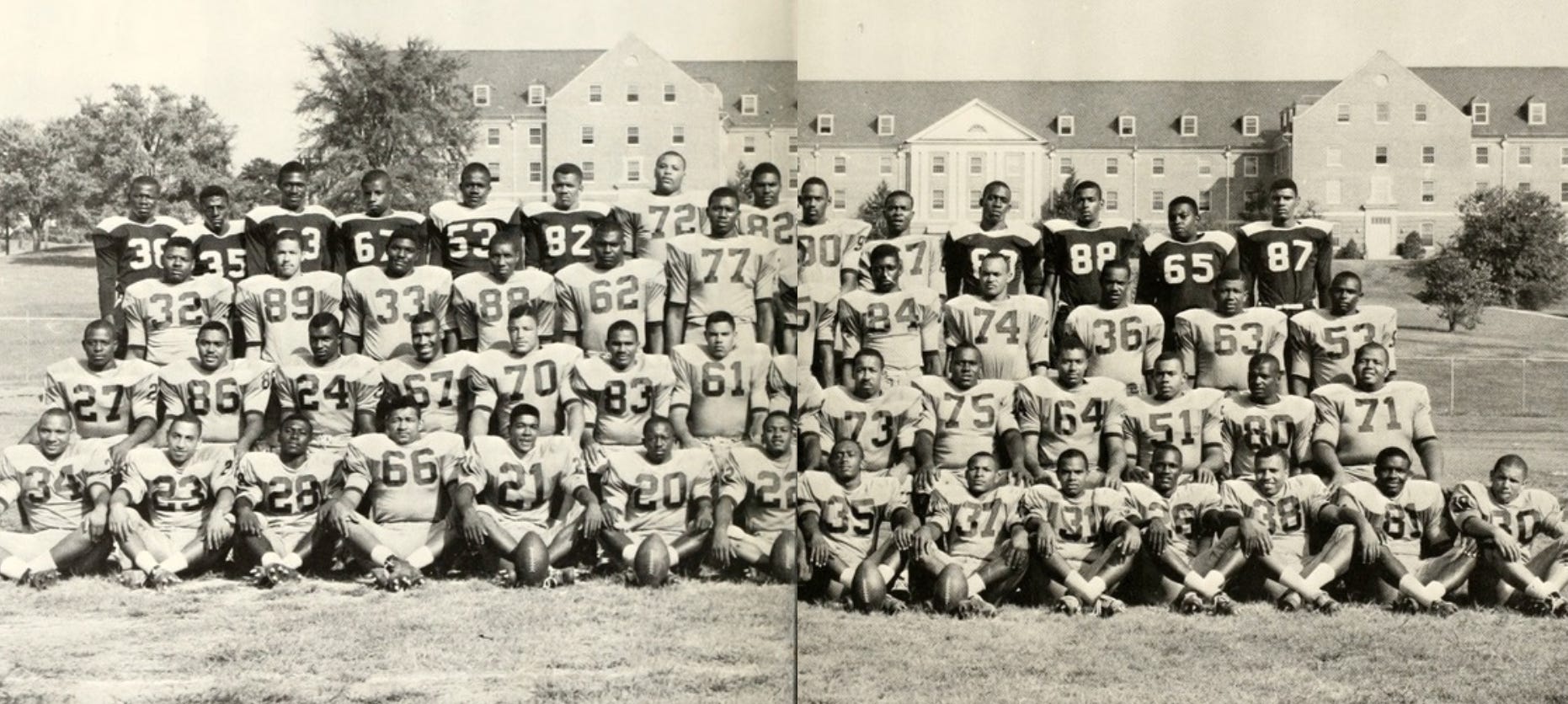
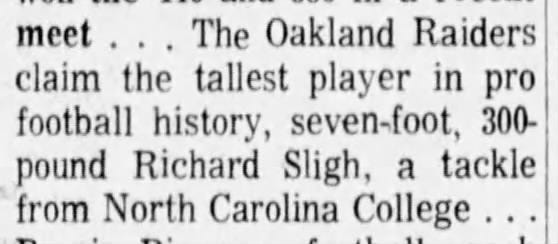
Sligh appeared in 8 games for the AFL champion Raiders, making him the tallest player on either roster for the first Super Bowl, a height not topped since. (Sligh did not play a snap in the game.)
When the Cincinnati Bengals entered the AFL for the 1968 season, they selected Sligh in the expansion draft, though they cut him several weeks into training camp, ending Sligh’s pro football career.
Of course, the story does not end there. It does not even begin there, not by a long stretch, because there was an even taller professional football player back in 1946.
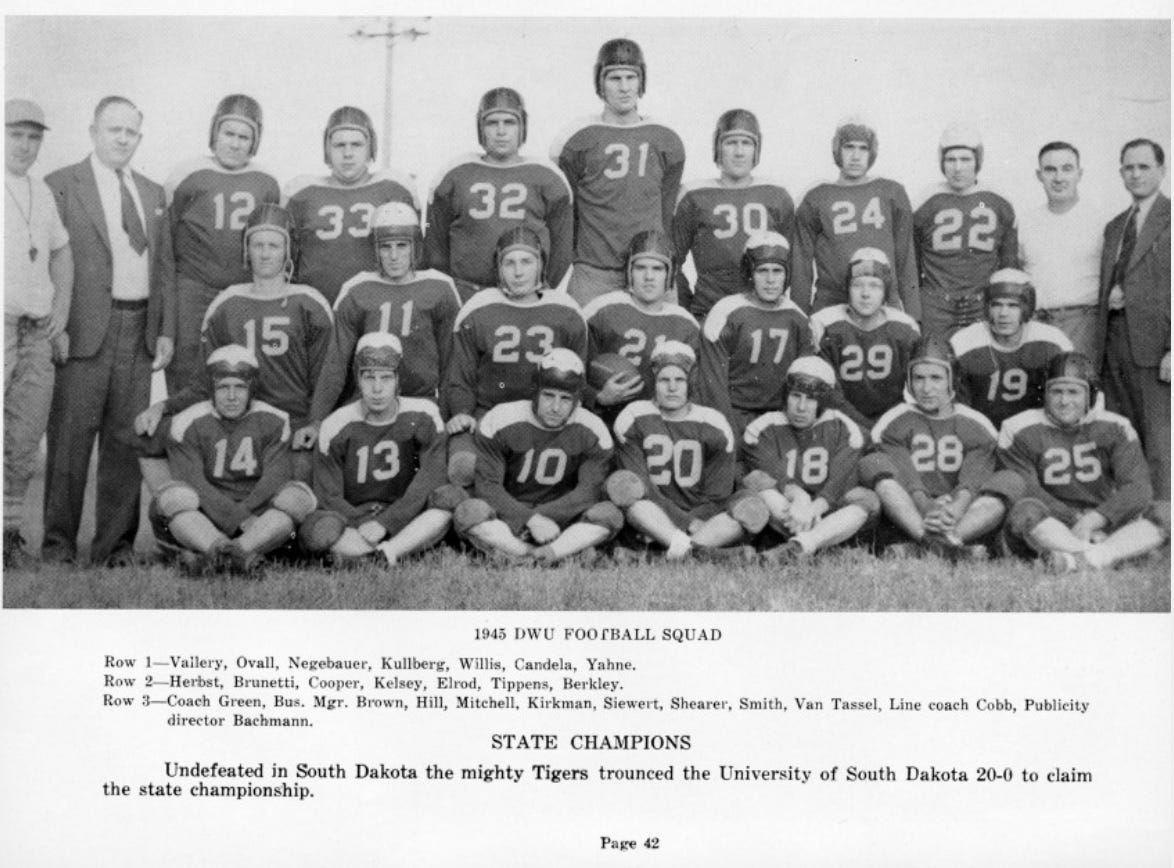
Ralph Siewert, who shared his initials with Richard Sligh, played football and basketball for Dakota Wesleyan in 1944 and 1945. I won’t tell you his jersey number, but see if you can pick him out of the team picture below.
As a cager, Siewert made a name for himself in the 1946 NAIB basketball tournament (the predecessor of the NAIA) by holding the nation’s leading scorer to 4 points, 17 points below his average. Despite his hardwood talents, Siewert seems to have had limited football ability. Still, since you can’t teach height, his potential led the AAFC’s Chicago Rockets to sign him for their inaugural 1946 season. (Several AAFC teams joined the NFL or merged with NFL teams in 1950, and AAFC statistics became part of NFL records as of April 2025.)
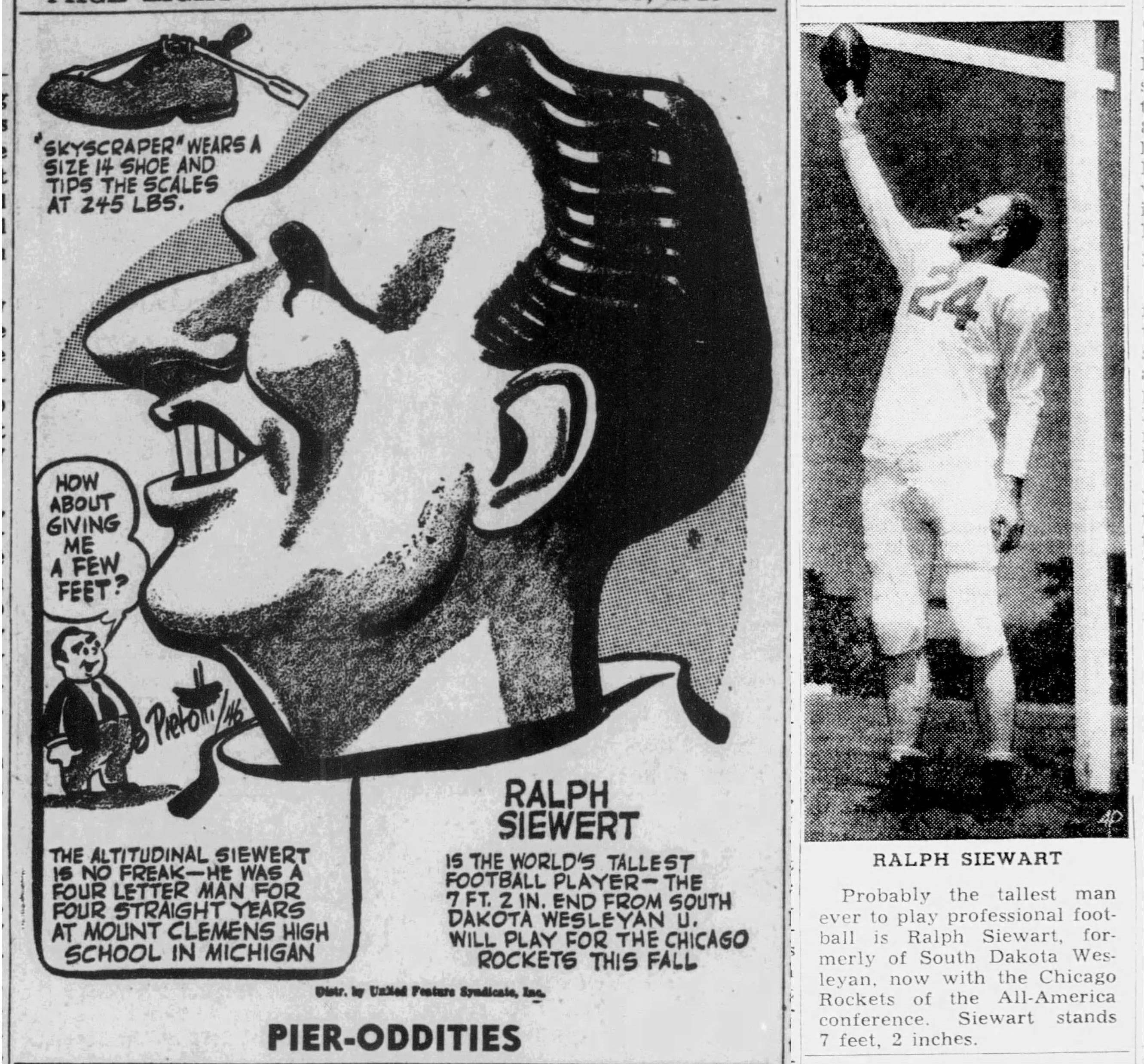
Standing 7’ 1” or 7’ 2” and weighing about 250, Siewert, and end, received praise early in camp, and, as a novelty, he garnered publicity for the new league. Unfortunately for Siewert, the Rockets cut him near the end of training camp, ending his professional football career.
Not to worry, Siewert quickly turned his attention to roundball, signing with the Midland Dow team of the National Basketball League (NBL). By January, he had signed with the St. Louis Bombers of the Basketball Association of America (BAA). (The NBL and BAA merged in 1949 to form the NBA.)
Siewert saw limited playing time with the Bombers. However, he gained additional publicity with a story about his costing the Bombers extra money when traveling because the railroads had to remove the partition between two Pullman sleeping berths to allow him to stretch out. Later that season, the Toronto Huskies purchased Siewert’s contract, and he finished the season with them.
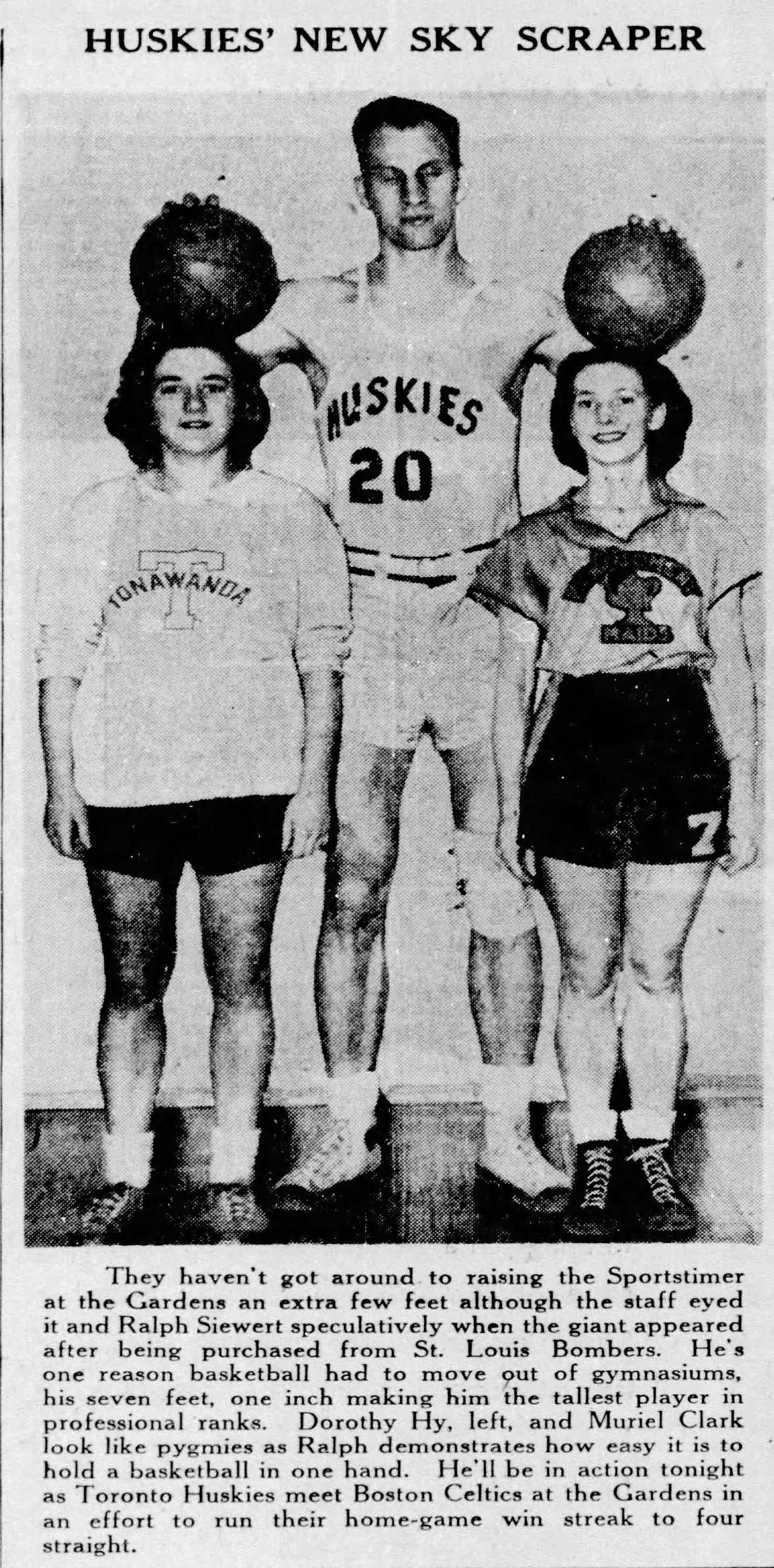
Siewert spent the 1948 season with the All-American Circus traveling team -a White version of the Harlem Globetrotters. After playing the 1948 season with the Billings All-American and the 1949 season with the Detroit Vagabond Kings, he left professional basketball and played only recreationally.
Despite limited success with the Chicago Rockets, the Midland Dow, the St. Louis Bombers, and the Toronto Huskies, Ralph Siewert was one of the few athletic seven-footers of his day, allowing him to hold the unique distinction of being the first seven-foot-tall player in both professional football and professional basketball.
Regular readers support Football Archaeology. If you enjoy my work, consider a paid subscription, buy me a coffee, or purchase a book.

