

The football helmet is football’s most iconic, yet its origin is shrouded in mystery. There are several contenders with reasonable claims to be the first helmet, and some confusion stems from the fact that the earliest protective headgear lacked the hard shell typical of helmets. That took nearly another decade to arrive on the scene.
Nevertheless, three contenders are often cited as the pioneers of gridiron head protection. They are:
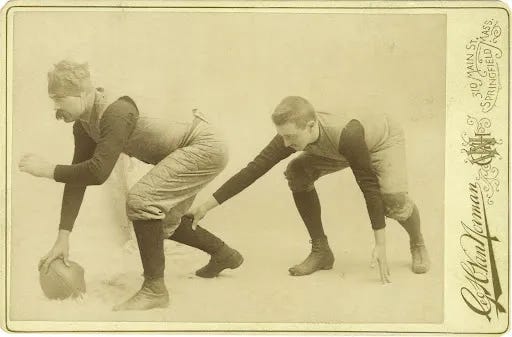
James Naismith, basketball's inventor, played football for Springfield College in 1891, when a picture was taken of him snapping the ball while wearing ear pads kept in place with a flannel wrap. Some claim he began wearing his wrap while playing Canadian Rugby at McGill, but he clearly wore it by 1891.
Joseph Reeves, Navy’s captain in 1893, was advised to quit football due to repeated head injuries, but chose to play wearing a dome-like device of unknown construction.
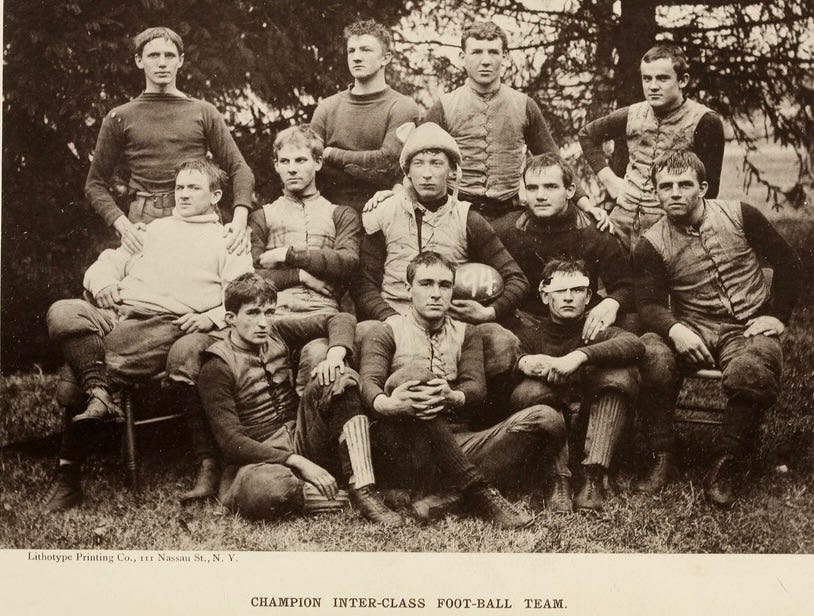
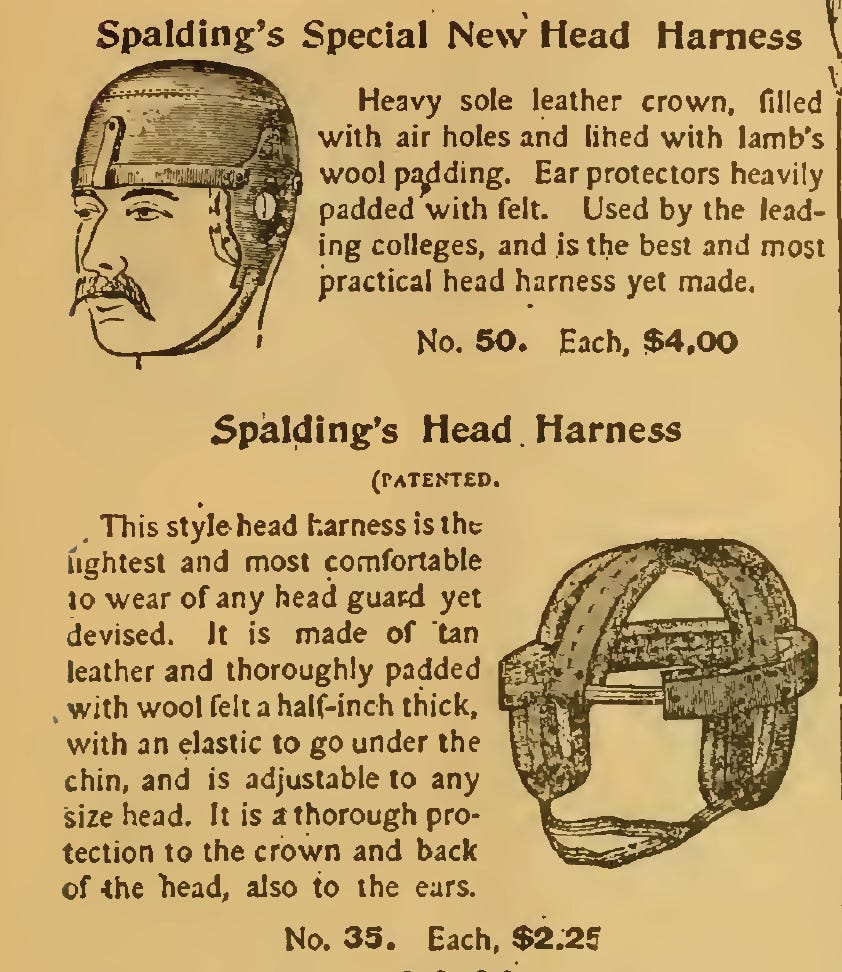
George Barclay, a freshman at Lafayette in 1894, protected his ears with a head harness that looked much like modern wrestling headgear. The device’s leather straps also protected other parts of his head against minor bumps and bruises. (Barclay played for Bucknell in 1893, and there is no evidence he wore a head harness there.)
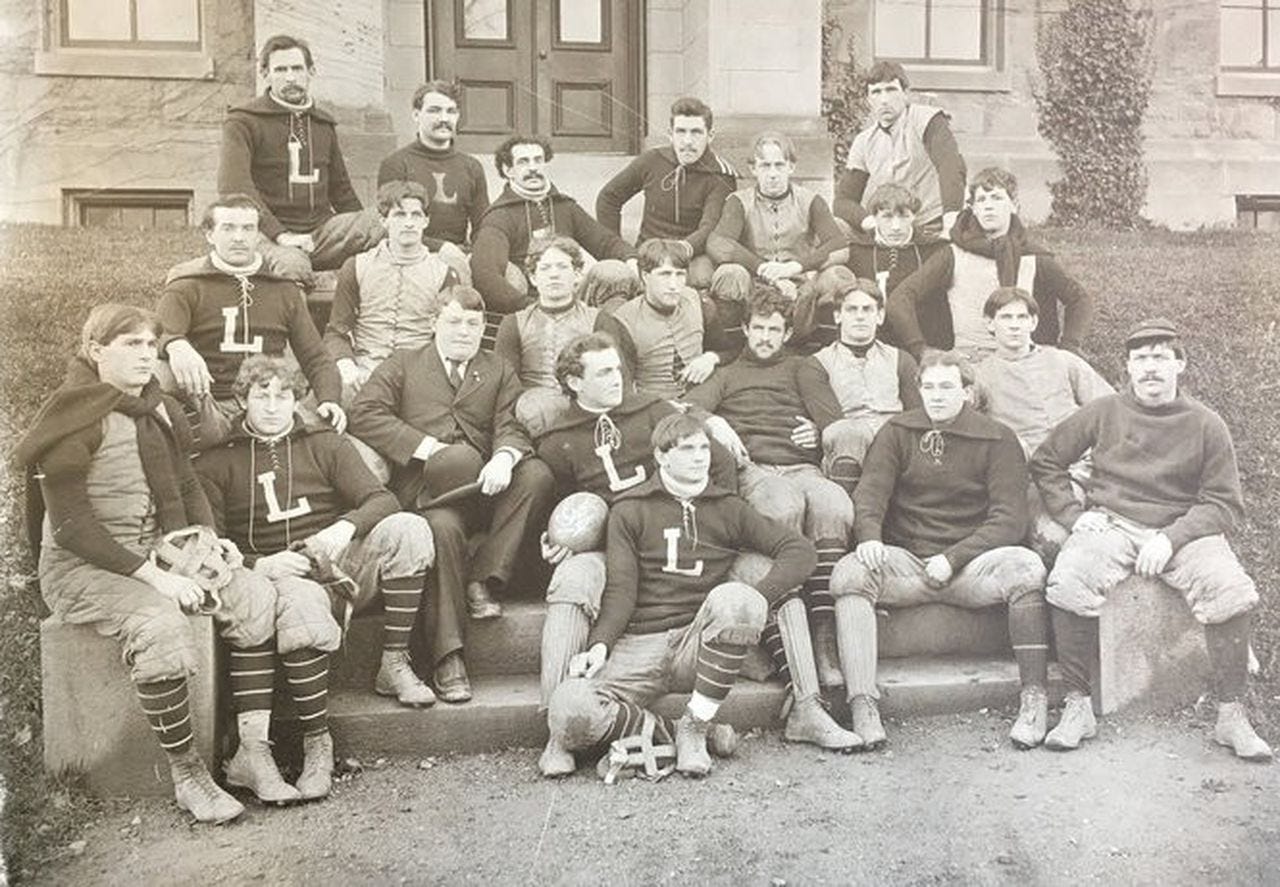
While I and many others cited those three in the past, it now appears that another player preceded Barclay as the developer of the head harness, based on photographic evidence of one (or two) headgear worn at West Point the previous year. I learned of the new contender a few years ago when John Gennantonio posted images of Army’s 1893 team on a football collectors’ message board. He pointed out the pictured headgear, but could not identify which players wore the headgear.
We can date both pictures to 1893 since Laurie Bliss, the former Yale star, appears in both pictures during his only year coaching on The Plain.
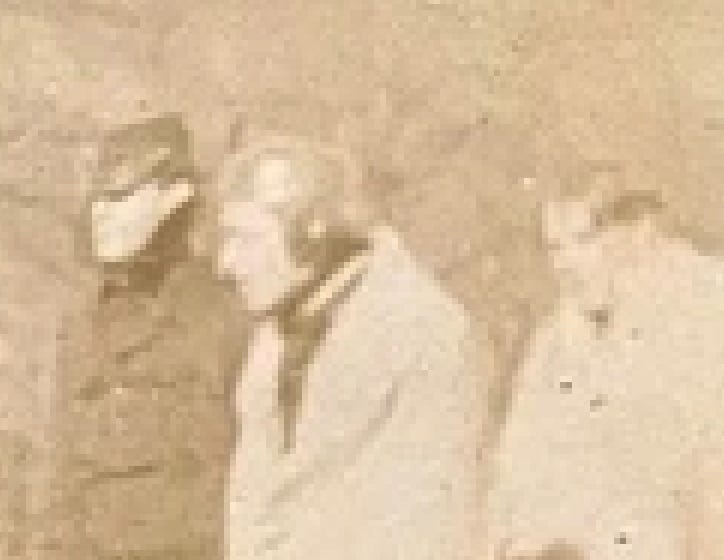
The first image shows the mustachioed and cap-wearing Bliss watching his team calling signals (aka running a play against air).
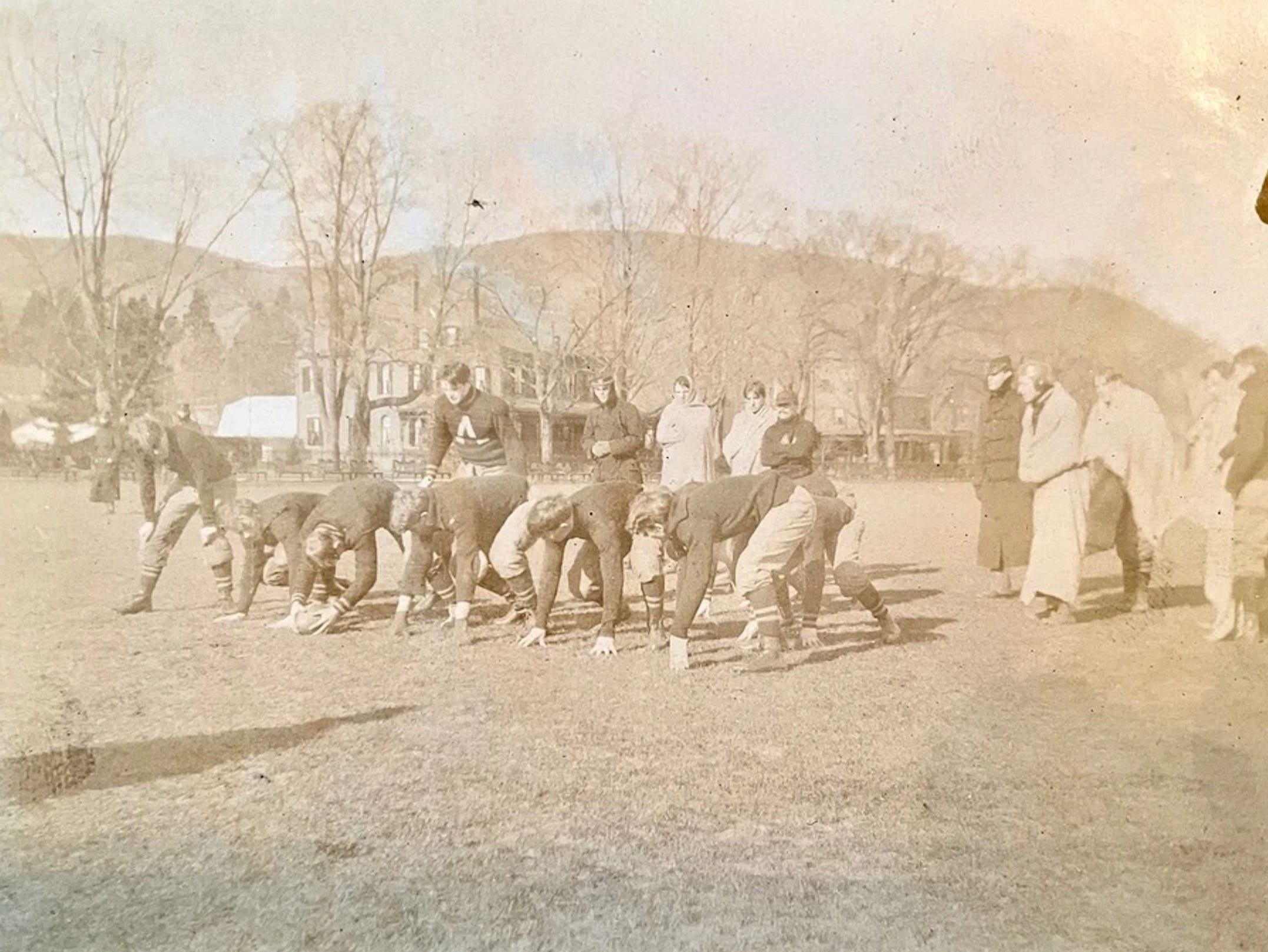
On the right side of the image is an unknown player wearing what appears to be a leather football helmet. Unfortunately, the image quality is not ideal, so it is difficult to confirm exactly what sits atop his head.
The second image is Army’s 1893 team picture, which includes a player lying on the ground wearing a head harness. A close-up shows the player has a head harness similar to that worn by Barclay and his Lafayette teammates the following year.
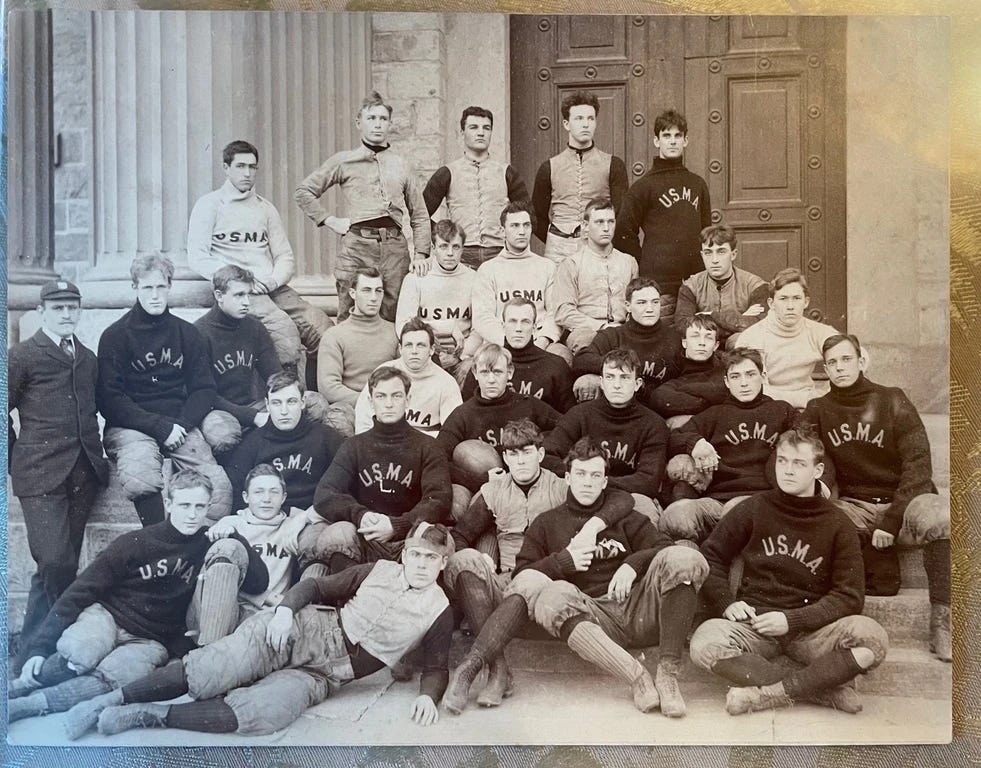
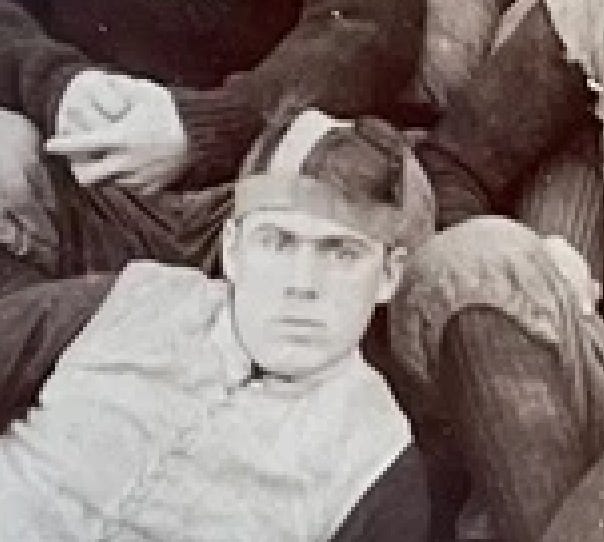
Unfortunately, the team picture did not identify the players, so we did not know the name of the head harness guy. I did not pursue it at the time, but I’m now writing a book on the history of football uniforms and equipment, so I returned to my notes on early football headgear and hit the research salt mine, hoping to find something new.
I may have missed Army’s head harness guy again, but while researching Navy’s Joseph Reeves, I found an article previewing the 1893 Army-Navy game. Newspapers of the time could not print photographs cost-effectively, so they often had artists create line drawings from photographs and printed the line drawing rather than the photograph. The Army-Navy preview article included line drawings of both teams, and luckily, the Army drawing was based on the team picture shown above. Better yet, it listed everyone’s surname, so it was quick work to determine that the head harness guy was Ralph W. Drury, then a West Point plebe.
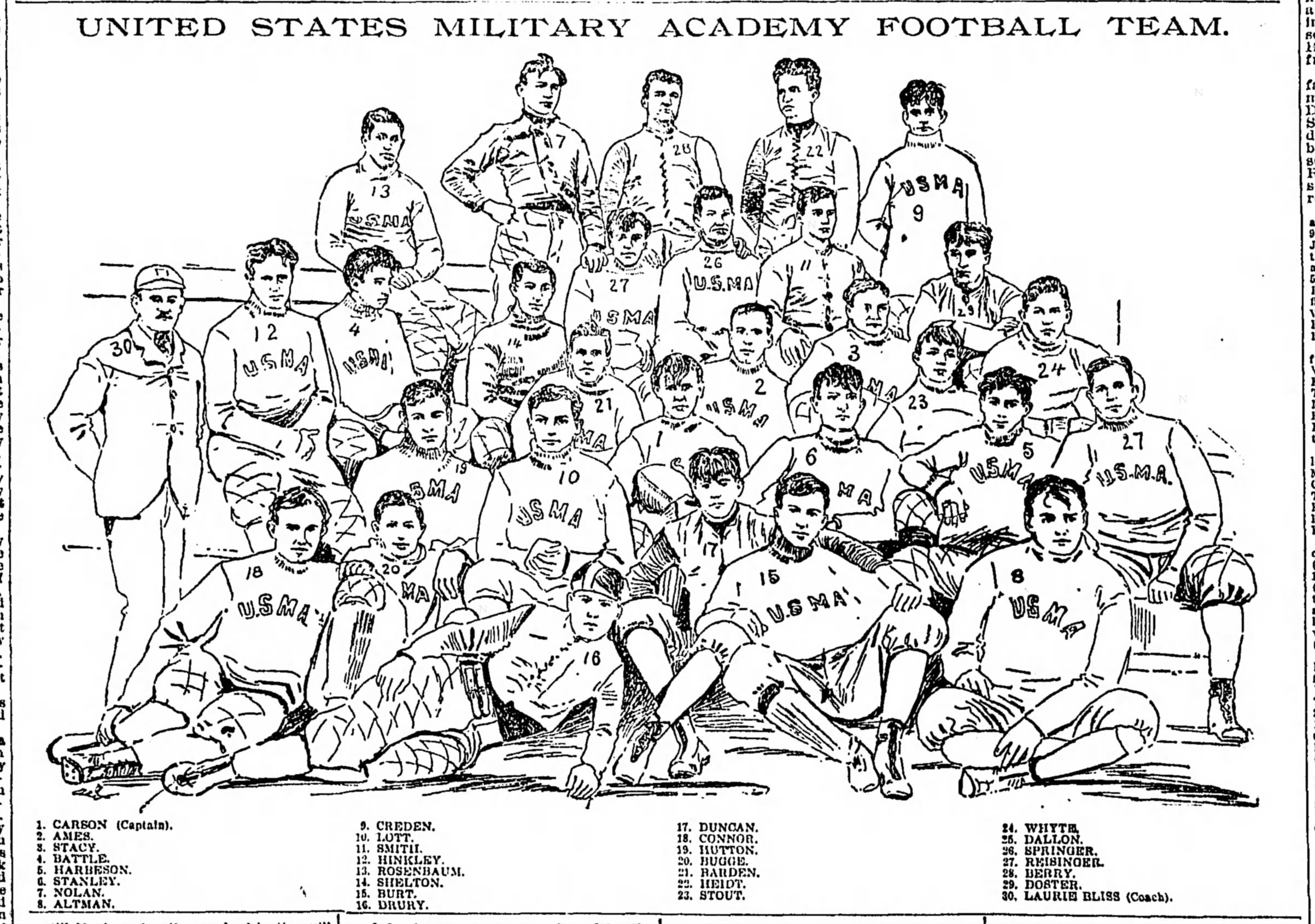
Back then, some young men pursued service academy appointments after spending a year or two at another college, and Drury was one of them. A native of Athol, Massachusetts, he attended UMass for two years, playing on the freshmen class football team in 1891 and the 1892 varsity team as a sophomore left end.
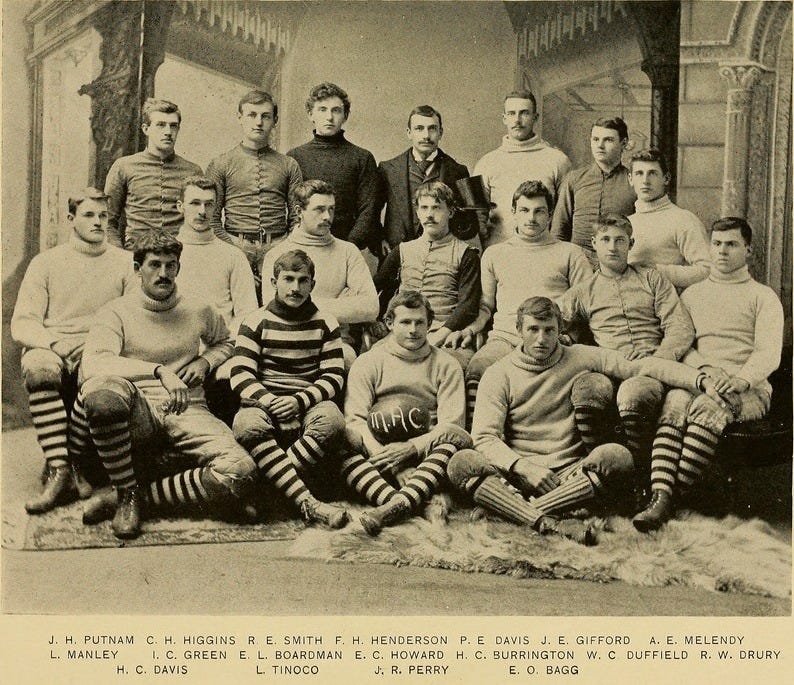
After his appointment to West Point, Drury joined the football team, starting at left end early in the 1893 season, and was on the 28-man travel squad to Annapolis, where he may have played against Joseph Reeves, of dome-like headgear fame. He started at right end in 1894, before being dismissed from West Point in the spring of 1895 for academic reasons.
Since we are entering a weekend honoring those who gave their lives while serving this country, I’ll point out that Drury lived a good, long life, but he put his life on the line. After being dismissed from West Point, Drury taught school and clerked in his hometown, but his desire to be a soldier remained, leading him to enlist as a private in 1901. Promoted to corporal in 1902, he earned his commission in 1908. After working under John Pershing in 1914, he served with the 2nd Division in France during WWI. During fighting at Chateau-Thierry in July 1918, he directed others and personally rescued wounded soldiers while being shelled. Drury was awarded a Silver Star for that action, and he also earned two Purple Hearts during the war. Drury retired from the Army in 1922 and returned to his hometown in Massachusetts.
To my knowledge, Drury’s contribution to football’s early use of protective headgear has gone unrecognized previously, though he wore a head harness the year before Barclay. Since the strap version of head harnesses was the primary form of noggin protection before full head covering versions arrived in the late 1890s, I’m putting my money on Drury for the time being.
Thanks to John Gennantonio for sharing the West Point images with all of us.
Regular readers support Football Archaeology. If you enjoy my work, consider a paid subscription, buy me a coffee, or purchase a book.


Great research and discovery. The factual truth is sometimes like an onion, and this question of football's first head protection is getting peeled again!
I blew up, sepia washed and framed the action photo of the 1893 Princeton-Yale game ('The Original Tandem-Tackle Play') found on page 397 of Parke Davis' Football. .. (1911). In it, a standing player, third from the left, appears to be wearing a leathery head covering. For me, it's hard to tell which side he's on. Who could he be? ..