

More than one football coach has had his teams play conservatively. They avoid taking risks by bending but not breaking, punting early and often, and waiting for the other guy to make a mistake. At times, that approach became so widespread that the rulemakers had to change the game’s laws to foster risk-taking. Conservative play became sufficiently problematic that the rulemakers issued two insurance policies in 1927, not by eliminating mistakes, but by limiting their impact—one related to teams fumbling punts and the other to laterals.
American football had allowed the fair catch since the game began, but wind, rain, and error meant there was always the potential for fumbles when fielding punts. Despite the risk associated with fielding punts, the rules had long allowed the “onside kick or punt,” which allowed the punting team to recover and advance the ball after it hit the ground. That rule encouraged the return team to field punts, even taking risks when running up on short punts.
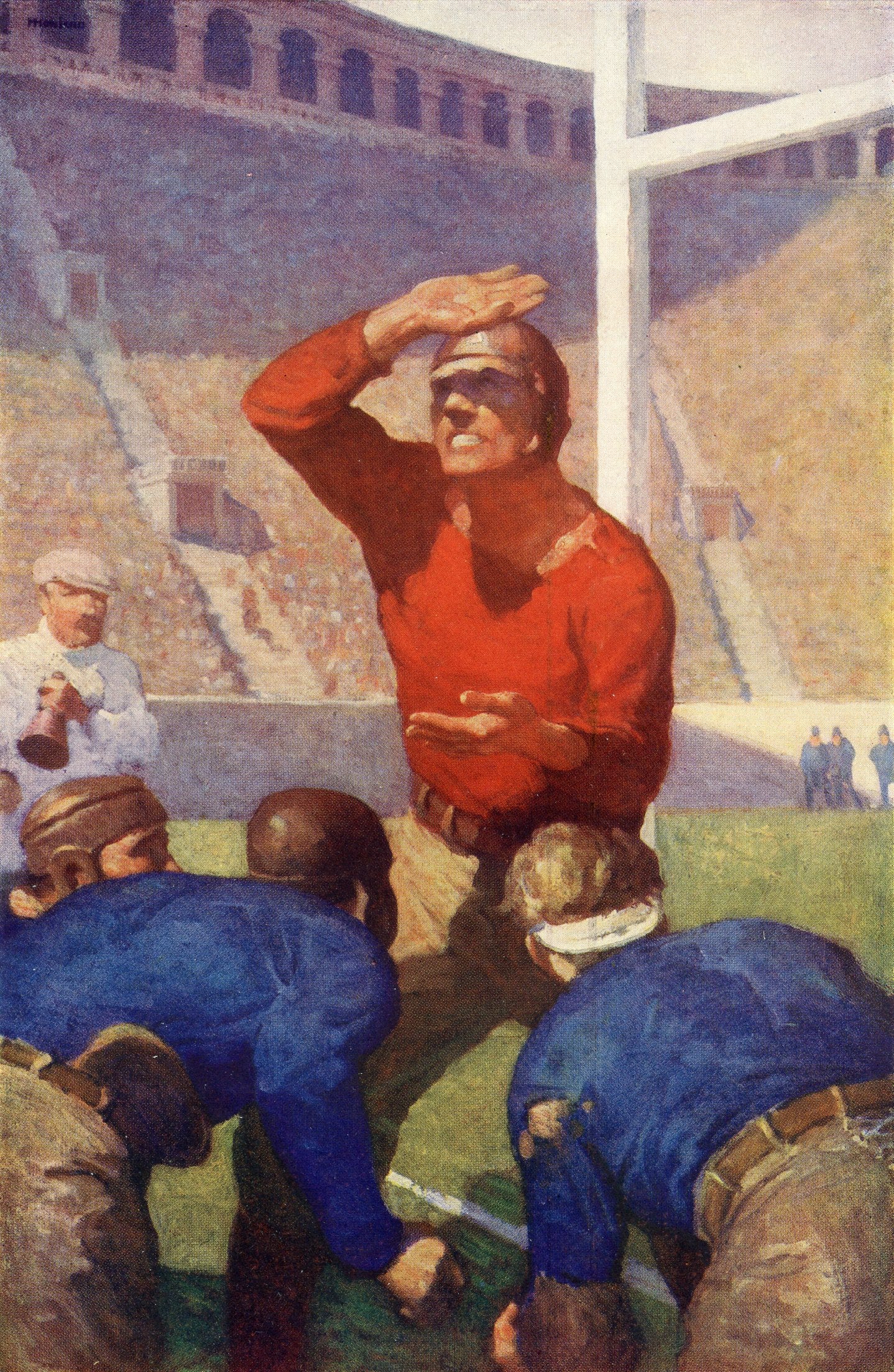
That logic changed in 1923, when the rulemakers eliminated the “onside punt,” so the punting team could no longer recover it. Instead, the ball could hit the ground, rolling and rolling until it stopped and was declared dead. The rule change allowed more conservative coaches to instruct their punt returners to avoid fielding risky punts. Twas better to let the ball roll and lose some field position rather than fumble and lose possession downfield. Even worse, the punt team could advance a fumbled punt, allowing for what some later called a scoop-and-score.
Punting, which was once among the most thrilling aspects of football, soon became among its most boring. Most punts ended in either a fair catch or a dead ball, which made for boring football.
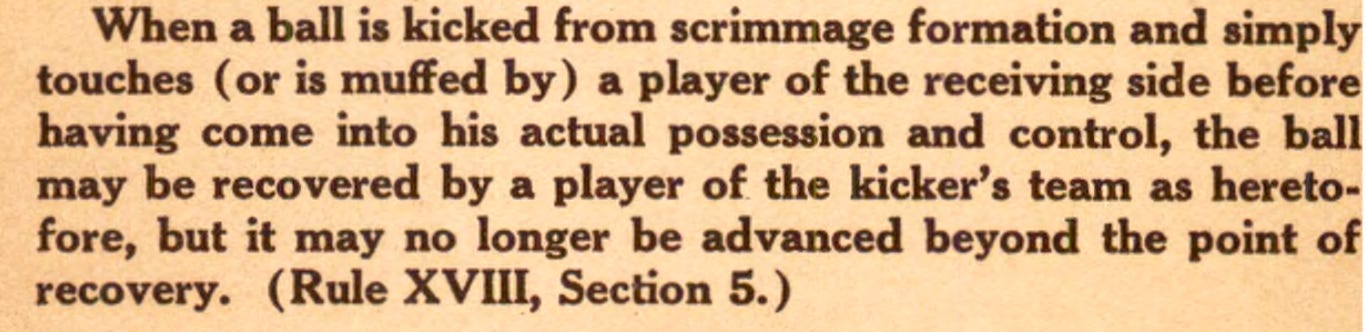
That changed in 1927, when abject boredom led the rulemakers to try injecting life into the punting game. Now, punt returners who touched the ball without possessing it did not fumble; they only muffed it. A muff meant the defense could recover the ball but not advance it.
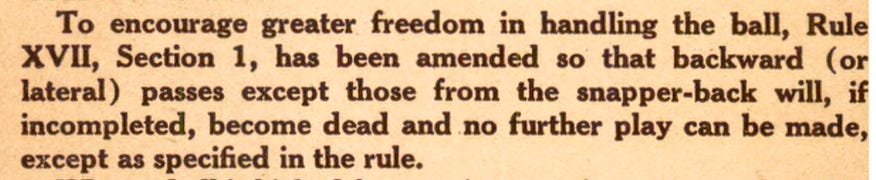
Taking that logic a step further, the Rules Committee applied it to laterals. Whether on plays behind the line of scrimmage or downfield passes followed by a lateral (the hook and lateral), they eliminated the opportunity for defenses to advance recovered fumbles.
Perhaps mirroring the NFL, the NCAA changed its rules in 1989 to allow defenses to advance fumbles, but not fumbled laterals, that occurred behind the neutral zone. All fumbles, including laterals, were subject to advance by the defense in 1998.
Muffed punts still cannot be advanced by the kicking team.
If you enjoy Football Archaeology and are not a paid subscriber, consider buying me a cup of coffee here and there. You can also buy a paid subscription or purchase one of my books.


Seems like the "muff" rule is one of the most sensible of rules. If one thinks about the punt return team, when the ball is in the air and the return team is setting up, the returner should have all of his ten teammates in front of him--if you are behind the returner, you're not going to be able to block anyone. With all of his teammates in front of him, any muff that is recovered by the kicking team almost has to be returned for a touchdown, since there isn't anyone from the return team between him and the goal line.
Though it may be slightly more boring than in the early days, the scrimmage kick punt is still one of the wildest plays in football. It has more of of chance of something crazy to occur that most plays.