
Today's Tidbit... Shoes of Any Color, As Long As They’re Black

While I monitor small college athletics more than the average bear, I had never heard of St. Martin’s University until two weeks ago. It’s a small Catholic college in Washington State that began as a prep school and grew into a college before changing its name from St. Martin’s College (S.M.C.) to St. Martin’s University.
I stumbled upon the school through an RPPC found on eBay labeled “S.M.C Football Team.” The seller identified the pictured team as the 1908-1909 St. Martin’s College team from Lacey, Washington, as confirmed by the postmark and divided-back style of the postcard. Information about the football team is limited. Newspaper articles confirm they played football during the time, with the two available game scores showing victories over high school teams.
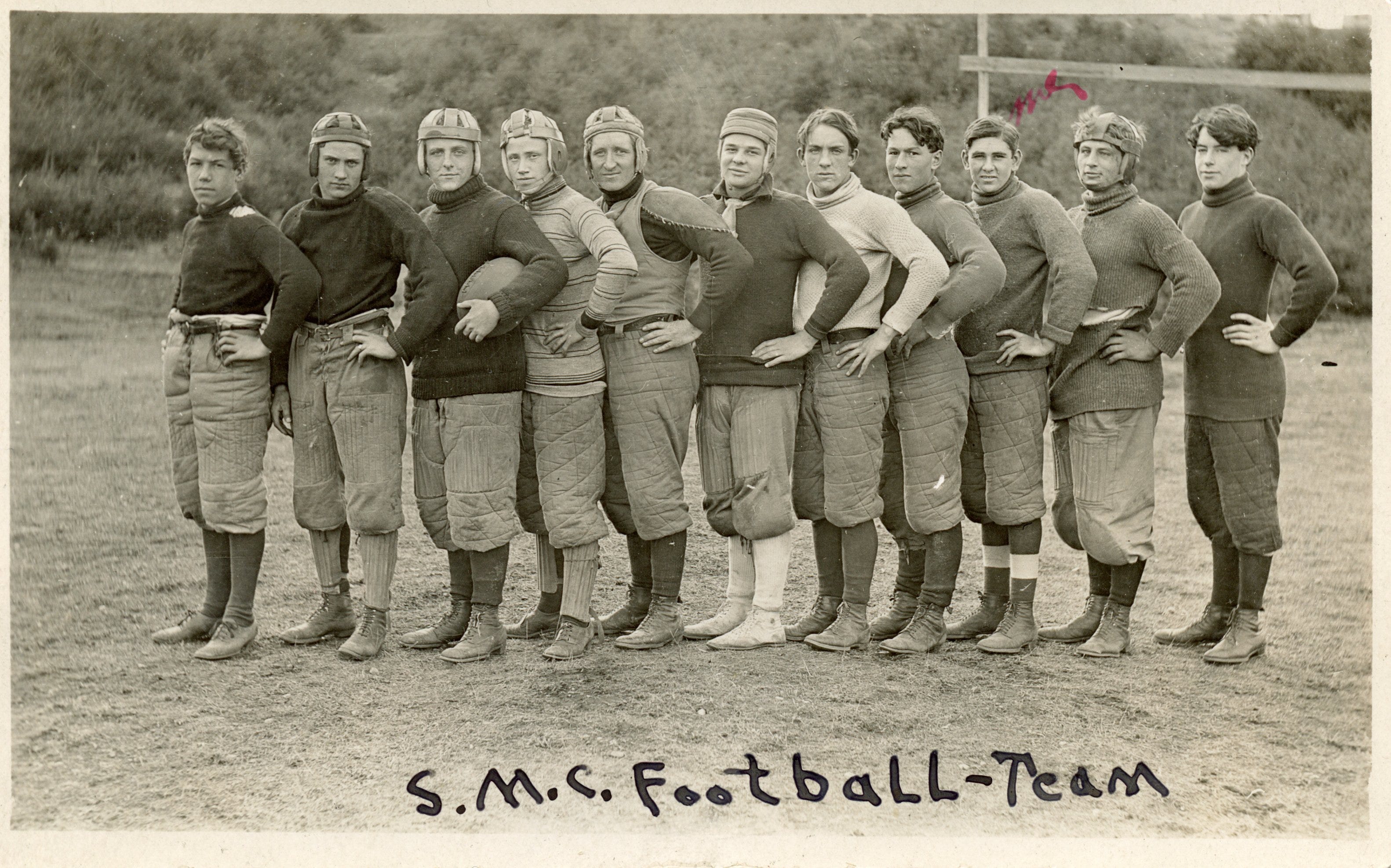
It is a beautifully formatted period image. Teams from colleges big and small had fewer team members than today. They did not need more, given the era’s limited substitution rules, and with smaller rosters, the team pictures commonly showed the starters, and perhaps a few more, lined up one after another, as described in a previous story.

While the image had inherent appeal, the most interesting element about the RPPC is the guy in the middle, wearing white shoes and socks. (Scroll up if you did not notice the white shoes the first time.) The conventional wisdom and my previous research indicated that no one wore white football shoes back then -other than the guy in the picture- but his appearance led me to take a fresh look at the history of white shoes.
I wrote about white shoes in How Football Became Football, noting that the owner of the 1946 Boston Yanks, Ted Collins, said he would outfit his team in white shoes so fans could more easily spot their running backs, though images from that season’s games do not show them shod in white. I then mentioned Army wearing white shoes as a psychological ploy for the 1962 Army-Navy game, before turning to Joe Namath, who wore spatted, and later, white shoes, at Alabama.
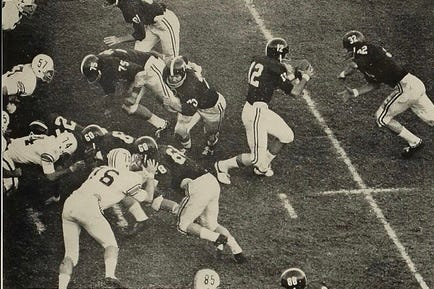
His wearing of white shoes as a New York Jets rookie in 1965 opened the floodgates, as other players began painting their shoes white before sporting goods companies made them an option, and shoes in all colors of the rainbow followed.
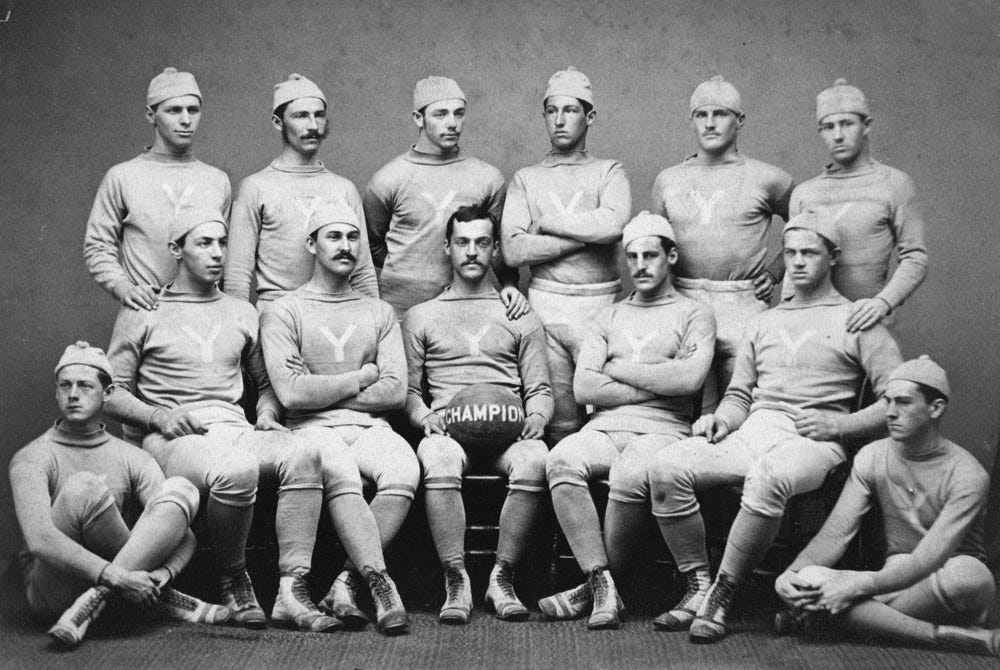
I should note that early American rugby/football players wore shoes made in England of kangaroo leather, often tanned in a lighter color, but they soon switched to black leather shoes, always high-tops. For example, Yale team pictures show everyone wearing lighter-colored shoes in 1876, while everyone had switched to black leather by 1883.

Upon returning to the white-shoe research mine, I found that the 1956 New York Giants wore white shoes during their championship game victory over the Chicago Bears. However, those white shoes were a one-time deal driven by function rather than fashion. They were basketball shoes that provided better grip than football spikes on Yankee Stadium’s icy turf.
So, was there anyone who consistently wore white shoes between our friend at St. Martin’s College and Joe Namath’s time? Indeed, there was. On the opposite side of the country from St. Martin’s College is the University of Rhode Island, where Frank Keaney coached basketball from 1920 to 1948. He won 76 percent of his games with his Run and Shoot offense, which introduced the fast-break, tempo-oriented offense to basketball and earned him spots in basketball Halls of Fame.
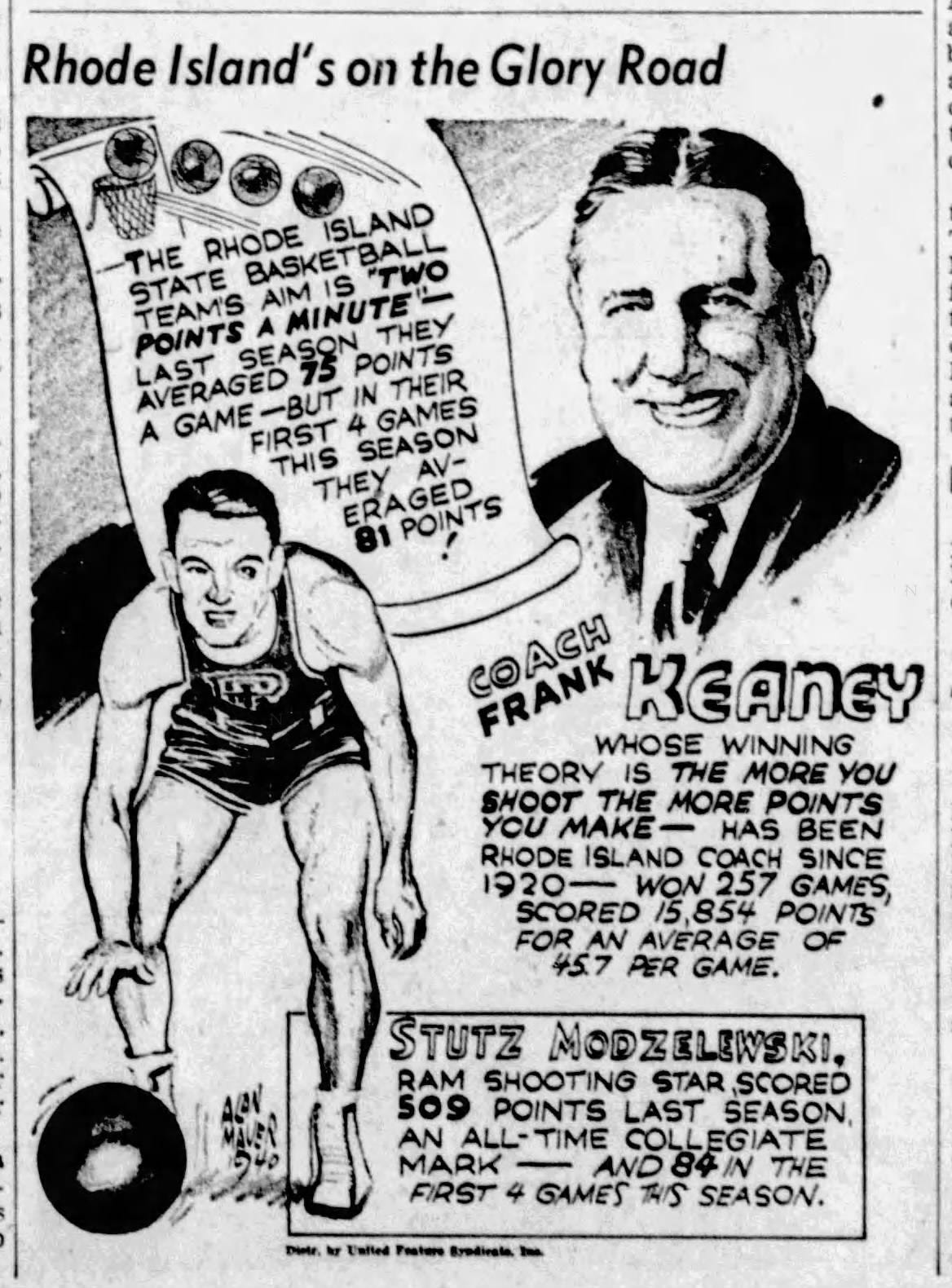
Keaney was also URI’s football coach from 1920 to 1940, and from 1935 to 1938, his teams wore white shoes beneath their baby blue uniforms, a look that seems odd when paired with maskless leather helmets, but that’s only because other teams did not adopt the look.
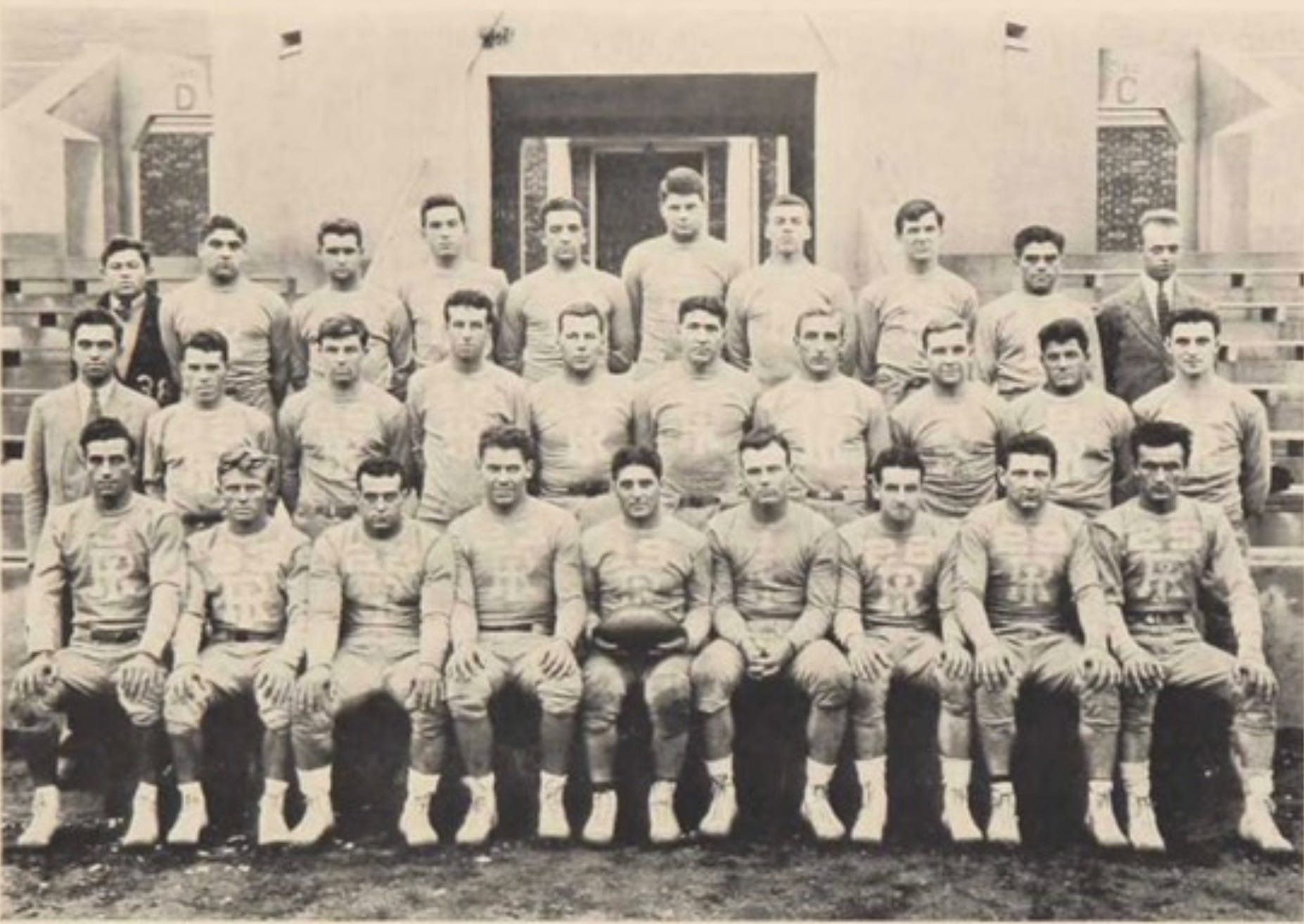
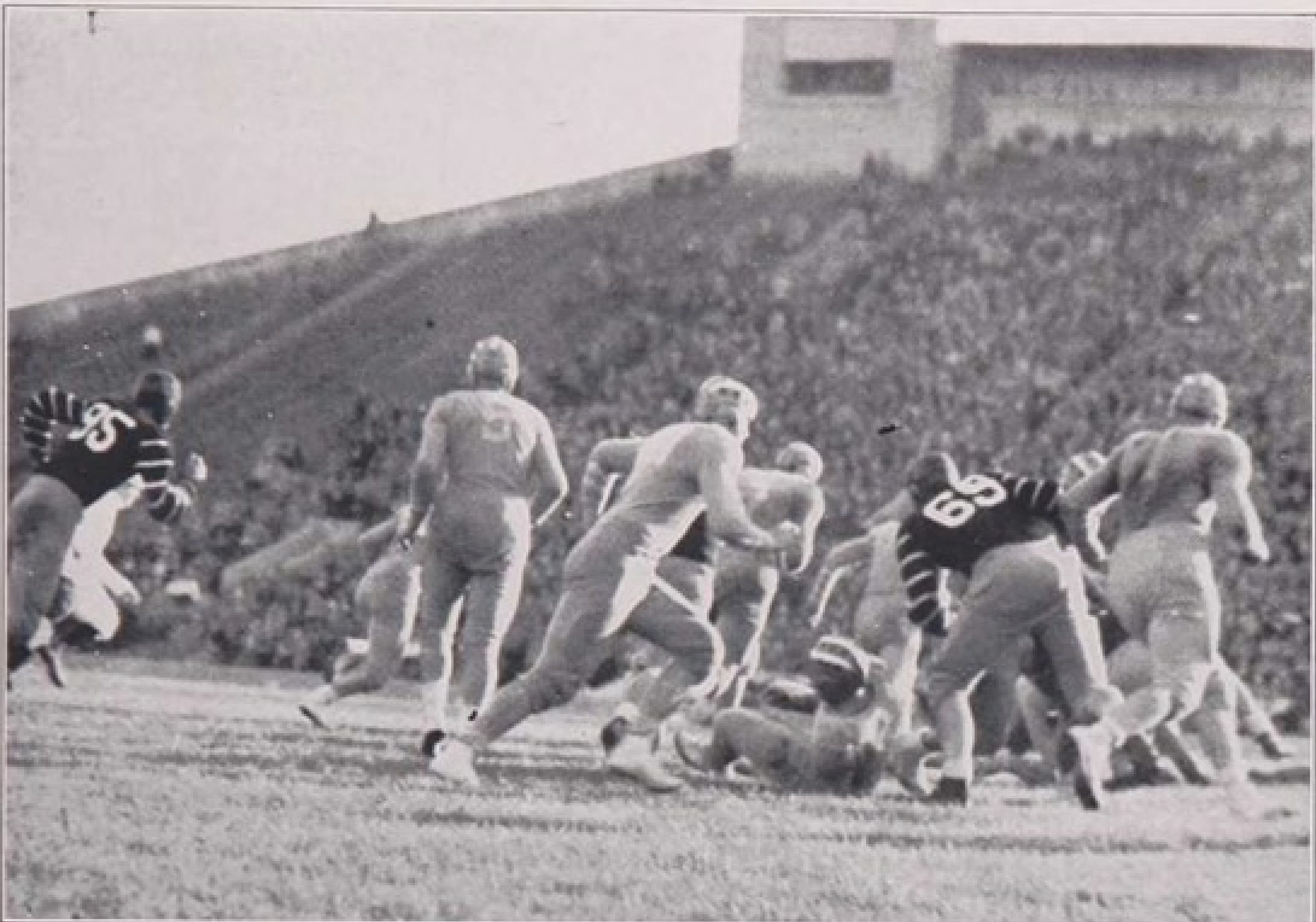
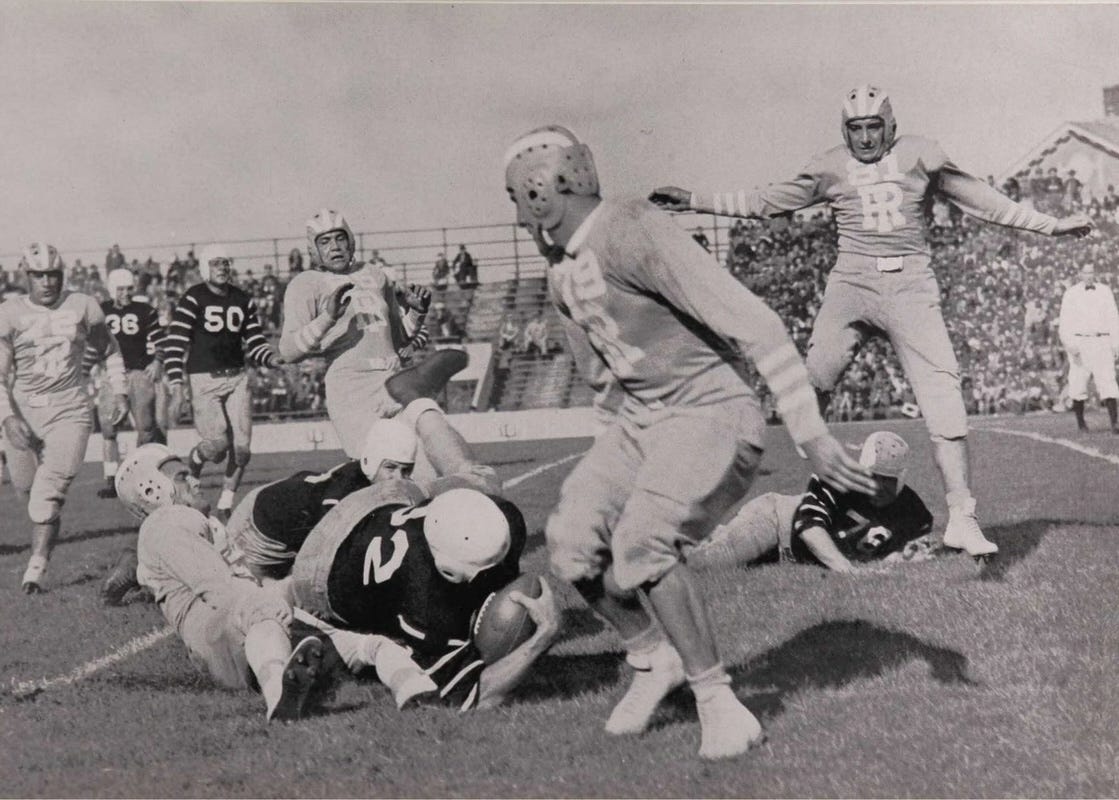
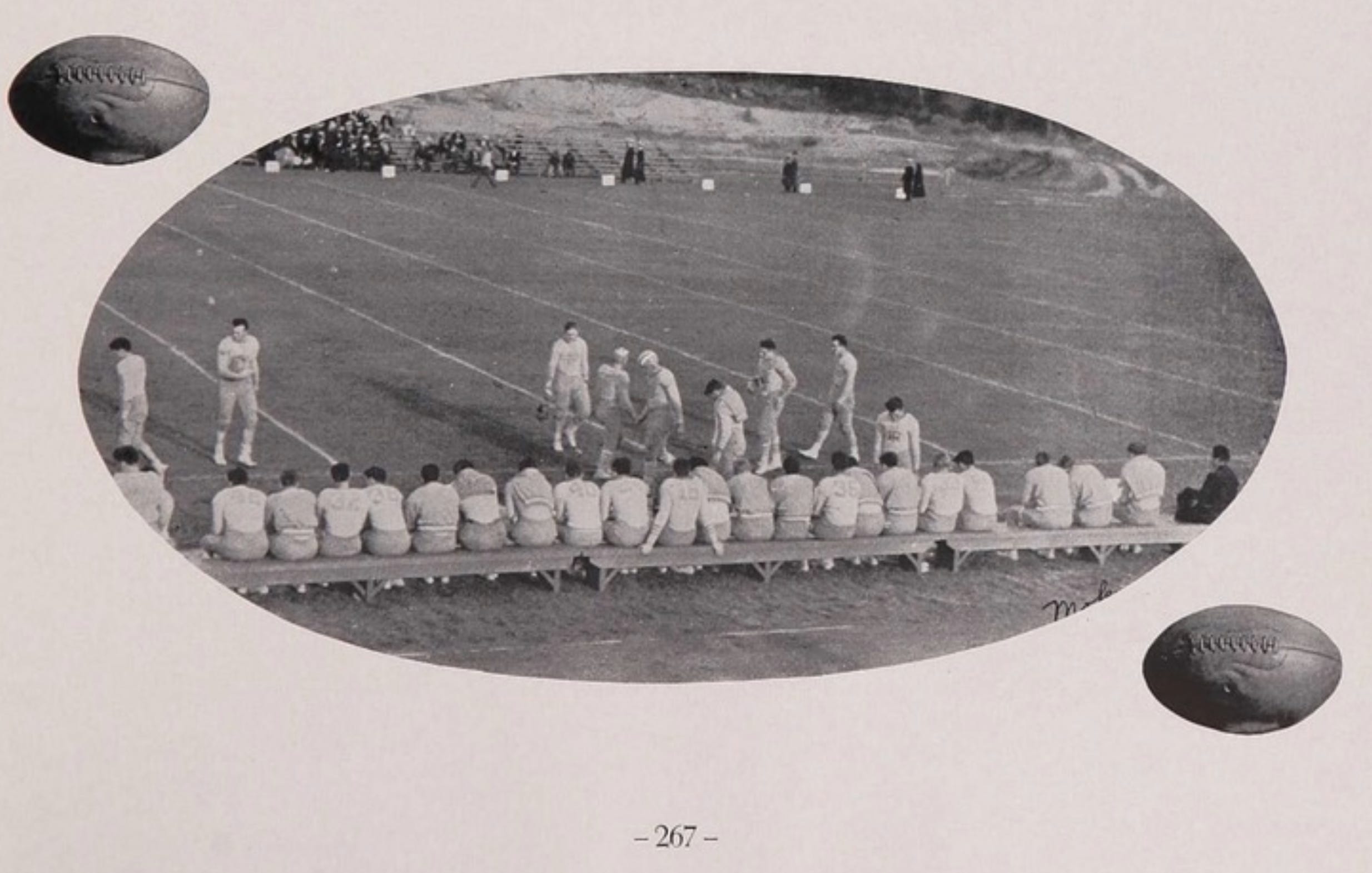
Unfortunately, I did not find an explanation for Keaney’s fashion choice or its discontinuation. Nevertheless, other than at least one guy in 1908 or 1909, a basketball Hall of Famer appears to have introduced the practice of football teams wearing white shoes, and while his shoe color innovation did not catch on for nearly 30 years, his impact on basketball was far more fundamental.
Regular readers support Football Archaeology. If you enjoy my work, consider a paid subscription, buy me a coffee, or purchase a book.


I am sure Billy White. shoes Johnson would approve of this story and it's great research.
I bought a pair of Adidas 'Italia' running shoes in '66. White kangaroo leather 'uppers' with green stripes, our high-school colors. One particularly stylish teammate originated them as every-day footwear, alternating with saddle shoes ..