

Since football began, uniforms have become dirty and required laundering. Depending on the team and time, some assigned cleaning responsibilities to the players, while others left them to the school or franchise.
The building blocks of early football uniforms were wool and cotton. Jerseys were wool, and pants were moleskin and canvas, both cotton fabrics. Wool and cotton had straightforward laundering processes -water, some soap, and lots of agitation- though they did not always succeed in removing all stains.
Laundering became more challenging when artificial fabrics arrived in the 1930s and more problematic when pants or jerseys combined different fabrics requiring distinct laundering treatments, including the increased use of dry cleaning. [Sidenote: The first U.S. patent awarded to a Black American went to Thomas Jennings in 1821 for a process he called “dry scouring.”]
As the care and cleaning of uniforms became more complex, uniform manufacturers sought to communicate the best laundering practices to those performing the function. This strategy helped teams and their cleaners, while reducing the likelihood that teams would blame the manufacturers for uniforms that did not wear well.
That background serves as an introduction to, perhaps, the geekiest football-related brochure I own, Rawlings’ c. 1956 The Care and Cleaning of Athletic Uniforms. After publishing similar documents in 1952 and 1954, with print volumes approaching 100K, the third edition is a stunningly geeky period piece that targeted college and high school equipment managers, as well as the local launderers and dry cleaners to whom they outsourced uniform care.
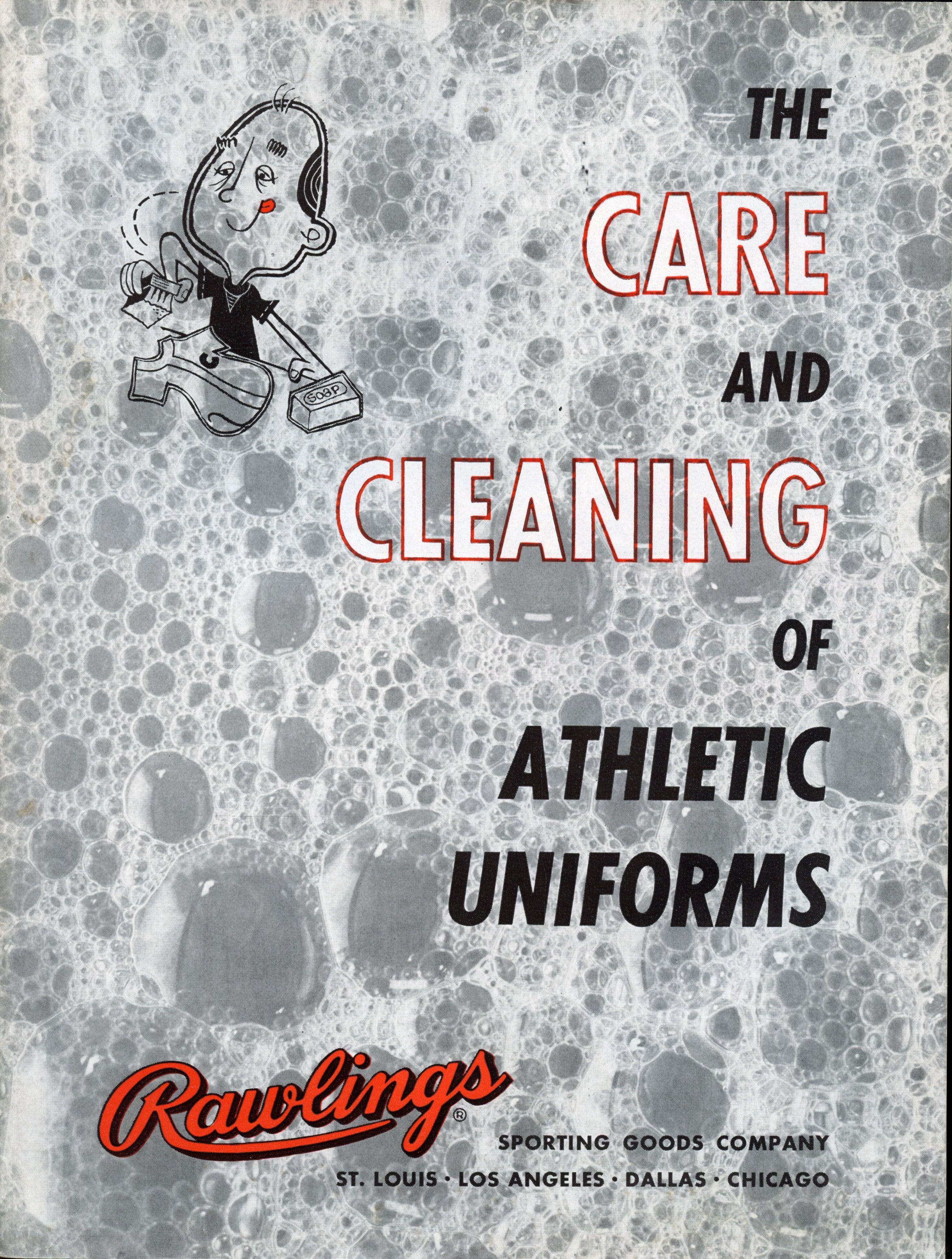
The brochure includes instructions for football jerseys, football pants, and basketball, baseball, and softball uniforms, but we’ll focus on the first two since they cover the world’s most important sport.
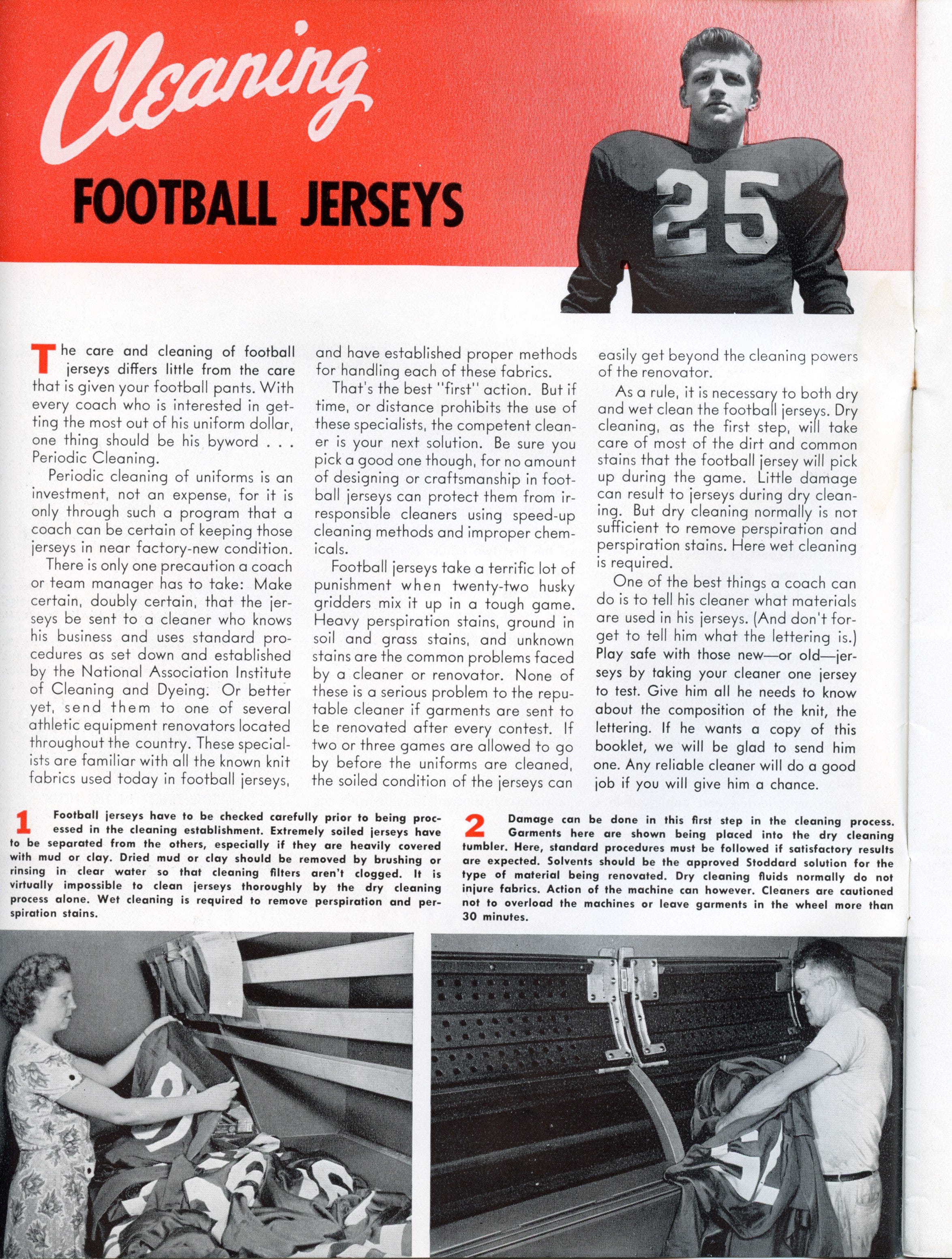
Despite having separate sections for jerseys and pants, the first sentence of the section on football jerseys states that there were few differences between cleaning jerseys and pants, so the recommendations for jerseys broadly apply to pants. Among the key points were to:
Use a reliable cleaning service that follows the “standard procedures as set down and established by the National Association Institute of Cleaning and Dyeing.”
Clean the uniforms at least once every two to three games.
Use dry and wet cleaning for football uniforms.
Inform your cleaner about your uniform fabrics so they can use the most appropriate methods.
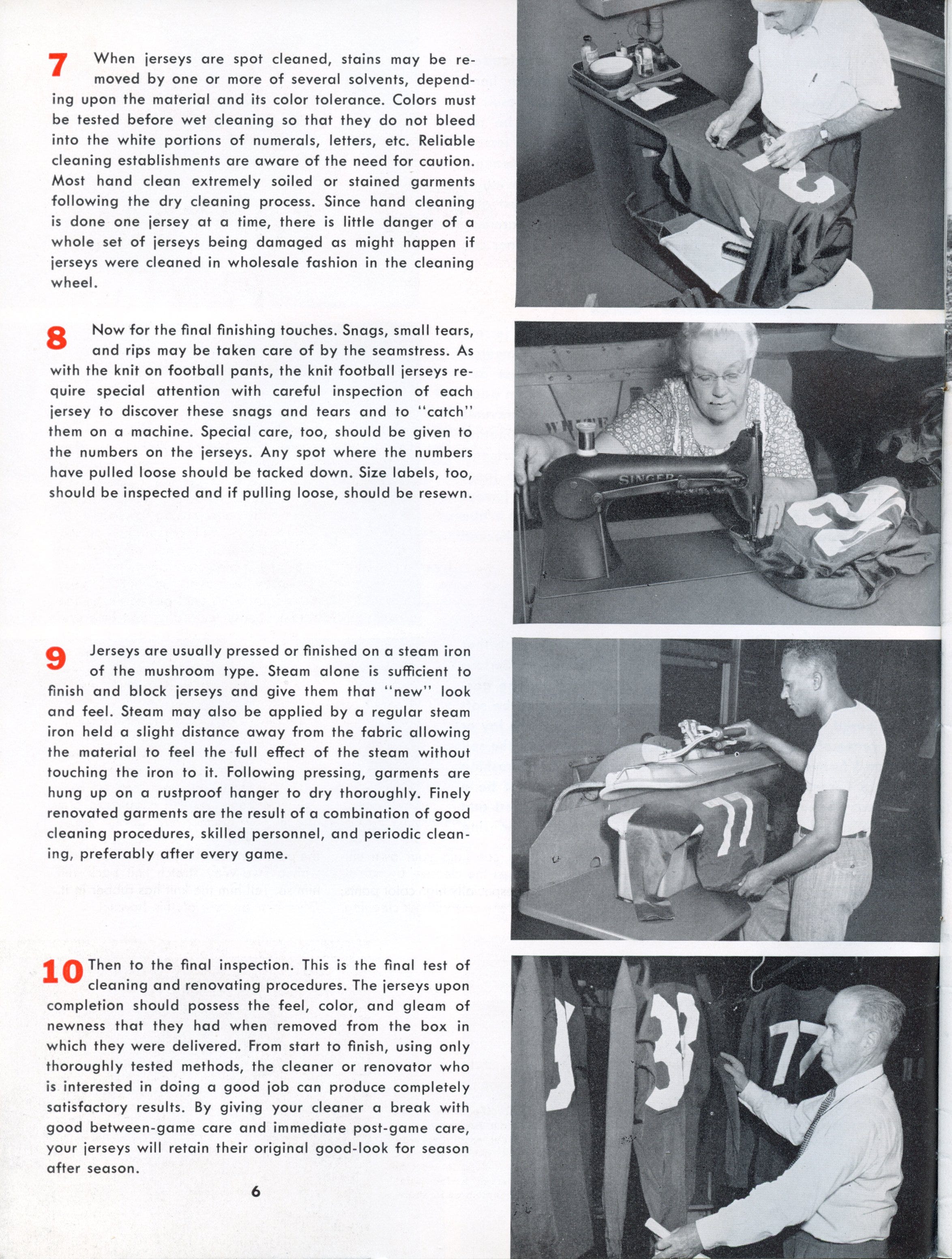
The brochure then presents a series of images that illustrate each step in the process and offer additional helpful hints.
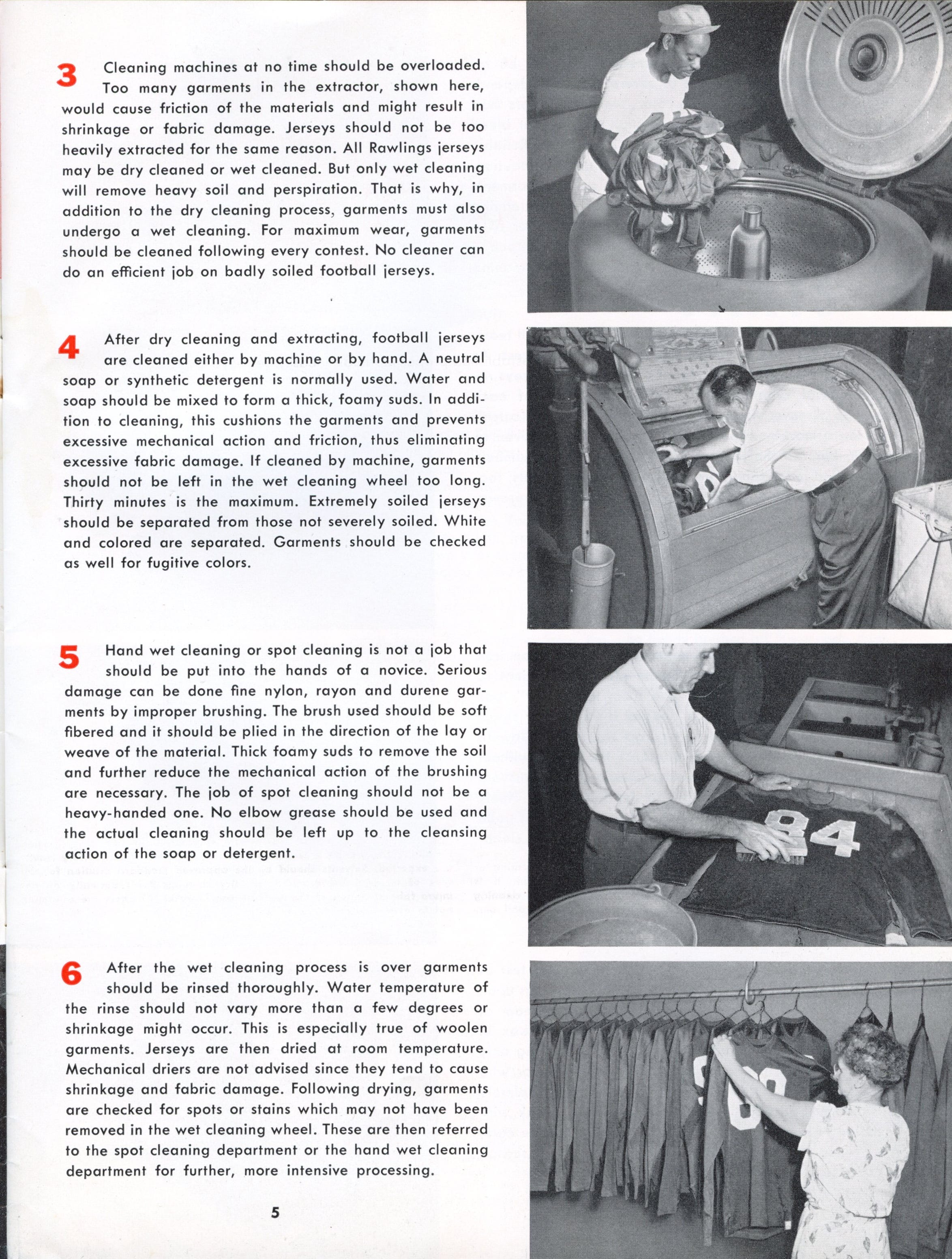
Among the helpful hints were to:
Remove excess dirty beforehand.
Don’t overload the machines.
Always brush in the direction of the lay and avoid using elbow grease on tough stains. Let the detergents do their job.
Avoid the use of mechanical dryers.
Have the seamstress make needed repairs.
Press jerseys using a mushroom steam iron.
Having told us upfront that laundering jerseys and pants follow essentially the same pattern, what differences does the brochure describe? The opening paragraph says it all:
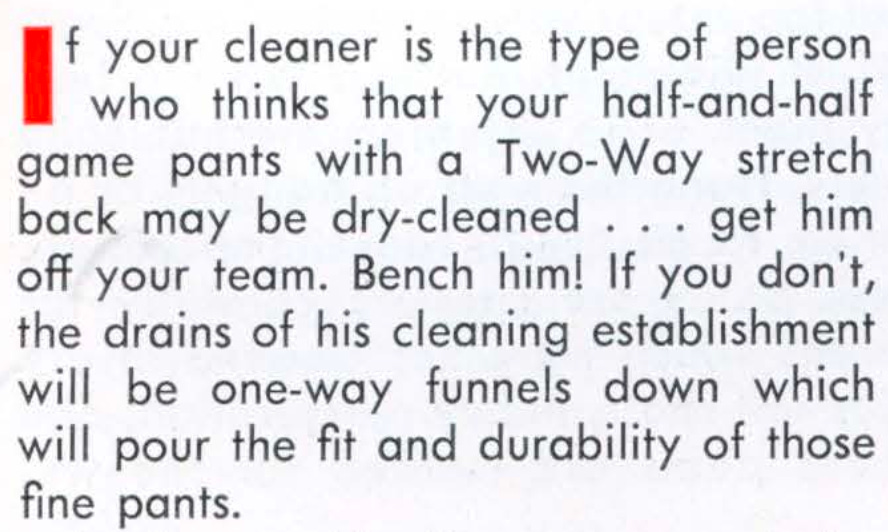
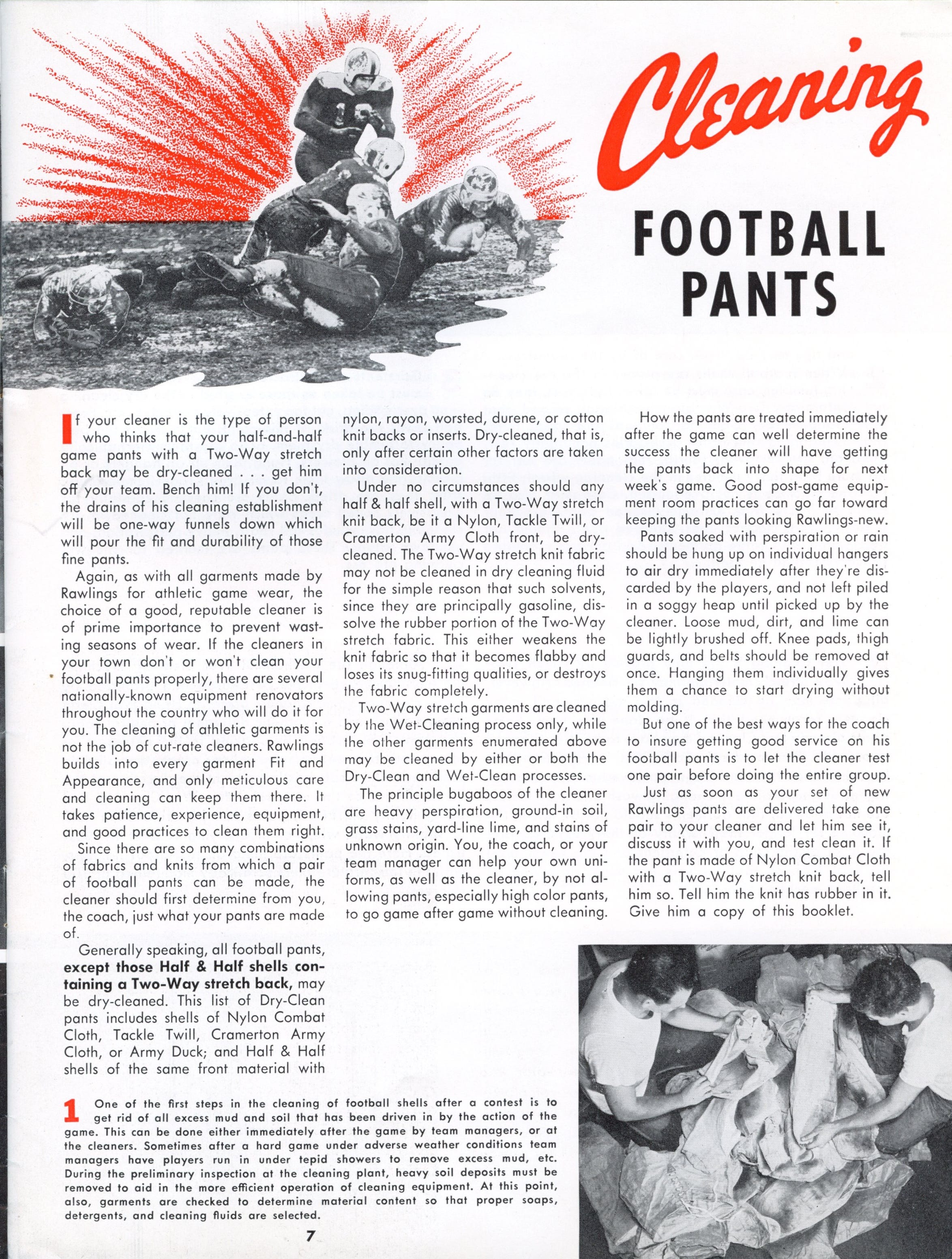
Although most pants of the era could be dry cleaned, those featuring certain fabrics required wet cleaning only. Dry-cleaning solvents, primarily gasoline, dissolved the rubber embedded in certain stretch fabrics.
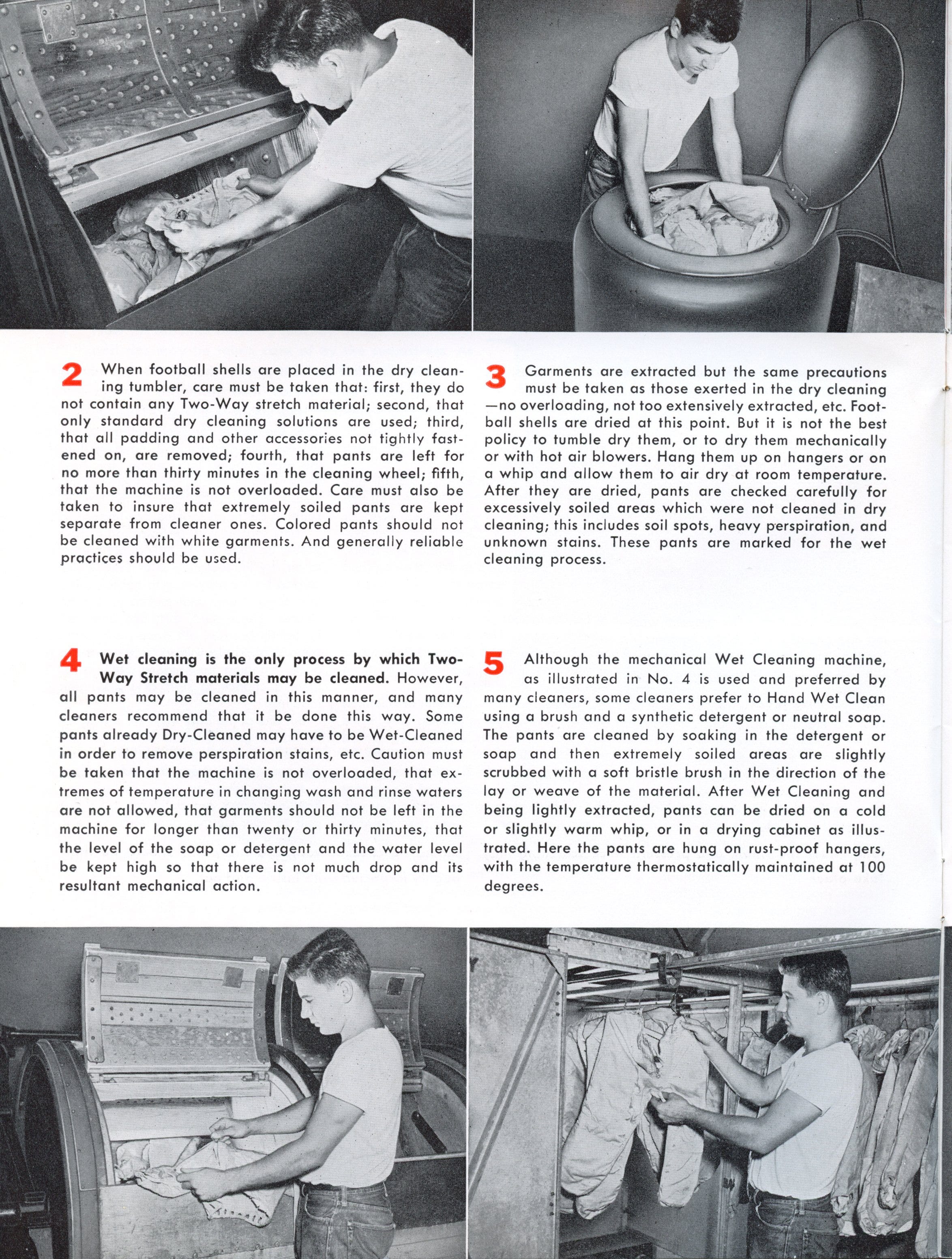
Other tips:
Pants that experience heavy perspiration or those worn in the rain should hang dry rather than be left in a pile post-game. Some teams encouraged players to pre-clean dirty uniforms in a tepid shower.
Remove belts and pads from the pants to allow for thorough drying. (The challenges of drying and laundering pants likely contributed to the disintegration of football pants.)

Rawlings offered a few other tips on storing uniforms, and laundering and repairing them while on the road. Key considerations for football teams with wool uniforms and baseball flannels were protection against moths and the need to store all uniforms in a cool, dry location.
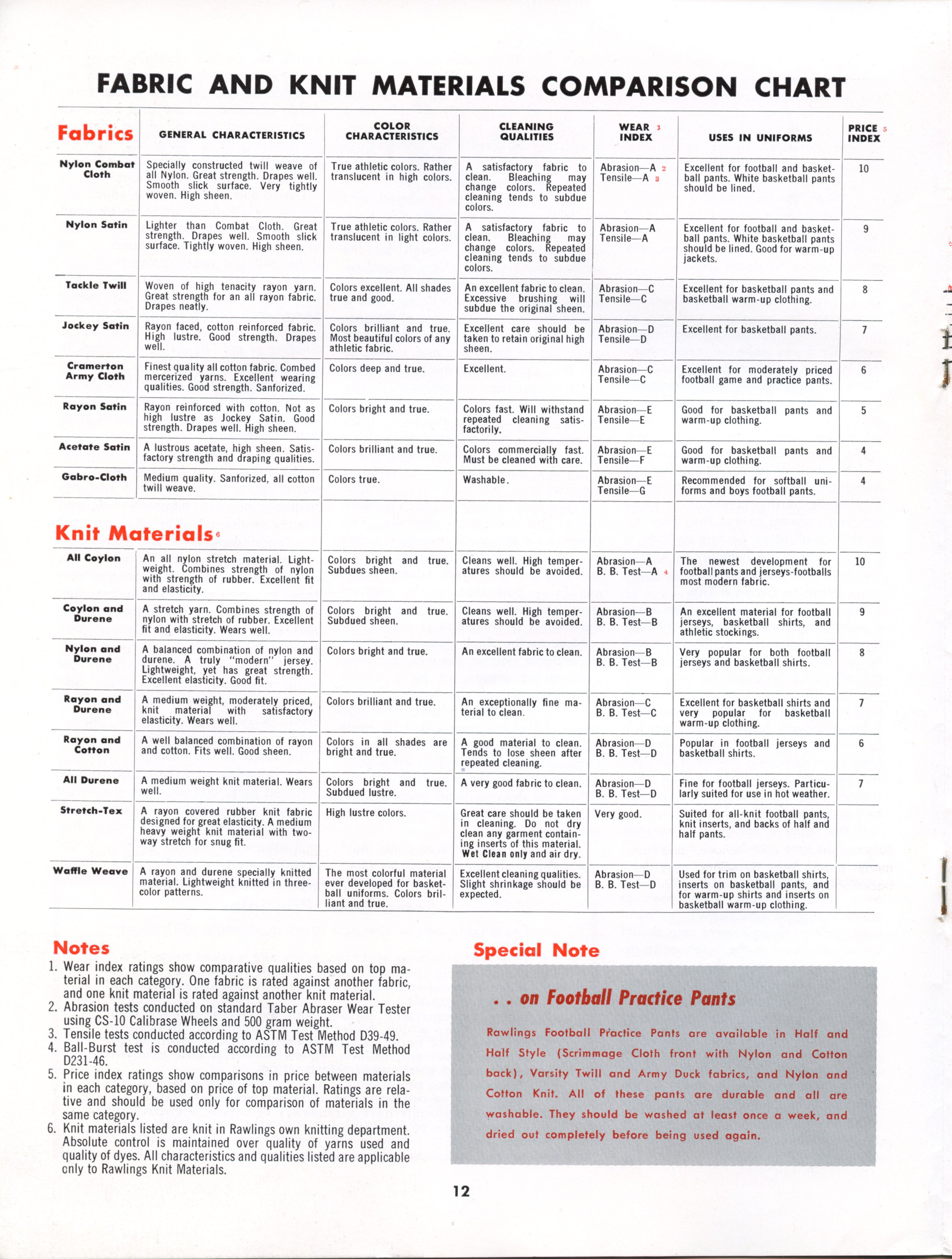
Finally, a handy dandy chart offers an overview of the fabrics used for mid-1950s athletic uniforms, their cleaning qualities, wear, and pricing.
Hopefully, those who had burning questions about the laundering of football uniforms in the mid-1950s had their questions answered above. And, for those who had never thought about the topic, perhaps you’ve learned a few things about a vital topic you should have learned about long ago.
For another story along these lines:

Football Archaeology is reader-supported. Subscribe now or support the site in other ways:

