
Today’s Tidbit... Billy Laval and the Crazy Quilt Formation

I’ve written in the past about Billy Laval, who was a head football coach at three South Carolina colleges and one in Virginia over 35 years, beginning in 1915. My focus in the past was on the crazy emblems he put on the front of his team’s jerseys, but he was also an offensive innovator, developing the Crazy Quilt formation and running it from 1925 through 1929.

Laval attended Furman, but did not play football because he was small and the school did not have a football team during his time. He played baseball instead, managing and playing in minor league baseball through the 1919 season. During those days, he supposedly discovered Shoeless Joe Jackson.
As Furman’s baseball coach, he assisted with football before taking over partway through the 1915 season. He studied the game and was open to out-of-the-box thinking, though his greatest strength was his effectiveness as a coach. His Furman boys regularly beat more highly regarded teams by focusing on execution and a variety of trick plays, such as reverses.
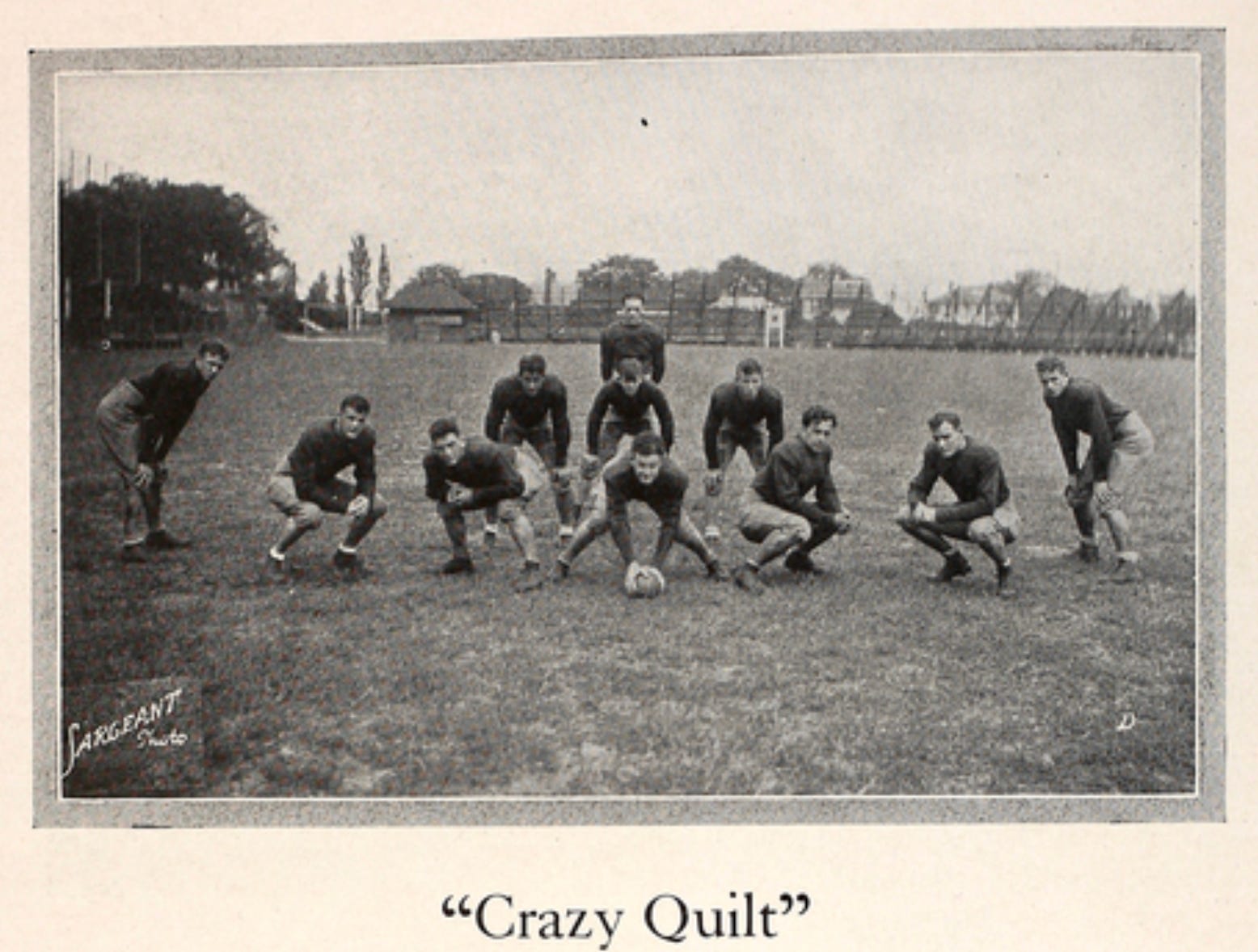
For the 1925 season, Laval created the Crazy Quilt formation. His team broke the huddle, lined up in the Crazy Quilt, executed a final pre-snap shift, and snapped the ball as soon after completing the shift as possible. Their unusual alignments apparently allowed selected players to quickly shift right or left, creating numbers advantages on one side of the ball or the other.
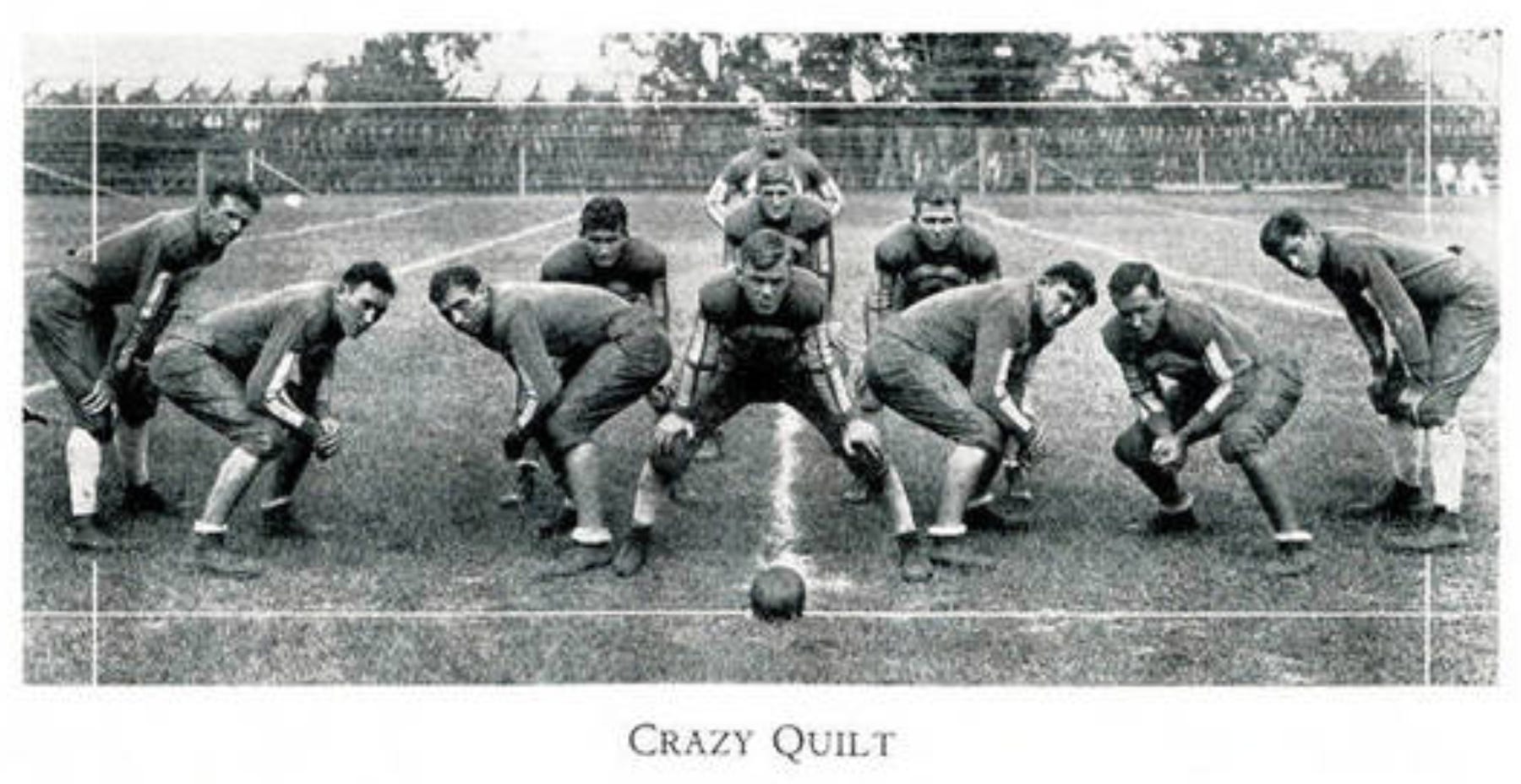
He wasn’t alone in snapping the ball soon after the shift. Zuppke created the modern huddle, in part, to snap the ball soon after his Illinois team got to the line. Rockne had the Irish snap the ball soon after completing the Notre Dame Shift, so Laval was not alone in using the tactic with his oddball alignment.
Few period descriptions provide details about the Crazy Quilt and why it worked. However, opponents hyped the formation before every game they played since scout teams often had success against their varsity teams when preparing for Furman, and his teams did well, going 7-3, 8-1-1, and 10-1 in the three years he ran it at Furman. They also beat Clemson and South Carolina each year, leading South Carolina to hire him for the 1928 season.
Parts of the football community complained about the shifts, but with Rockne’s Notre Dame team stealing the headlines, the Rules Committee was reluctant to make a substantive change. Instead, they increased the penalty for offside by the offense from 5 to 15 yards, while keeping offside by the defense at 5 yards.
Laval used the Crazy Quilt with the Gamecocks as well, and made noise in the second game of the season and the first intersectional game in school history by traveling to Chicago and beating the Maroons 6-0. Nevertheless, Laval never recaptured the success he had with the Crazy Quilt at Furman.
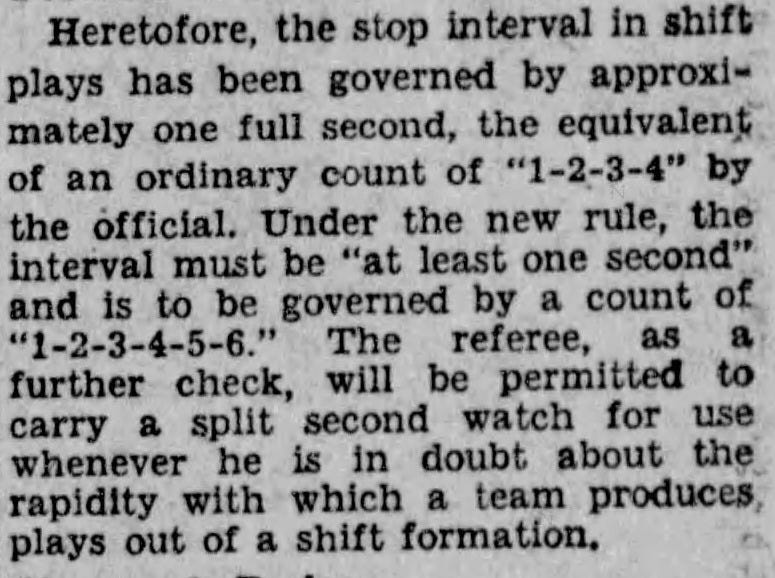
The Gamecocks went 6-2-2 that year and 6-5 the next as opposing coaches increasingly complained about Furman, Notre Dame, and others employing late shifts. Florida’s Charlie Bachman was especially incensed with South Carolina’s approach, demanding that the 1930 Rules Committee implement a change, and they did. Rather than teams needing to wait “approximately one second” after a shift, they now had to pause “at least one second,” with referees instructed to increase their silent count from 4 to 6.
With the rule change approved, Laval announced that his teams would no longer run the Crazy Quilt, though they would continue to use trick plays. Throughout his time at South Carolina, Laval’s teams struggled to beat the top teams in the SIAA, and South Carolina let him go following the 1934 season after he refused to take a pay cut during the athletic department’s budget crisis.
Laval moved to Emory and Henry for two years, then took over at Newberry, where he coached for another dozen years.
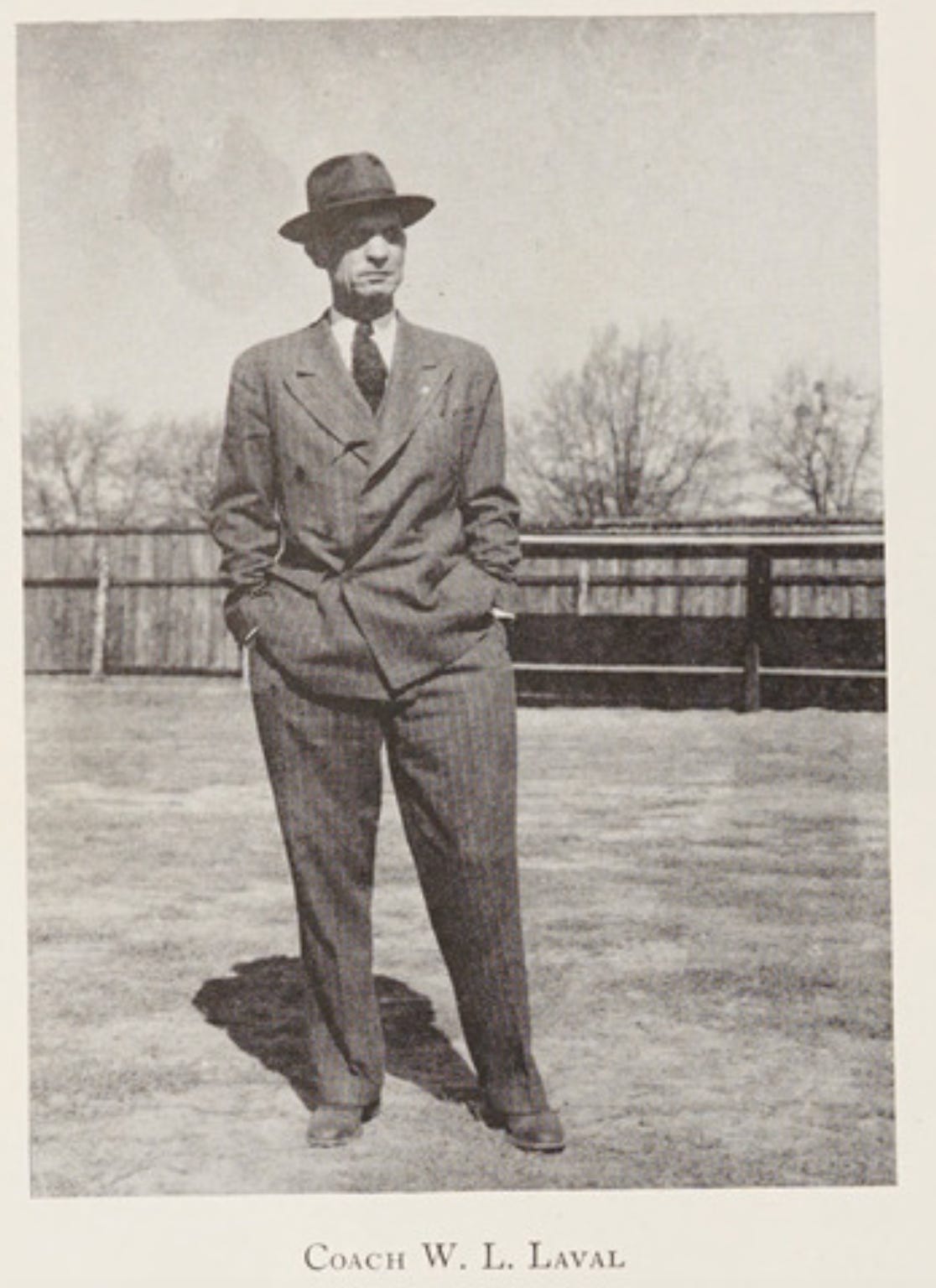
Laval mostly had middling teams at those schools before calling it quits after the 1950 baseball season.
So, Billy Laval had his teams wear crazy emblems on their jerseys and an unusually tricky formation as distractions, allowing his often lesser teams to compete with their opponents, even if they racked up fewer wins than desired.
Thanks to Christopher Haack for the heads up on the Crazy Quilt.
Regular readers support Football Archaeology. If you enjoy my work, consider a paid subscription, buy me a coffee, or purchase a book.


When doing my own research involving NC State games in the past, I found the attached blurb describing the Crazy Quilt helpful; I think there's also some writing in a book I have, but I'm not finding it at the moment.
https://www.thestate.com/sports/spt-columns-blogs/ron-morris/article14358131.html
Laval immediately introduced the "crazy quilt" offense to Furman football. In this set, when the center stood over the ball, the guards were a yard deeper and faced out, with the tackles and ends facing the center at an angle. Two runners stood next to the quarterback in the backfield, and another back stationed himself behind the quarterback.
There were no rules to prevent motion and shifting prior to the center snap, and Laval's club would send as many as five players in motion. Ends moved to the backfield and running backs shifted to the line. Once the ball was snapped, the defense would face mass confusion as the offense went through a series of fake handoffs and feigned carries. Laval loved reverses, double reverses and even triple reverses. Laterals and backward passes were as common as straight handoffs.