
Today’s Tidbit... Courtesies Extended to Visiting Teams

A nephew spent the last four years as a manager for a Division I baseball team. Because college baseball teams typically play multiple games against the same opponent over a weekend, the home team extends the courtesy of providing laundry and other services to their guests. That got me thinking about the courtesies football teams extended to their guests back in the day, particularly food, shelter, and access to the stadium for a practice session on the day before the game.
The idea that teams might offer food and shelter to visiting teams might seem odd. However, schools in smaller communities did not, and still do not necessarily have nearby hotels capable of housing traveling football parties. (I was involved with a Division I program in a small town in the 1980s, and some visiting teams slept on cots in the old gymnasium the night before the game. They also used the school’s training table facilities.)
I covered the hosting of opponents for meals, specifically, shared meals or purity banquets in the past, so that I won’t take that topic further here.

Instead, let’s examine the custom of allowing visiting teams to practice on the game field the day before the contest. That does not seem to have been a common practice, past or present, but it occurred at times, especially in the past, when transportation systems were less advanced.
In the old days, the absence of airplanes and buses meant teams primarily traveled by train, and the transportation system’s limitations were one reason teams mostly played teams from the same or neighboring states. It’s also the reason most games started at 2:30 in the afternoon. The 2:30 start time allowed teams and fans to travel to the game by train, play a two-hour game, and return home by train that evening.
Still, some teams traveling to or from remote locations could not depart on the morning of the game and arrive in time, and some coaches might have preferred to arrive the day before so their players could have a relaxing trip and be well-rested for the game. In fact, some wanted to arrive early enough on Friday to practice on the game field so the team could become familiar with the surroundings and punters could test the prevailing winds.
That all leads to the obvious question: who originated the practice of giving the visiting team access to the game field the day before the game? As with many football practices, the team or person credited with originating a custom was often not the true originator.
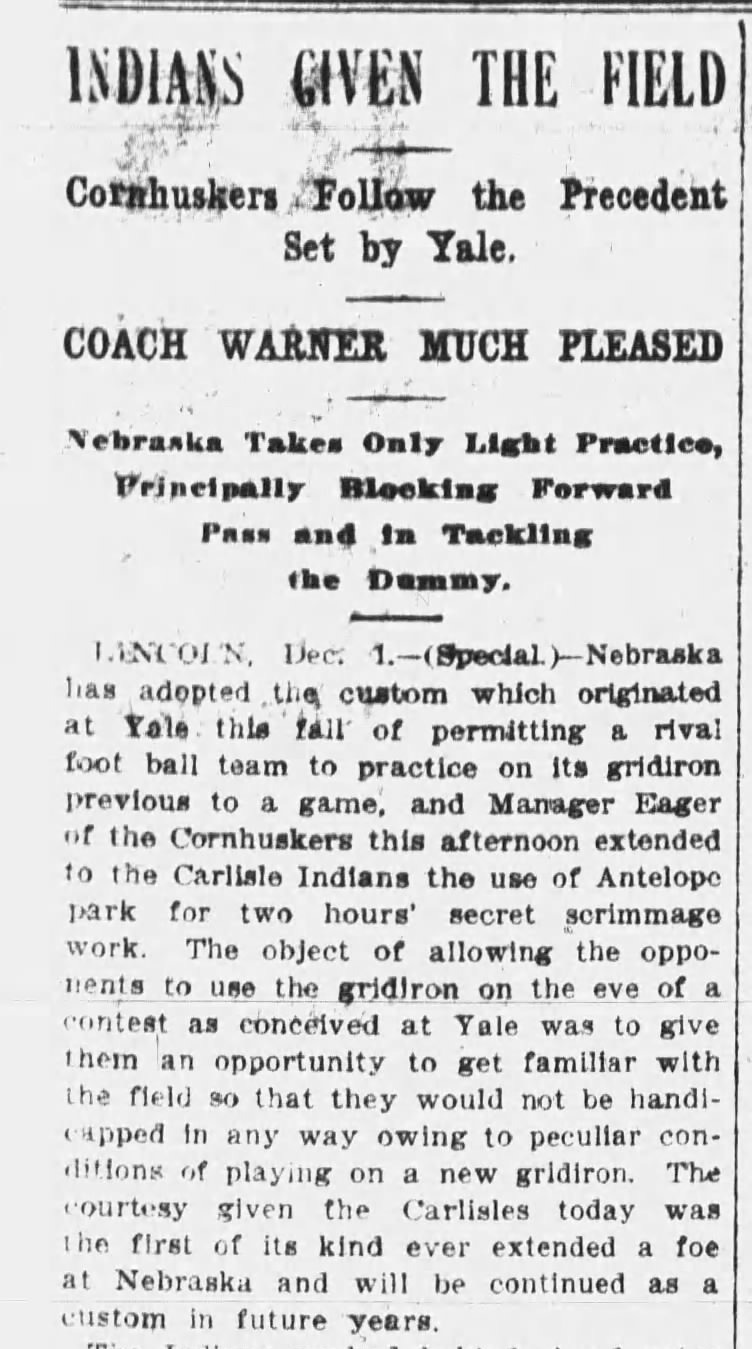
For example, below is coverage of Nebraska, which gave the Pop Warner-coached Carlisle team the courtesy of practicing on Nebraska’s field the day before they played in 1908. It was the first time Nebraska followed this custom, which the reporter credited to Yale for originating earlier that year. But did they? No, they did not.
Instead, the custom appears to have originated at Penn’s Franklin Field in the late 1800s and early 1900s, when Penn hosted Cornell. From 1893 to 1960, Cornell ended its season by playing at Penn on Thanksgiving Day. It was a big deal. While our buddy Pop Warner coached Cornell in 1897 and 1898, before returning from 1904 to 1907, Cornell’s coach from 1899 through 1901 was Percy Haughton, who gained fame by coaching Harvard to a handful of national championships.
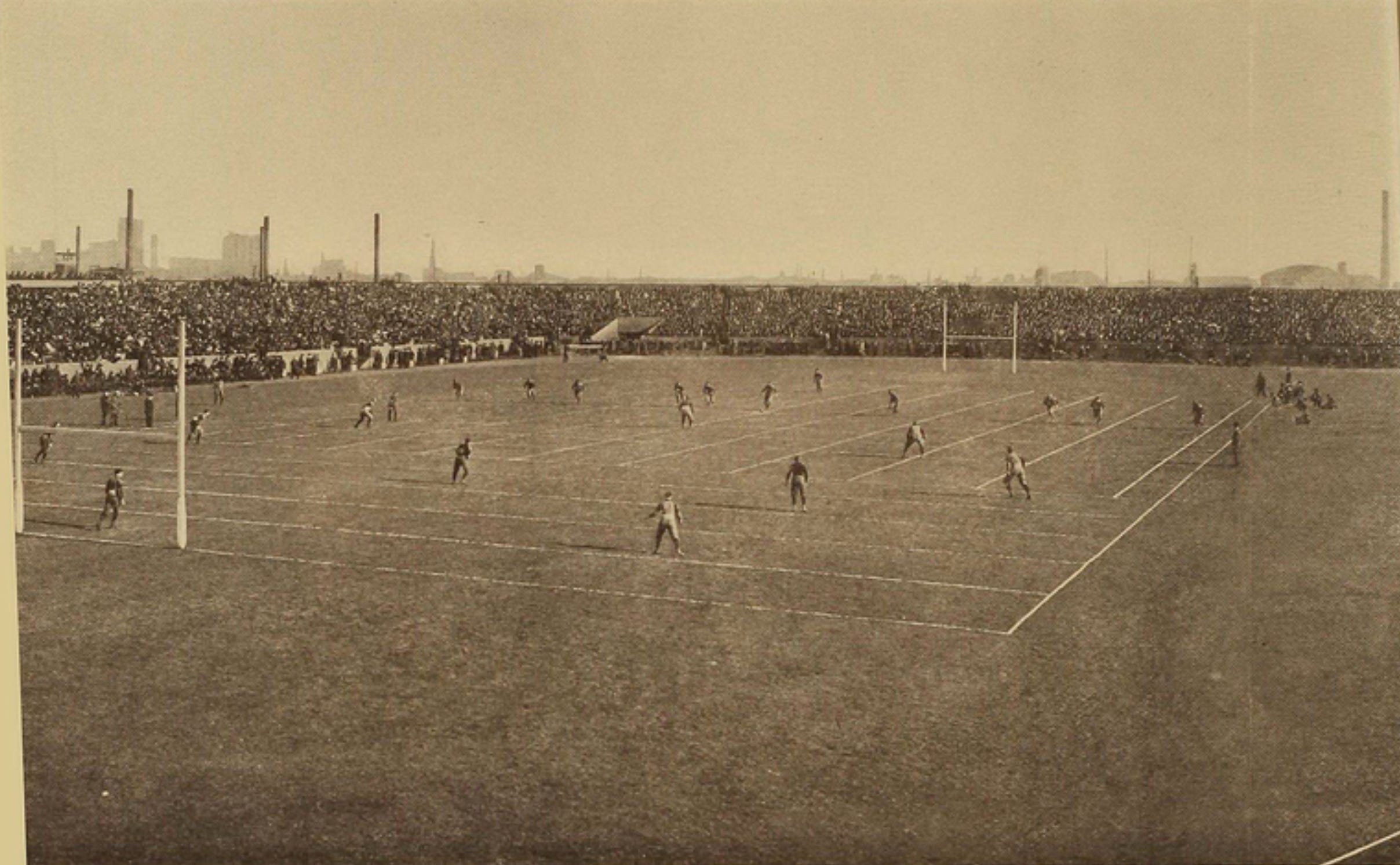
It was under Haughton’s watchful eye that Cornell traveled to Philadelphia in time to practice at Franklin Field on Thanksgiving Wednesday in 1899. So, Yale was not the first to extend the courtesy. Penn was.
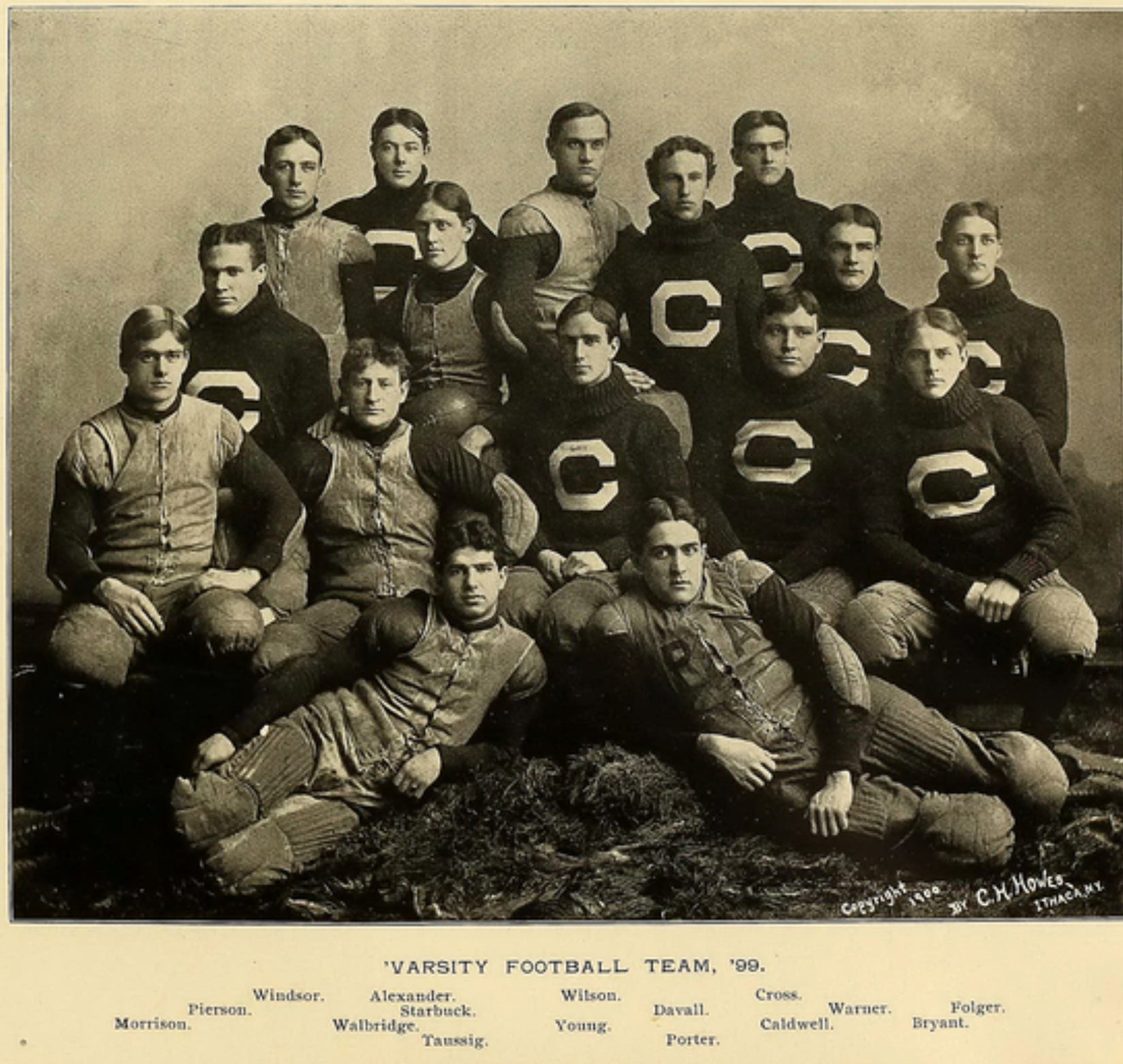
For whatever reason, Cornell did not practice at Franklin Field the day before the game in 1900. Instead, they held signal practice in the hotel ballroom, but in 1901, 1902, 1903, and 1904, they held practice at Franklin Field, with Warner returning to Ithaca in the last year of the sequence.
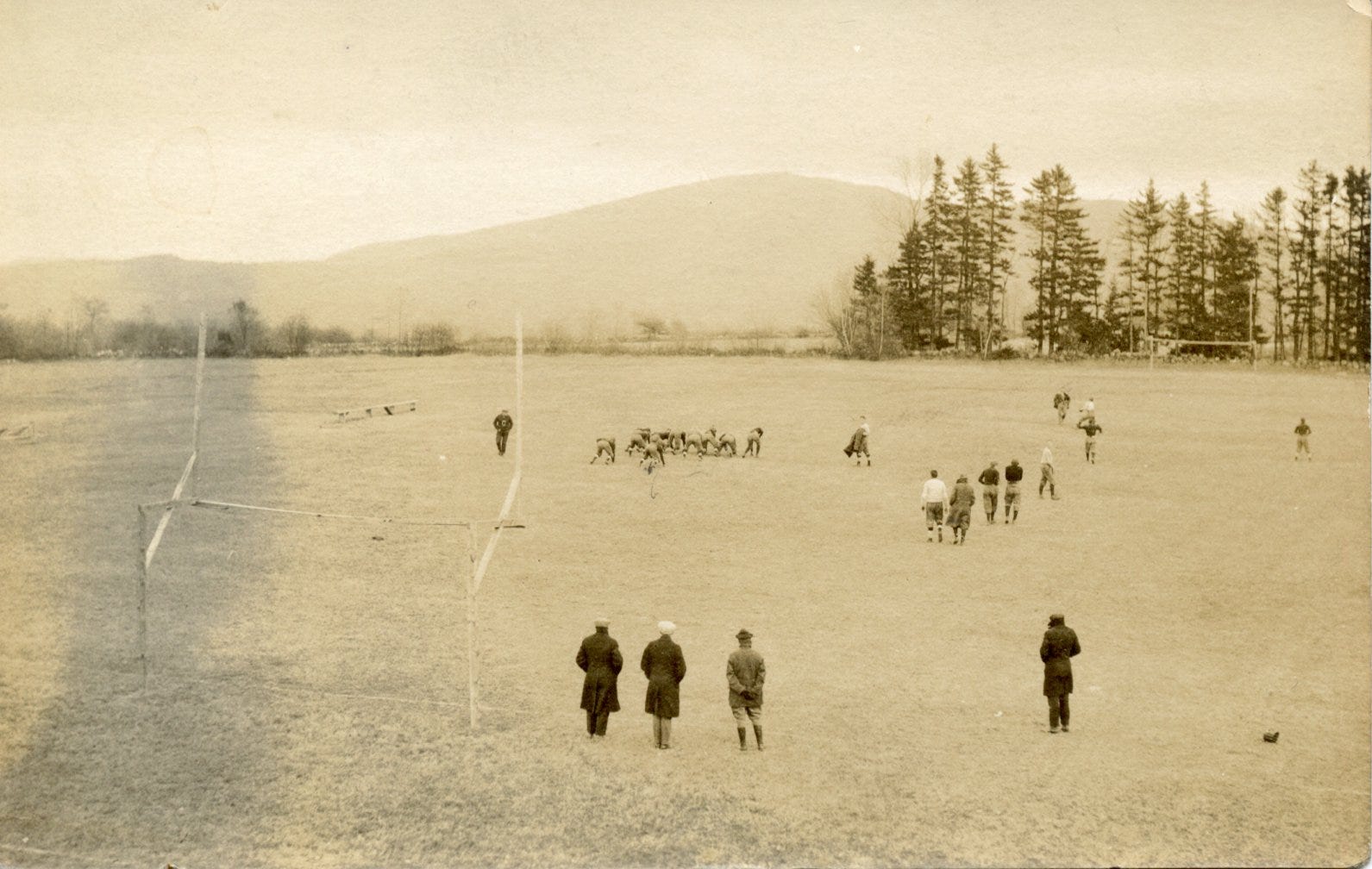
In 1901, Penn allowed Harvard to practice at Franklin Field, so the Quakers were gracious hosts to non-Cornellians as well.
The gracious host custom does not appear to have taken hold in the Midwest during that era, though the purity banquets had their day later that decade. Visiting teams practicing on the game field became more common in the 1910s, perhaps because intersectional games grew more frequent, with Yale practicing at Harvard Stadium and Harvard at Princeton on the eve of their games.
Whether budgets expanded or coaching philosophies changed, the trend continued, and the 1920s saw teams arriving the day before and practicing on the game field more often.
Nevertheless, buses and airplanes made it far easier to practice at home the day before the game and still arrive at the destination, so practicing on the game field the day before games seems to have faded away, except for games played at more distant locales and bowl games. Instead, teams appear to have arrived at the stadium earlier on game day to allow players to walk around, soak up the atmosphere, test the turf, and otherwise acclimate to their new surroundings.
If you enjoy Football Archaeology and are not a paid subscriber, consider buying me a cup of coffee now and again. You can also buy a paid subscription or purchase one of my books.


Yeah. WAC teams are all over the place. Before freshmen were eligible, WAC freshmen teams played one another, leading to high travel costs. In 1968, the WAC proposed making freshmen eligible to eliminate these costs. The NCAA passed the rule in the early 70s. The WAC also proposed playing an eleventh game in 1970, and the NCAA approved it that year.
Love reading the history of this. Reminds me of the trips we took when I was playing at Wyoming in the 1980s. The old WAC was far flung and we went to some cool places.