
Today's Tidbit... Eckie, A Pistol, and the 1923 National Championship

Among the rule changes of 1906 to reduce piling on and make football safer was that ball carriers were deemed down when any part of their body, other than their feet and hands, touched the ground while in the grasp of an opponent. The last phrase was critical to the ruling since a ball carrier might be knocked down by contact, but rise and continue running if he was not in the grasp at the time he contacted the ground.
The NCAA changed that rule in 1932, eliminating the “in the grasp” phrase. College ball carriers have since been down even when not knocked down by contact. Slipping and falling on their own was sufficient to be ruled down.
Between 1906 and 1932, there were many situations in which a player was knocked down by contact, yet was not in the grasp. Some of those situations proved controversial, including one when Michigan visited Wisconsin in November 1923. Michigan was 6-0 at the time, with 3-1-1 Wisconsin and 5-1 Minnesota left on the schedule.
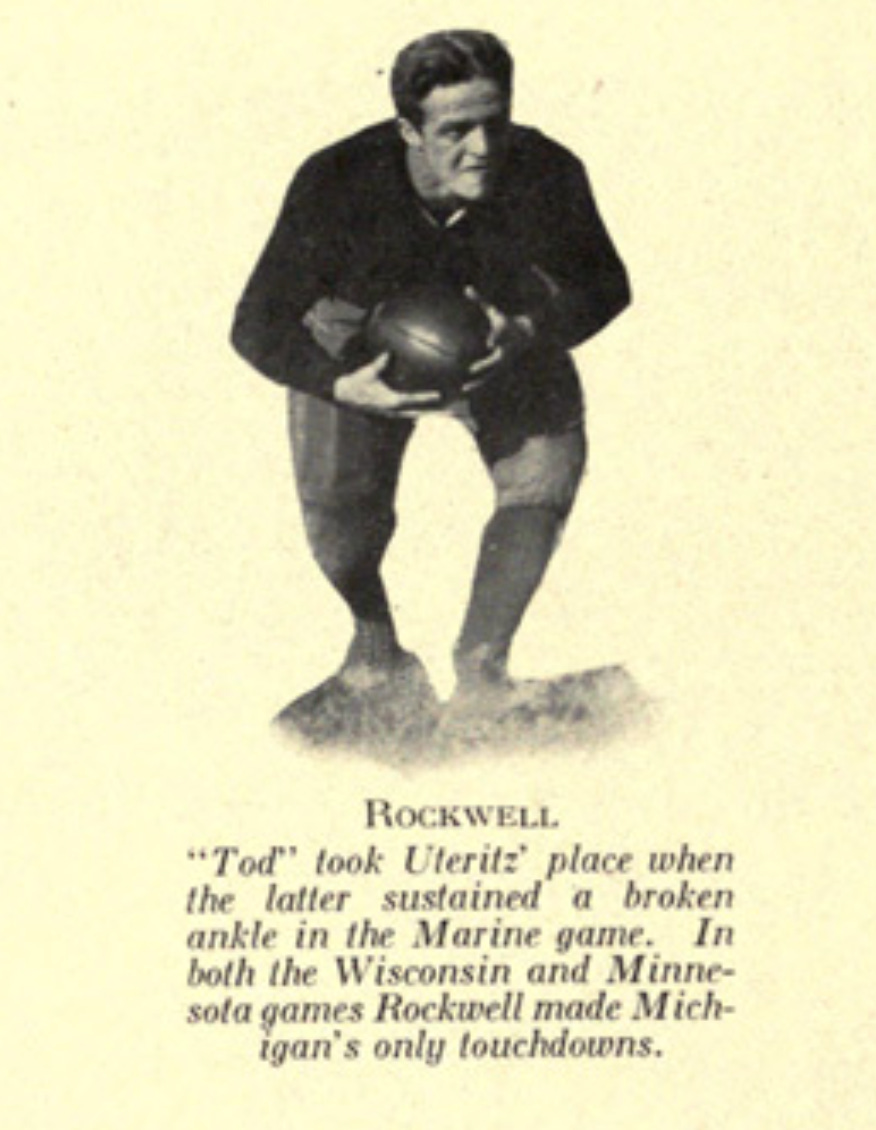
Michigan lost its starting quarterback, Irwin Uteritz, during the previous week’s game, leaving backup Ted Rockwell to take his place.
Fielding Yost was in his 23rd season leading the Wolverines, and rookie coach John Ryan led the Badgers, so when Yost requested that Walter Eckersall referee the game, Ryan acceded to the Dean of Coaches’ request, despite Eckersall making some disputed calls against Wisconsin in the past. (Eckersall has Yost’s recommendation despite quarterbacking Chicago to a 2-0 victory over Yost and Michigan to decide the 1905 national championship.)
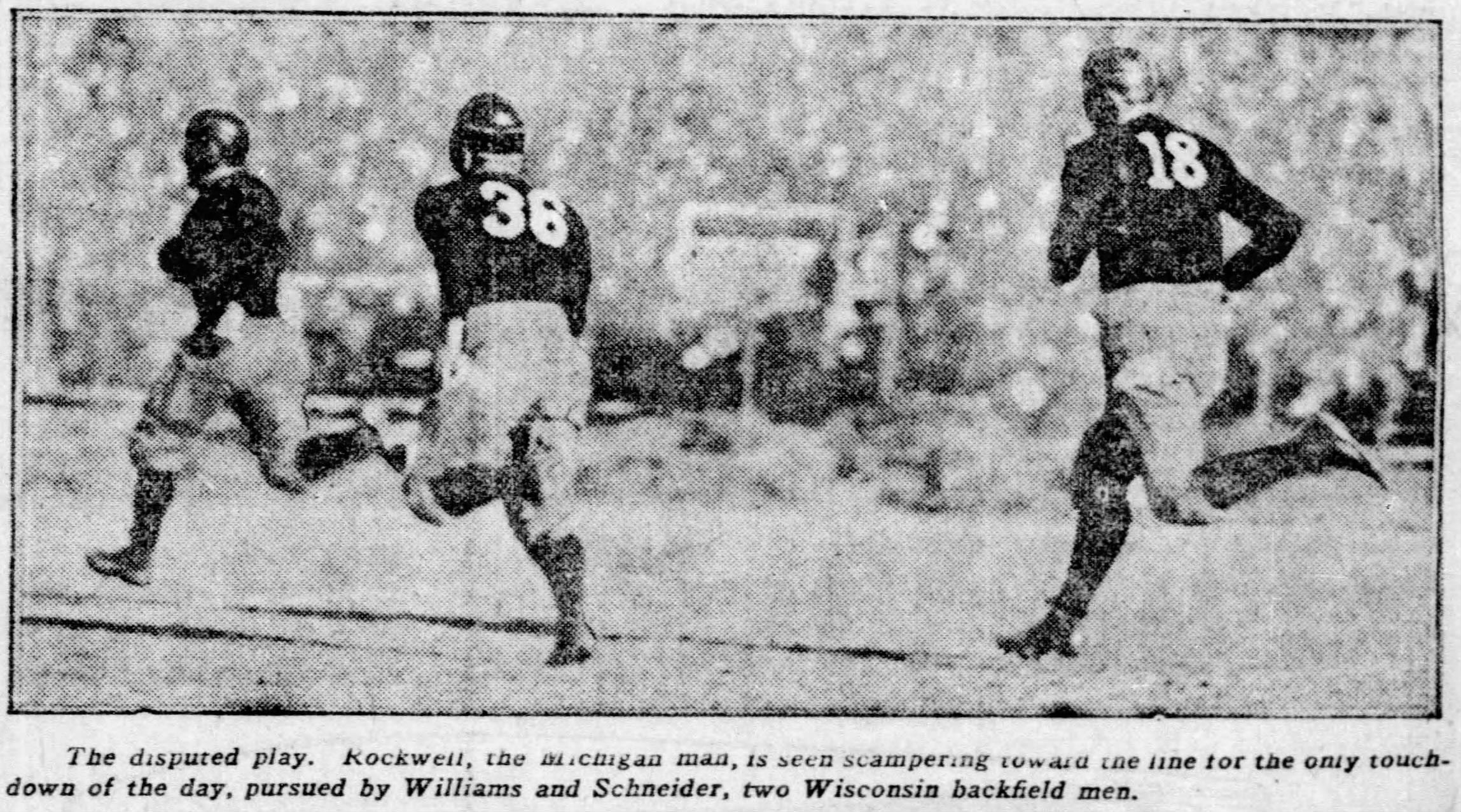
The Badgers played the Wolverines tough the entire game, earning 10 first downs to Michigan’s 4, so punting and punt coverage proved critical. The Badgers scored first, kicking a field goal in the first quarter. During the second stanza, Taft, the Badger punter, lofted a long boot downfield where Ted Rockwell fumbled the punted ball on Michigan’s 32-yard line. Rockwell quickly picked up the ball and headed upfield, where he was knocked down by the Badger captain, Marty Below, close to Field Judge Col. Morton C. Mumma.
Although Below later claimed Rockwell was in his grasp and his teammates believed the play was dead, Rockwell got up and sprinted for a touchdown with several Badgers in delayed pursuit.
Referee Walter Eckersall trailed the play to the end zone before conferring with the Field Judge, Mumma. At the time, referees were the only officials to carry whistles; the other officials tooted horns, which did not stop play like the referee’s whistle.


Mumma asked Eckersall if he had blown the whistle when Rockwell went down, and Eckersall replied that he had not. Likewise, Mumma told Eckersall that Rockwell was not in the grasp while on the ground, after which, Eckersall raised both arms to confirm that Rockwell’s touchdown.
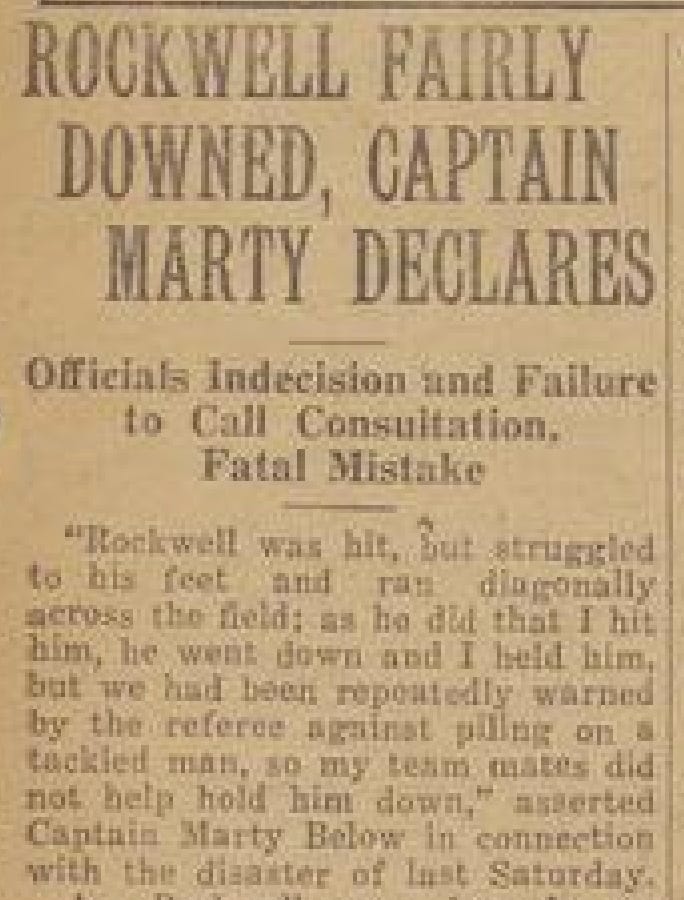
Wisconsin’s crowd went wild. Wisconsin’s captain claimed he had Rockwell in his grasp. Wisconsin fans argued that Mumma had marked the spot of the tackle with his foot to indicate that Rockwell was down, or that he blew his whistle, which he did not carry, but the touchdown stood.
That ended the scoring, so Michigan won 6-3, but the Camp Randall crowd had not forgotten during the second half what they perceived as a bad call in the first. Immediately following the game, thousands left the stands to confront Eckersall as he left the field. Sensing a potentially bad situation, Ryan, the Wisconsin coach, and T. E. Jones, the Badger Athletic Director, escorted Eckersall from the field, but not before a spectator punched or slapped Eckersall.
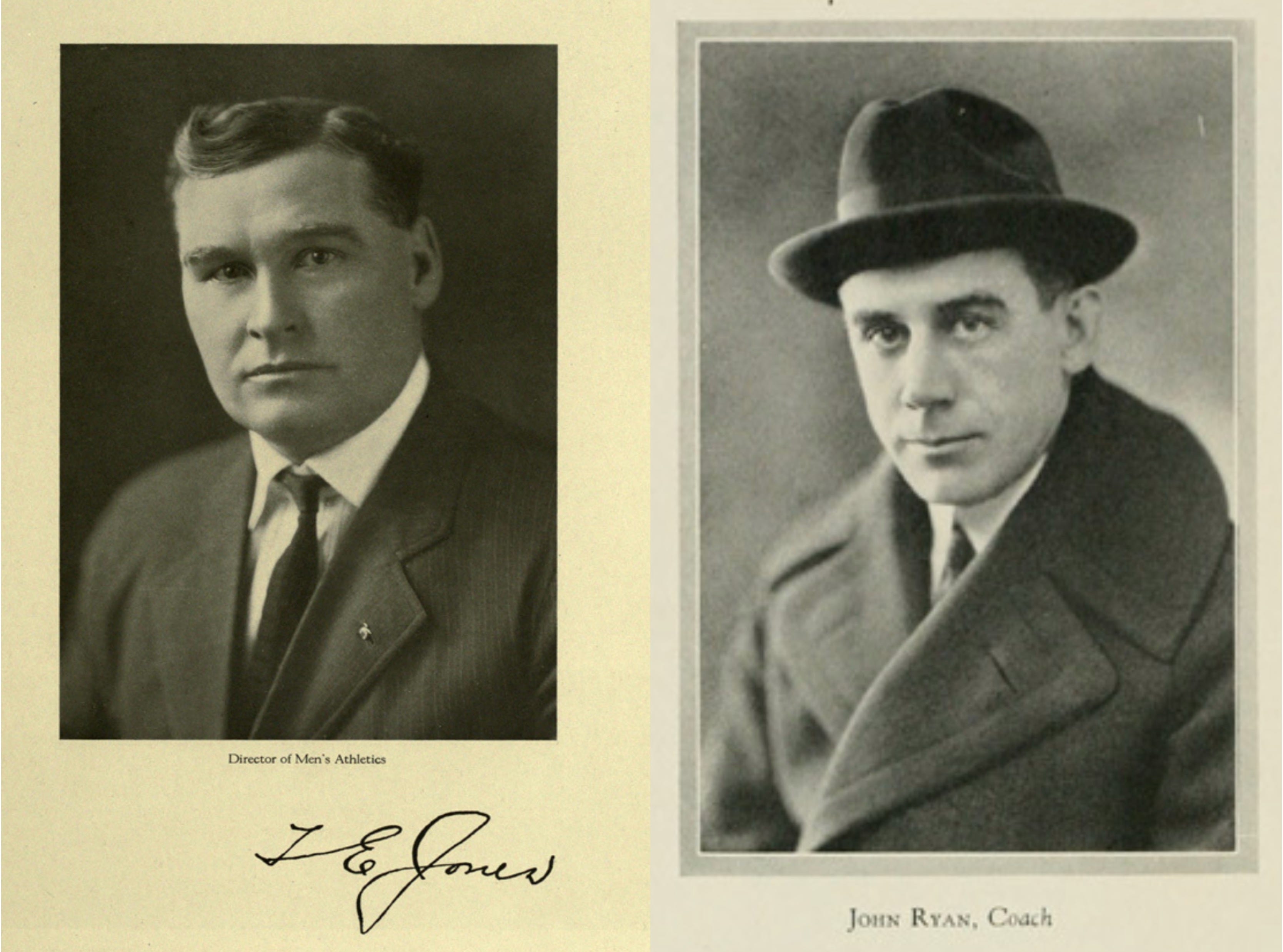
Detroit newspaperman H. G. Salsinger, the guy credited a few stories ago with coining the term “basketball on grass,” reported that Jones pulled out a pistol to keep the crowd at bay, though no one else suggested the same. At that point, the Wisconsin football team entered the area to guard Eckersall and escort him from the scene.
The controversial call remained a hot topic for the next week, with accusations back and forth. Wisconsinites denied that Jones had pulled a pistol, and as a Hall of Fame track and cross-country coach, Jones was familiar with starter’s pistols but was otherwise not known to pack heat for Wisconsin home games. Some suggested that Wisconsin end its athletic relationship with Michigan, but cooler heads prevailed by aiming their ire at Eckersall, not Michigan. Jones pledged that Eckersall would never work another Wisconsin game as long as he was AD, and they didn’t, though Jones resigned his AD role the next year, remaining as track coach until 1948.
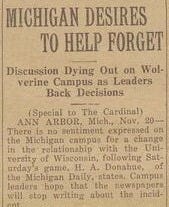
Eckersall returned to Chicago, briefly writing about the incident in his role as a Chicago Tribune reporter. Jones’ pledge held for a while, since Eckersall did not work another Wisconsin game until 1929, when the Badgers forgave the past troubles.
So, Wisconsin failed to grasp the victory that could have been theirs. When Michigan beat Minnesota the following Saturday, they finished the season 8-0. As a result, Eckie, who beat Michigan during his playing career, made a ruling that helped the Wolverines and Fielding Yost earn the last of his six national championships.
Thanks, once again, to Christopher Haack, for spotting this story and alerting me to it.
Regular readers support Football Archaeology. If you enjoy my work, get a paid subscription, buy me a coffee, or purchase a book.


I’ve seen 1950’s NFL highlights where runners continue after being knocked down. Can you address how the pros handled this over the years? Thanks.