
Today’s Tidbit... Football in Plane Sight

Sometimes, football is only the vehicle for a story, such as with this tale, which is more about vehicles and their football-adjacent pilots when the gridiron game and people took to the air.
Football was a dangerous game in 1905, leading to substantial rule changes for 1906; foremost among them was the legalization of the forward pass. Although it took a few years for the forward pass to get going, the rule change released the game from Earth’s surly bonds.
Footballs were not the only manmade objects taking flight by 1909. Balloons had lifted off for more than a century, and the Wright Brothers did their heavier-than-air thing in 1903, so it was only natural that the Thanksgiving Day football game between Cornell and Penn presented an opportunity for Nostradamus to make an appearance and prediction.
The game itself offered little to remember, with Penn winning 17-6. It was a muddy, miserable game in which Penn threw a few incomplete forward passes. Cornell stuck with the ground game in their losing effort.
Rather than discuss the football game, we’ll focus on a noteworthy event planned for Thanksgiving Day in Philadelphia: the first scheduled aeronautical competition between American universities. Brave college students enjoyed getting high in 1910, as Aero Clubs popped up on many campuses. MIT, Harvard, Notre Dame, and Penn were early adopters, with Carl H. Carson being a key promoter at Penn.
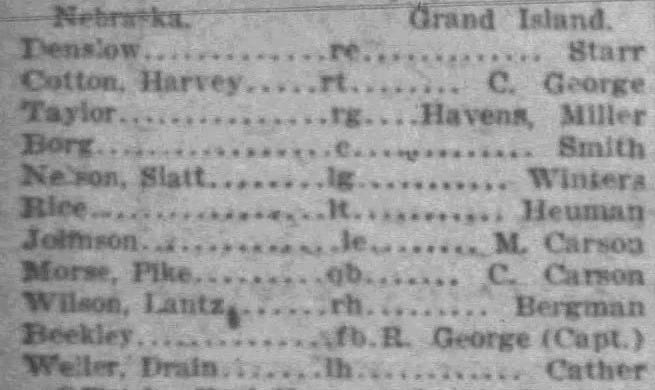
Born to missionaries in Burma, Carson quarterbacked Grand Island College in 1905, including in their 30-0 loss to Nebraska.
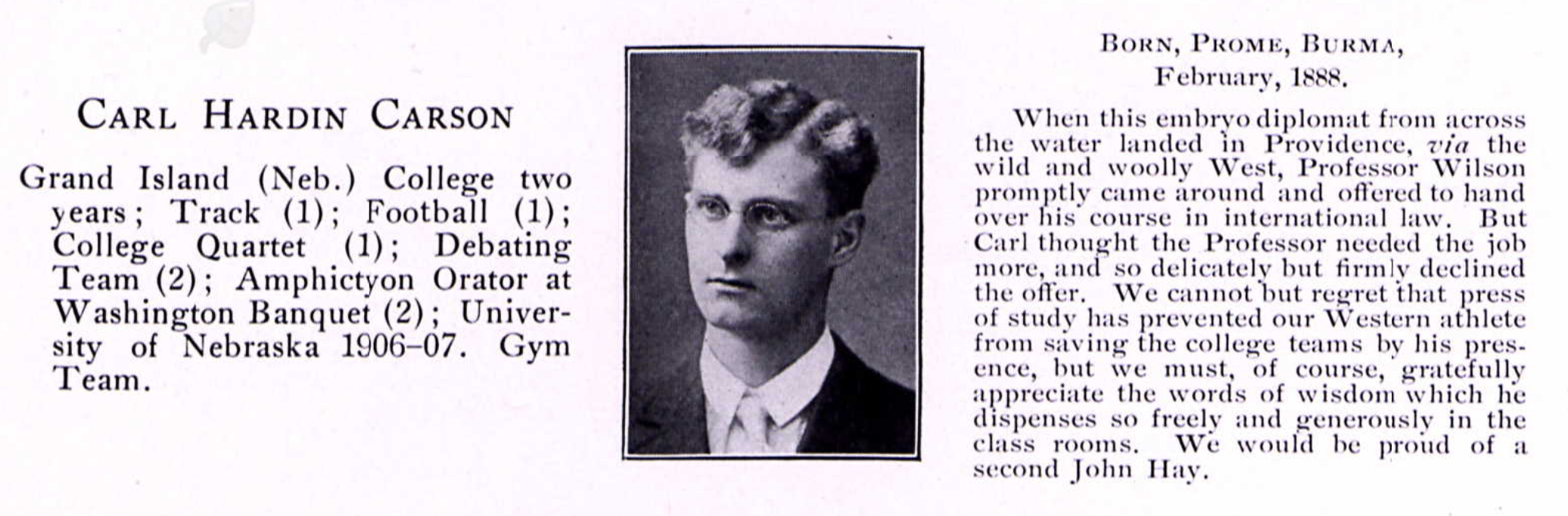
The following year, Carson enrolled at Nebraska and then transferred to Brown, from which he graduated in 1908. His senior profile shows he played football, though the reference may have been to his Grand Island days, not his time in Providence.
The peripatetic Carson then studied in the aviation hotbed of Paris, France, before enrolling at Penn for the 1909-1910 school year. There, he helped found the Aero Club of the University of Pennsylvania, which had 100 members by November, each of whom pledged their money or lives to advancing the cause of aviation. Aviation was so much in the air at Penn that Carson and his club challenged Harvard to an aero race, with lift-off planned at Franklin Field or nearby Fairmount Park, just before Penn’s Thanksgiving football game against Cornell.
Ballooning and aeronautics were considered sporting events back then, with articles about balloon and aeroplane races appearing in newspaper sports sections.
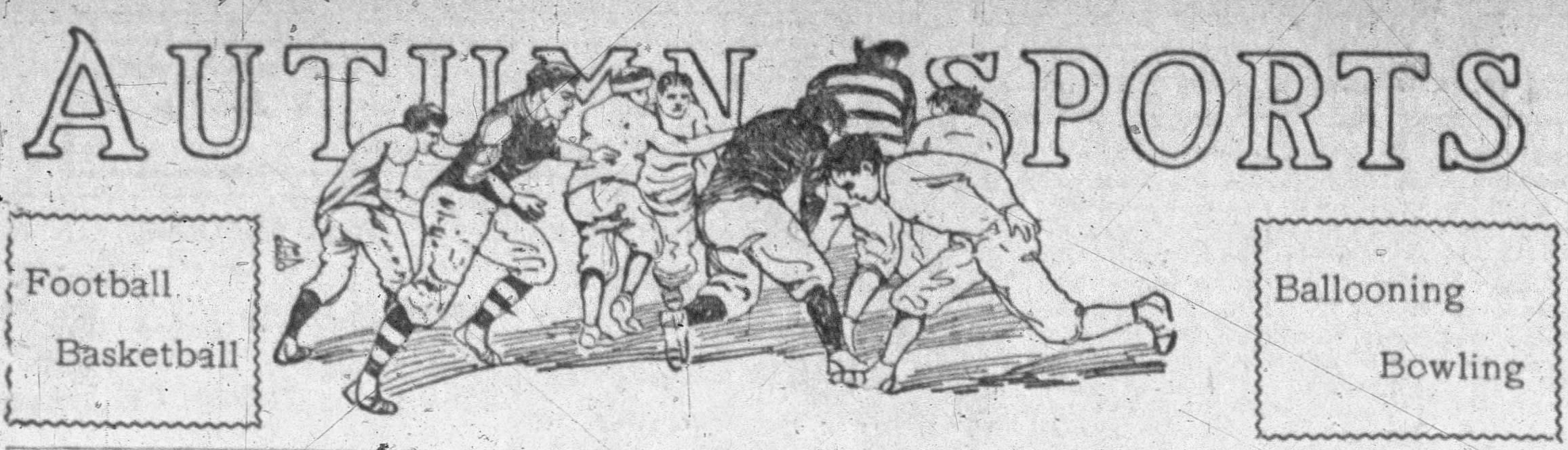
Carson drank deeply of the aeronautical Kool-Aid and believed aeronautics would become a varsity sport. His announcement of the pre-game competition received attention nationwide, and included his prediction that:
Aero competitions will soon be as much a part of college sports as football, baseball, and rowing.
’Students In Air Race,’ Syracuse Herald-Journal, November 18, 1909.
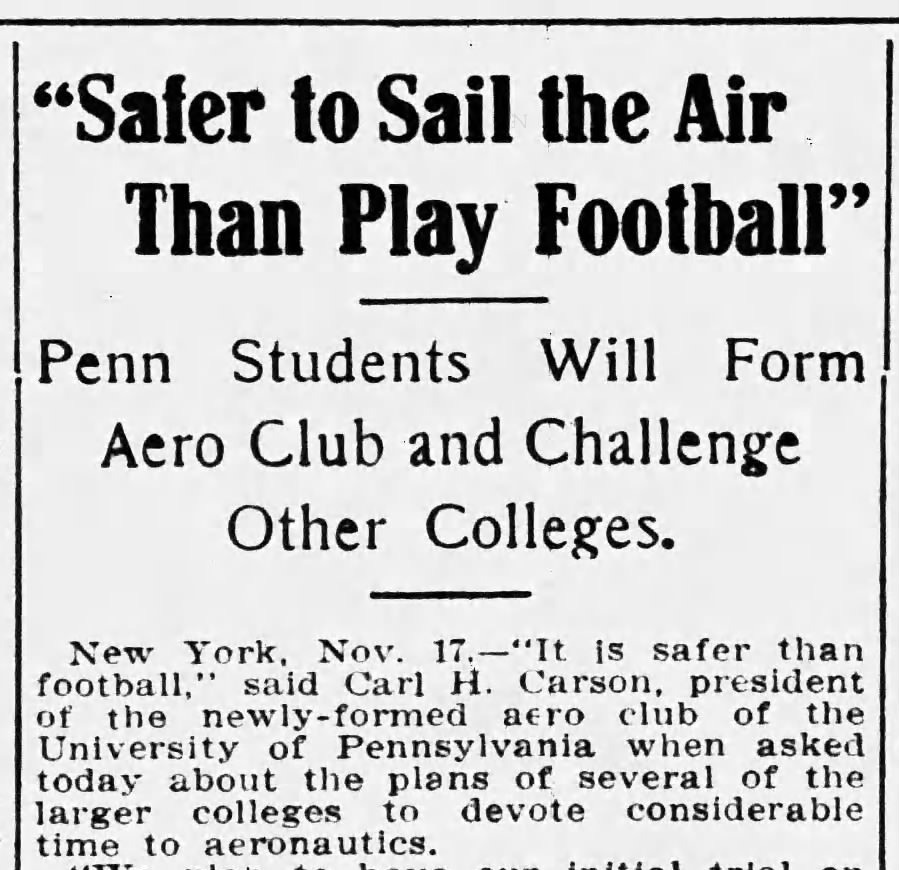
Others quoted Carson describing how interest in aviation at Penn was on the rise and that flying was safer than football:
(There will) be the ascension of a balloon manned by undergraduates of the university, and since every student is deeply interested in the sport, there will be as much keenness about the balloon as about the [football] game.
‘Safer To Sail The Air Than Play Football,’ Buffalo Courier, November 18, 1909.
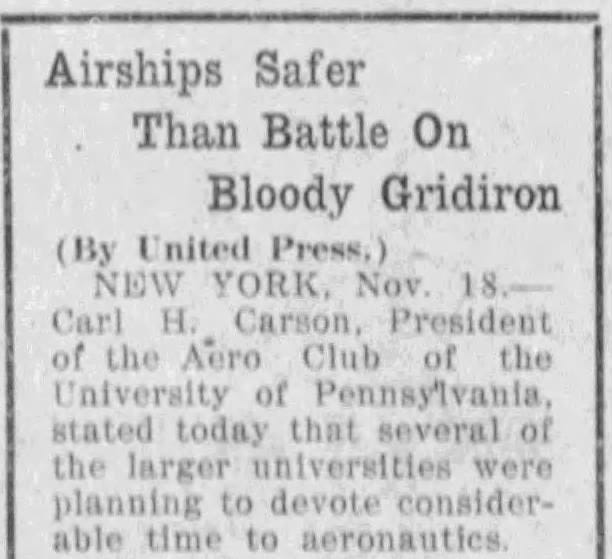
Alas, whether it was the poor weather or a lack of interest, the aeronautics race never got off the ground that Thanksgiving Day. Not to be discouraged, Carson and the Aero Club of Penn sent a letter to every college and university in the nation enrolling more than 200 students, inviting them to participate in the Intercollegiate Aero Convention in Philadelphia the following spring. The convention also failed to materialize, leaving Aero Club members deflated.
Carson became a high school teacher and seems to have lost interest in flight, but his football interests surfaced twice during his time at Pasadena High. Carson gained publicity in December 1915 when he was among those who found a live brown bear to act as the team mascot when Brown visited Pasadena for the 1916 Rose Bowl. A year later, after Pasadena High’s head football coach joined the Army, Carson rose from assistant to head coach, leading the team to a 3-1-2 record after three undefeated seasons.
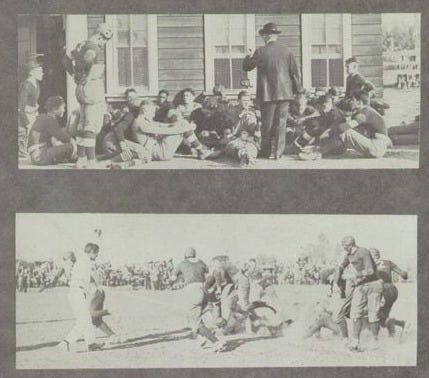
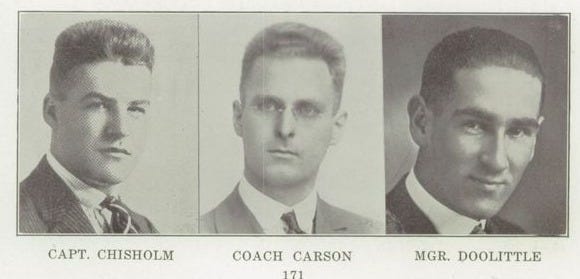
Carson left the school and educational field shortly thereafter, moving to Honolulu, where he worked in technical sales and the contracting business for several decades.
Although he was not directly involved, Carson’s dream of intercollegiate aviation competitions came to life after WWI, when veteran pilots returning to college formed or reformed Aero Clubs at various universities and competed in Intercollegiate Flying Association contests in 1920.
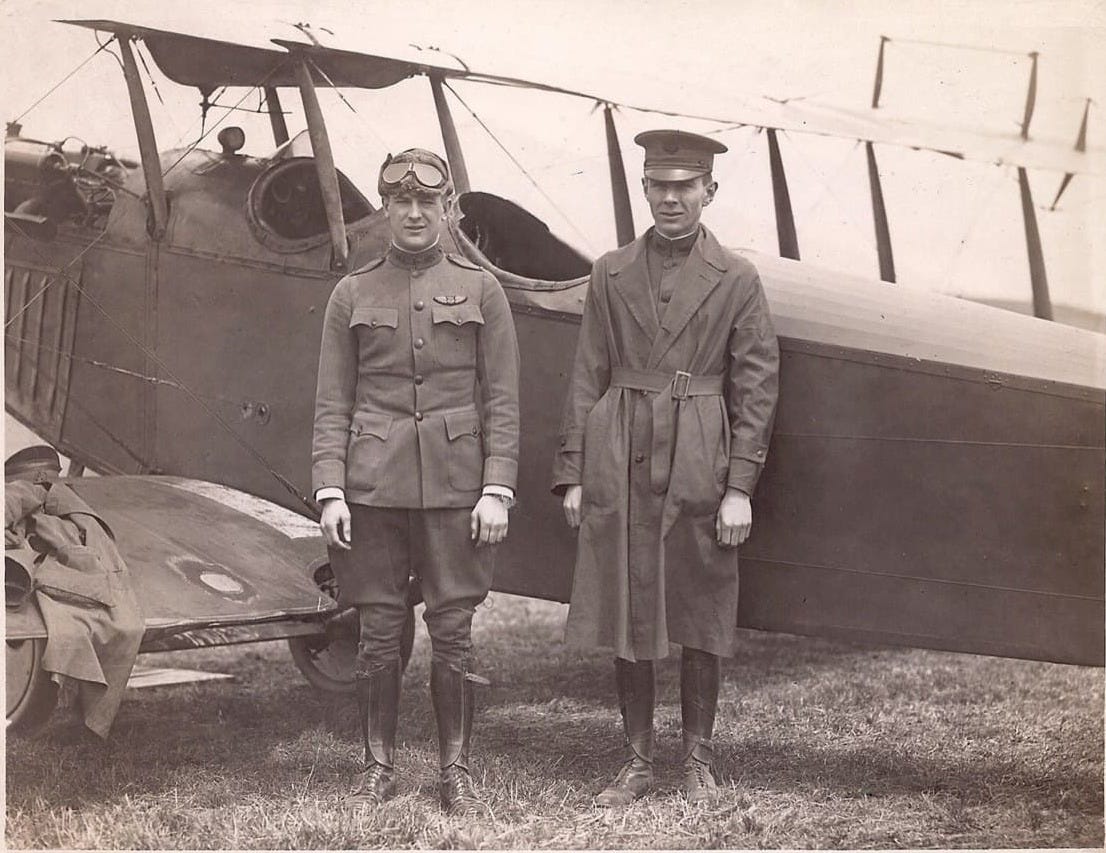
The National Intercollegiate Flying Association (NIFA) was founded in 1928 and continues to oversee competitive and non-competitive aviation contests among American colleges and universities. While Carl Carson was not involved in NIFA, he floated the idea for such an organization 21 years before its founding, so he would be pleased to know that America’s colleges offer top-flight competition in football and aviation nearly 120 years later.
Regular readers support Football Archaeology. If you enjoy my work, get a paid subscription, buy me a coffee, or purchase a book.


At least today student flyers can get high using simulators.