

Fans enjoy doinks unless their team is the doinker. We had a doinkfest in the first half of the college national championship game when Miami’s kicker booted one far enough out on the bell-shaped curve that it hit the upright and bounced the wrong way. Indiana later doinked an extra point attempt, leaving both teams saying, “Close, but no crossbar.”
Perhaps we get a kick out of doinks because they remind us that much of football and life depends on chance. The better football team generally wins, but every game sees falls, drops, tips, and slips that sometimes lead to one team surprising the other.
Thinking about doinks led to two questions at the heart of doinkdom. First, when did someone first call a kick hitting the goal posts a doink? And when did a team first attempt a kick that hit the goalposts and failed to convert?
The simpler question to answer is the first: when did someone first call a doink a doink? Most early appearances of doink in newspapers were typos of words like ‘doing’ and ‘drink’. Cartoon dialogues of Central or Eastern Europeans pronouncing the word ‘doing’ as ‘doink’ came later. ‘Doink’ then transitioned into the sound made when one object hits and bounces off another, as seen in the Broom Hilda cartoons of the 1970s.
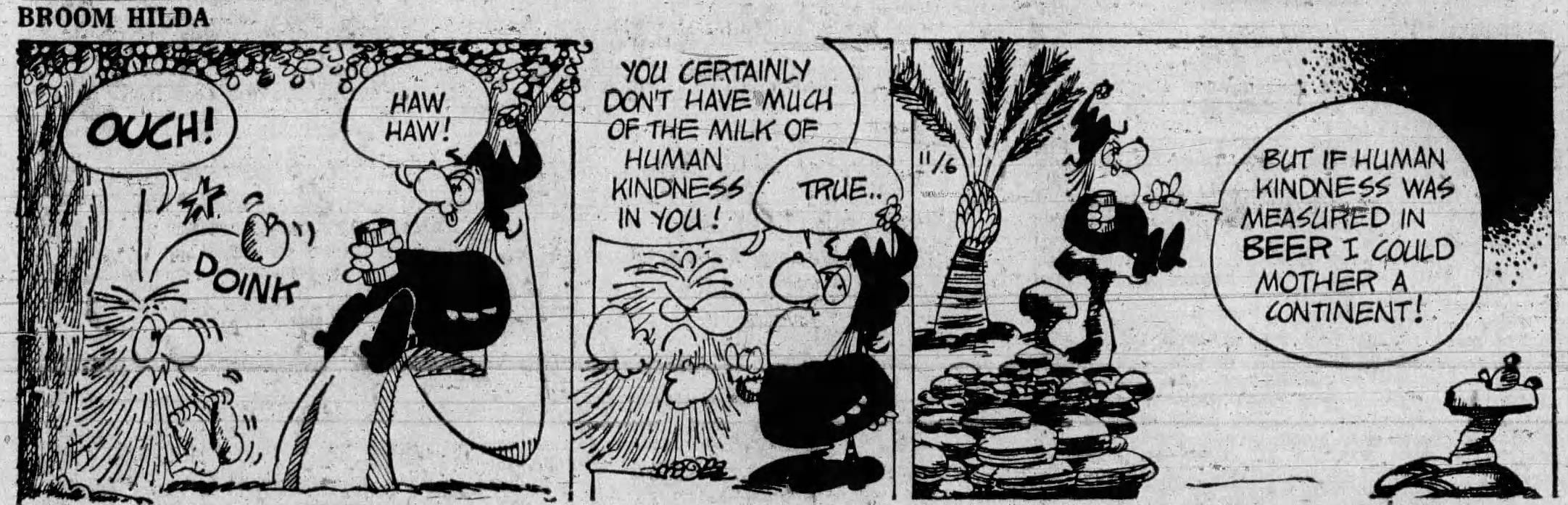
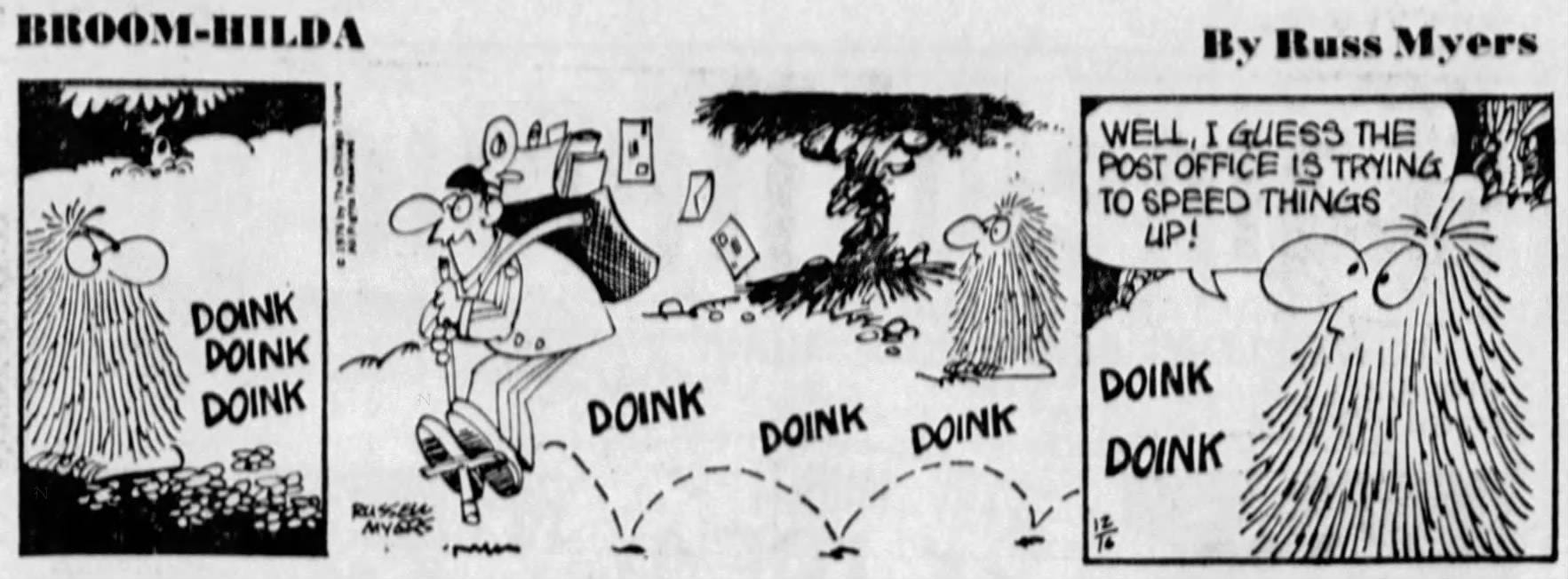
Doink entered football’s lexicon as one of many sounds John Madden made in the broadcast booth in the mid-1980s. Madden periodically used doink to describe a solid block or tackle until the Chicago Bears-New York Giants divisional playoff game on January 5, 1986. On the last play of the first half, Giants’ kicker Eric Schubert’s 19-yard field goal attempt hit the left upright.
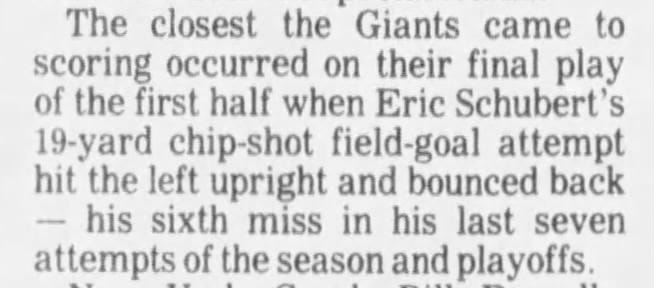
As Pat Summerall and John Madden discussed and replayed the miss, Madden dropped the earliest football-hits-goal post doink known to man:
It’s right there on the left hash, so he has to kick it a little inside. He just kicks it straight up the thing. Hits the uprights. Doink. Bounced right out.
Despite my best efforts, I could not find CBS's broadcast of the game on YouTube, but you can watch it on DailyMotion. The Giants fail on a third-down pass attempt at the 9:52 mark; the field goal attempt begins at 10:20; and Madden drops his doink at 11:16.
Having solved the mystery of the first doink, we move on to the greater challenge of finding the earliest instance of a kick attempt hitting the goal posts in a football game. Since that event came well before Madden uttered boom, biff, and doink, the challenge comes in determining the words used to describe pre-doink doinks during football’s early days.
Searches for phrases such as “hit the goal post” and “struck the goal post” got things going and reminded me that rugby and football had a term for doinks in the pre-doink days. When the Intercollegiate Football Association adopted football’s first rules on November 26, 1876, they copied nearly verbatim the 1876 Laws of Rugby, including Rules 4 to 6 covering the goal posts and goals:
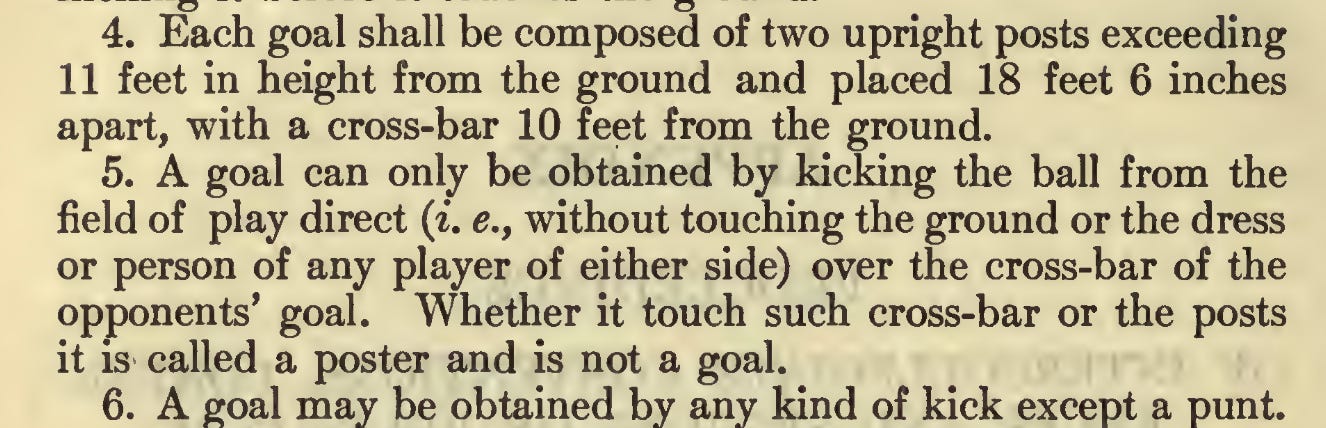
So, before doinks were doinks, they were posters and did not count if they hit the upright or crossbar, even when subsequently going over the crossbar.
Of course, there were a limited number of schools playing football in the early days, and fewer whose games received coverage by local newspapers. Yet, a search of American newspapers from 1876 through 1883 produced five examples of doinks nee posters.
The first came in the Princeton-Columbia game played the weekend before the IFA approved its first set of rules. Although the article mentions that they played under college association rules, the poster by Columbia’s Lynch preceded football’s first rules, so technically, the contest was a rugby match, not a football game.
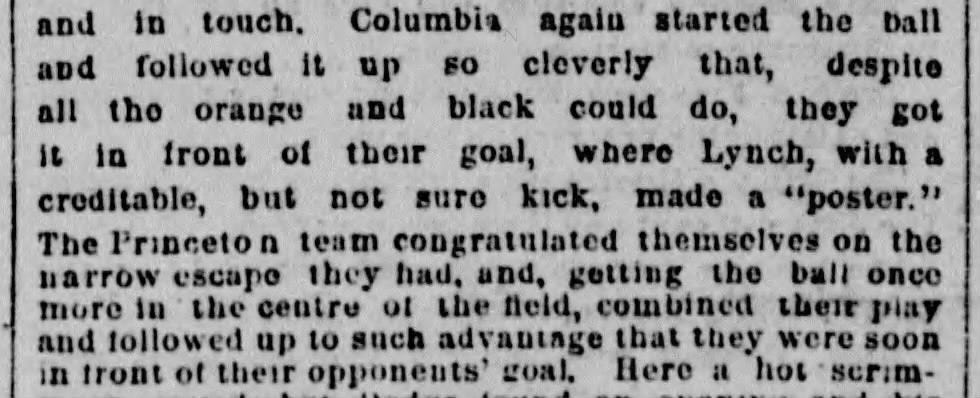
Our next known poster came during the 1879 Yale-Columbia game when Harding of Yale scored a touchdown, and posted the ensuing try at goal.

The 1880 season saw Columbia benefit when Harvard’s Kent shanked the ball, hit the goal post, and watched it return to sender.

For the 1881 season, the IFA revised its rules so kicks striking the goal post and bouncing over the crossbar counted as a goal, making posters the equivalent of modern doinks. In 1882, Columbia made it four for four in doink/poster appearances when Yale posterized them. Since missed kicks were live balls in those days, when Yale booted a ball that struck the post and bounced back to a boy in blue, the rules allowed him to run it in for another touchdown. The Elis then scored a goal on the second kick.
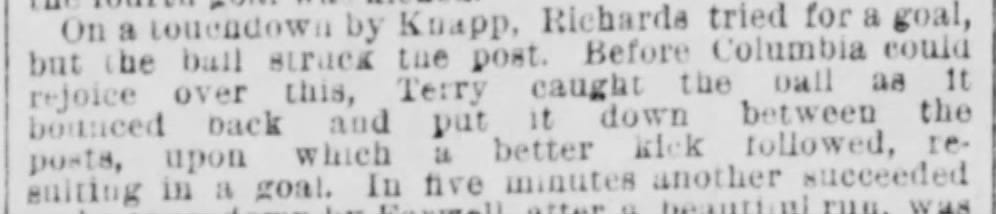
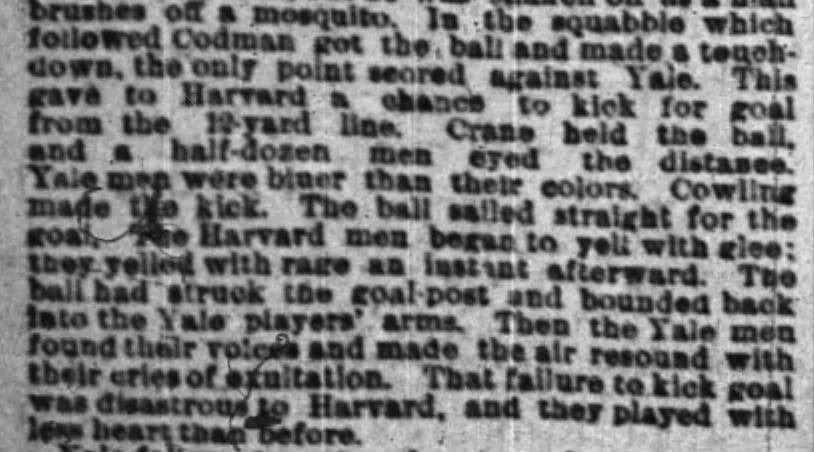
Our fifth example of an early poster or doink came in an 1883 game not involving Columbia. The game featured Harvard and Yale, and when Harvard kicked a poster, the Crimson seemed to fall apart, eventually losing 23-2.
So, while some consider doinks maddening, I like to think of them as examples of the great rolls of dice that comprise much of life, with doinks being the poster child of those many chance events.
Also, our friends with the Sickos Committee were kind enough to create a video montage of college football’s doinks during the 2025 season. If you enjoy a good doink from time to time, you can watch the video on their BlueSky account here.
Regular readers support Football Archaeology. If you enjoy my work, get a paid subscription, buy me a coffee, or purchase a book.


Mad Magazine's Don Martin may have first coined the term: Mad #96, July 1965, page 36.
I was watching an evening San Francisco Giants game. Barry Bonds skied one to the upper deck--a homer for sure--until 'Pinggg', it hit the foul pole. So now, 'doink' has company (if sound is what we're after) ..