

In a world in which collegiate and professional athletes and coaches are paid to endorse or otherwise lend their name to a product, who gets the royalties when a company sort of names a product line after one of its employees?
If you are of a certain age and demographic, Sears Roebuck was among the key retailers of your childhood. Your washing machine and dryer, sold under the Kenmore brand, came from Sears, and their catalogs offered everything a young lad could want, ranging from pages of women modeling their delicates to a substantial sporting goods section.
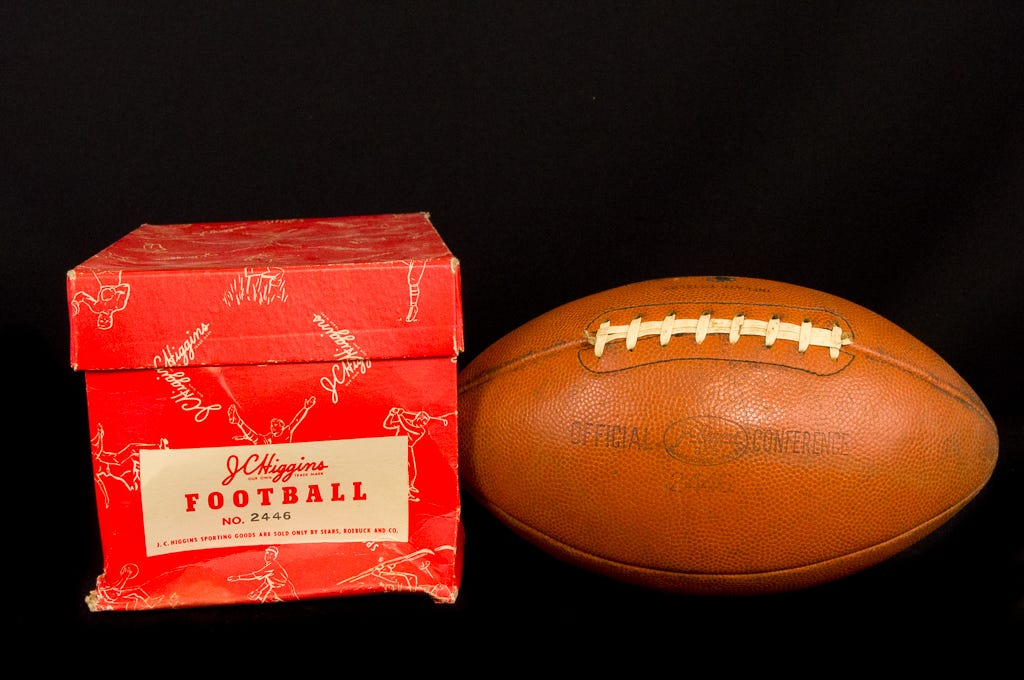
Sears sold many of their sporting goods products under the J. C. Higgins brand. J. C. Higgins was an imaginary sportsman based on John Higgins, a Sears executive. An English immigrant who lacked a middle name, Higgins began working for Sears in Chicago in 1897 at age 14 as a cash boy. Back then, clerks did not keep cash on the sales floor. Instead, they had boys run the customer’s cash, change, and receipts back and forth to a central cash office. Pneumatic tubes replaced cash boys in ultra-efficient stores.
Higgins quickly rose up the accounting ranks at Sears to become a VP and secretary. He played a key role in creating the company’s employee profit-sharing plan in the 1920s and oversaw the financial side of a company that was America’s largest retailer until Walmart took that title in 1991.
Through their catalog and retail stores, Sears sold everything under the sun. As they looked to expand their sporting goods sales in 1908, they created a store brand named after Higgins, whose closest association with athletics was his days running cash around the store.
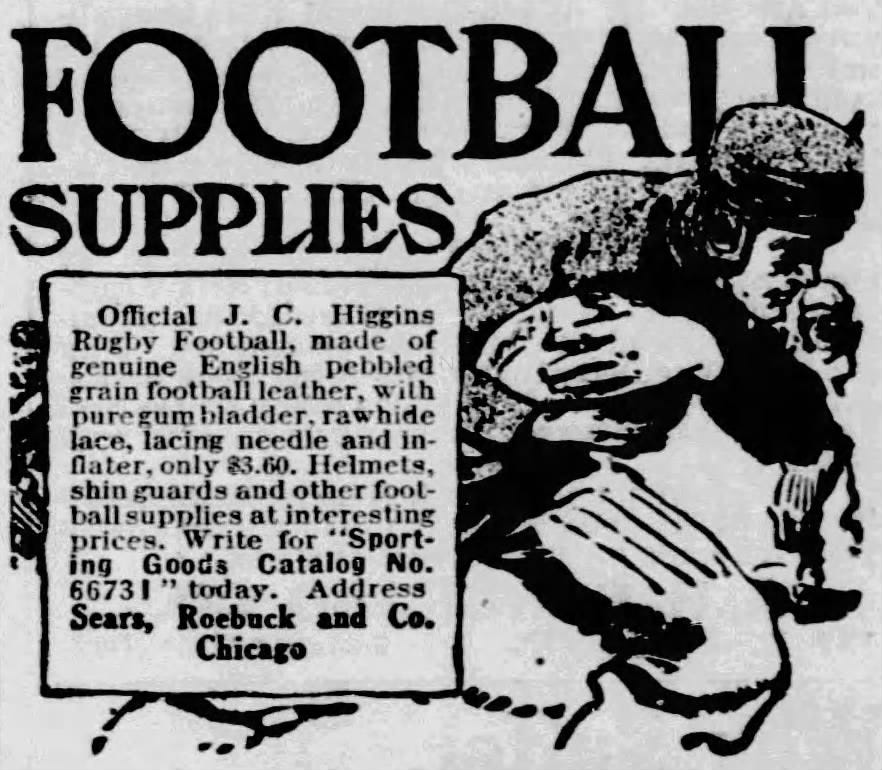
The marketing side of the organization wanted to jazz up the Higgins name, so they gave him an imaginary middle initial, landing on J. C. Higgins. By 1914, they promoted the “Official J. C. Higgins Rugby Football” and other gridiron supplies in newspapers around the country.
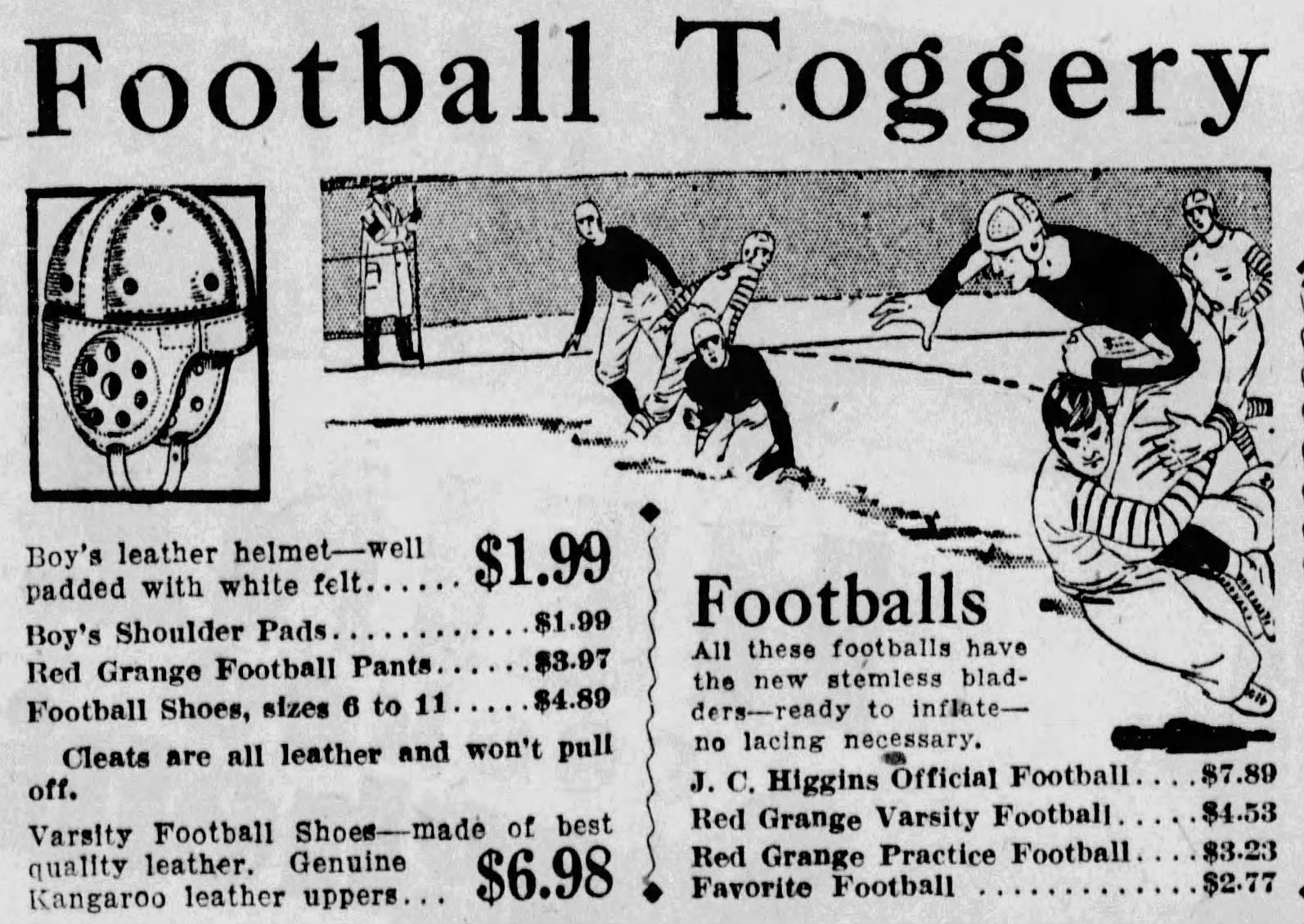
The J. C. Higgins line had enough brand equity by 1928 that they priced the Higgins football well above their Red Grange models, though the Grange pants cost more that the J. C. Higgins version.
Higgins was widely profiled in newspapers across the country in the late 1920s, since Sears often ran full-page ads featuring key employees when it opened a new store in town.
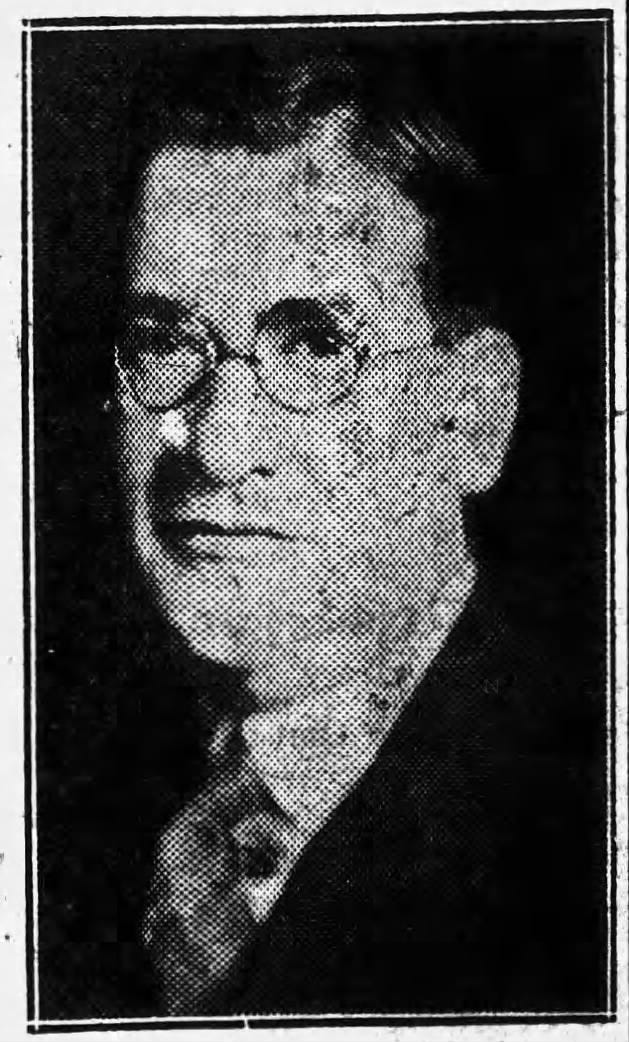
Higgins retired from Sears in 1930 and passed away in 1950. Still, Sears continued selling sporting goods under the J. C. Higgins line until 1962, when they switched the branding to Ted Williams’ name.
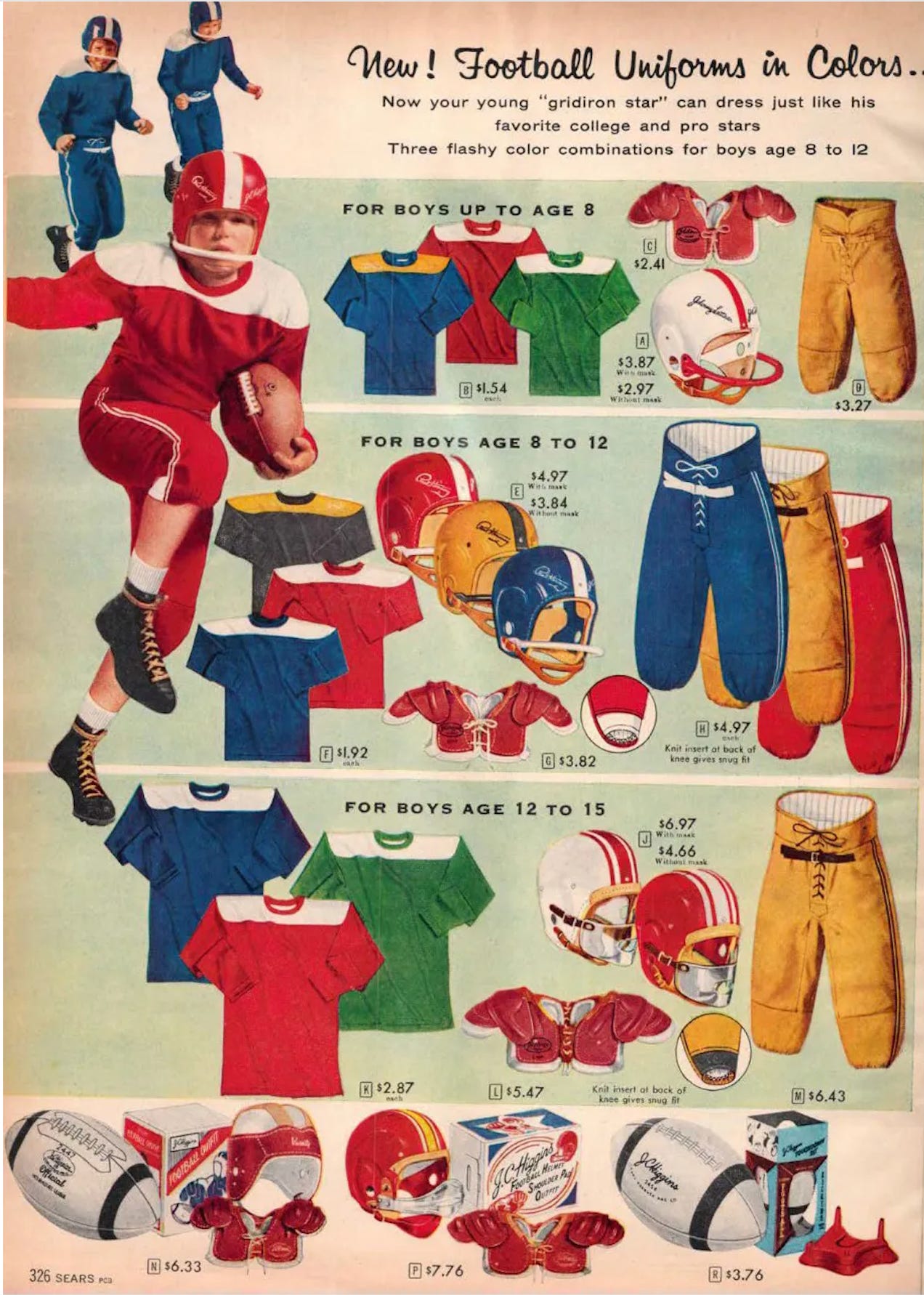
As with other brands, you can find now J. C. Higgins helmets, shoulder pads, and footballs (and other sporting lines) wherever they sell vintage sporting goods.
Although Sears compensated Ted Williams for the use of his name, there is no evidence that John Higgins received compensation for the J. C. pseudonym, other than his being the answer to a trivia question three-quarters of a century after his passing.
Regular readers support Football Archaeology. If you enjoy my work, get a paid subscription, buy me a coffee, or purchase a book.

