
Today’s Tidbit... Of Neck Rolls and Cowboy Collars

I spend too much time thinking about why things changed over the course of football’s history, including why some player equipment came into use, was altered, grew popular, or fell into disfavor. Did a new piece of equipment come into use because someone had a bright idea or because conditions or technologies changed?
I've always assumed that the popularity of neck rolls and later Cowboy Collars was due to plastic helmets, face masks, and changes in blocking and tackling techniques. Still, I never dove into the issue until the author of another Substack, The Cowboy Collar, asked about their history. My assumption was correct, but there were a few interesting nuances.
Football players began wearing headgear to protect their heads and nose guards to protect their noses and their faces in the early 1890s. Primitive face masks emerged in the 1920s, and in each case, their early use was among players trying to protect an existing injury rather than prevent one with a custom-made device.
The more widespread adoption of harder plastic helmets in the late 1940s and early 1950s led to more facial injuries among other players, so more players wore face masks, which led to even more players wearing both devices until their use became universal by rule or practice.
But two problems emerged. One was that helmet manufacturers styled plastic helmets much like their leather predecessors. They used two-point chin straps on helmets, with the back of the helmet lower than it is today. Those factors, combined with the leverage of face masks, resulted in a guillotine effect on the back of the neck, causing significant injuries and deaths. The manufacturers reduced that problem by redesigning the helmet shells.
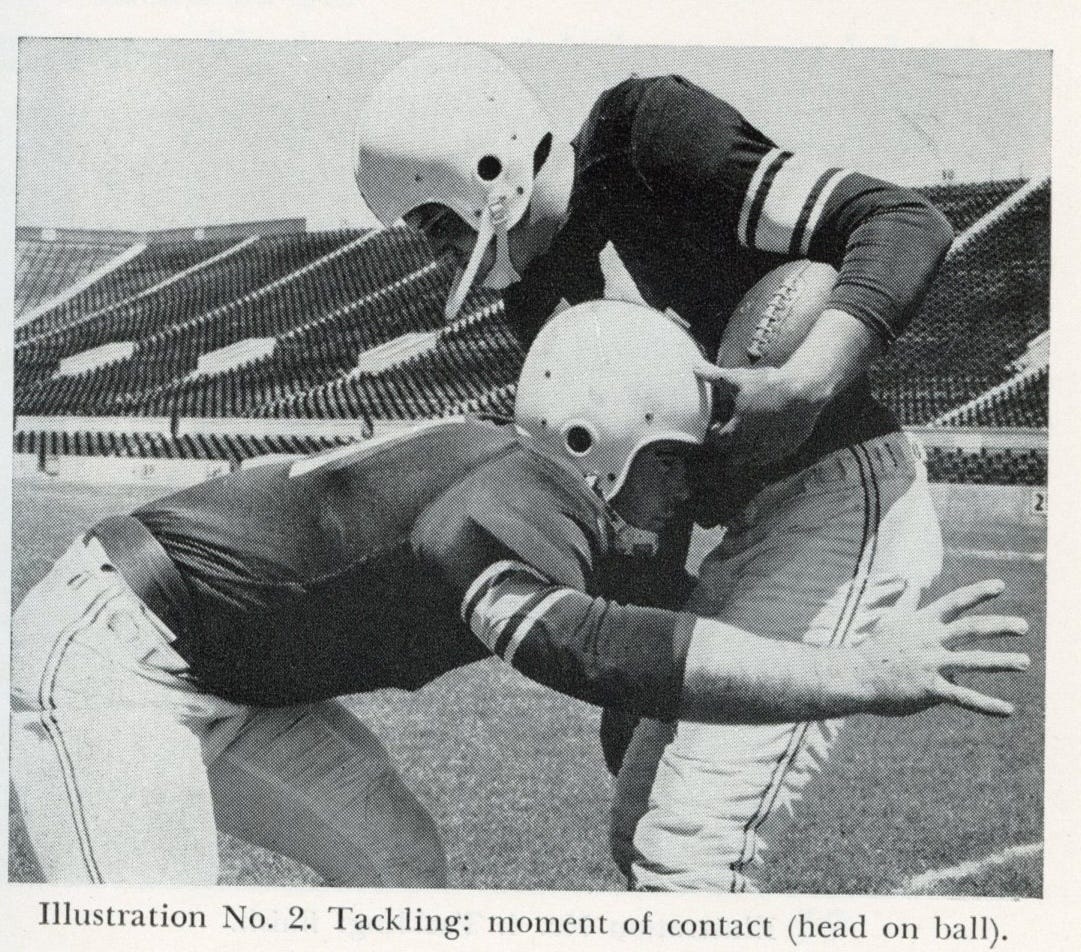
Second, the greater protection of plastic helmets and face masks prompted changes in blocking and tackling techniques. On defense, players were often taught to tackle by putting their head on the ball, which usually meant their aiming point was to one side of the ball carrier or the other, resulting in a shoulder tackle. However, things did not always work out that way on the field (similar to targeting today). Others taught players to tackle by planting their face in the opponent’s numbers, which was even more problematic. For these and other reasons, football saw an increase in deaths (e.g., 30 in 1961), leading to greater focus on safer helmets and playing techniques.
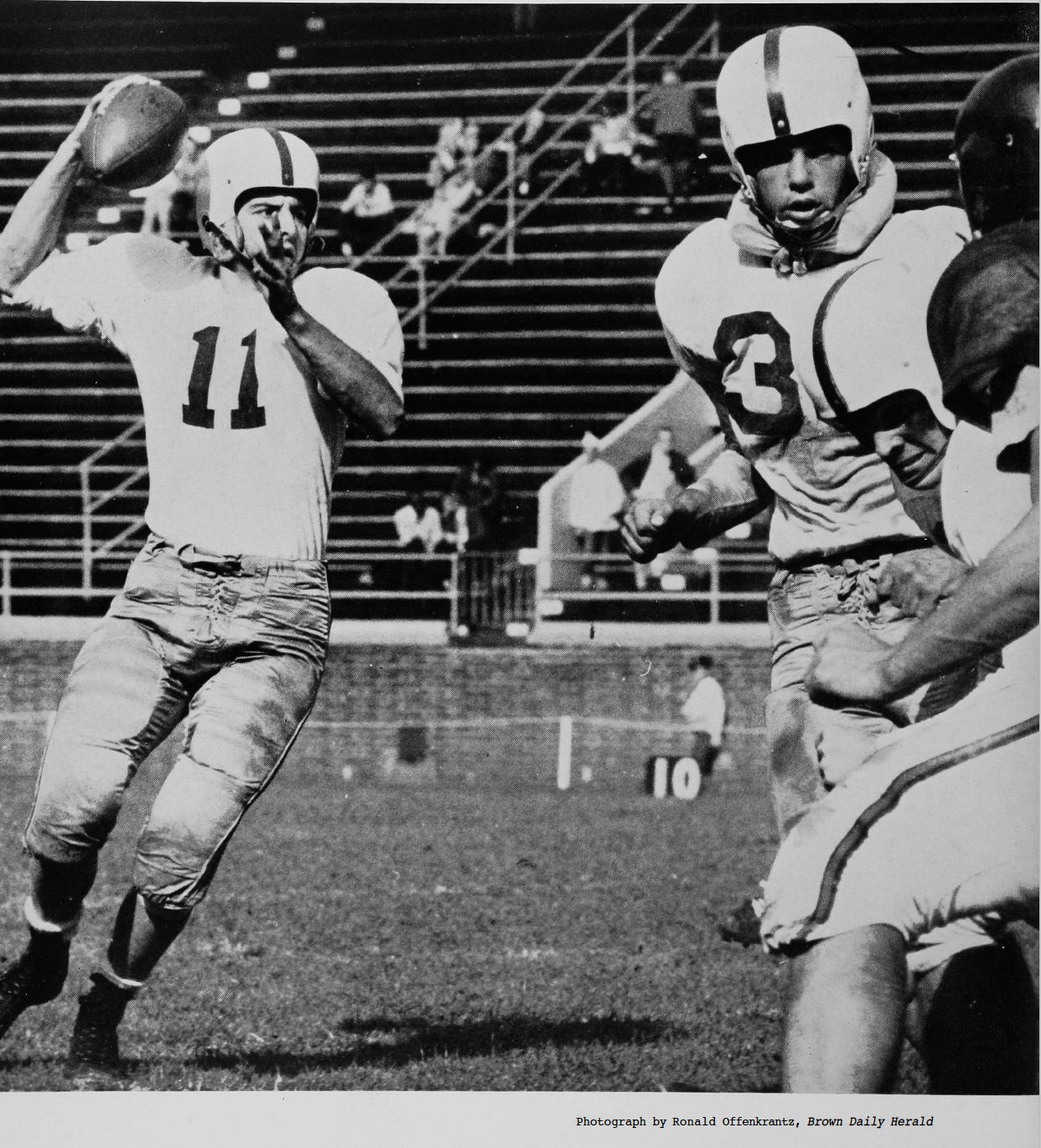
With that background, I searched for information on neck rolls, pads, collars, and similar terms. I found very little until the mid-1950s, when players with neck injuries or histories began wearing “protective collars.” Unlike devices used to aid recovery after an injury or surgery, players wore protective collars on the field, generally for what they described as pinched nerves.
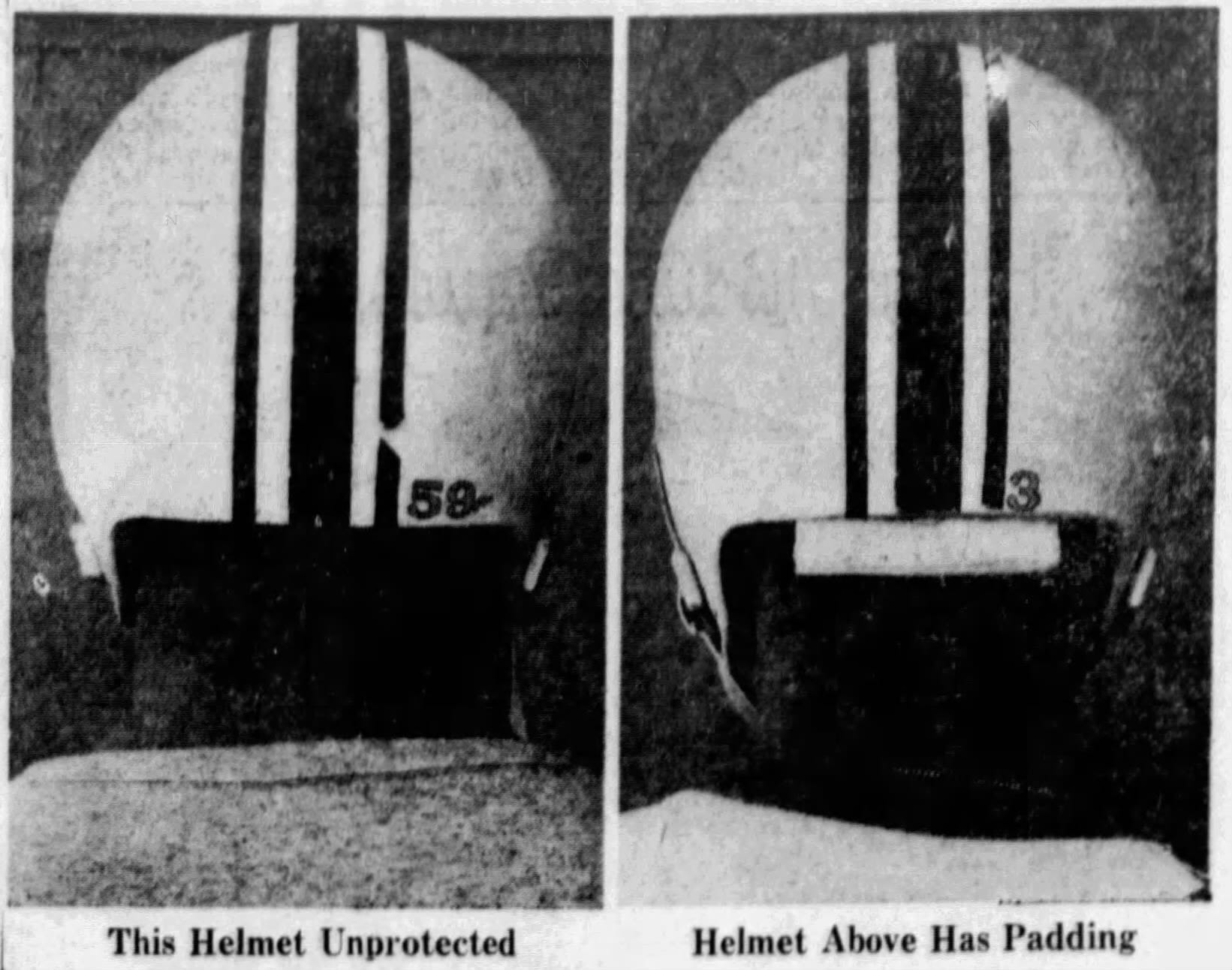
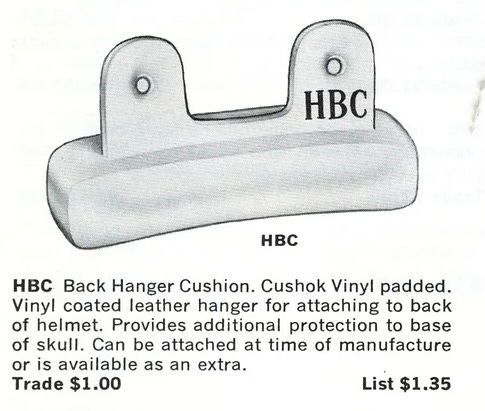
Besides changing the depth of the helmet back, manufacturers added neck bumpers by the early 1960s. Most were relatively simple, while more substantial versions were also available.
While redesigned helmets, neck bumpers, and the availability of four-point chin straps in the 1960s helped limit the guillotine effect, they had less impact on neck injuries and the “stingers” that can result when a player’s head is struck from the side. To address players who suffered neck injuries, players began, as a preventive measure, wearing neck rolls, both the bulky tubular roll and the flatter version.
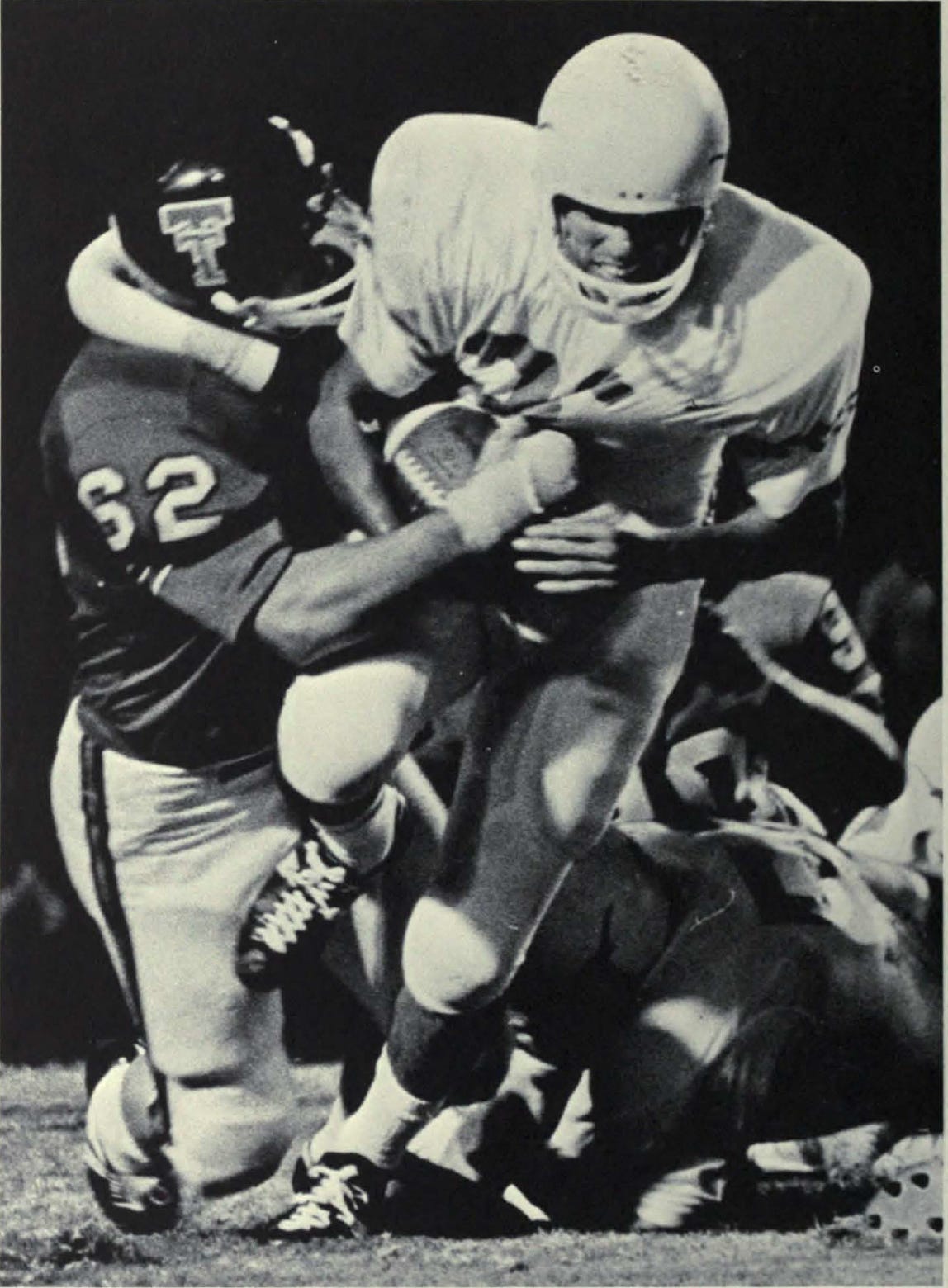
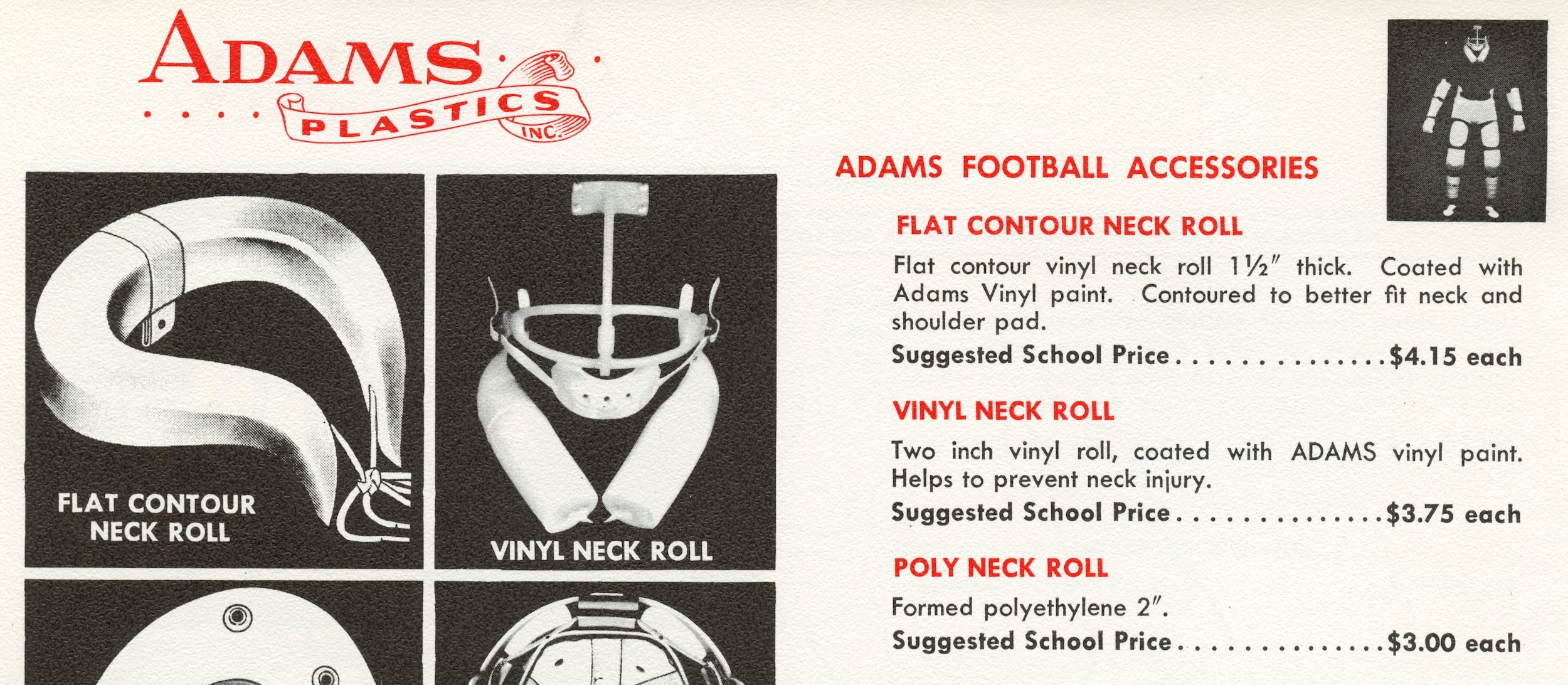
Despite equipment changes and the National Federation of State High School Associations’ ban on butt blocking and face tackling in 1976, neck injuries remained a part of the game.
An unintended consequence of neck rolls, especially the large tubular version, was that they sometimes caused neck injuries since players’ necks were stretched further by the height of the neck roll. This problem led Jeff Fair, the trainer at Oklahoma State, to design the Cowboy Collar in the early 1990s, which supported the back of the head and not the sides.
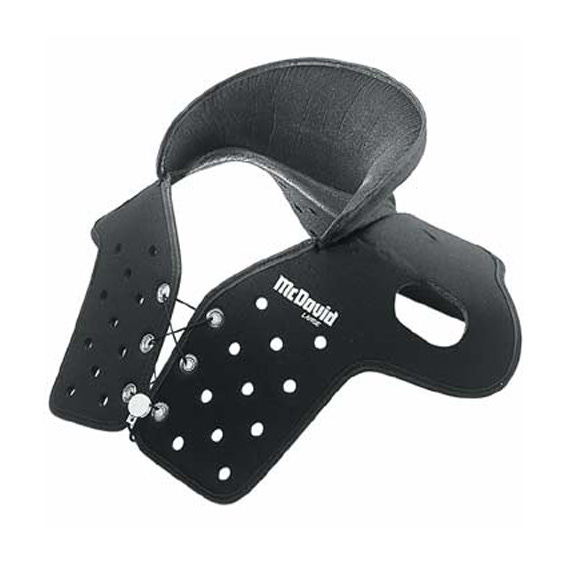
Interestingly, Fair approached Wilson and Rawlings about his invention, but they were not interested since they made little profit on their inexpensive neck rolls. Fair then approached McKnight, which supplied Oklahoma’s knee braces, leading to a partnership.
A similar device, the Kerr Collar, debuted in the mid-2010s.
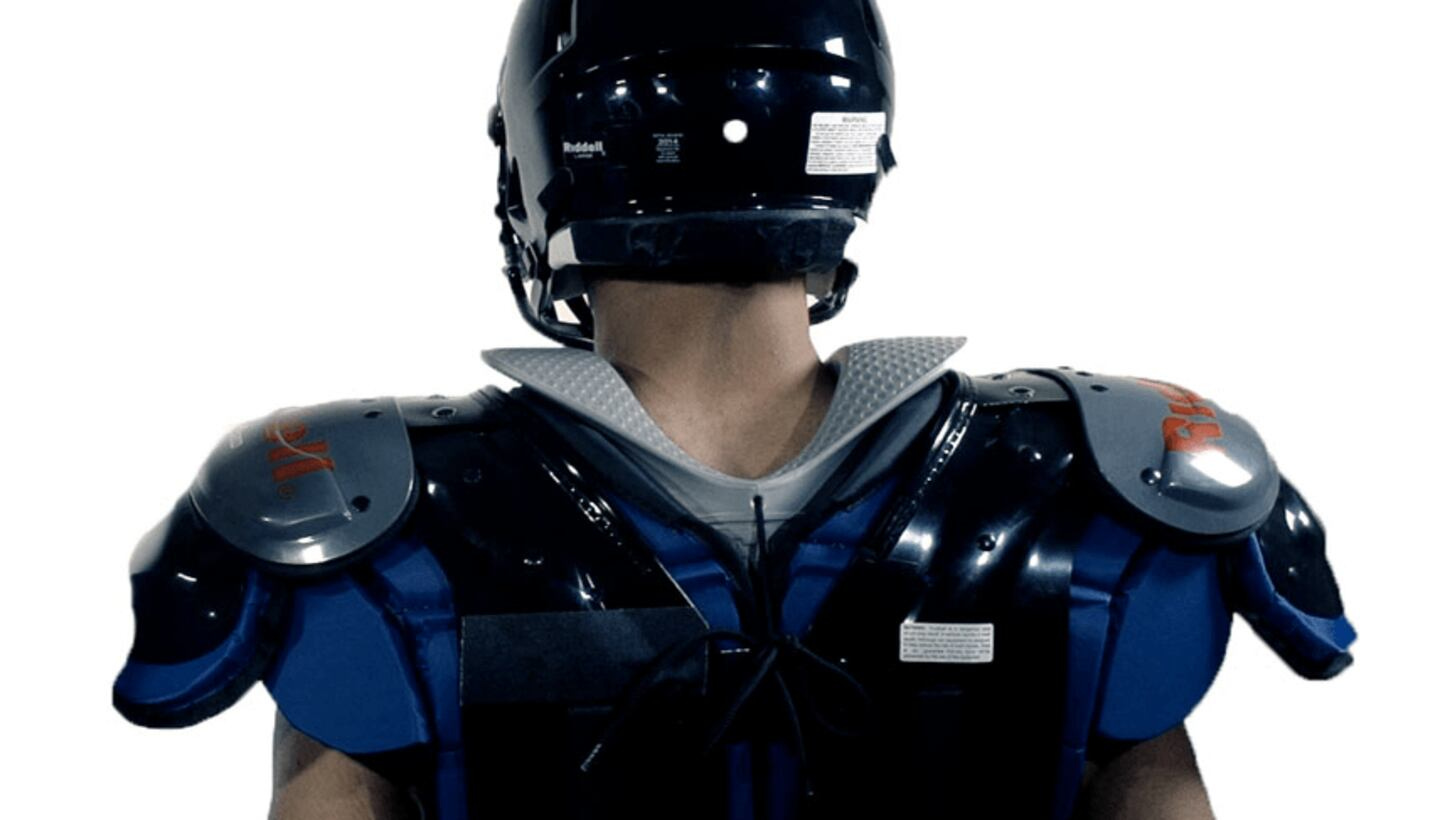
Neck rolls and Cowboy Collars were once the mark of a hard-nosed football player. However, as offenses continued to stretch the field horizontally and vertically, the game saw fewer straight-ahead collisions and more emphasis on speed, leading players to minimize the protective equipment they wore, so you don’t see the devices as often as in the past. However, as with other changes in the game, it is hard to predict how playing styles may change, and innovations in protective equipment may prove popular, so we’ll have to wait a few years to see what rolls around.
Regular readers support Football Archaeology. If you enjoy my work, get a paid subscription, buy me a coffee, or purchase a book.


Great read!
Anything to stave off CTE, I guess.