

It may be difficult for some to think of football during the first weekend of the NCAA tournament, but I don’t have that problem today. One of my two favorite teams didn’t make the tourney, and the other had a low point against High Point.
As we near the end of the current basketball season, there is an opportunity to reflect on past football seasons, especially those before the internet. For all its value, one downside of the internet has been its enabling a mind-numbing, seemingly endless parade of season previews. Back in the day, there were fewer previews. There was Playboy, which bared the secrets of the coming season. Sports Illustrated was also a great resource, but the most anticipated publication was Street & Smith’s College Football Yearbook, which premiered in 1940. It continued until 2007 or so, disappeared for a time, and then restarted under separate ownership
Street and Smith’s was known for its comprehensiveness, providing team-by-team analysis of all major conference members and independents. For many years, they also covered many small conference teams, down to today’s Division III. Having your name, even your school’s name, appear in the magazine was a big deal to the little guys.
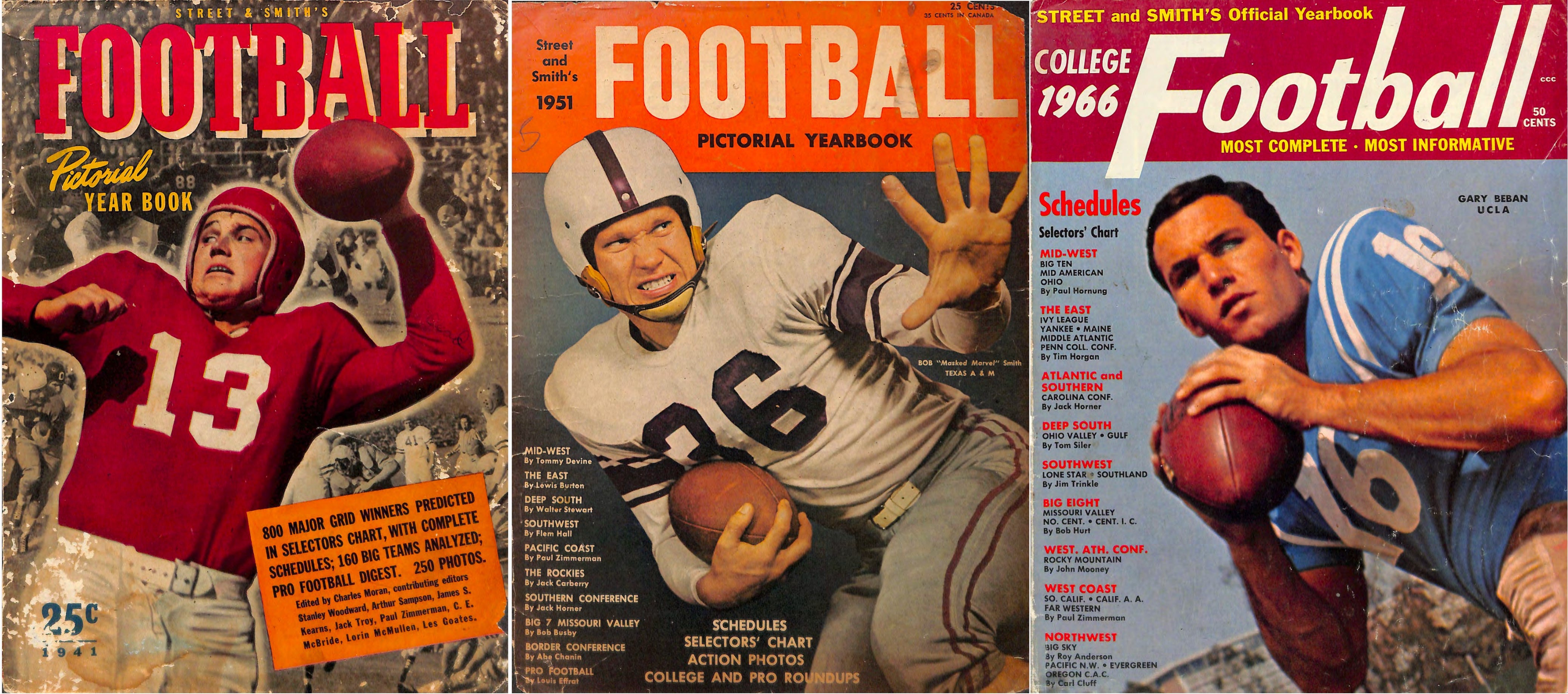
Of course, we could go on and on about Street & Smith’s contents, but we’ll focus instead on their covers. Like most publications, Street & Smith’s almost universally featured the quarterback or running back for a national contender. Bulky linemen did not grace the cover, and only a few receivers and linebackers were so lucky.
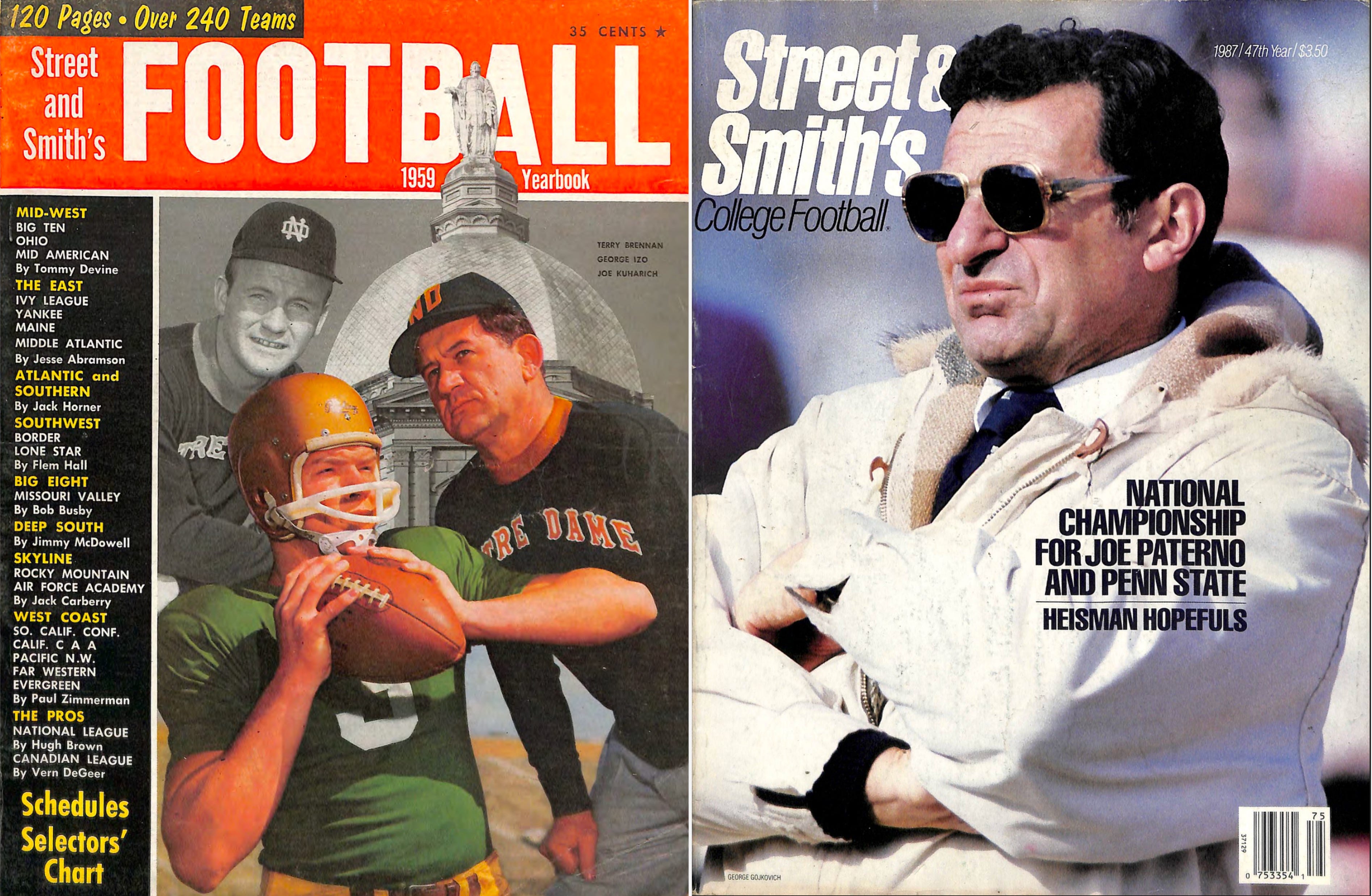
Of the available covers, only two include coaches. Notre Dame set the mark with two coaches and a player in 1959, while Joe Paterno appeared solo in 1987.
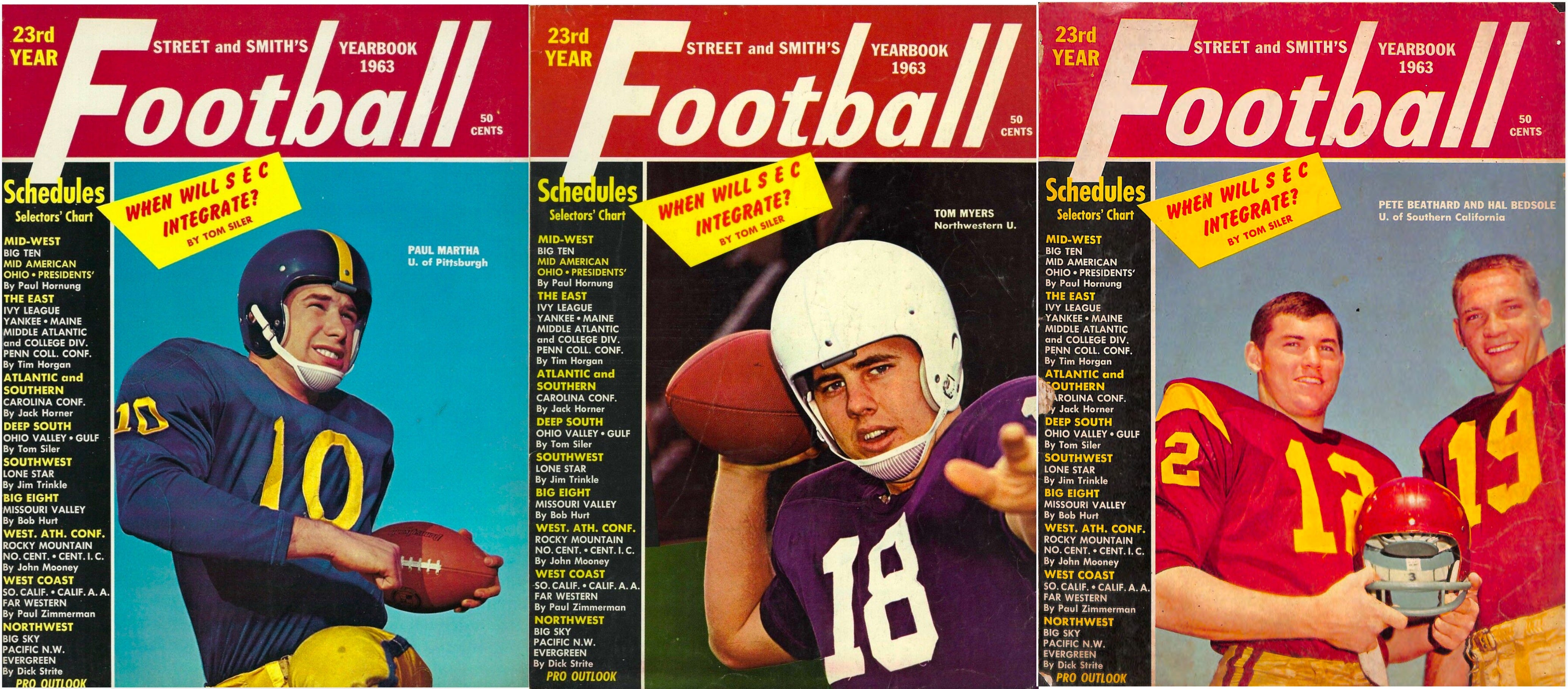
For the first 20+ years, Street & Smith’s published the magazine with the same cover nationwide. Early in the 1960s, however, they created regional covers, though the contents were the same across regions. Below are three regional covers from 1963, an issue that also included an article asking when the SEC would integrate. The SEC did not answer that question until 1967 when Nate Worthington entered a game for Kentucky.
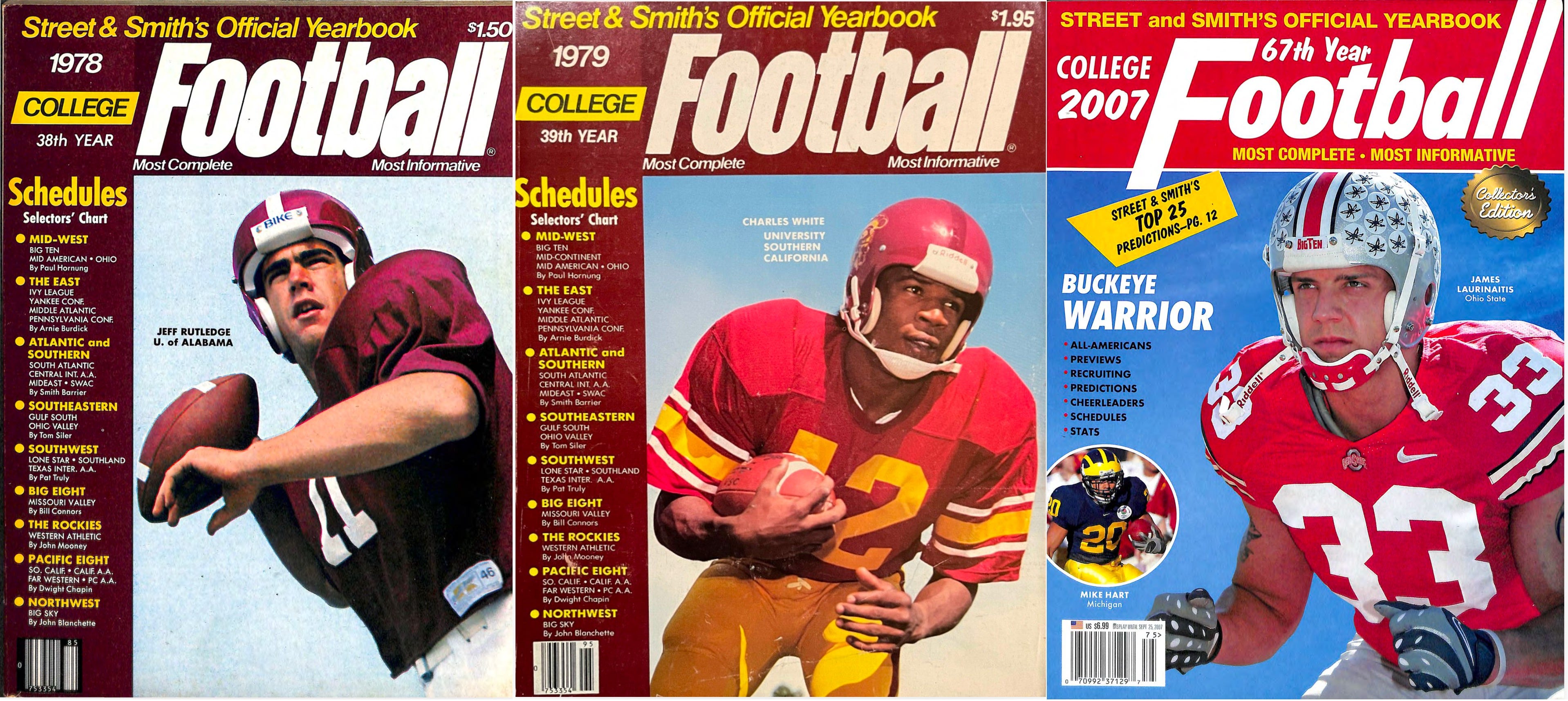
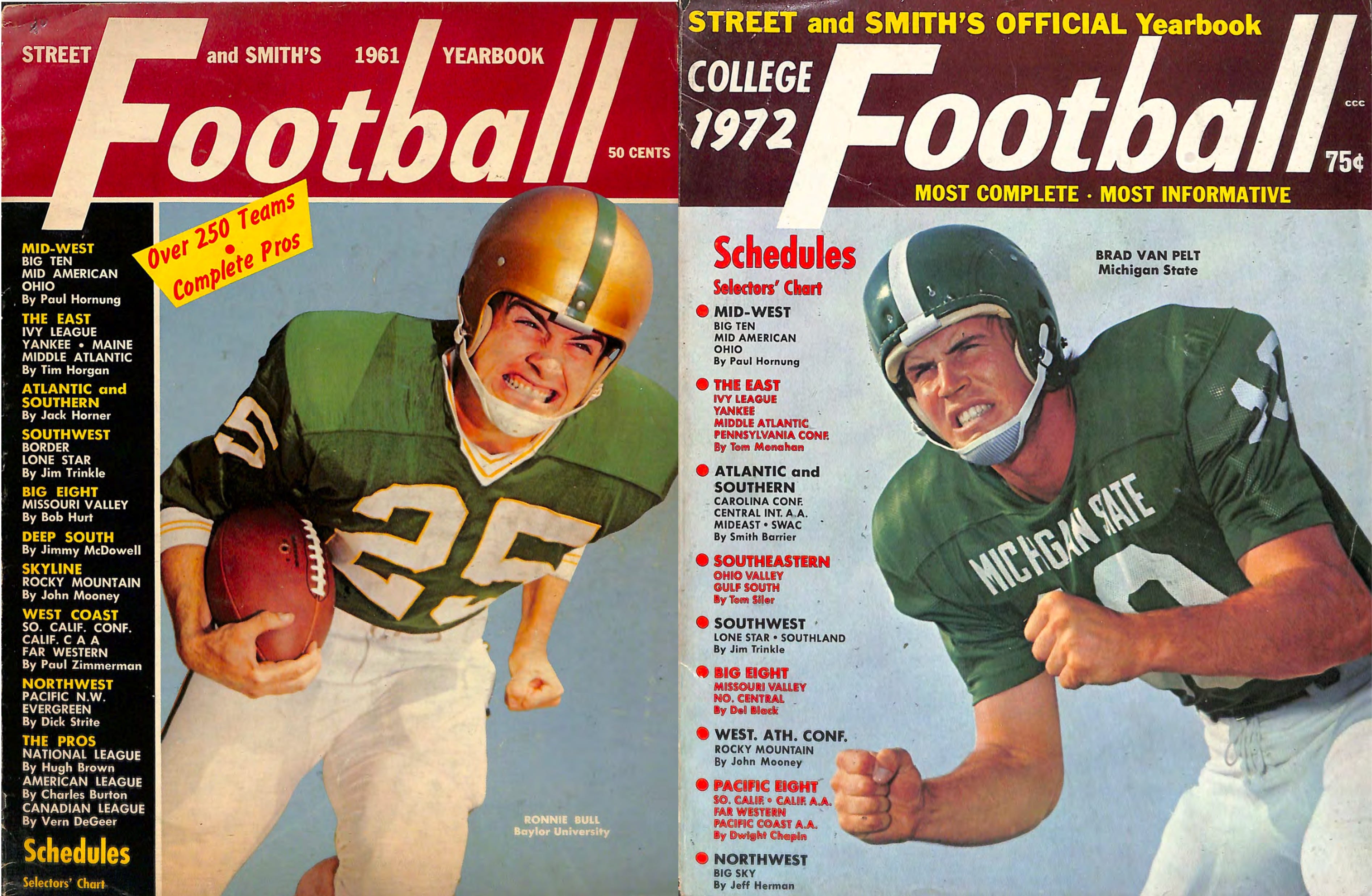
Through the 1979 season, the covers featured posed photos of the old-school type, showing players without face masks, despite players universally wearing them by 1960. Then, out of nowhere, they returned to the no-face mask look in 2007.
Among the odder elements of the posed photos, generally, and one on a few covers, was the tough-guy, gritty look, though not every player pulled it off as well as others.
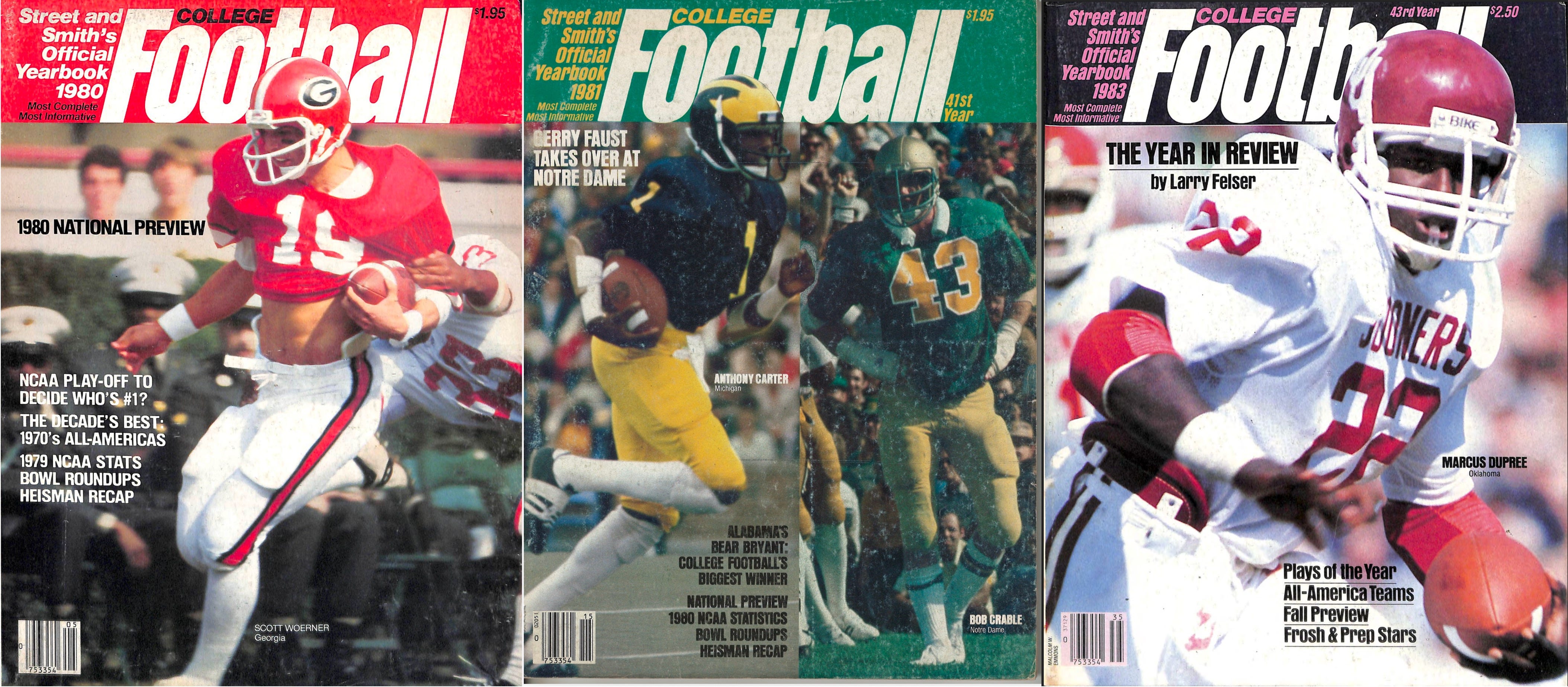
Starting in 1980, the covers began using game action shots of players wearing face masks, which, aside from the 2007 exception, became the norm thereafter.
There are many other ways to slice Street & Smith’s covers, but constraints on the number of images per Substack story require me to end it there. Of course, I invite you to review the covers yourself. You can find about 150 issues and regional variations (covers and contents) available via the Internet Archive. Each is downloadable in numerous formats.
Regular readers support Football Archaeology. If you enjoy my work, get a paid subscription, buy me a coffee, or purchase a book.


Good nostalgia piece. I remember eagerly awaiting the preseason preview magazines, and agree that Street and Smith was a winner. Being short of money as a youth, I'd go to the store with my mom and while she was grocery shopping, I'd go to the magazine section and read as much as I could before either my mother came to tell me we were going home, or a shop employee told me to quit trying to read for free. And, like you Tim, I'm now looking forward to spring football, since we had a basketball low point v. High Point.