
Today’s Tidbit... The Edgar B. Schwabacher Perpetual Trophy

I’ve written in the past about rivalry games and championship trophies that have gone the way of leather helmets, many of which disappeared without a trace.
I also wrote about the days before conferences played full schedules. Teams played varying numbers of conference games, so they decided conference championships based on each team’s conference win percentage, excluding ties. (The NFL followed the same procedure through the 1932 season.)

Today, those separate streams merge in the story of the Edgar B. Schwabacher Perpetual Trophy, which originated in 1921, when its namesake donated it to be awarded to the Pacific Coast Conference (PCC) football champion.
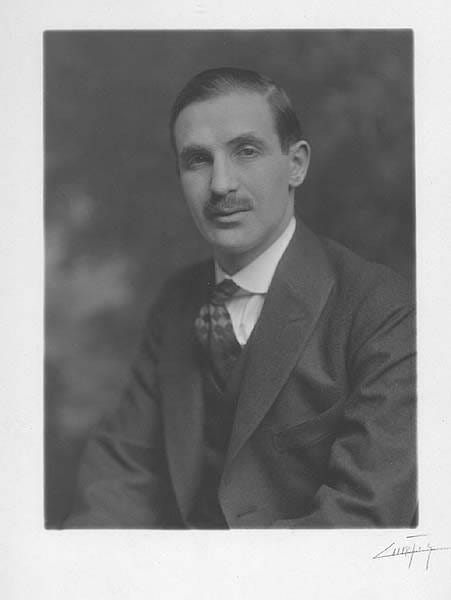
The Schwabachers were a trophy-donating family. The Sam I. Schwabacher Challenge Trophy arrived in 1911 as the traveling award for the West Coast crew championship. Funnily enough, Stanford won the trophy in 1916, dropped the sport after that season, and chose not to pass it on to the next winner.
The Edgar B. Schwabacher Trophy was also a traveling or perpetual trophy. It is a wonderful period design, two statuettes: one is a placekicker, and the other is a holder, lying on the ground holding the ball using the over-under technique, plus there were small, football-shaped engraving plates to list each year’s winners.
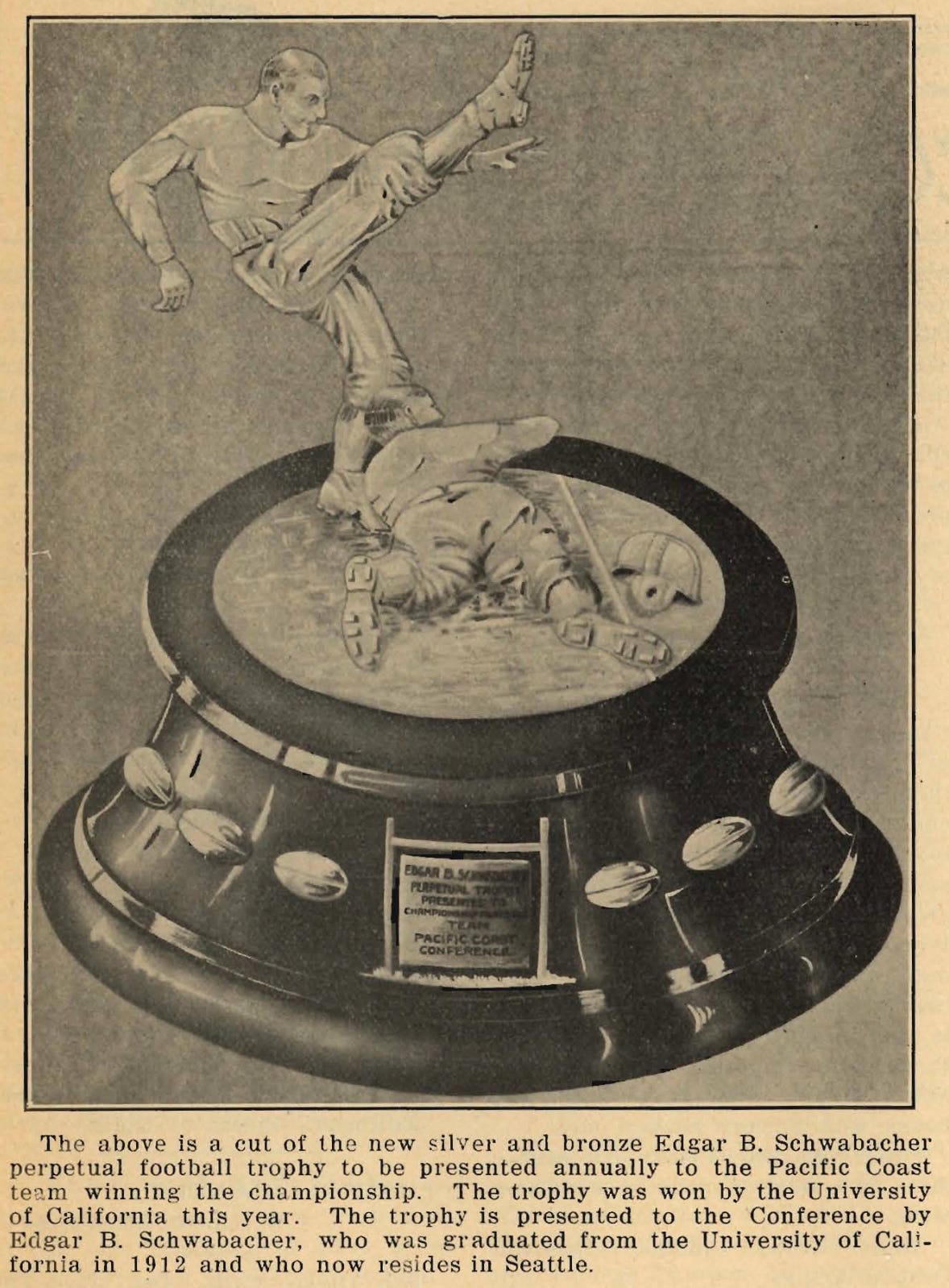
Cal won the title and trophy for the first several years; Stanford and Cal shared it in 1924, so each school had the trophy for six months. Washington earned it in 1925 and Stanford in 1926.
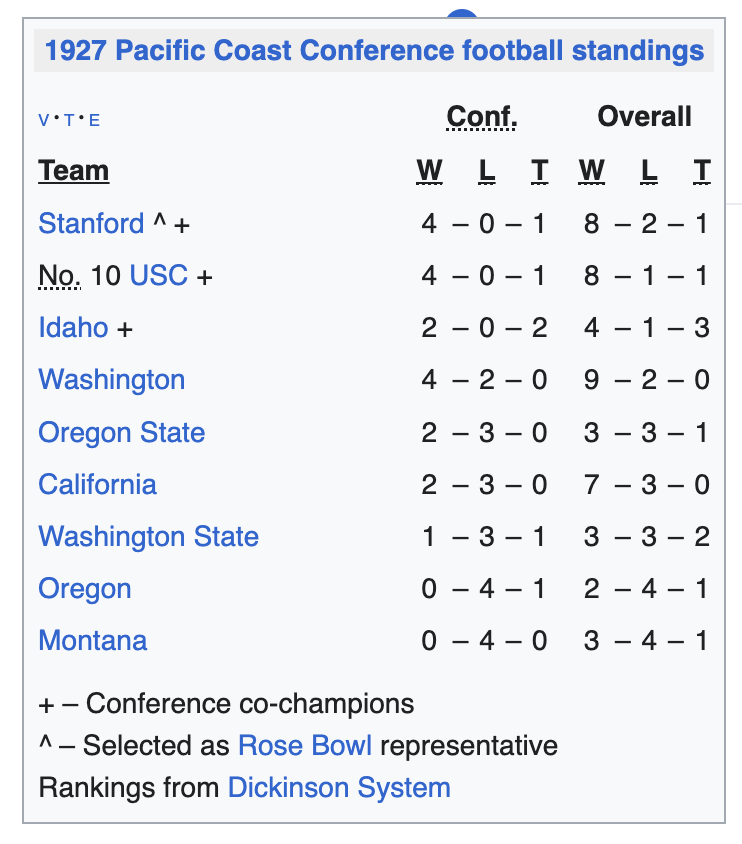
Things got interesting in 1927 when Stanford, USC, and Idaho tied for the conference championship, with Stanford and USC winning four conference games and tying one, while Idaho won two and tied two, giving all three teams a perfect record since ties did not count in the calculation. Nevertheless, there was controversy since Idaho’s wins came over Washington State and Oregon, who combined for one conference win.
.jpg)
The controversy ended at the conference meeting when the members voted Idaho an equal share, but they also discussed moving to a round-robin conference schedule, a step they never took.
The term, round robin, comes from the 17th-century French rond (’round’) ruban (’ribbon’). To hide who signed a petition first, they formatted the petition in a circular pattern, keeping “ring leaders” from being identified.
Thankfully, Idaho got to hold the trophy for four months following its title win.
USC won the title in 1928, while 1929 saw a four-way tie among 6-1 USC, 5-1 Stanford, and 4-1 Cal and Oregon.
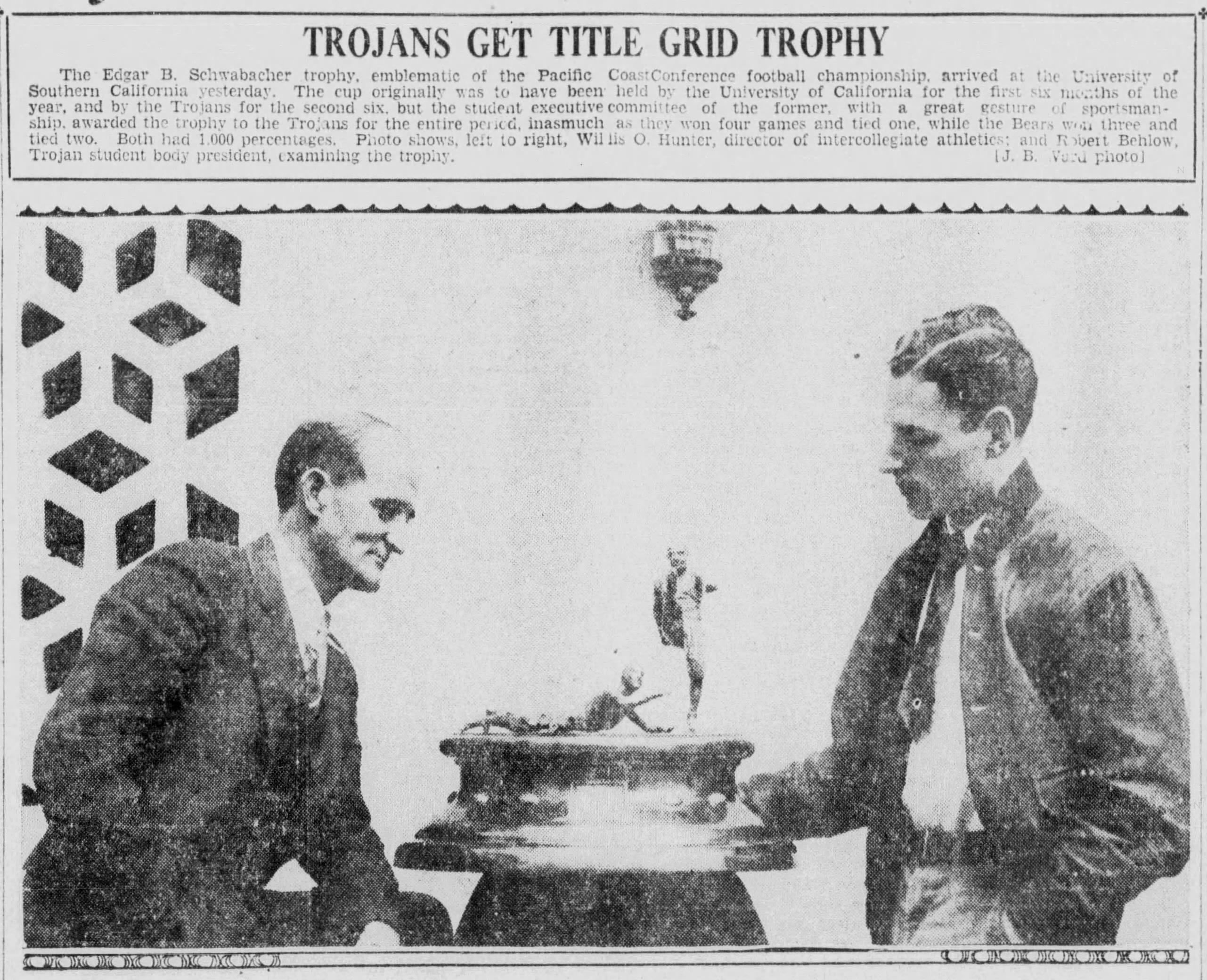
By some accounts, the four-way tie and the schools’ inability to agree to round-robin scheduling led them to stop naming a conference champion and to return the trophy to the donor. (Sources commonly cite conference winners, including those who tied, through the 1958 season.) Whatever the truth of the story, Washington State proudly accepted the trophy in January 1931, but the trophy is absent from media reports thereafter, aside from occasional retrospective stories.
Whether the trophy gathers dust in a Washington State basement, was returned to the donor, or became a boat anchor, it disappeared from view; we shall not look upon its like again.
If you enjoy Football Archaeology and are not a paid subscriber, consider buying me a cup of coffee now and again. You can also buy a paid subscription or purchase one of my books.


Washington State needs to search the basement for this one