

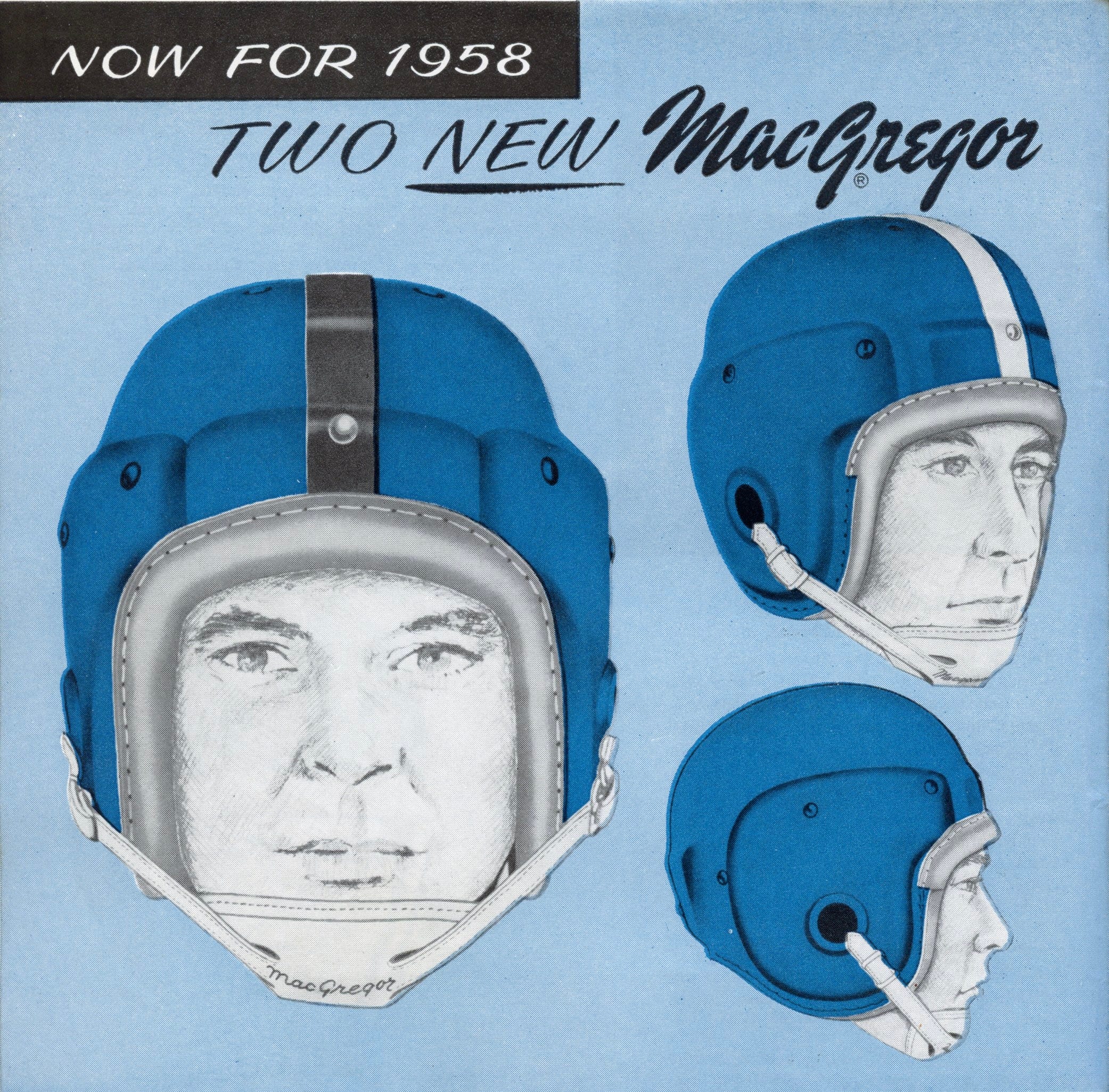
I have a collection of old sporting goods catalogs I use to track the evolution of football equipment. While scanning the pages of a recently acquired 1958 MacGregor Fall and Winter Sports Equipment catalog, I noticed that MacGregor approached helmets differently than other manufacturers. Not only did MacGregor still sell leather helmets, but they also positioned them before their plastic helmets in the catalog.
MacGregor sold its popular H612 leather helmet and three lower-cost models, as well as three plastic helmet models.
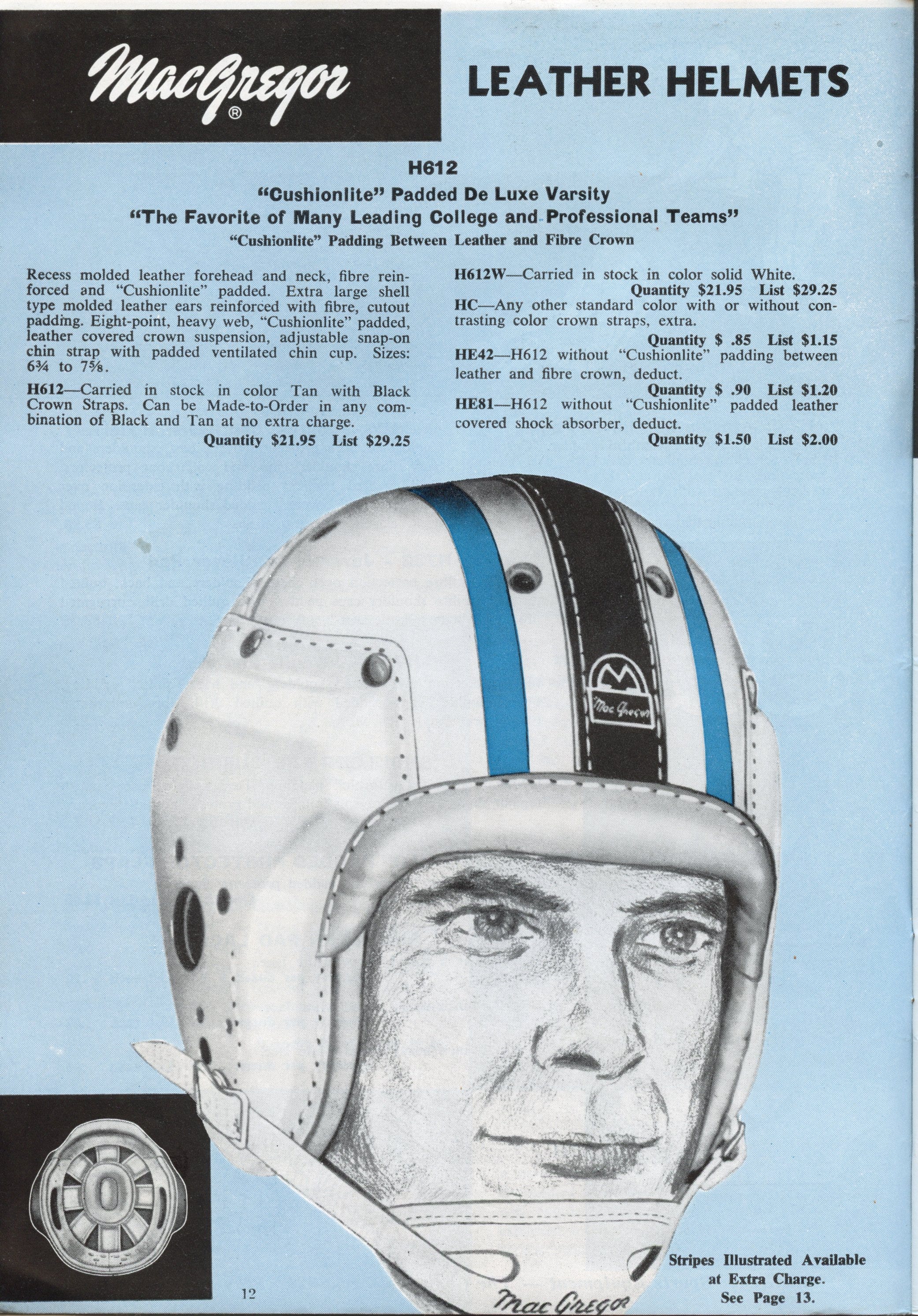
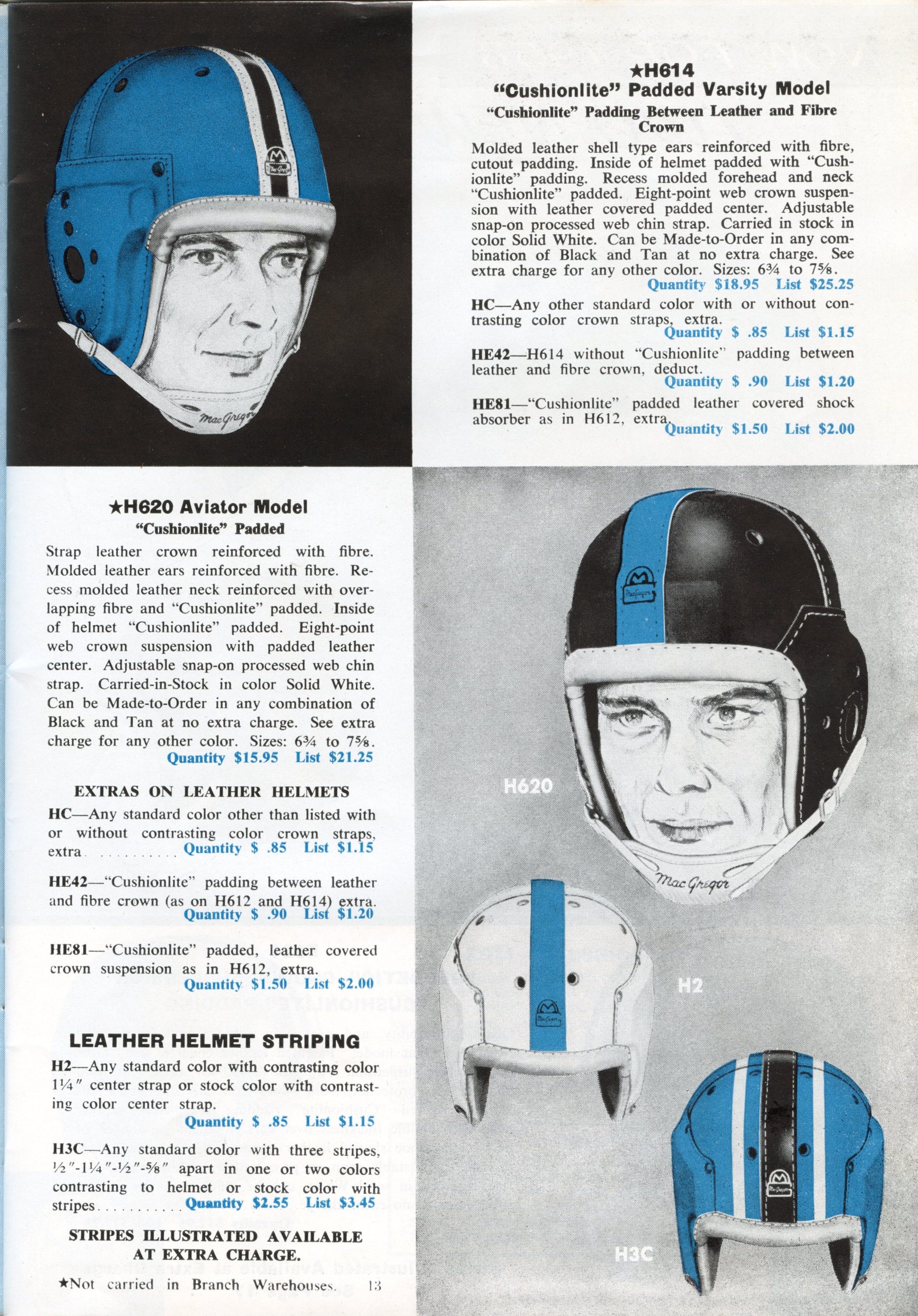
By then, leather helmets were a dying technology. However, they had a band of loyal leather-helmet enthusiasts who considered them safer, better-fitting, and more comfortable than the plastic variety.
Other major manufacturers had switched to plastic by then. Wilson was all plastic by 1955. Spalding sold both leather and plastic in 1955, but went plastic only in 1956, and Rawlings did the same a year later.
The hard shells of plastic helmets virtually eliminated skull fractures, though many worried that they injured others. On the other hand, early plastic models were shaped like their leather counterparts at the bottom, back of the head, which sometimes resulted in a guillotine effect, causing cervical injuries and deaths. That issue was remedied by revising the helmet’s shape, adding pads at the back of the helmet, and by players wearing horse collars or neck rolls.
As teams considered which helmet to wear, economics also entered the picture. Leather helmets cost more than plastic ones, presumably because skilled craftsmen are needed in the manufacturing process. Leather helmets also did not last as long, lacked the easily replaceable interior parts of plastic helmets, were harder to keep clean, and could become misshapen after being wet. Newspaper articles of the time suggest that high school coaches were more likely than college coaches to prefer leather helmets, but their tighter budgets sometimes forced them to buy plastic helmets, particularly since lower-quality models cost a third as much as high-end leather versions.
Still, the leather helmet loyalists persevered, and so did MacGregor when they introduced two new leather models in 1961.
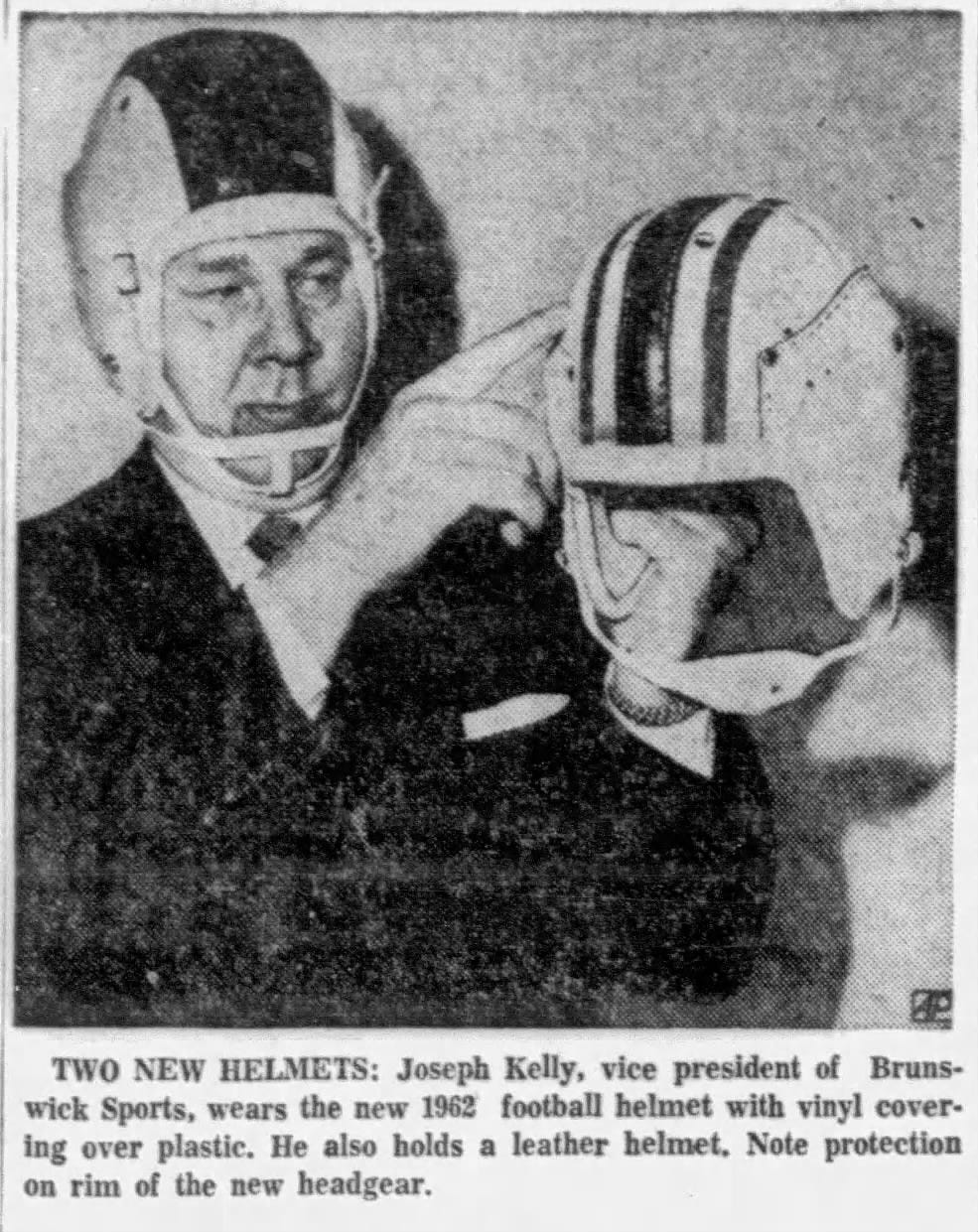
Perhaps MacGregor thought their signature Absorblo padding made their leather helmets more protective than plastic helmets. Still, even they could not swim against the tide of plastic, and they dropped their leather helmet line a few years later.
While that tells us when new leather helmets gave up the galloping ghost, which team or teams were the last to hit the field wearing leather helmets?
There isn’t a simple, surefire way to determine when teams switched to plastic, but various sources indicate that NFL players stopped wearing leather helmets by 1950. For college teams, I scanned my saved images from the late 1950s and found that in 1957, only Notre Dame, Marquette, and Xavier still wore leather. (I’m sure there were others, but they were not among my saved images.)
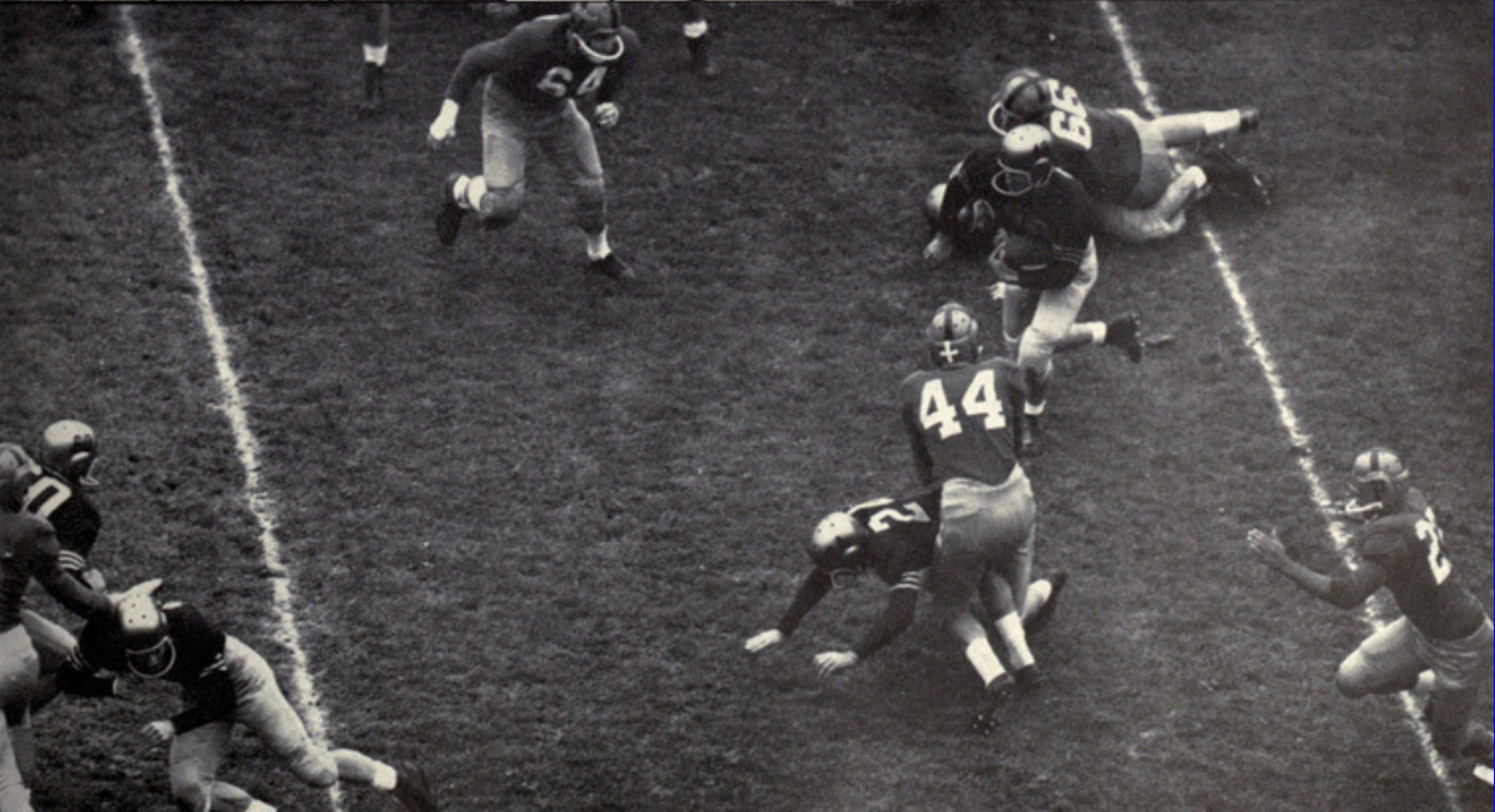
Notre Dame and Marquette switched to plastic in 1958, but it’s difficult to determine when Xavier made the transition, since the ear muffs and forehead pads on their MacGregor helmets make their leather and plastic models appear similar.
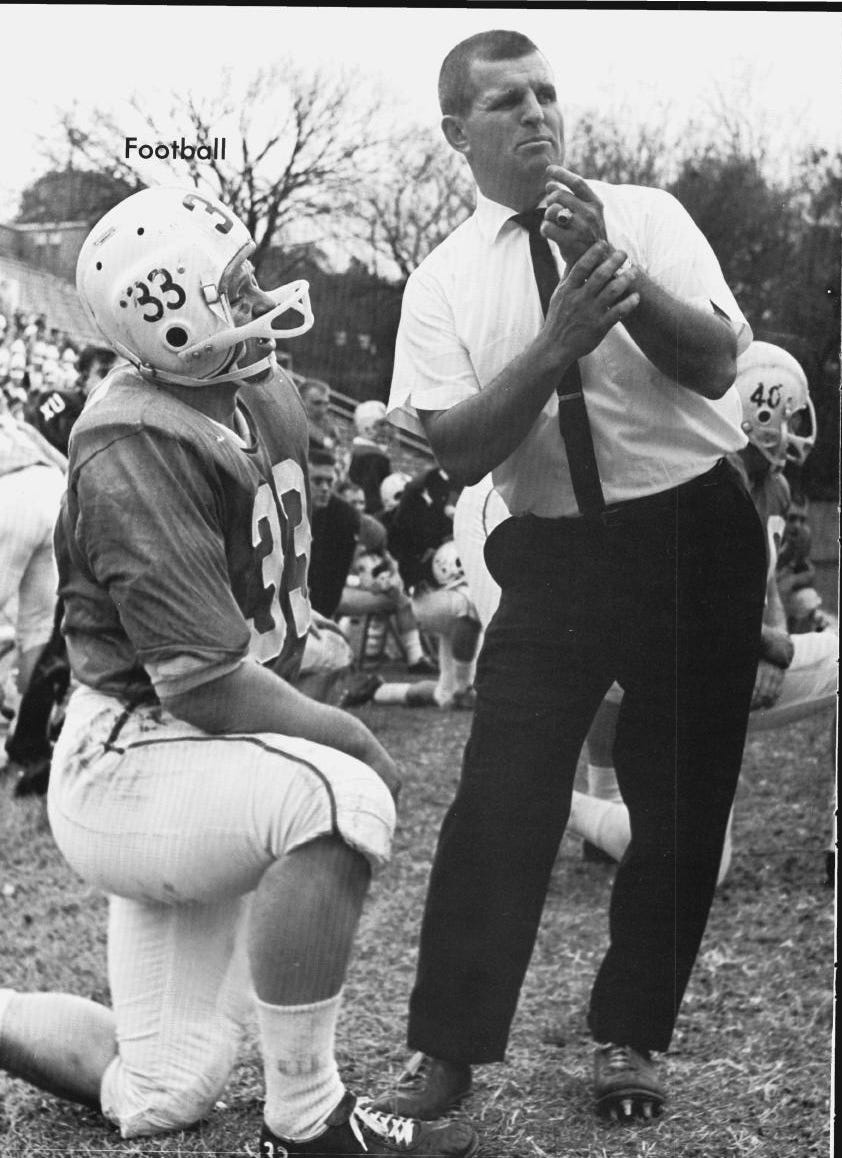
The other approach for finding the last team to wear leather helmets was a newspaper search, which struck gold (and blue). That search identified Delaware as the last team to wear leather. (If anyone has information about other teams wearing leather helmets in the 1960s, please comment below.)
Delaware’s coach, Dave Nelson, played at Michigan in the 1940s, and he had his Blue Hens team wear similar winged helmets. Nelson was also a long-time member of the NCAA Rules Committee and exceptionally well-informed about football safety issues. He believed that leather helmets from the early 1960s were safer than plastic helmets, so the Blue Hens continued wearing leather. In 1982, Nelson claimed that Delaware adopted plastic helmets in 1965 only because no manufacturer made leather helmets at the time. Images from Delaware’s 1964 yearbook show the team donning leather helmets, as indicated by the shape of the ear muffs and the leather cross strap atop the helmet.
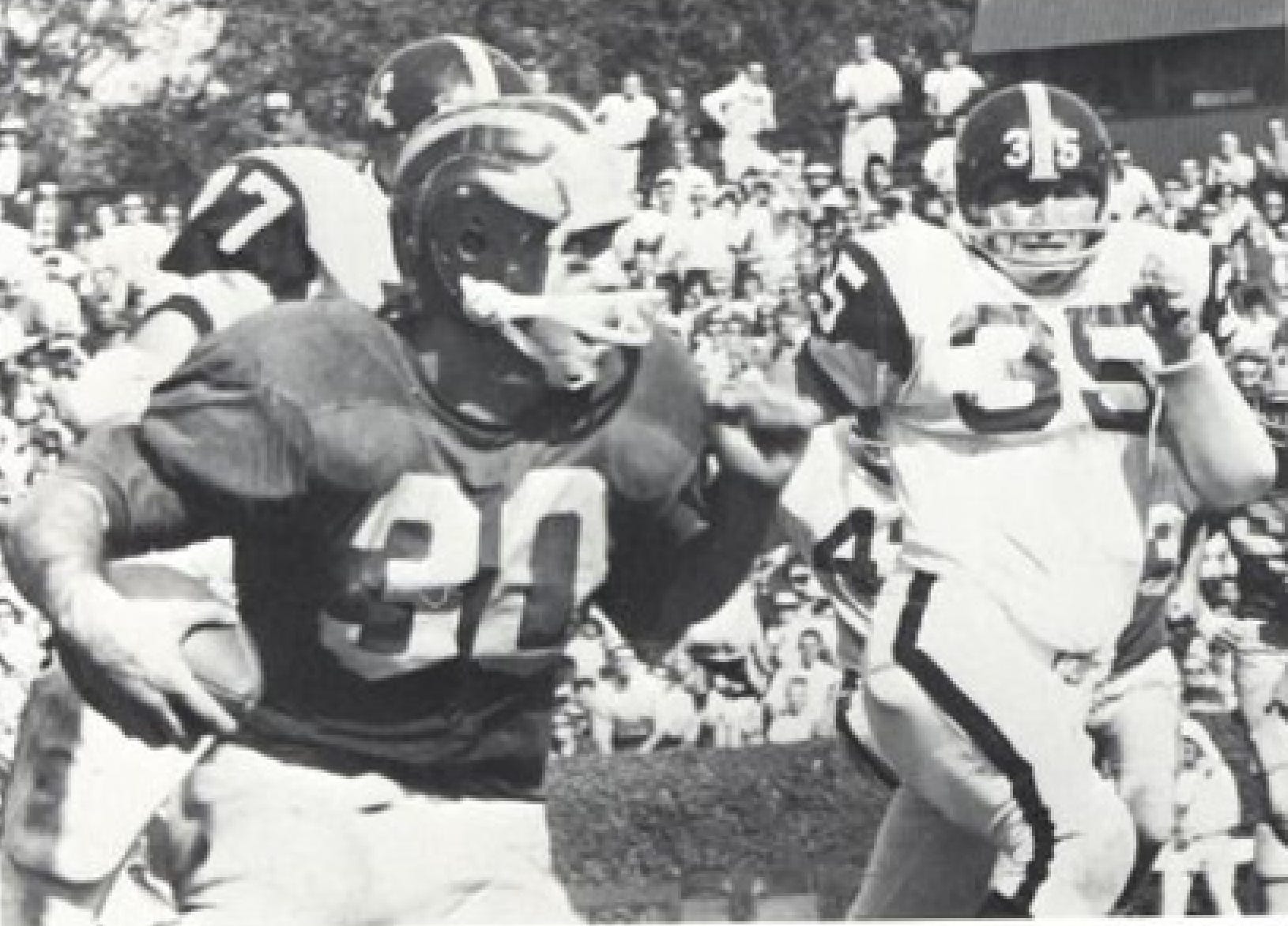
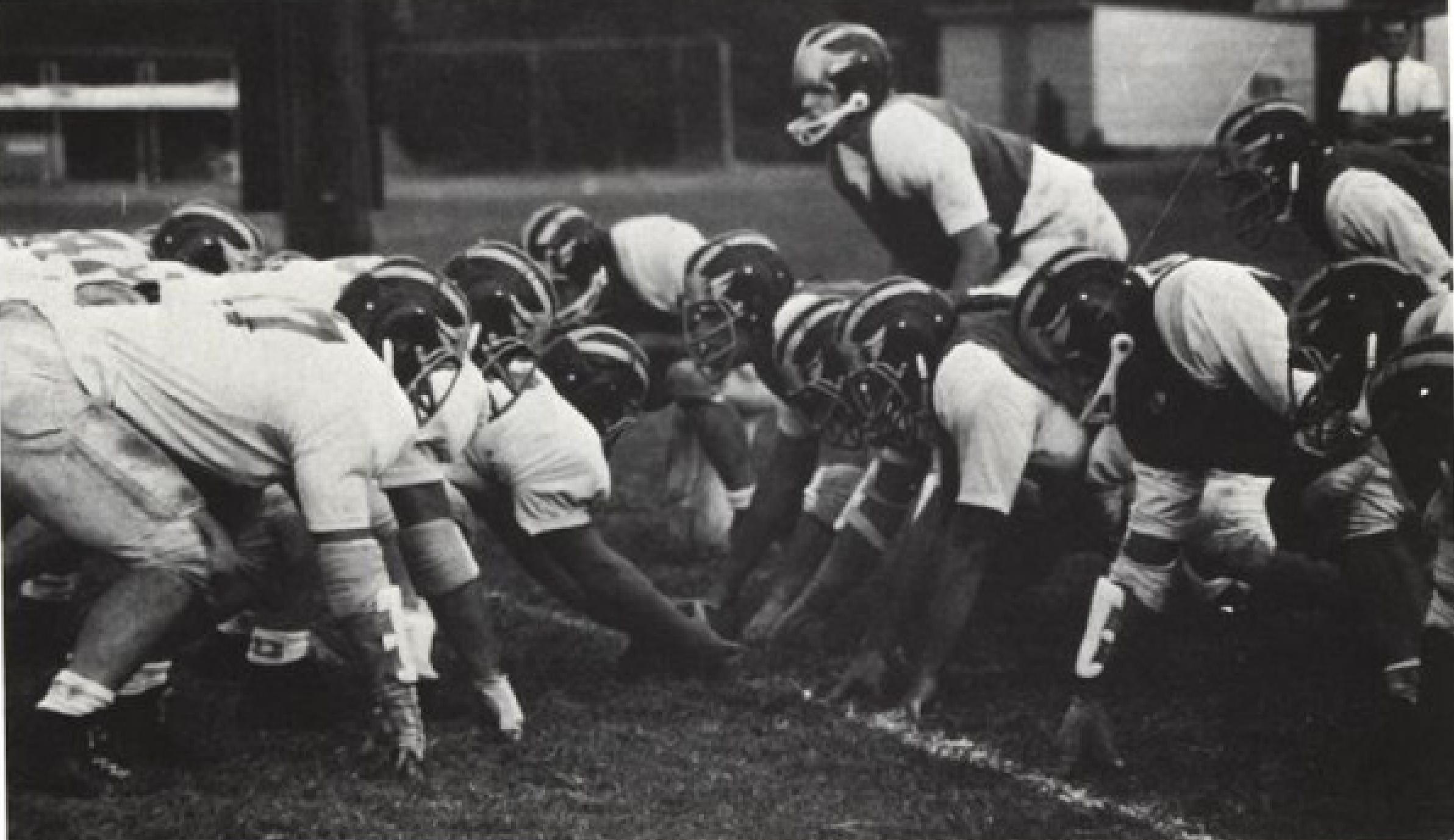
So, while the claim that Delaware was the last college team to wear leather helmets is not definitive, I award them the title until someone provides photographic or other evidence of a more worthy team.
With the holidays approaching, now is the time to add one or more books to your holiday lists. Make yourself and others merry.

For me, the signature helmet issue has become 'protection' for the opposing player as well ..