
Today's Tidbit... Wearing Shoulder Pads Atop the Jersey

The NCAA required players to wear shoulder pads in 1974, and their jerseys had to cover them since 1975. That rule came in response to tearaway jerseys, which the NCAA banned in 1978. Still, those events raise the questions: when and why did players start covering their shoulder pads in the first place?
Shoulder pads came along in 1895, apparently at Yale; at least the Elis were the first documented users. Their shoulder pads were custom or homemade, stuffed leather or cloth pads, sewn on the exterior of players’ jerseys.
Sporting goods manufacturers, who were close with the top teams, picked up on the trend and introduced commercially available shoulder pads that mirrored the homemade versions: simple stuffed pads sewn atop the jersey.
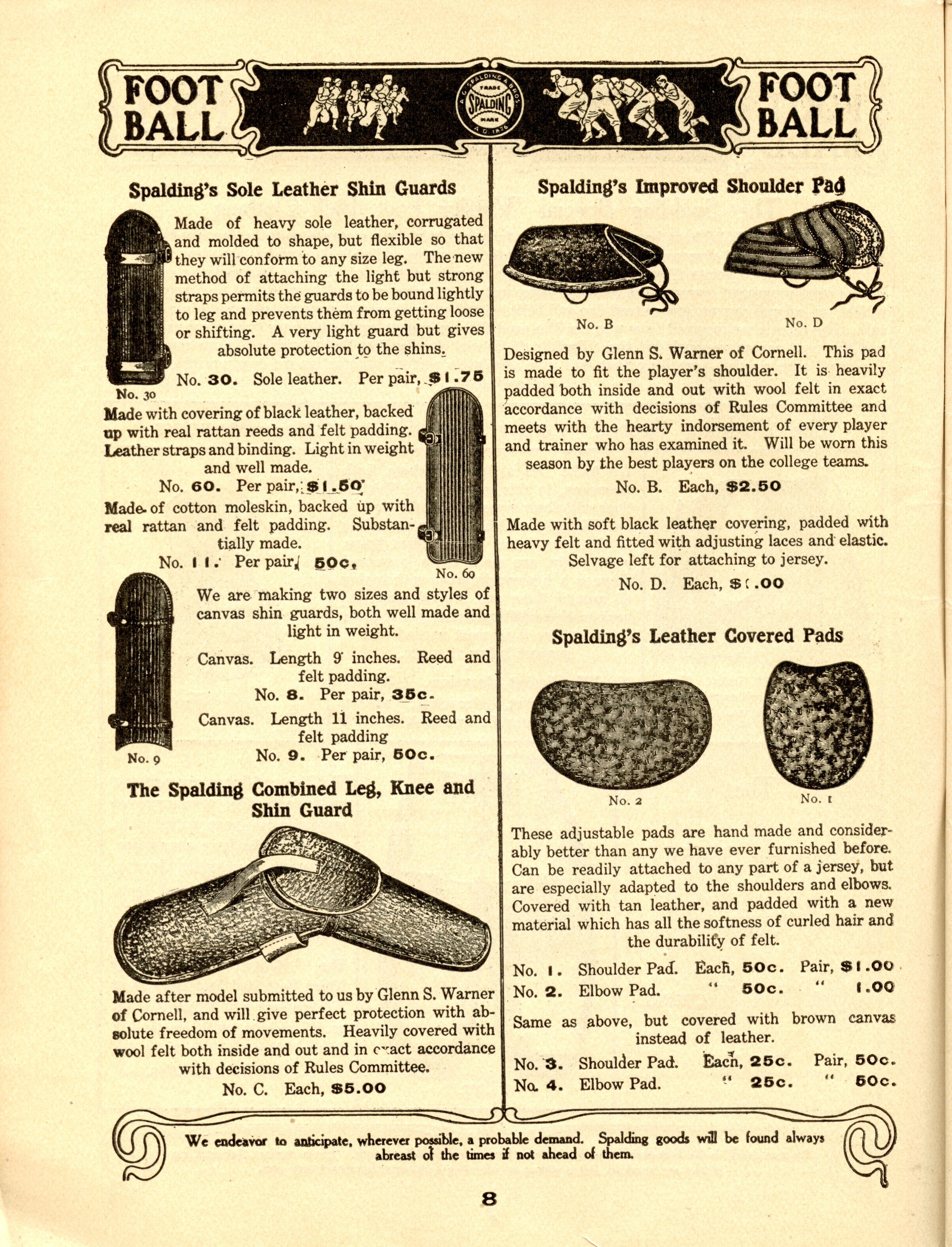
Although many teams and players wore the fancy leather pads from Spalding and their competitors, those with fewer resources rolled their own.
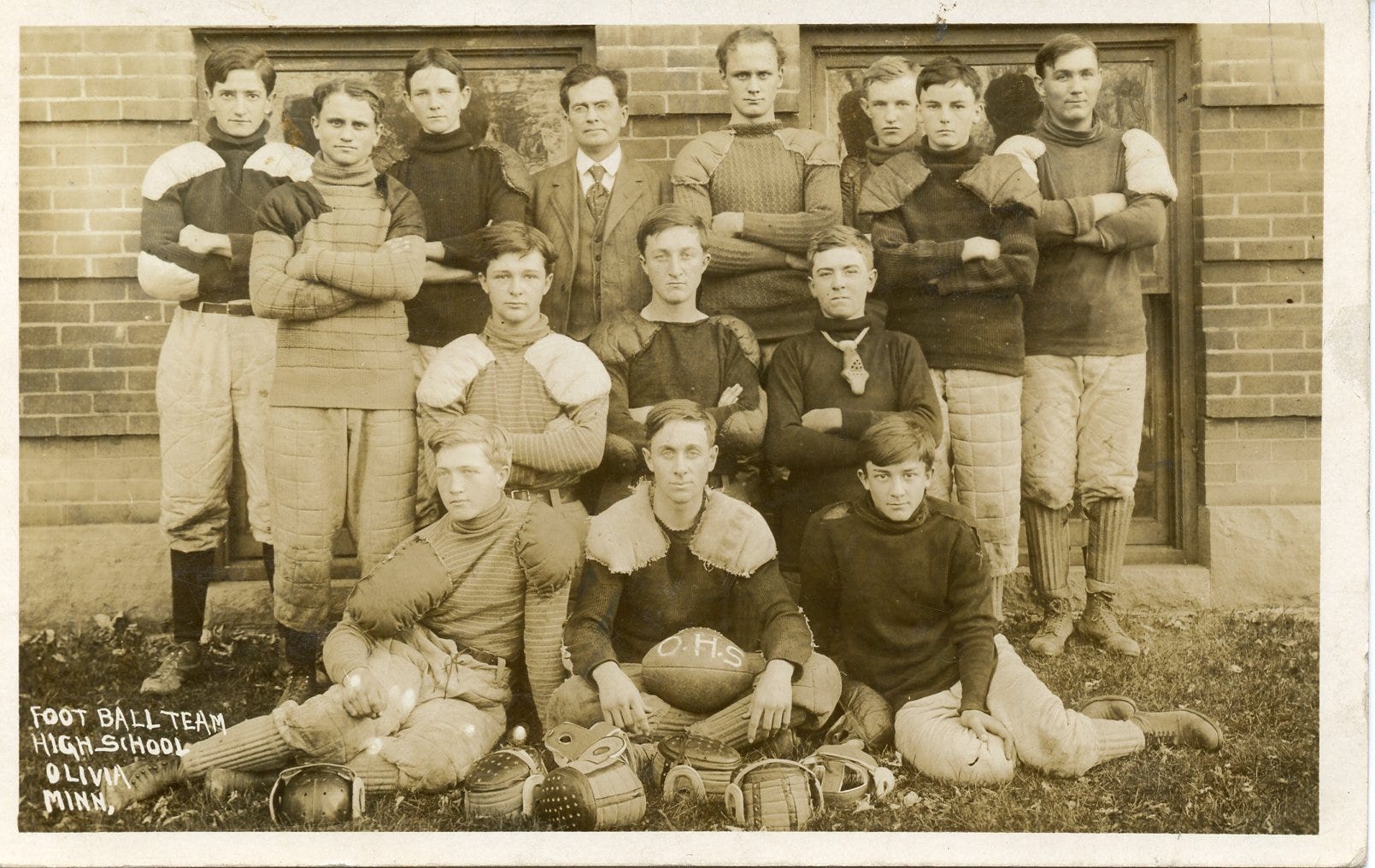
While the early pads typically sat atop the shoulders, they soon added protective caps over the bursa and extended the padding to cover the collarbones. As those changes occurred, shoulder pads evolved into integrated units connecting the left, right, and middle, and began taking the shape resembling shoulder pads today.
An element of shoulder pad use that seems strange today is that early wearers of the integrated units did not always wear their shoulder pads under their jerseys. Some wore them atop the jersey.
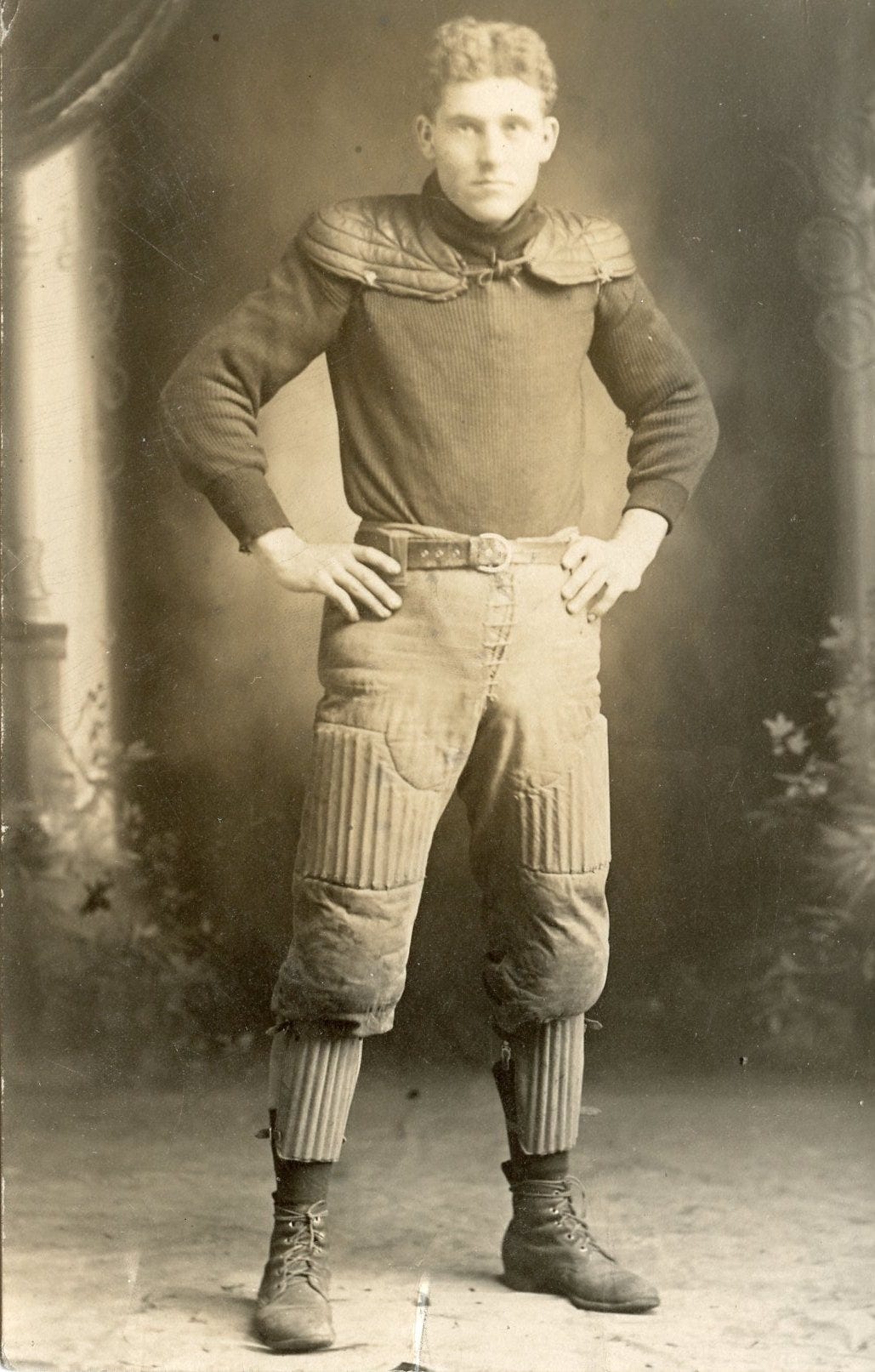
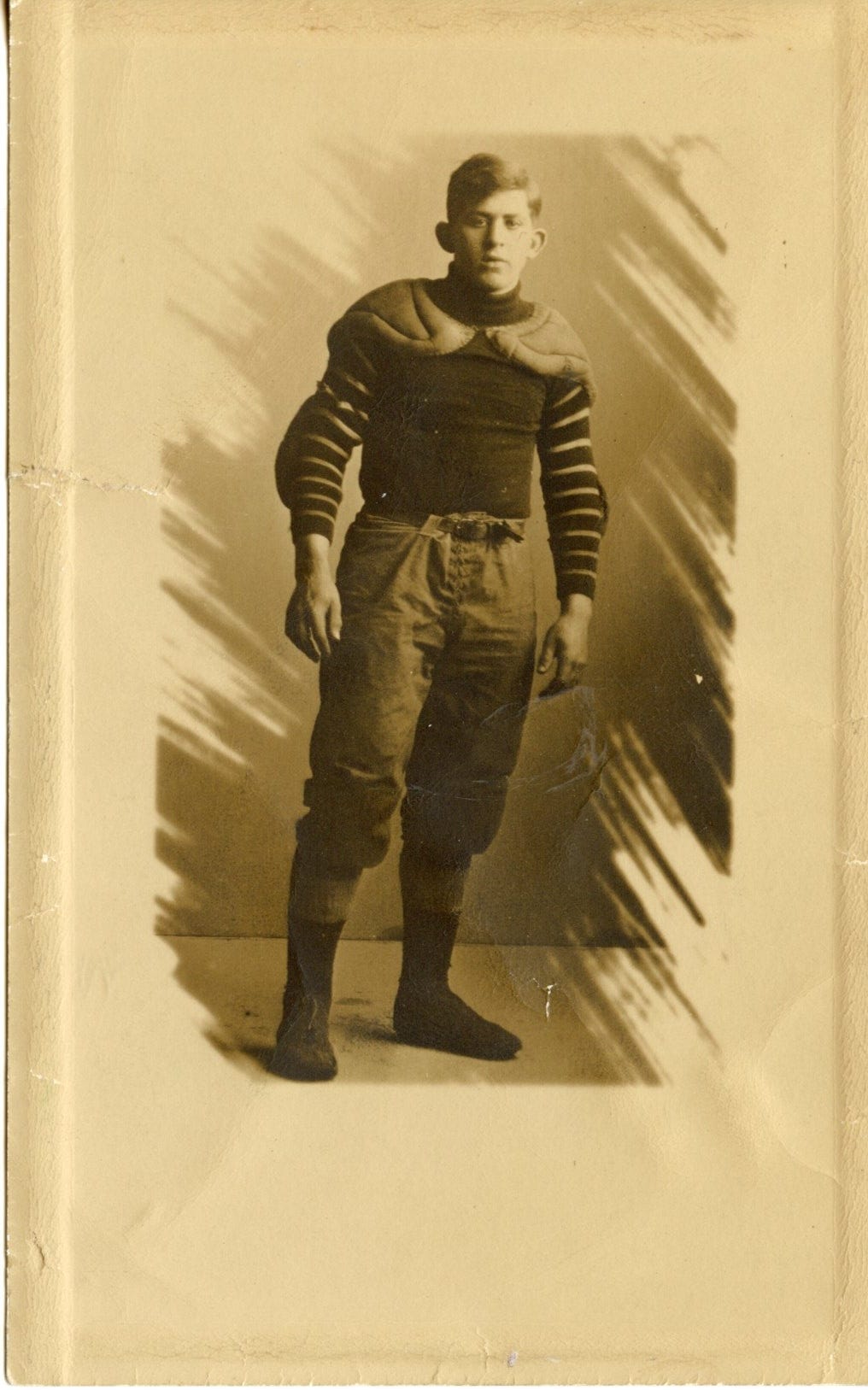
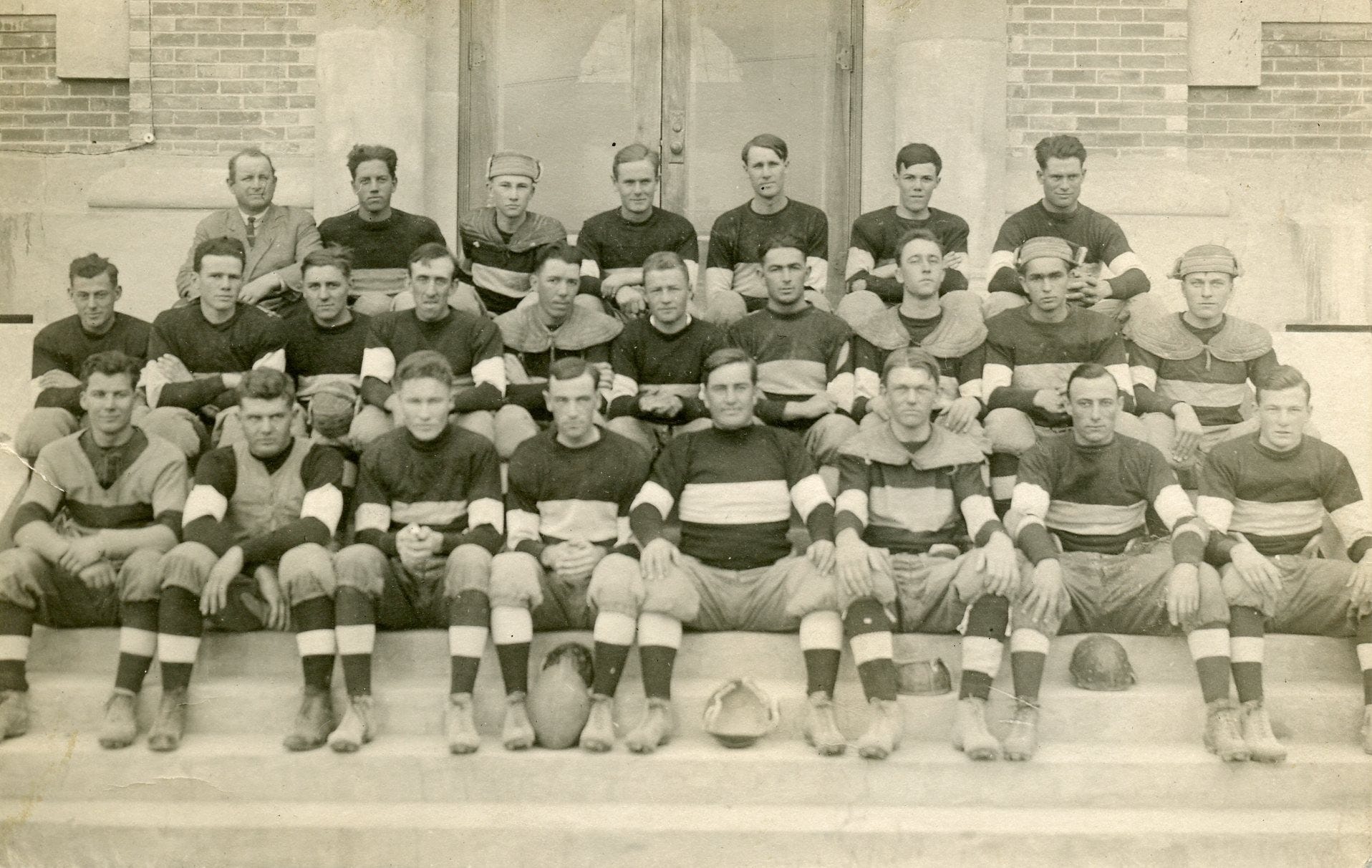
When teams began covering their shoulder pads can be difficult to determine since, relative to the monster shoulder pads that came later, early integrated units were small and thin. Their size and the quality of game action images often make it difficult to tell whether a team or player wore shoulder pads under their jerseys.
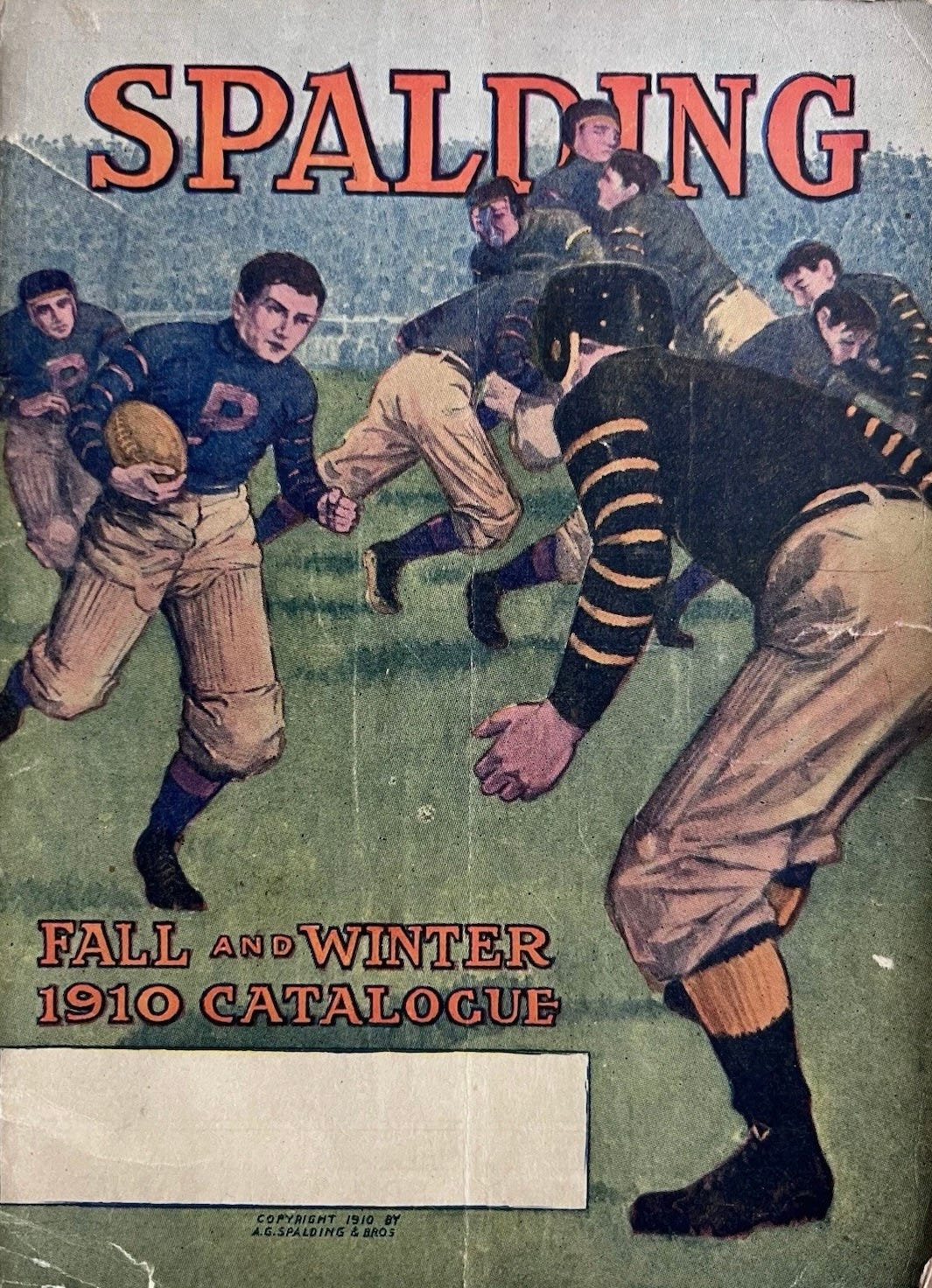
You might think that those who wore their shoulder pads over their jerseys were uninformed rubes, the sort whose great-grandsons wore jorts or capris pants. I thought the same until I looked at the 1910 Spalding Fall and Winter catalog. The cover has an illustration of two teams in a game in which it is unclear whether either team wears shoulder pads.
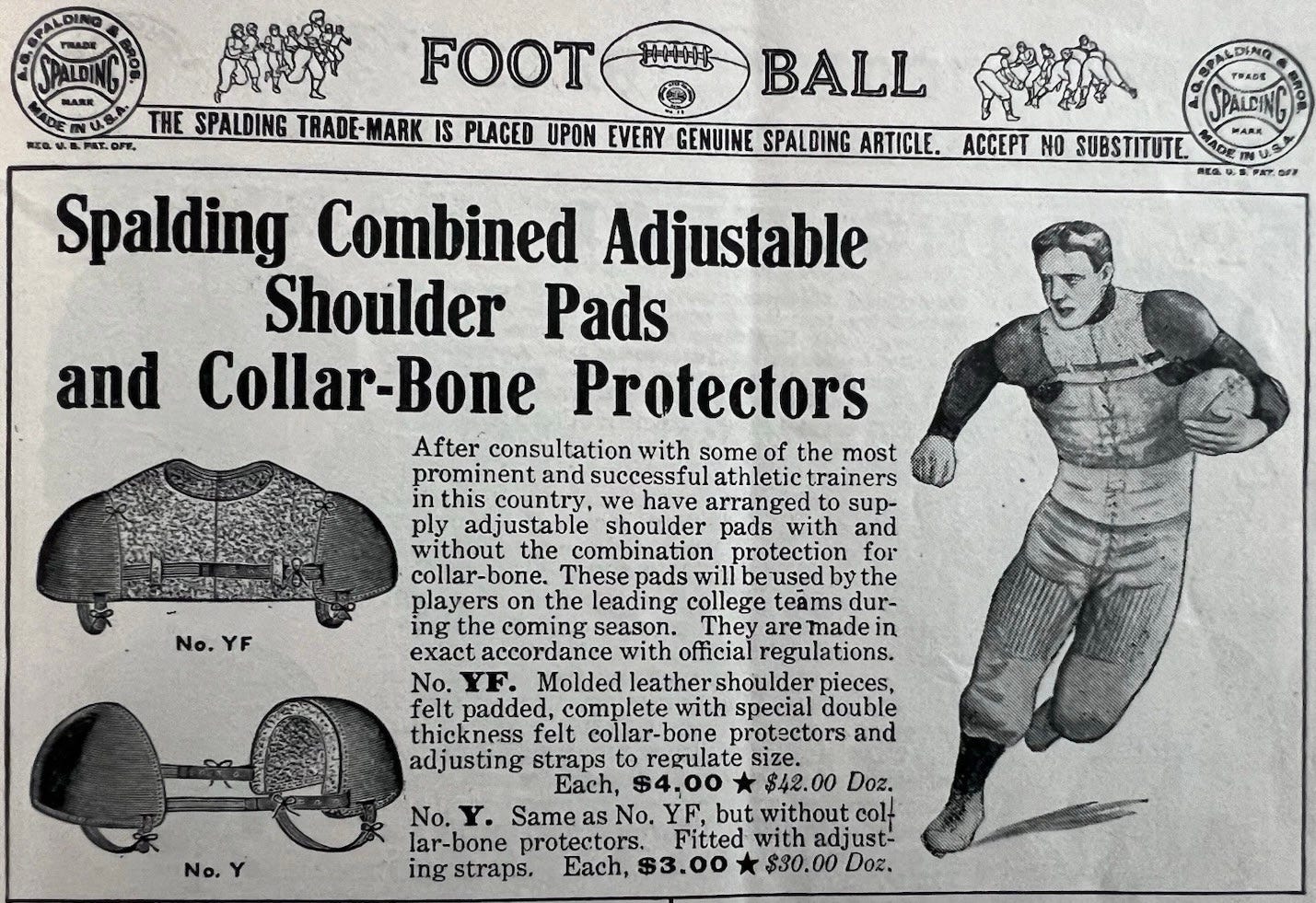
Inside the issue, however, Spalding makes it clear that wearing shoulder pads atop the jerseys is perfectly acceptable, perhaps even recommended.
The integrated shoulder pads worn atop the jersey styling did not last long, and neither did Spalding’s 1914 shoulder pads, which had prominent bumps at key locations.
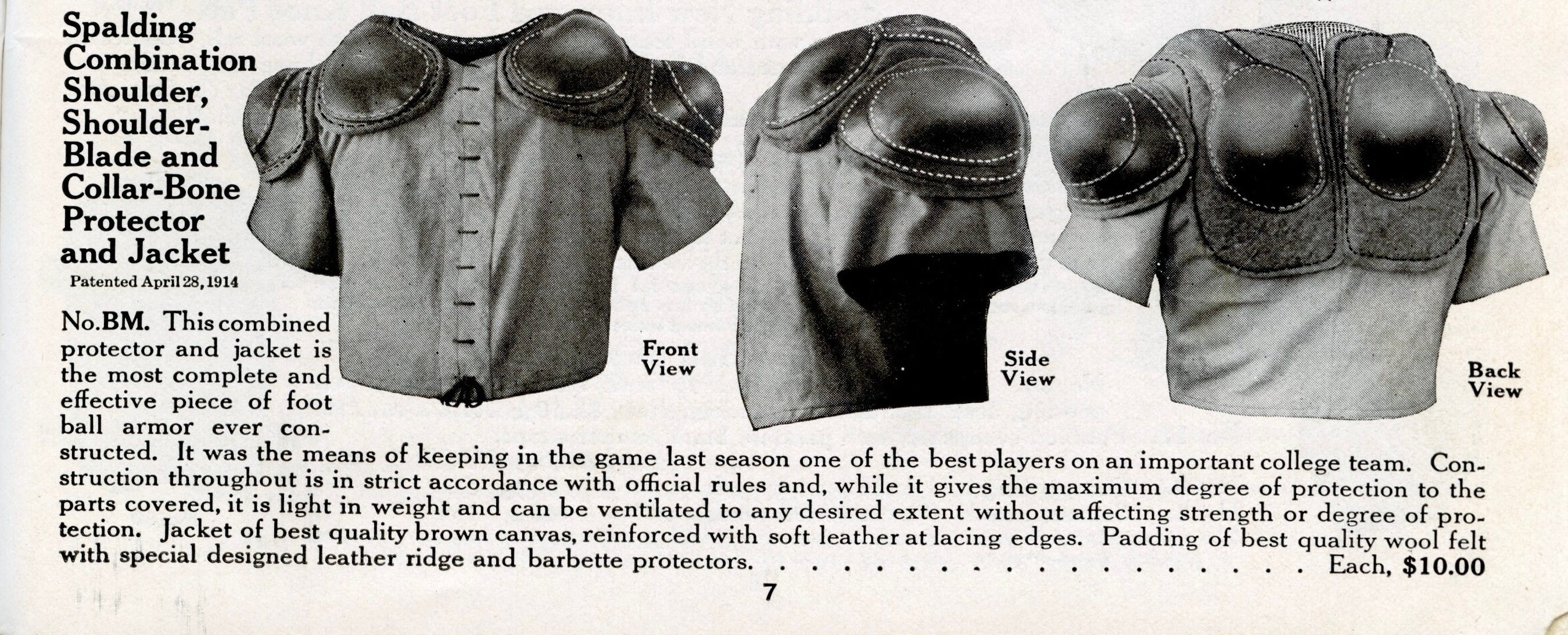
Instead, shoulder pads were soon smoothed out and universally worn under the jerseys. Presumably, wearing the jersey over the shoulder pads was more aesthetically pleasing than wearing them atop the jersey. Also, wearing them under the jersey made the shoulder pads more difficult to grab, a tactic we saw with horse collar tackles that resulted in penalties as of 2008.
So, a simple issue like whether the jersey should cover one’s shoulder pads took a few years to institutionalize, but doing so cleared the way for the many shoulder stripes that football welcomed in the 1930s, which were a bit much.
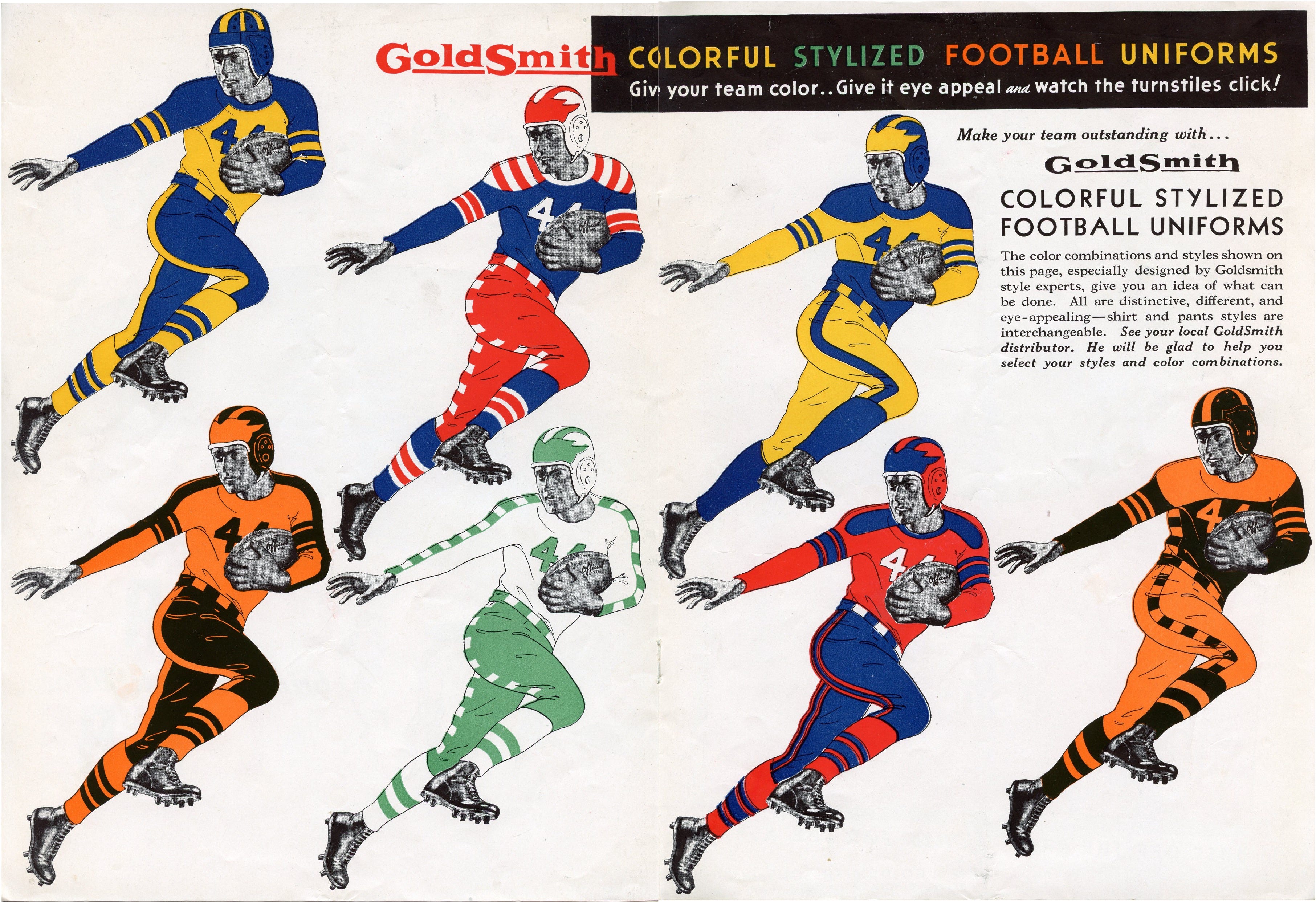
Still, the early shoulder stripes ultimately led to the signature striping that UCLA, LSU, and other teams adopted a few decades later, which has been a good thing.
If you enjoy Football Archaeology and are not a paid subscriber, consider buying me a cup of coffee now and again. You can also buy a paid subscription or purchase one of my books.

