
Today’s Tidbit... What’s a Field Goal Worth?

One value of studying the history of football is that it helps us identify and understand the game’s core principles, and few things tell us more about the game’s shifting values than how its scoring system evolved. The many changes in the game’s early scoring rules show how the game increasingly valued rushing and team play over kicking. Despite the many changes in football over last century, its core scoring system is unchanged since 1912.
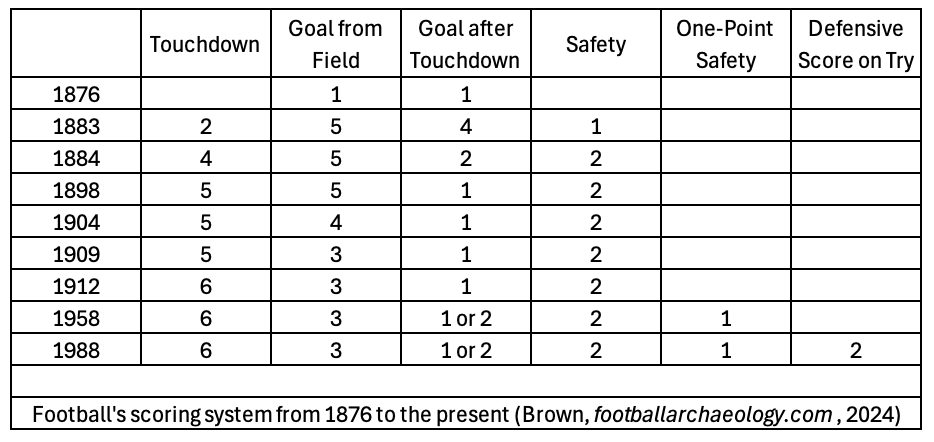
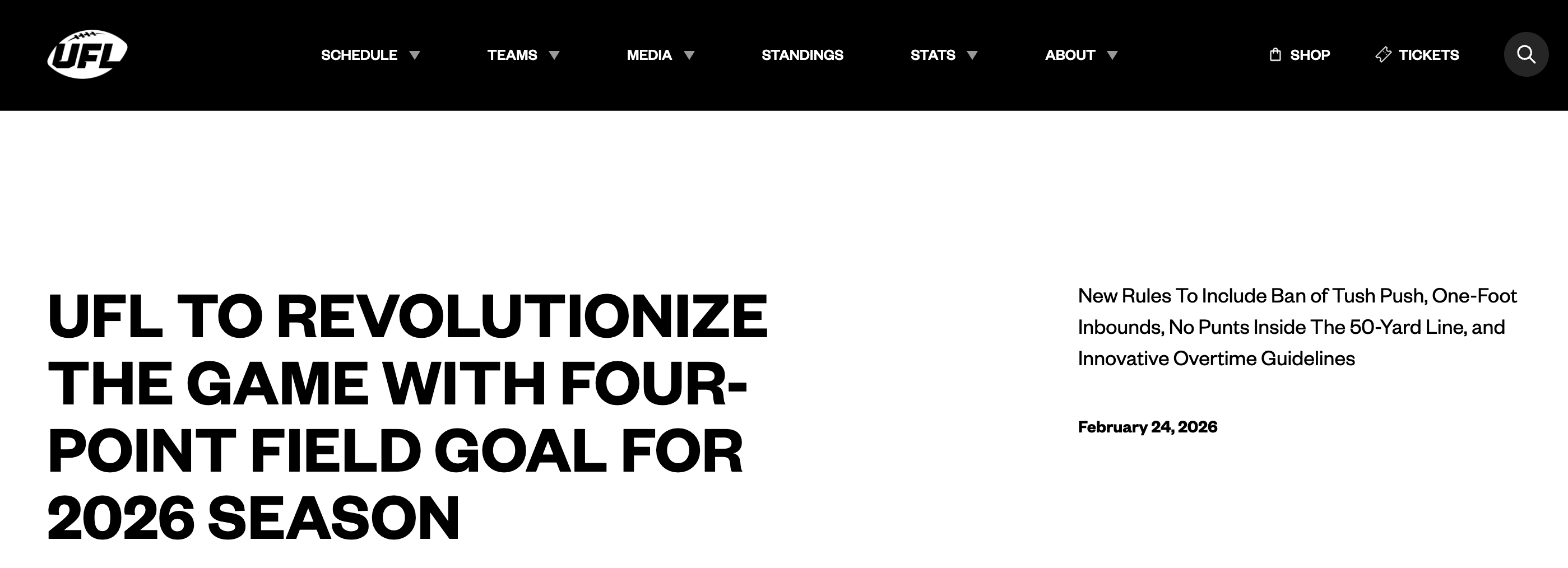
However, the UFL’s recent announcement that teams will earn 4 points for field goals of 60 yards or longer tells us someone thinks long field goals are exciting or worth rewarding. I don’t think either is the case, and I don’t think teams should receive an additional point for rushing or passing touchdowns of 60 yards or more.
Rather than spend more time talking about a dumb UFL rule, I’ll turn to football history for a more extreme proposal to change the value of field goals. The extreme idea came in 1905, when football needed to reinvent itself and put many of its fundamental rules on the table. Seeking to maintain the game people loved while removing its brutality and danger, some argued for banning or restricting specific activities, such as piling on. In contrast, others advocated bold new rules, such as legalizing the forward pass.
One person with an idea or two was Wilson W. Thompson, Wesleyan Class of 1890, and a prominent New York lawyer. Thompson did not play football at Wesleyan. He. was a yearbook editor, orator, the third baseman on his class team, and a football fan, but not a football player.
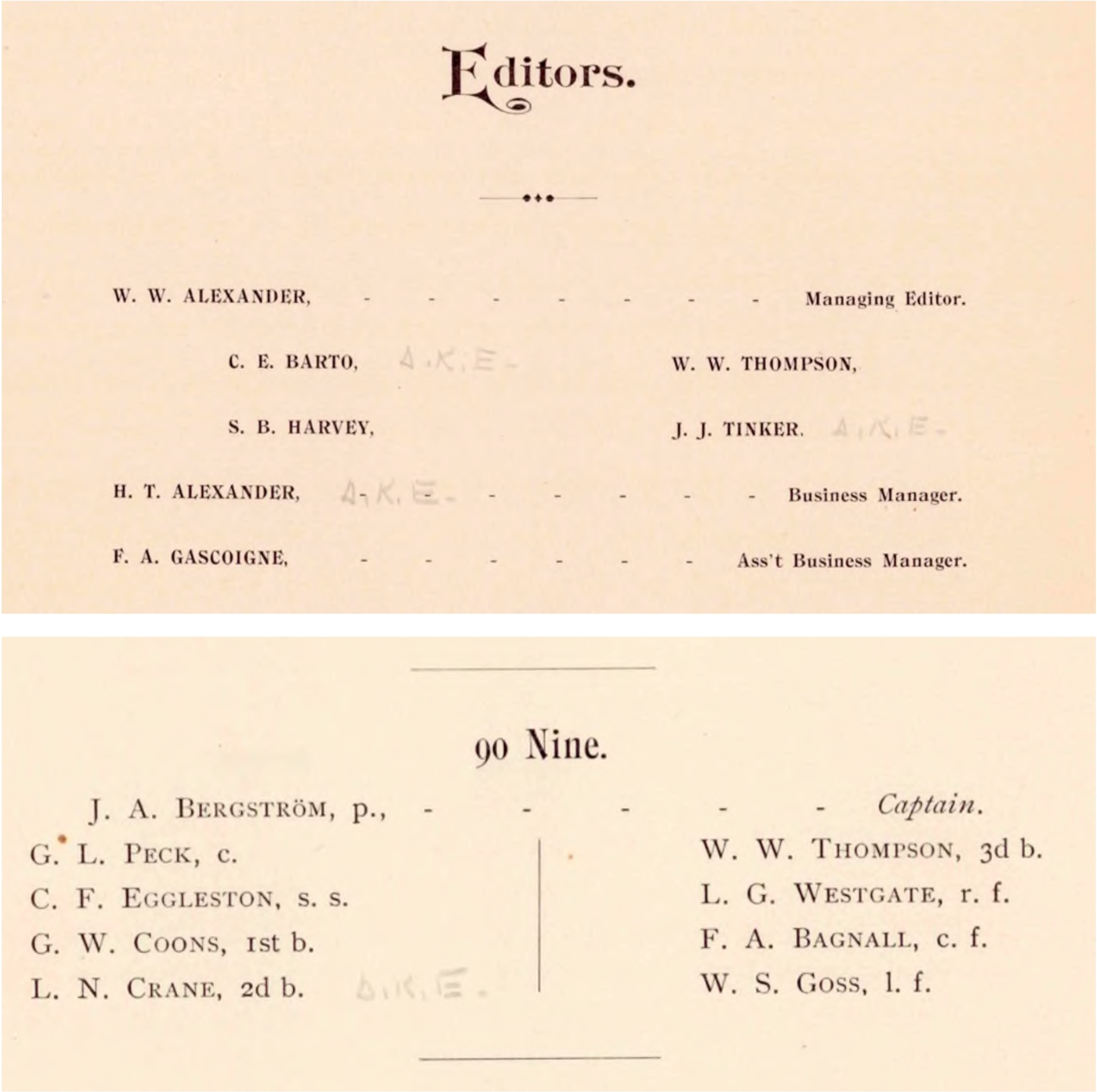
Interestingly, during Thompson’s junior and senior years, future President Woodrow Wilson was a Wesleyan faculty member, teaching history and political economy, and the football team’s coach/advisor.
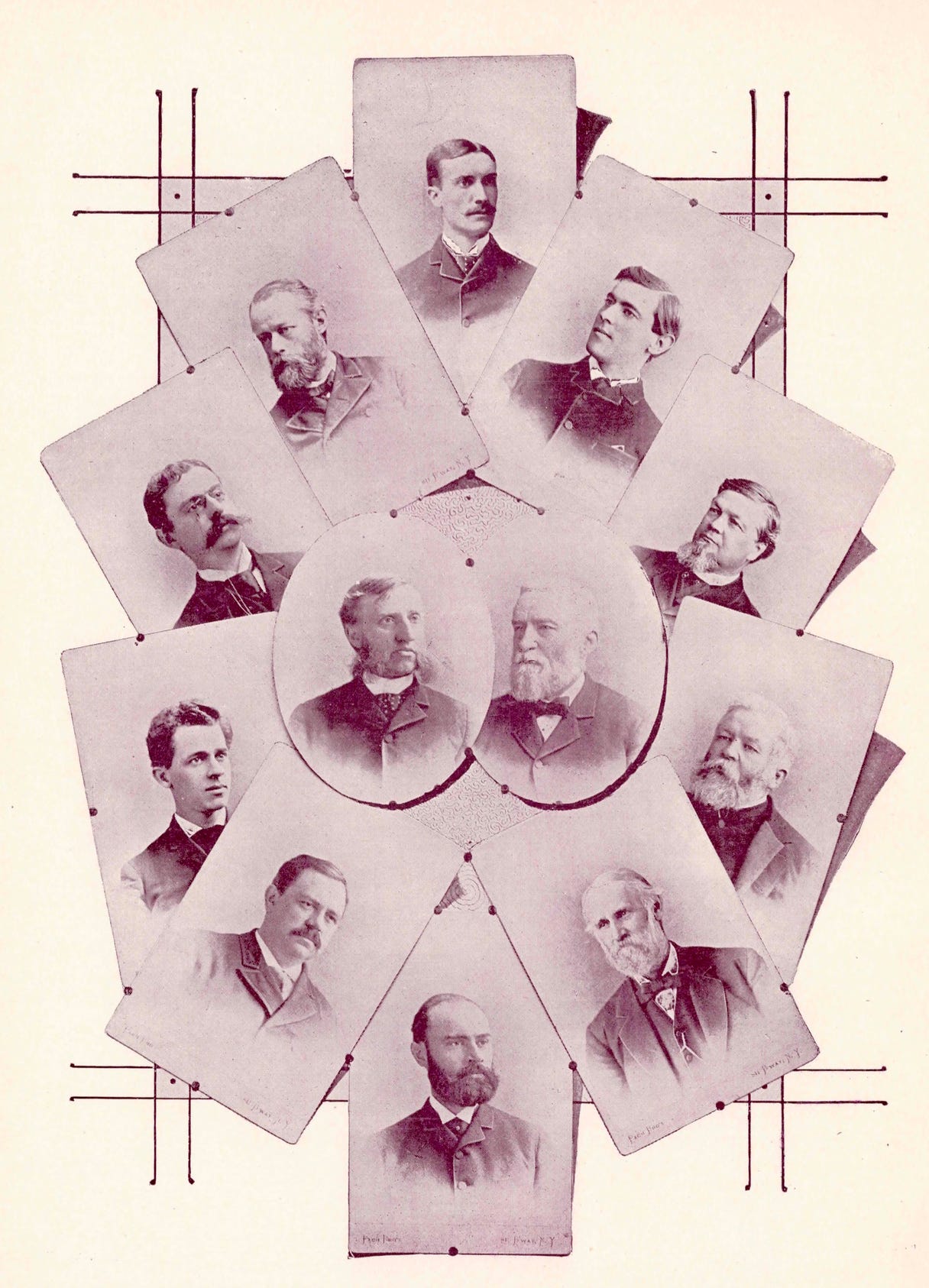
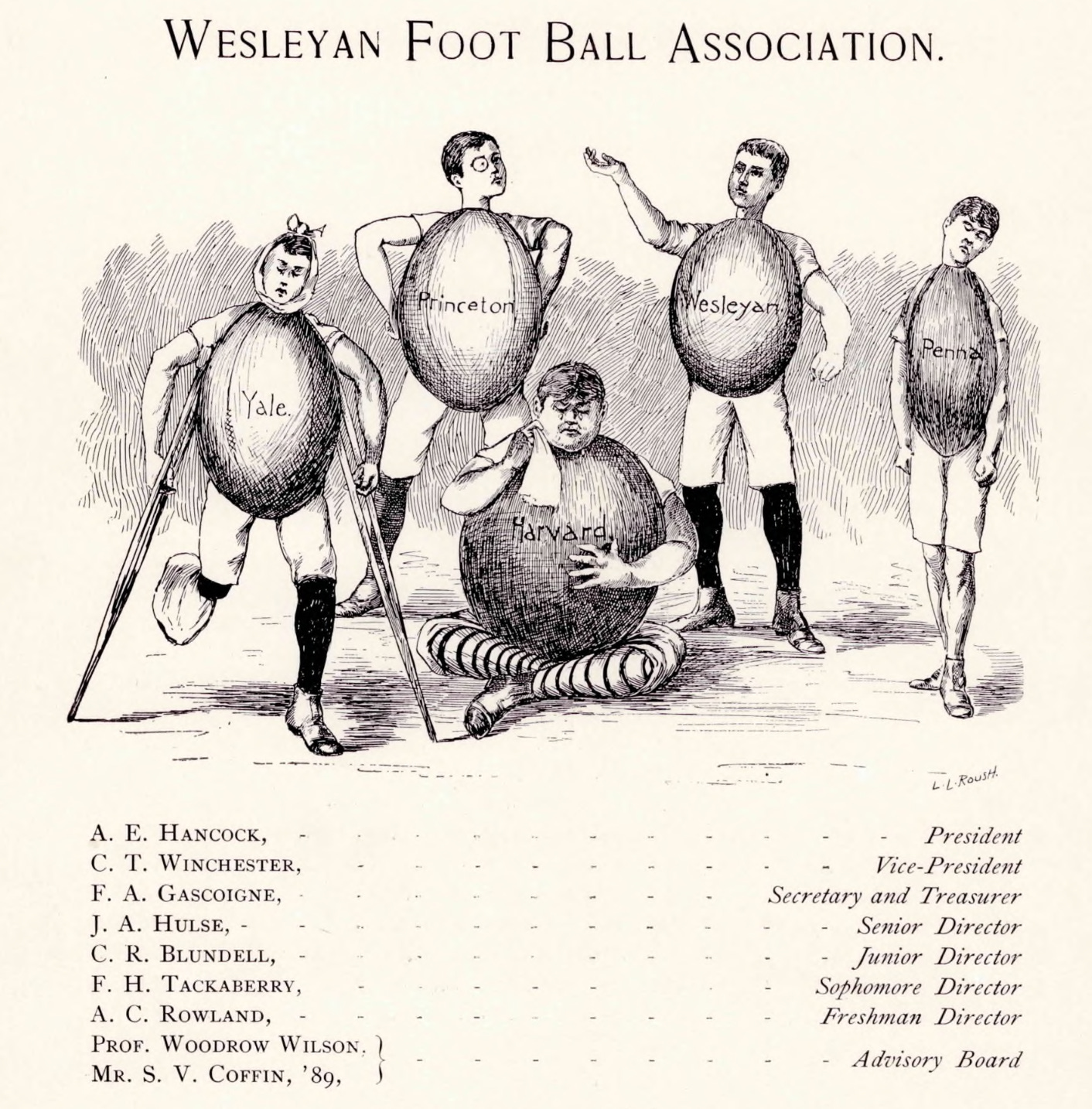
Thompson, who was in classes taught by Wilson, became a lawyer, and his success gained him membership in New York’s prestigious University Club, which began facilitating college football’s rulemaking process in 1887 after the Intercollegiate Football Association dissolved.
The death of a Union College player when playing New York University spurred NYU president Henry McCracken to execute an end around the traditional rulemakers. He called for a national convention of schools to revise football’s rules, and after meeting a few times, they agreed to work with the traditionalists to revise the rules for 1906. The combined Intercollegiate Athletic Association of the United States (IAAUS) soon brought about the most influential changes in the game’s history, and in 1910 renamed itself the National Collegiate Athletic Association.
I haven’t seen evidence that Thompson was involved in the football rulemaking process through the University Club, but he had radical ideas for change that he documented in an open letter to President Theodore Roosevelt in December 1905. Several New York newspapers printed the full letter, and summarized versions appeared in newspapers nationwide.
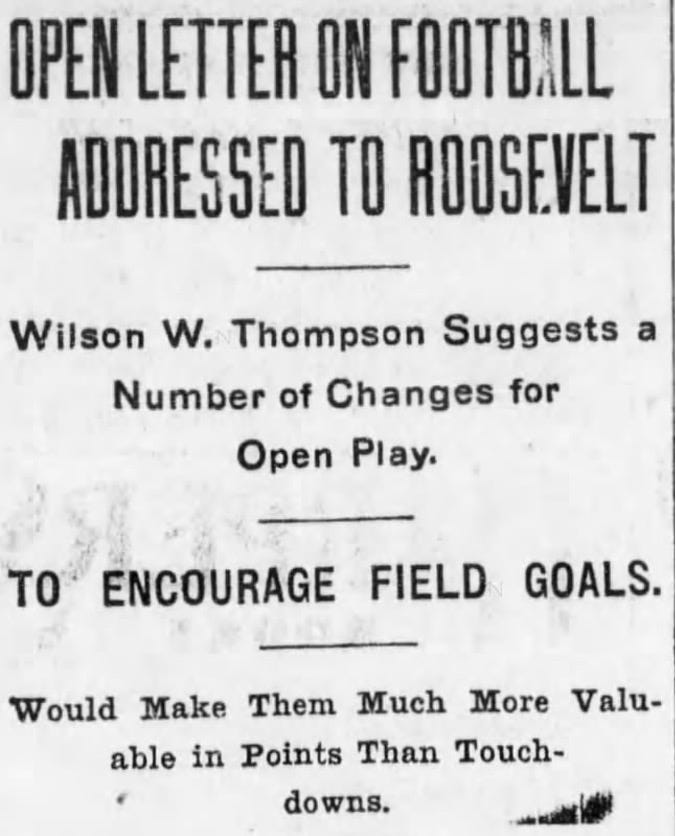


Philosophically, Thompson thought football should be a kicking game, not a rushing game, yet his suggestions did not ban rushing or any other aspect of the game. Instead, he focused on football’s basic fundamentals: its scoring system. To him, points were king; everything else was details.
Thompson perceived football’s brutality as increasing when teams approached their opponent’s goal line, so his idea was to reduce their desire to score touchdowns by increasing the value of field goals and allowing field goals via punts. His full scoring system was as follows:
Touchdown: 4 points
Goal after touchdown: 1 point
Safety: 1 point
Field goal by dropkick or placekick: 15 points
Field goal by punt: 10 points
It is unclear whether Thompson would have allowed rugby-style punt attempts beyond the line of scrimmage or only behind it, but either way, his scoring system would have encouraged teams to kick the ball once they reached field-goal range. He also argued that the new scoring system would promote the development of better kickers and reduce the game’s emphasis on player size.
As far as I can tell, Thompson’s proposal for dramatically higher point values for field goals did not receive serious consideration by the committee, though a Christmas Day 1905 test game in Wichita monitored by the rulemakers valued field goals by distance:
<25 yards = 4 points
25 to 35 yards = 5 points
>35 yards = 6 points
Neither team scored in the test game, and changes in point values were not passed in 1906. Counter to Thompson’s suggestion, the point value of field goals dropped from four points to three in 1909, and the last change in core scoring came in 1912, when touchdowns changed from five to six points.
People argued here and there to change the value of field goals. Some wanted them increased to 4 points in 1914. In the late 1930s, some cited evidence that 65% of injuries occurred inside the 20-yard line. The high schools considered the change a few more times to reward skilled kickers, but the change in point values never passed.
The colleges and high schools increased the width of the goal post from 18 feet 6 inches to 23 feet 4 inches inside the uprights in 1959, with the colleges returning to the original width in 1990. The wider uprights increased the likelihood of making field goals for a time, but the rulemakers seldom considered, and never passed, a point-value increase until now.
Presumably, the UFL thinks the four-point field goal will add to the game. Their press release even claims it will revolutionize football, but color me skeptical, especially after a team deliberately loses yardage near the end of a game to set up a 60+ yard field goal. That will be riveting television.
Football Archaeology is reader-supported. If you enjoy my work, get a paid subscription, buy me a coffee, or read When Football Came To Pass.


Is this UFL thing meant to be a competitor to the NFL, like how the ABA and the WHA challenged the NBA and the NHL in the '70s?
What's the history behind the widths of the goal posts? They seem very specific, rather than an even 20 or 22 feet. Thanks.