

One of the challenges and delights of many RPPCs comes in figuring out which team or teams are pictured in the images. Some RPPC images include team names, game scores, or the photographer who published them. You can decipher other information from the postmark or message scrawled on the back (or front for earlier RPPCs). But many carry no information beyond what you can deduce from the USPS postcard formatting and the photographic paper brand printed on the back.
In that case, you’re left looking at the image for team logos, signage, or unique aspects of the setting where the game was played. In most cases, the images reveal nothing, and the teams’ identity is lost to time.
A few years ago I bought the RPPC below, which I determined was the U.S.S. Connecticut team from 1908 or 1909. I don't recall how I figured that out, but the guy in the Naval Academy letter sweater is William A. Richardson, a multi-sport letterwinner and fullback who started at Navy from 1906 through 1909. He served on the Connecticut the summer after his first year at Navy, and again in 1910 and 1911 when he served on Admiral Seaton Schroeder's staff, when the Connecticut was the flagship of the Atlantic Fleet.
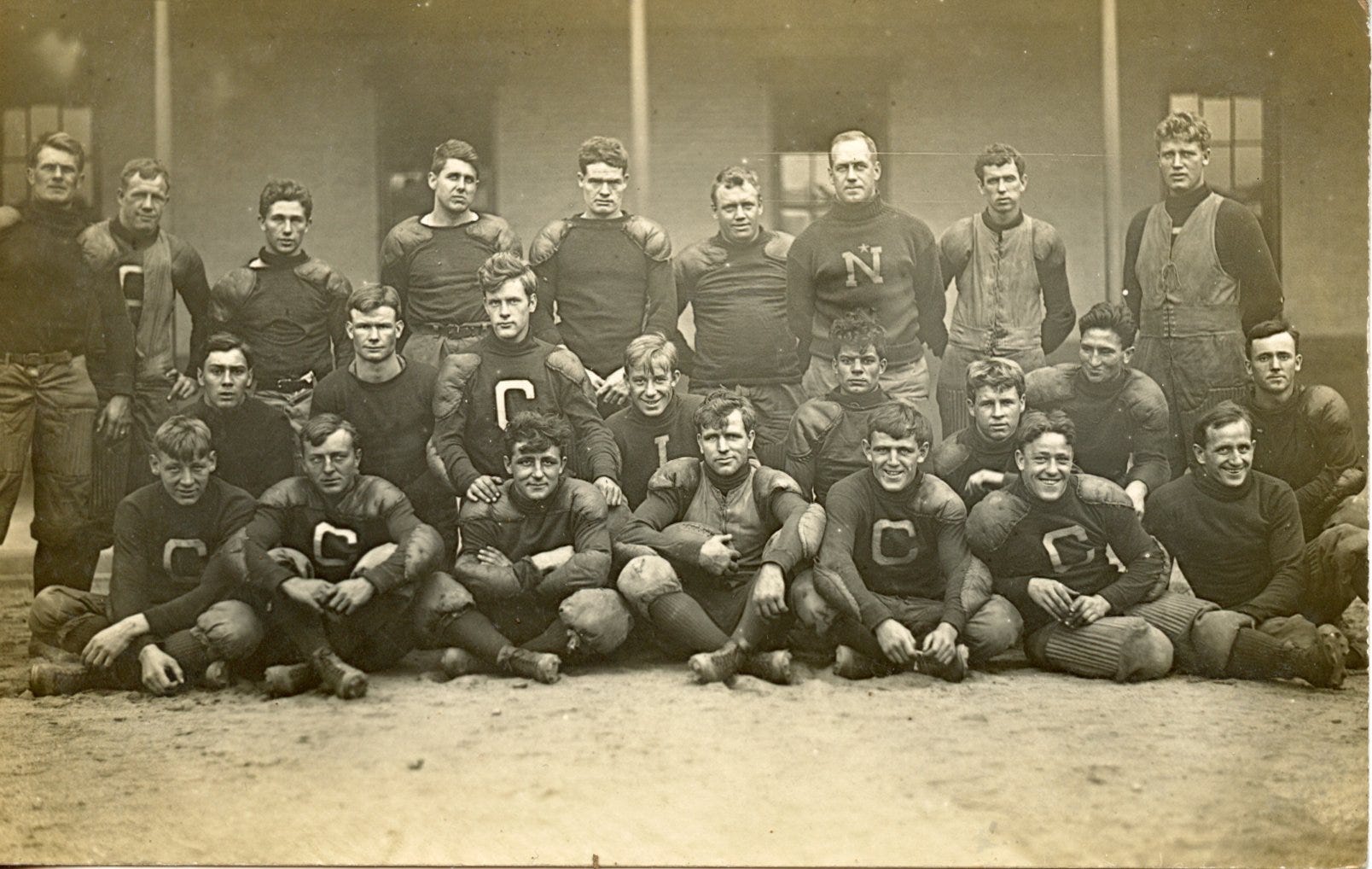
Recently, I came across another copy of the same postcard, but this one came with two game-action photos showing players wearing the same jerseys with large Cs on the front. None of the RPPCs have labels, but the game-action photos show distinctive buildings in the background. Assuming those buildings were at one of the Navy’s East Coast ports, which one was it?
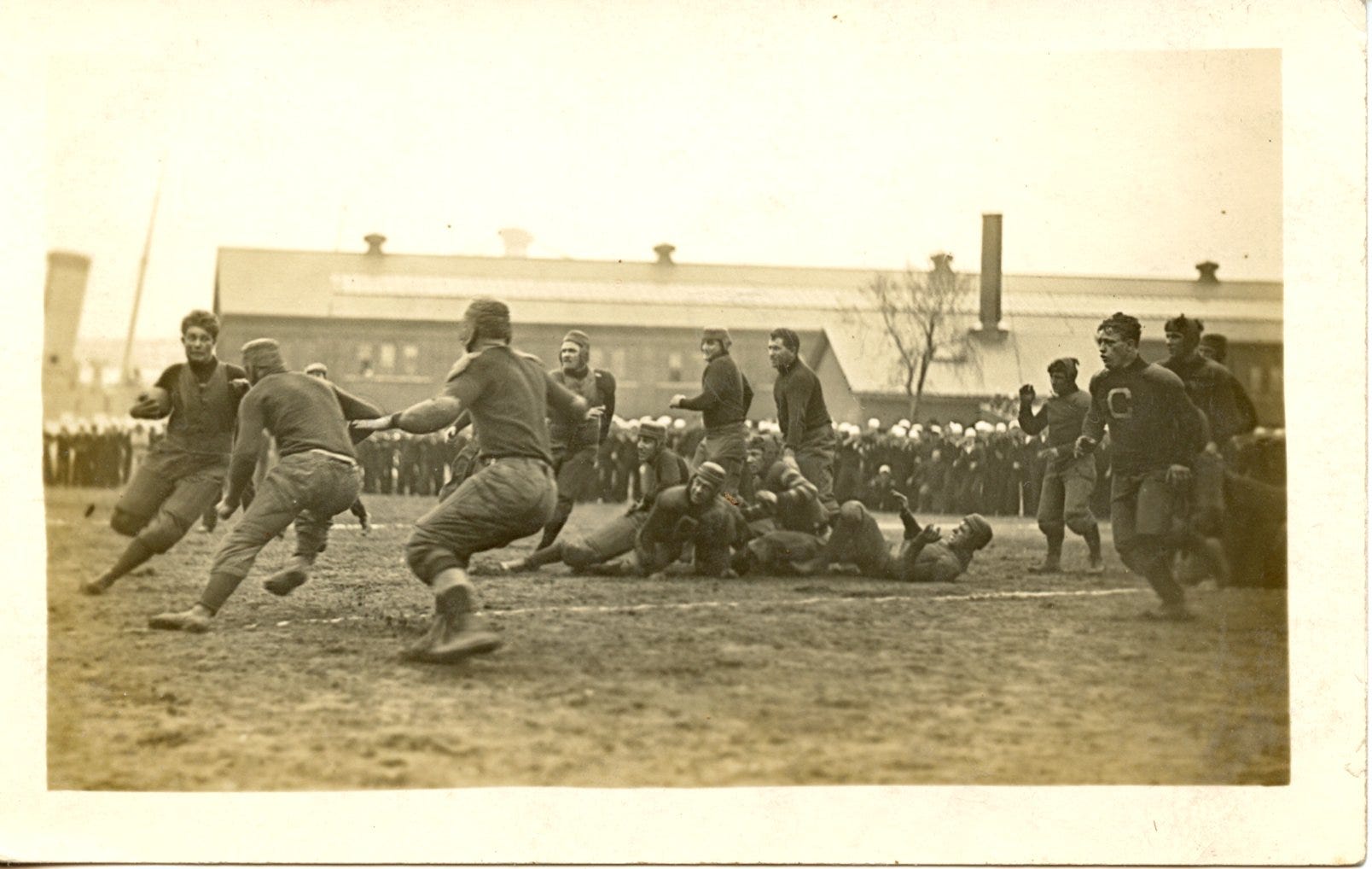
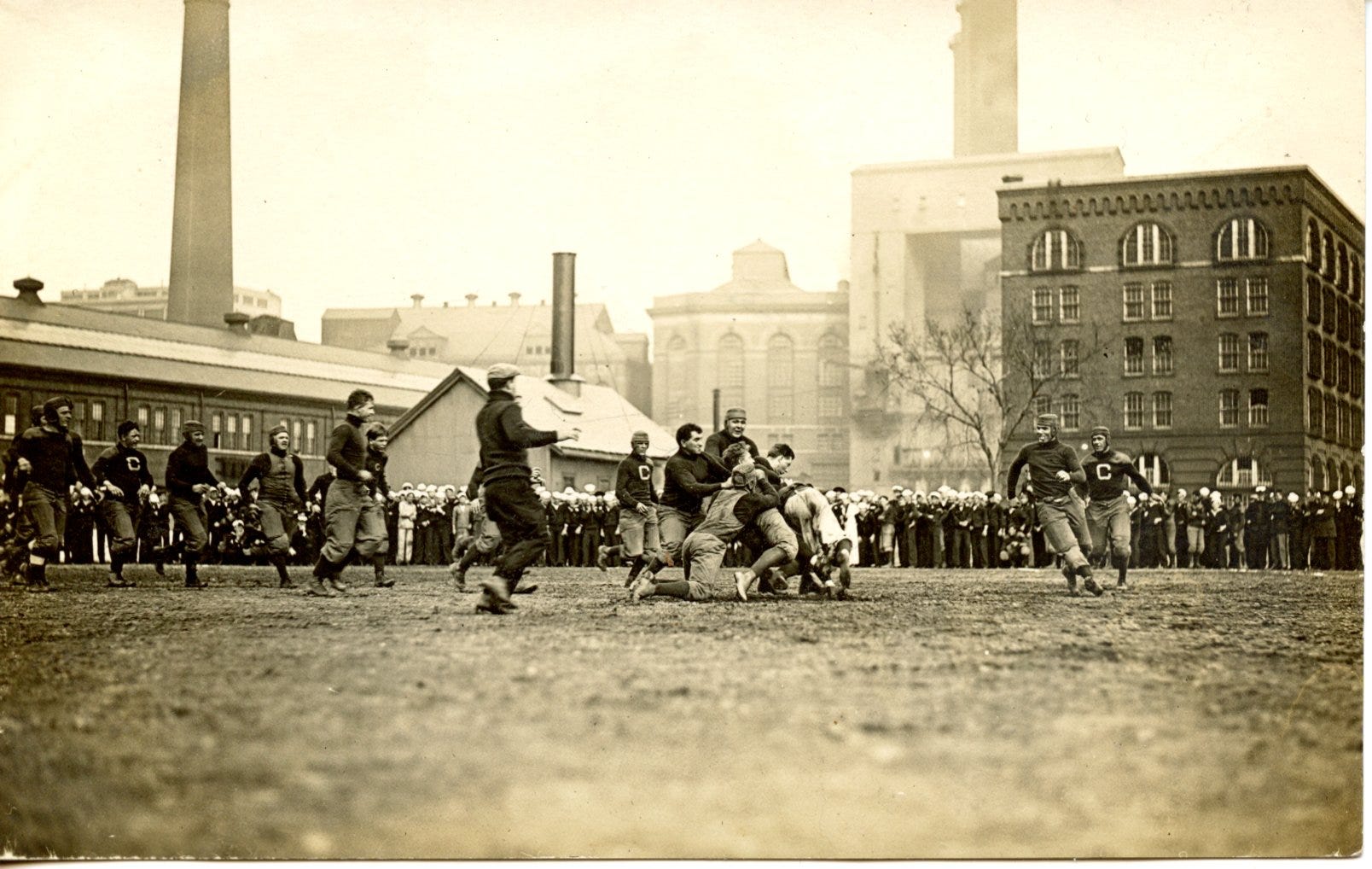
It turns out the Connecticut was at the New York Naval Yard in Brooklyn, being overhauled during the summer of 1907, before leaving in December to serve as the flagship of the Great White Fleet.
A review of images of the Brooklyn Naval Yard turned up a 1914 baseball game, showing the same buildings in the background.
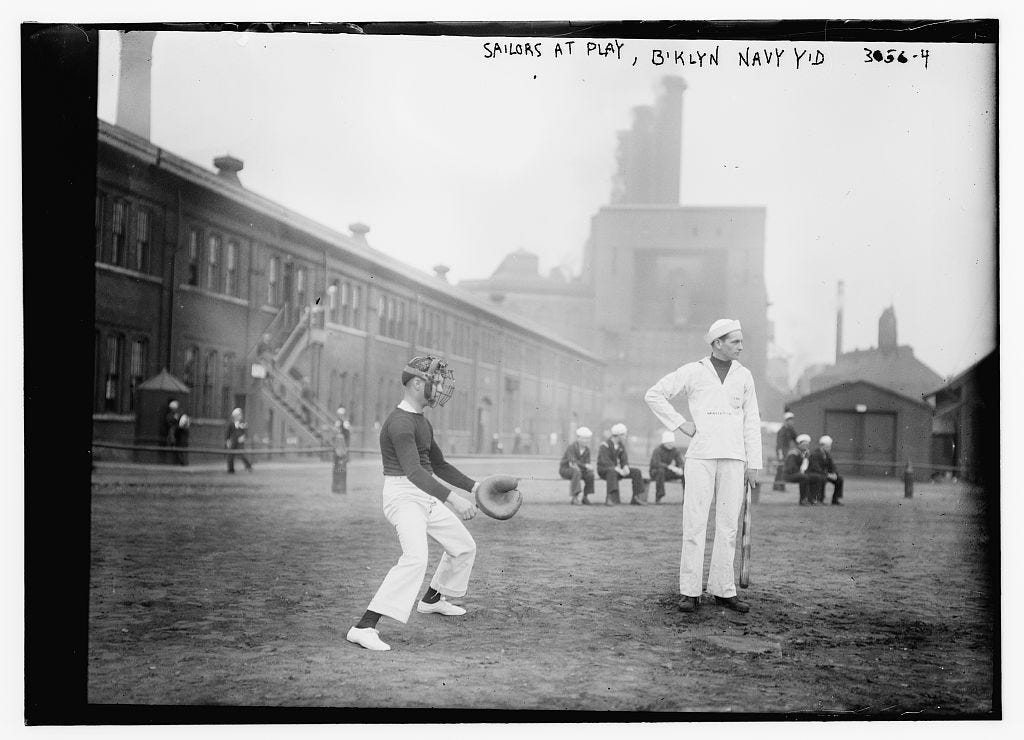
Once I confirmed the location, I recalled another game-action RPPC I picked up a few years back, which was also played at the Brooklyn Naval Yard.
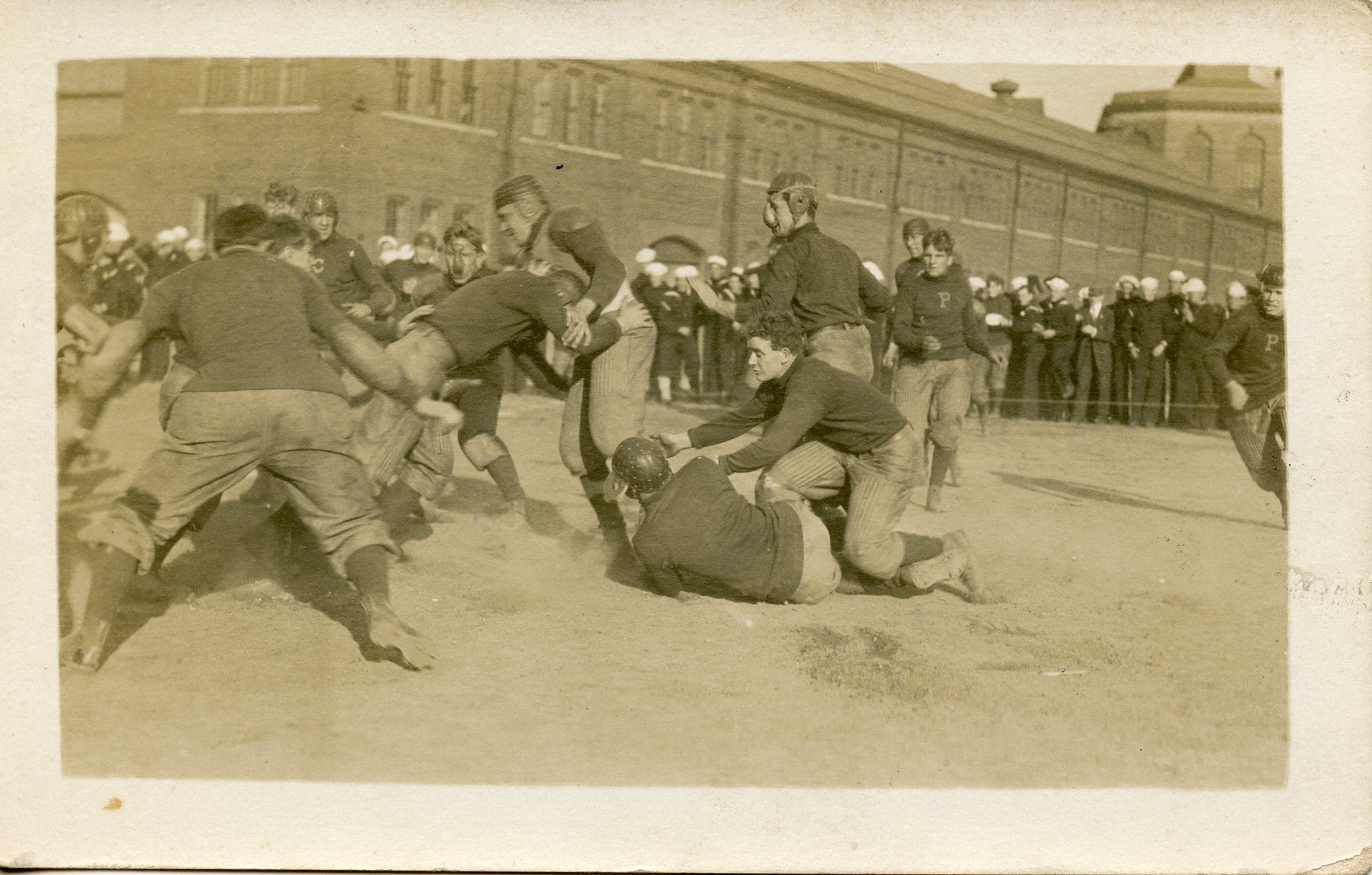
So, with that mystery solved and the connection to the Great White Fleet made, it is worth pointing out that battleship teams played some of the earliest American football games in France in 1909, England in 1910, and Italy in 1913.


After graduating in 1910 and being assigned to the admiral's staff on the U.S.S. Connecticut, Richardson was made the ship's athletic officer and football player-coach. He led the Connecticut to victory in a Thanksgiving Day game in Weymouth in 1910, before losing in the fleet championship game at the Crystal Palace a week later. However, they won the fleet championship in 1911 upon returning to the U.S. The Connecticut was at Brooklyn Naval Yard from early November 1911 to mid-January 1912, so the Connecticut team picture and two game action shots likely date to this period.
Richardson continued switching between duty aboard ship and staff or teaching roles. He assisted Navy’s football team in 1916, after which he was awarded the Navy Cross and Silver Star for commanding the U.S.S. Parker during anti-submarine activities in WWI. While ashore in England, he won the hand of the daughter of a British admiral, so he had that going for him.
He served in athletic administration and assistant football coaching roles in the Navy in the 1920s before retiring and becoming the football coach and AD at King’s College (TN), where he passed away in 1936.
If you enjoy Football Archaeology and are not a paid subscriber, consider buying me a cup of coffee now and again. You can also buy a paid subscription or purchase one of my books.


How did he die in 1916 but coach in the 1920s? Ouija Board?