
Allison Danzig and the Crescent Athletic Club

Allison Danzig was a sportswriter for the Brooklyn Eagle for several years before joining the New York Times, where he remained for 45 years. He was among the top writers covering tennis and covered football at newspapers and in book form, including Oh, How They Played The Game (1971) and History of American Football: Its Great Teams, Players and Coaches (1956).
Looking back, however, one of his more interesting pieces was a 1921 story for the Brooklyn Eagle:

The article tells the history of the Crescent Athletic Club and its football team, which started in 1884. The article ends in a plea, or at least proposes the idea, that someone reconstitute the Crescent team so guys could play competitive football after their college graduation.
The football world was different in 1921. College football dominated. The NFL was a handful of minor league guys trying to elevate the semi-pro game to the pro level. They became a massive success, but in 1921, they were nothing.
As an East Coaster, Danzig could not have conceived of professional football overtaking the college game. However, he recognized that post-college teams would fill player and fan needs, so why not restart the Crescents football team?
The article goes on to describe the club’s history, how the Crescent team formed in 1884, largely composed of former Yale, Princeton, and other college players. They had so much fun that they continued playing, later formalizing the group by creating the Crescent Athletic Club in Brooklyn in 1887.
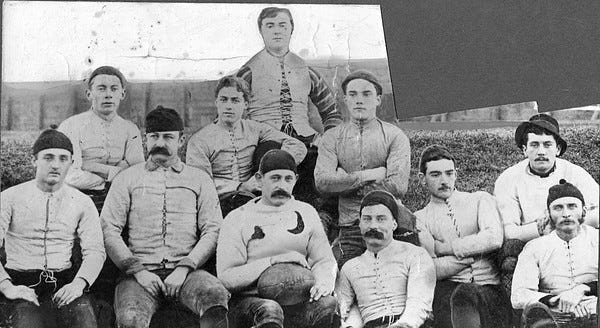
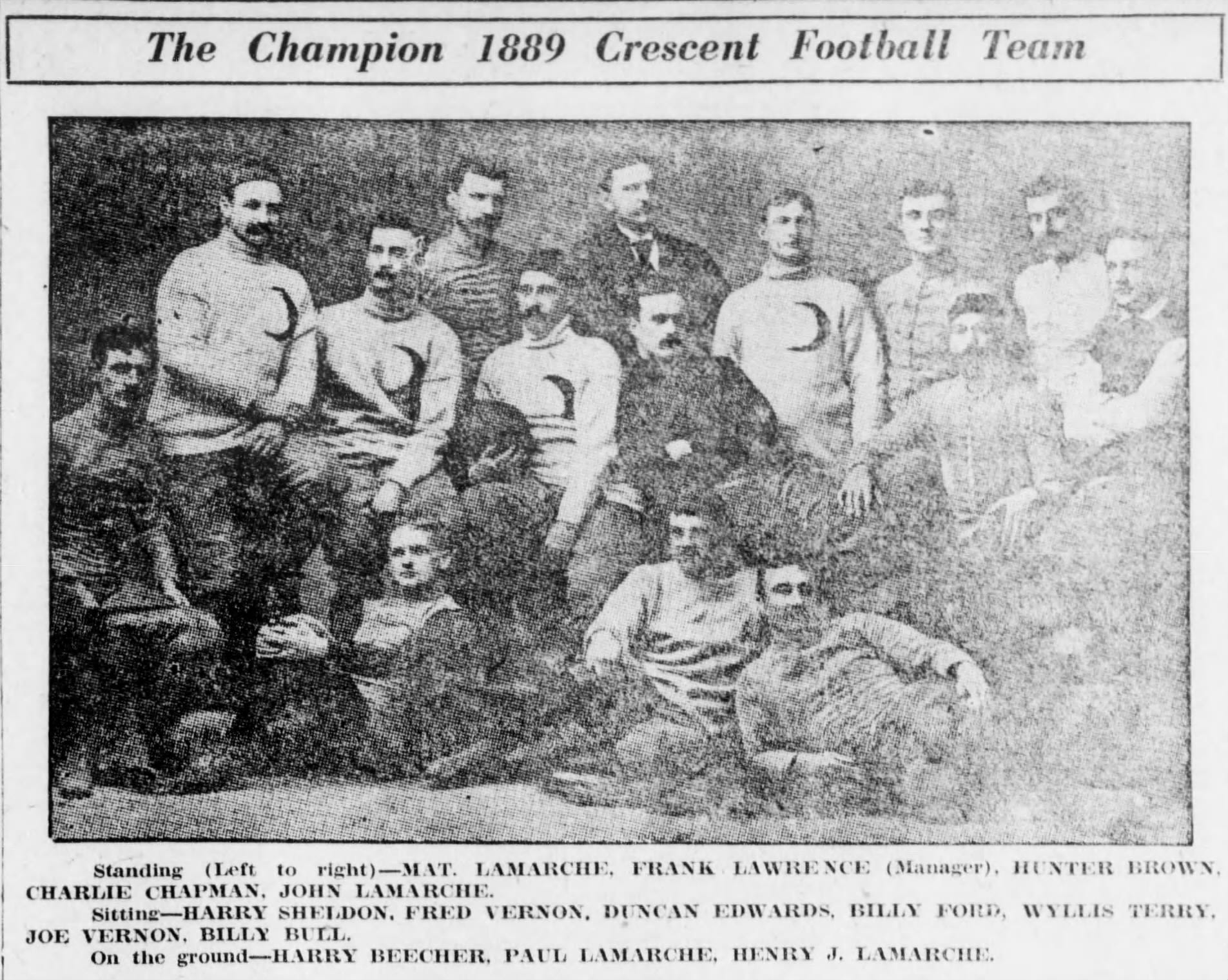
During the 1880s, the team included many former Yale, Princeton, and other college stars, including Alex Moffat, Wyllis Terry, Duncan Edwards, Phil King, Billy Bull, Harry Beecher, George Foster Stanford, and the Lamarche brothers of Seton Hall. They regularly played and lost to Yale and Princeton, but did very well against other colleges and other club teams. Their top game of the year came against the Orange Athletic Club of Orange, New Jersey, whose roster included Pa Corbin, A. A. Stagg, Lee McClung, George Woodruff, Pudge Heffelfinger, Charley Gill, and others. Despite the tough competition with Orange AC, the team won the American Football Union championship from 1887 to 1892.
Some readers will recall my covering the Crescent Athletic Club in the past, since they were the first or second team known to have used down markers, even if Penn invented them.

As the linked story details, after coming across a story which made the Crescents the earliest users of chains I had found, I declared them to be its inventor. Later, I found sources indicating that the Crescents played Penn two weeks earlier, and Crescent picked up the down markers from George Woodruff, Penn’s coach.
So, maybe they weren’t the first to mark down with chains, but, so far, I believe they were the first-timers for another element of today’s football. Scroll up and look at the Crescent team images, and particularly the team captain, William H. Ford. Notice anything different about him? How about the 1889 team image? I think it’s the logos.
Until someone provides an earlier example -which could well occur- I’ll stake the claim that Crescent AC was the first football team to display a non-alphabetic logo on its uniform. The 1876 Yale team had large Ys on their jerseys, so letters were there from the beginning, but the crescent found on Ford’s jersey is the earliest non-alphabetic logo I have seen.
Given the role that non-alphabetic logos play in sports and sports marketing today, that seems like an interesting moment in the game’s history.
Please comment below about earlier logos in football or other sports.
If you enjoy Football Archaeology and are not a paid subscriber, consider buying me a cup of coffee here and there. You can also buy a paid subscription or purchase one of my books.


x