

There was a time when coaches told football players with minor aches and pains to rub some dirt on it, but the rise of artificial turf and the disappearance of multi-purpose stadiums now leave players hard-pressed to find healing dirt.
One source of dirt came from games played at baseball stadiums. Gridirons intersected by baseball infields were once a common sight, though the last NFL game played on such a field came when the Kansas City Chiefs played the Raiders at Oakland-Alameda County Coliseum in September 2019. However, we can see such a game today when Minnesota plays Northwestern at Wrigley Field. By now, the Wrigley Field grounds crew has had time to reconfigure the stadium, removing one dugout, some seating, and the pitcher’s mound, and sodding the infield, base paths, and warning track where needed.
Sodding the infield was not always an option in the past when the start of the football season overlapped the end of the baseball season, especially when a baseball team went deep into the playoffs. News reports from early in the last century note that the Polo Ground received sod the moment its baseball teams played their last home game of the year. The image of the Polo Grounds III shows they were filling in the blanks by 1903.
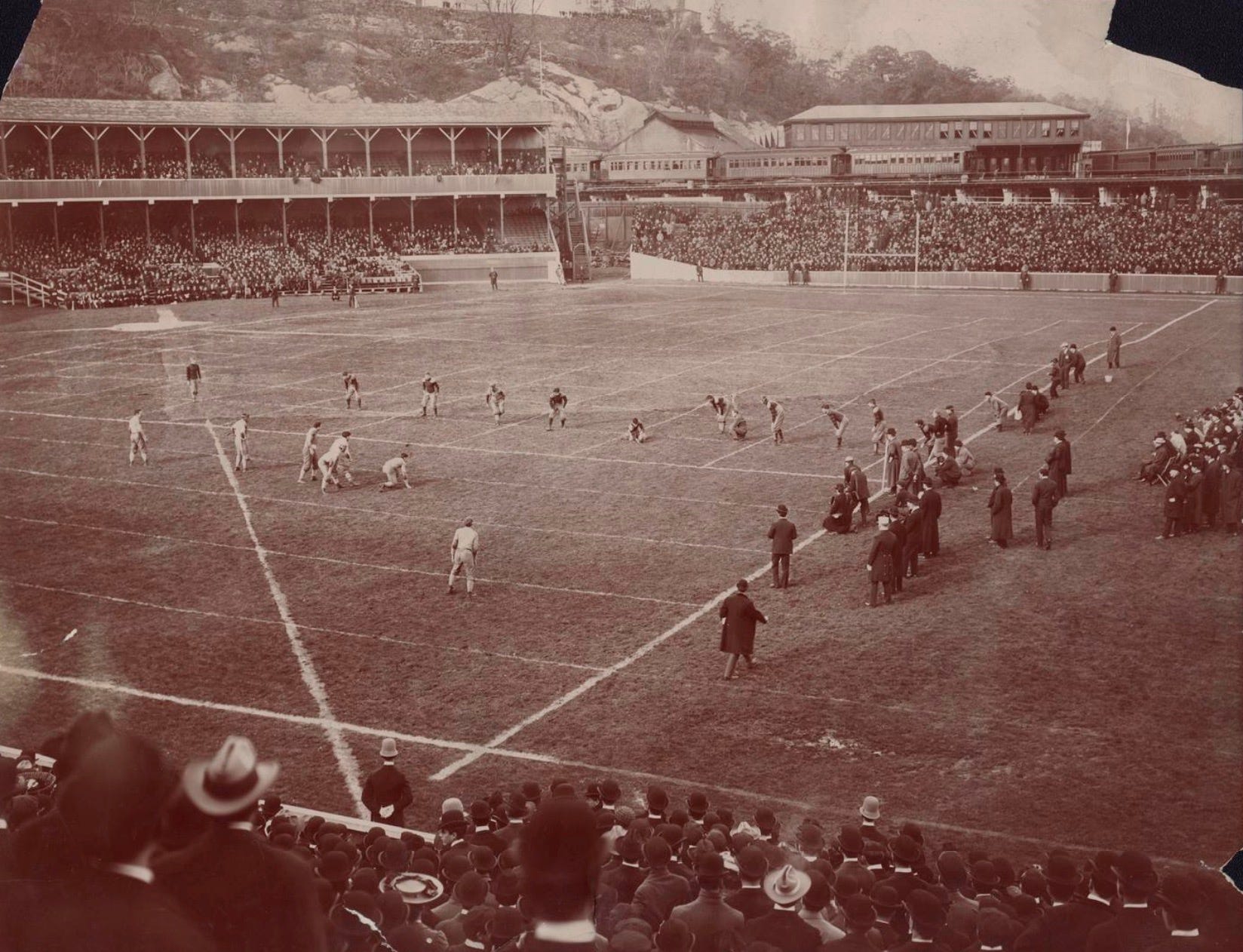
Sodding the field did not eliminate many other problems that came with multi-use stadiums. Often, the sod added for the gridiron remained loose or uneven for weeks, and the sod sitting atop the clay infield drained differently and produced dead spots and more erratic bounces than normal on punts and dropkicks.
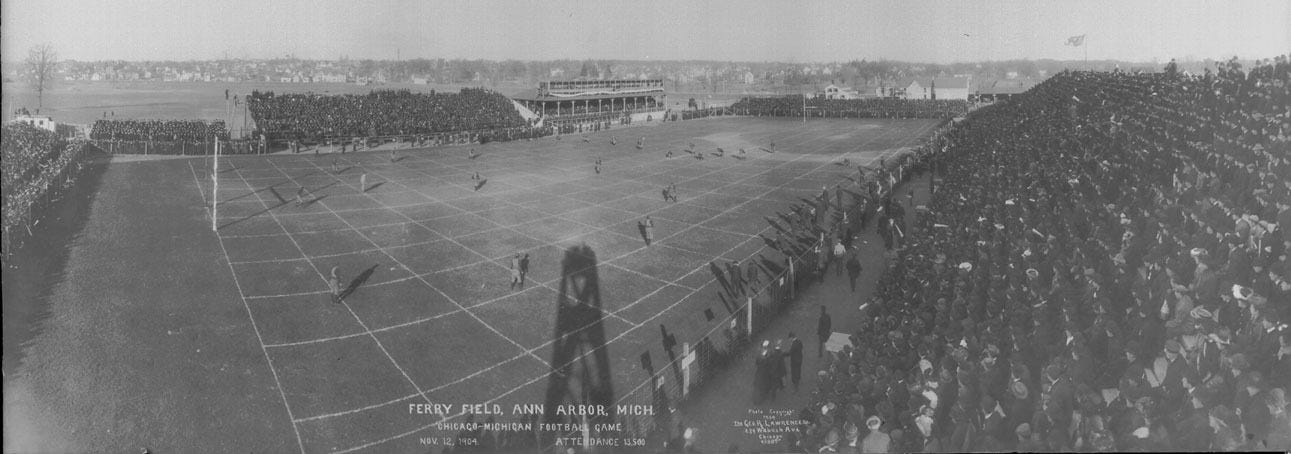
Conflicts also arose from differences in the crowning and drainage of baseball and football fields. As early as 1901, the Pittsburgh Pirates paid good money to enhance Exposition Park to suit their purposes, only to see the professional Homestead football team redo the work. Football teams also abused fields in ways baseball teams did not appreciate, such as spreading sawdust on wet or muddy areas and tearing up the turf with their long cleats, a problem exacerbated by the introduction of hash marks, which concentrated scrimmages at the center of the field.
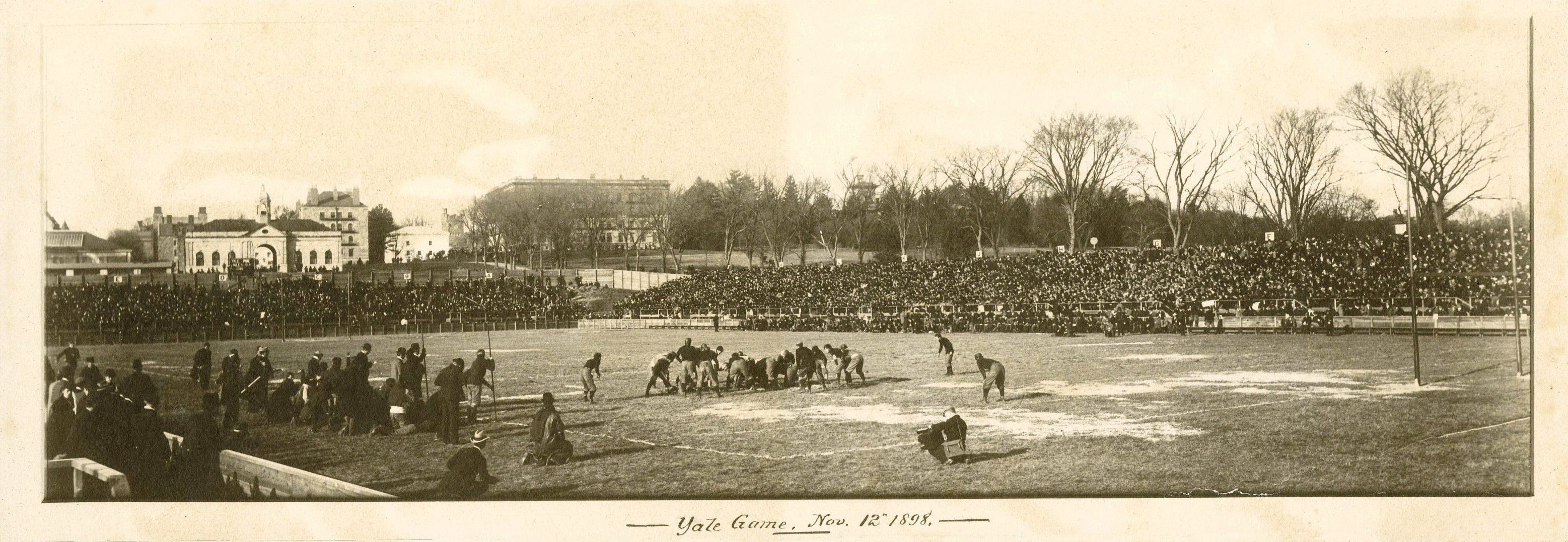
Beyond field conditions, baseball and football differ in stadium configurations and sight lines. Baseball stadiums are roundish, with the best seats behind home plate. Football fields are rectangular, so the smart set sits near the 50-yard line. Football in baseball stadiums places fans far from the action, with their seats oriented toward the pitcher’s mound rather than midfield. The view in a ballpark is often worse than the seats that are miles from the field at the ends of traditional football bowls.
Despite the many ills of football games played in baseball stadiums, there is something old-school and nostalgic about them. The dirty, muddy uniforms that come with games played on grass and dirt infields remain valued features.
With that said, let’s look at a few more images and configurations of football fields in stadiums designed for baseball that were in use in the 1949 and 1950 seasons. These stadiums generally hosted NFL games on Sundays but also often hosted one or more college games on Saturday. Of course, our society has since chosen to spend gobs more money on purpose-built stadiums to avoid scheduling conflicts, enhance the viewing experience, and increase NFL team revenues. Dual-use stadiums are now largely a thing of the past, but they were sort of fun while they lasted.
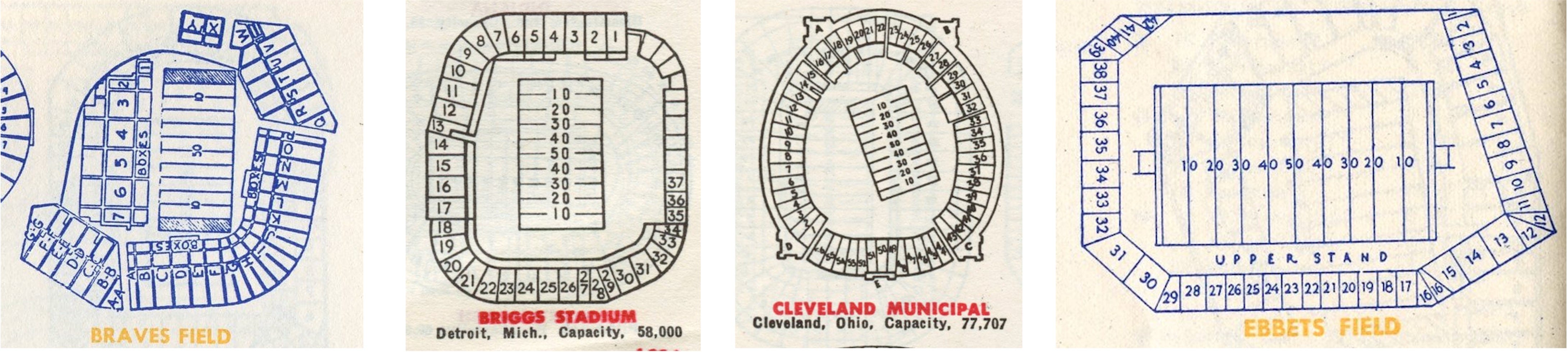
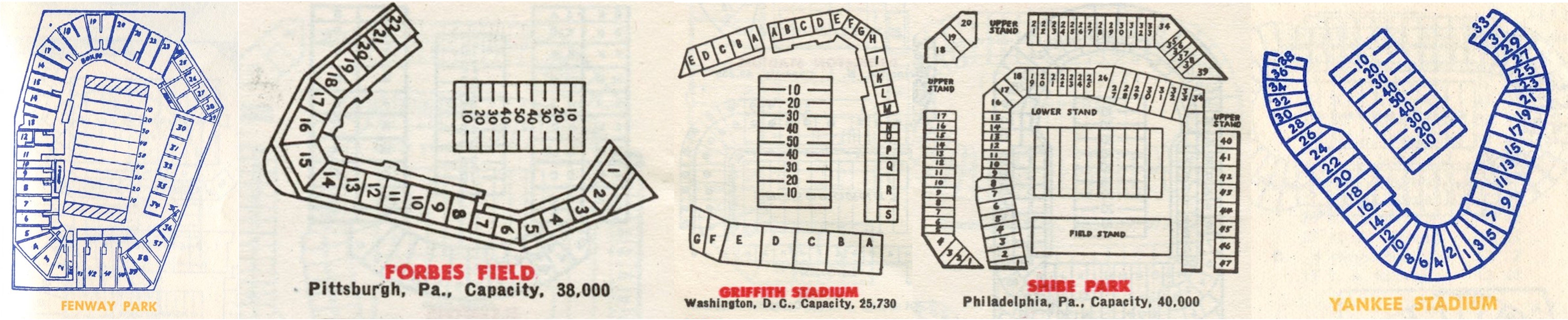
Note: Thanks to readers Brautigaive and Christopher Haack for past inquiries about the sodding of baseball diamonds and dual-use stadiums.
Football Archaeology is reader-supported. Click here to donate a couple of bucks, buy one of my books, or otherwise support the site.

Polo Grounds III? There were two more before it?
Forbes Field must have been awkward at best to watch a football game at.