
Innovations in the 1923-24 GoldSmith Fall & Winter Catalog

I recently downloaded a PDF of the 1923-24 GoldSmith Fall & Winter catalog in the Cincinnati & Hamilton County Public Library collection. It showcases the Cincinnati-based Goldsmith’s equipment innovations, boosted by color printing. So, let’s turn a few pages to look at the state of football uniforms and equipment heading into the 1923 season.
First, Goldsmith guaranteed their premium football, the No. RS, for two games before it might gain weight or become misshapen. They also touted their patented four-ply waxed linen stitching, which provided a better grip for forward passing, a skill becoming increasingly important in the game.
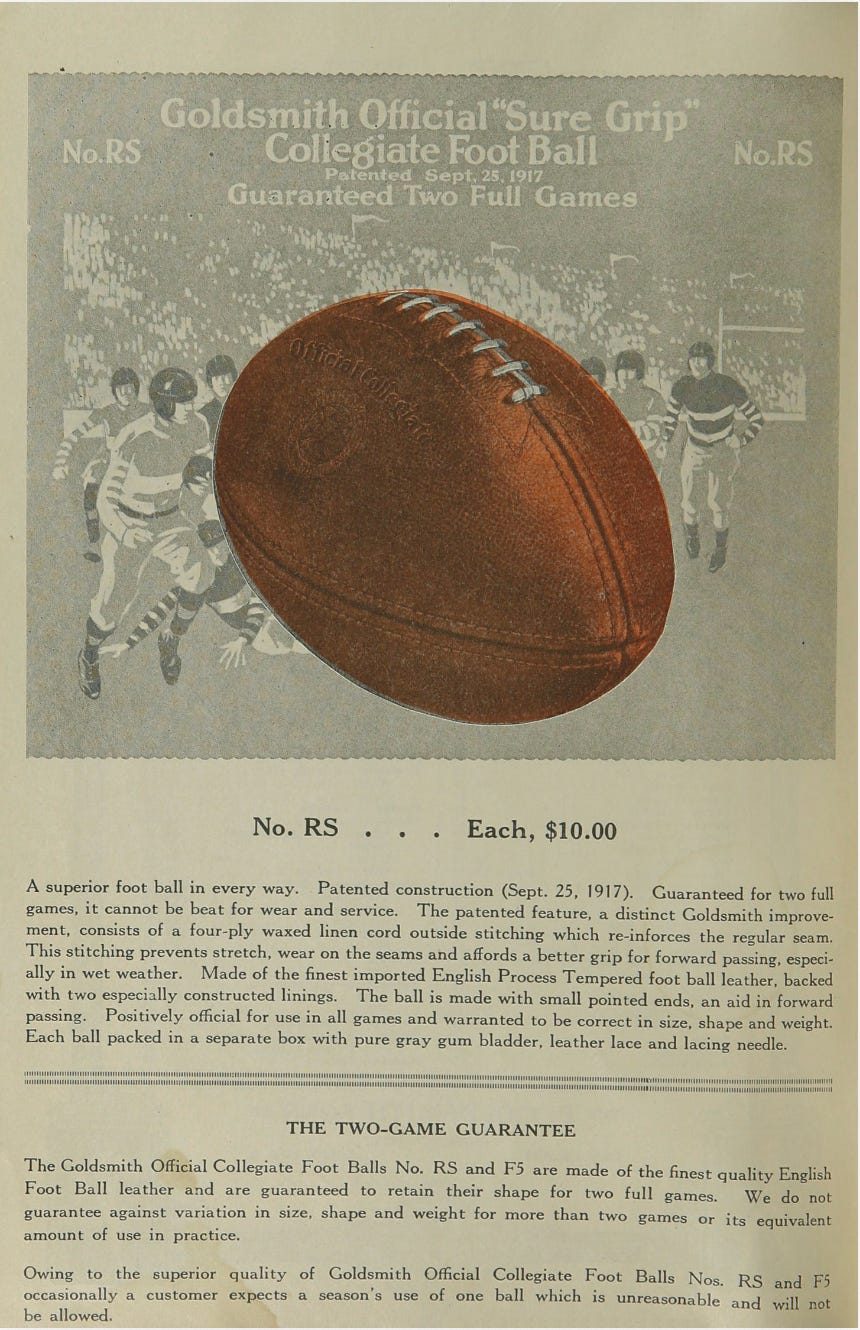
Notable is the line in its description:
The ball is made with small pointed ends, an aid in forward passing.
While Goldsmith’s ball complied with NCAA rules regarding ball size, they modified the ball’s ogive (its curve or slope) for teams looking to throw the ball.
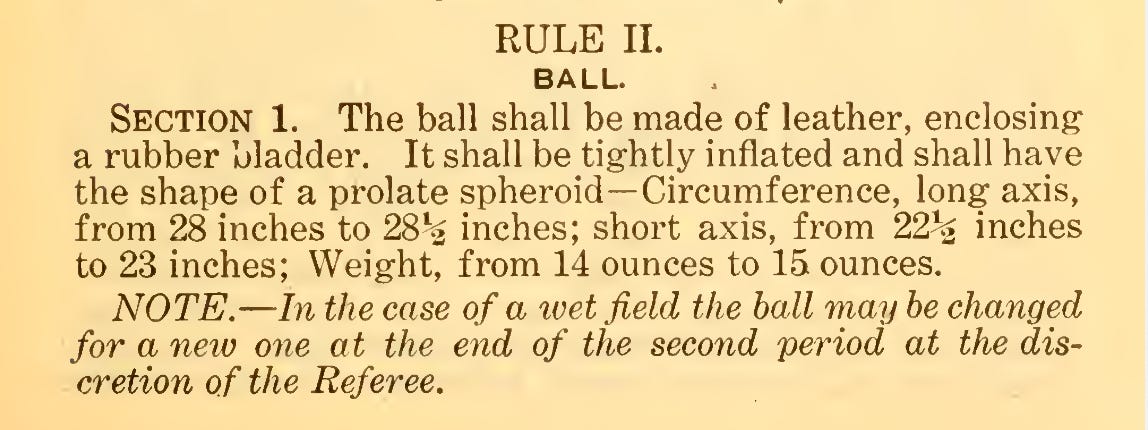
Later in the 1920s, some manufacturers produced slimmer balls that violated NCAA rules, and enough coaches supported using the “bootleg” balls that the NCAA changed the football’s specs in 1929 and 1934.
Next, we move to Goldsmith’s top-of-the-line helmets, which were unusual for being reshaped to extend further down the back and along the sides of the head.
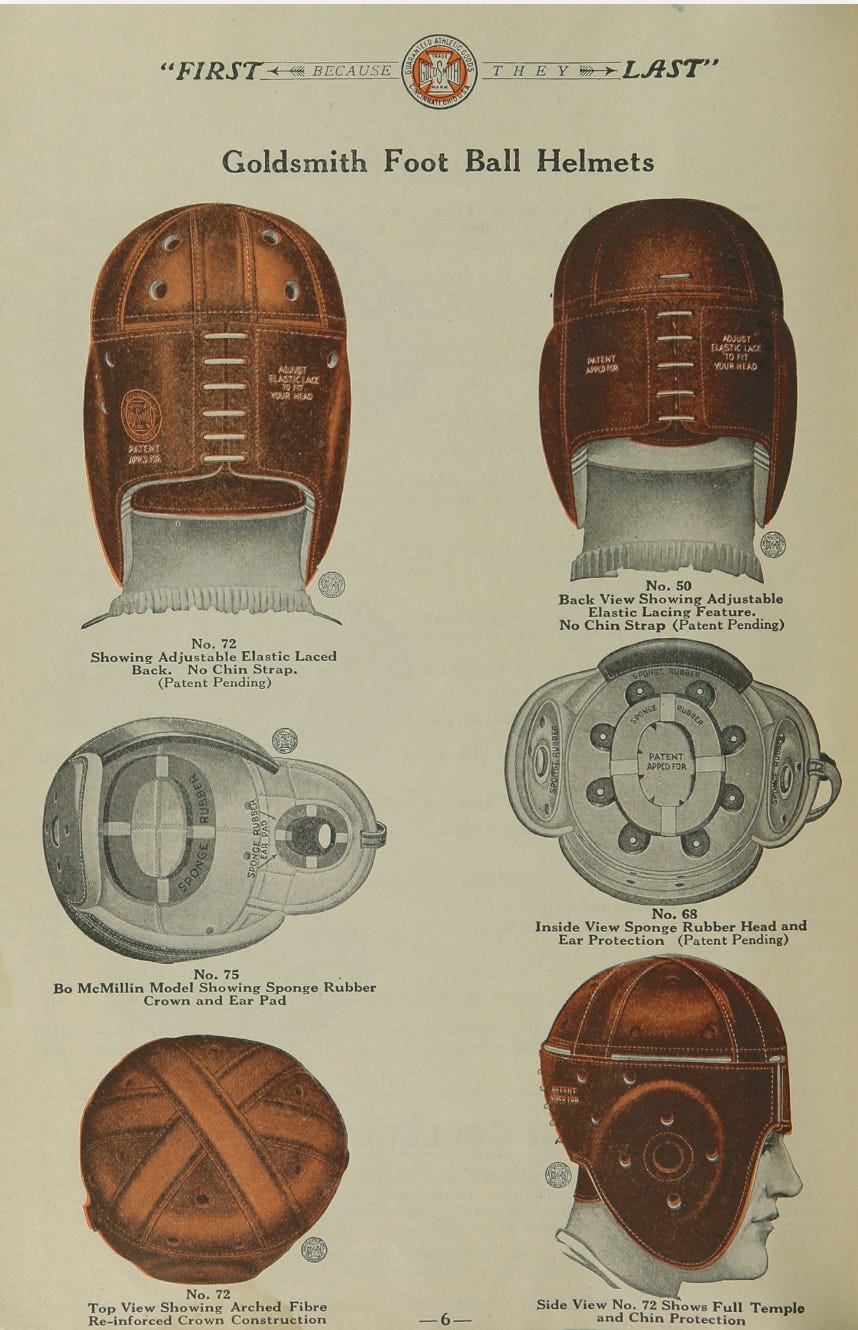
Most of Goldsmith’s helmets were still flathead and dog-eared, so Nos. 72 and 09 were a big deal in an industry reshaping its helmets.
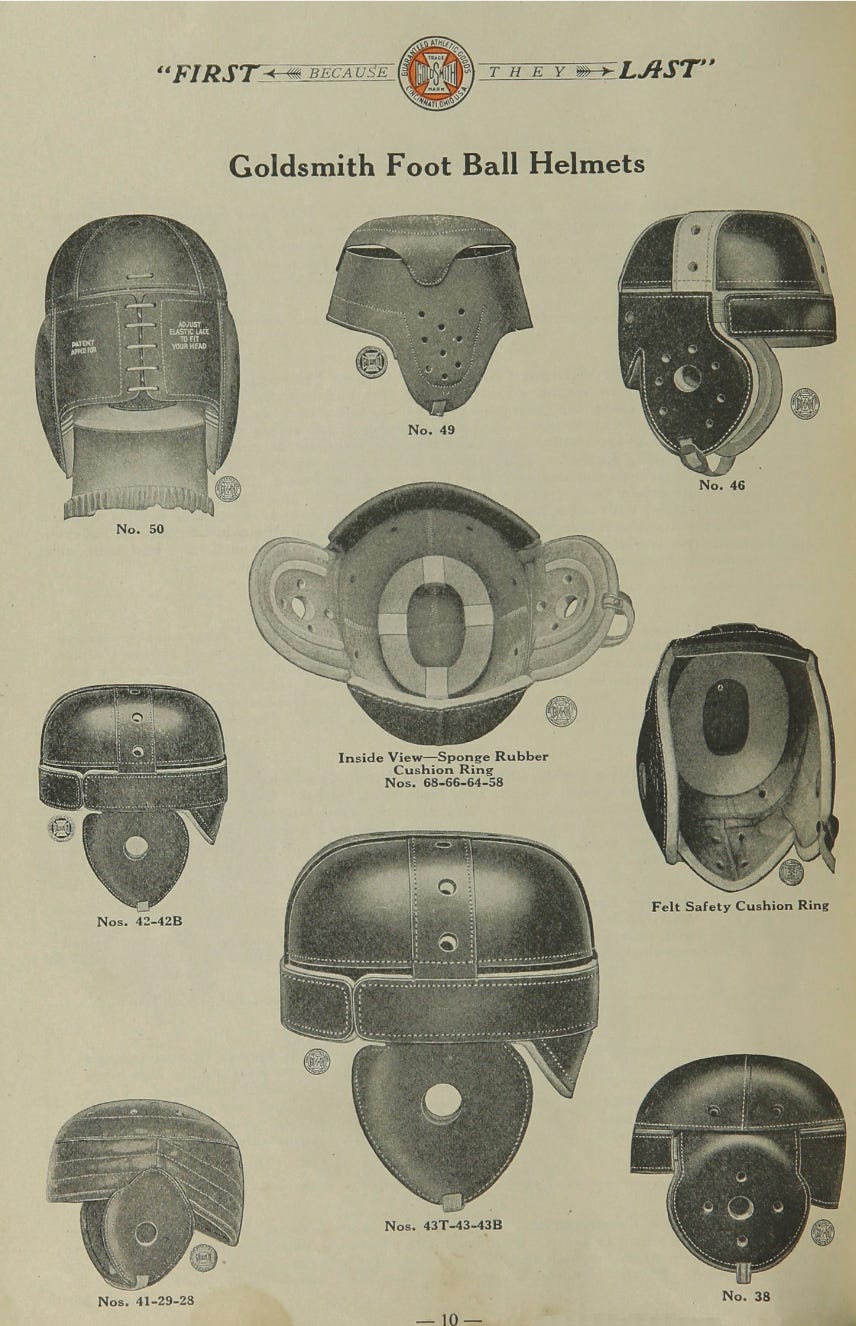
Goldsmith also dropped the chin strap from their new models. eliminating what was actually a jaw strap rather than a chin strap. It is unclear what they gained by removing the chin strap, but Goldsmith was still selling them in 1927, so somebody bought them.

We see “Bo” McMillin in living color, along with the shoulder pad model named after him. McMillin starred for the 1921 Centre team that beat Harvard, ending the Crimson’s 25-game undefeated streak. He played for the NFL’s Milwaukee Badgers in 1923.
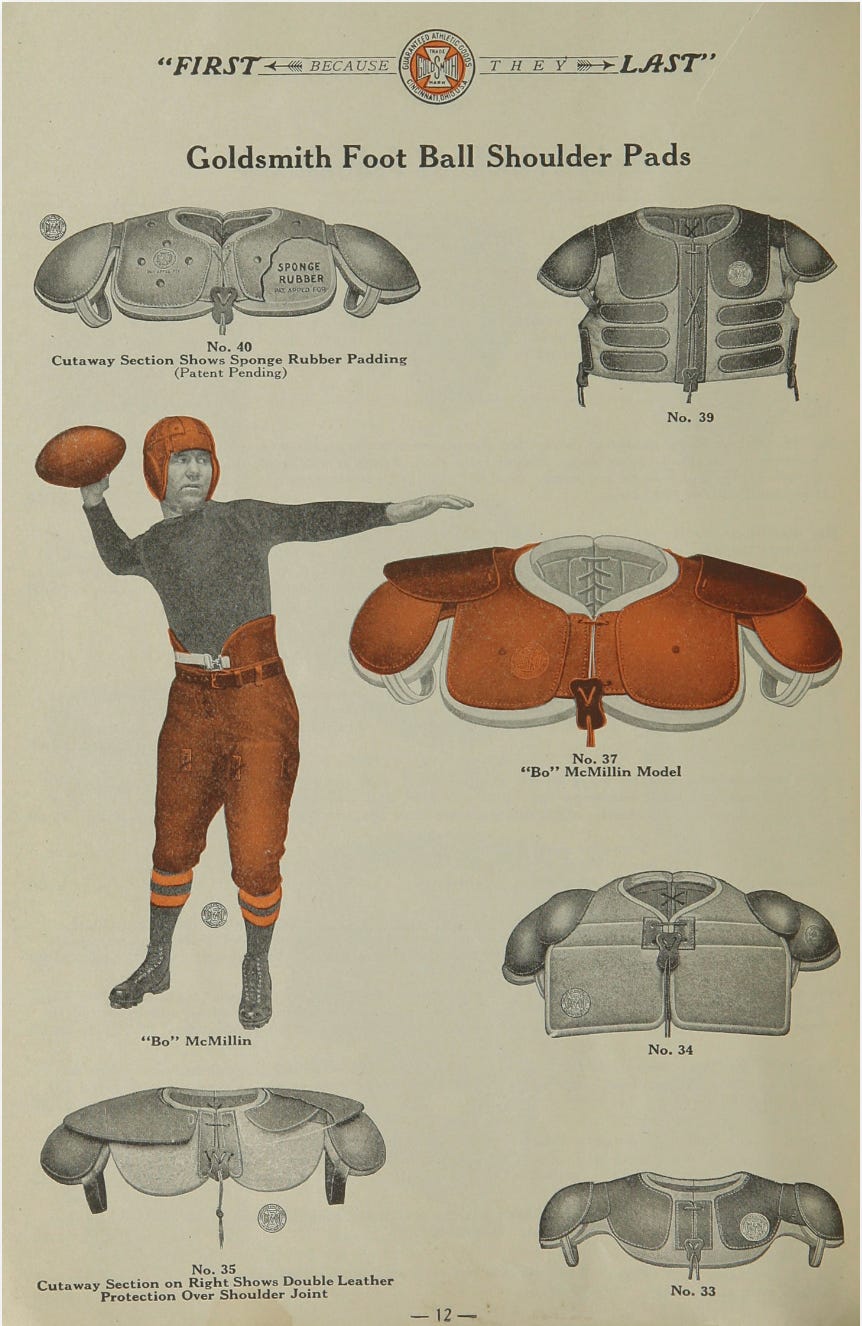
Their model No. 40 had a patent-pending design that leveraged foam rubber. Goldsmith was at the forefront of the trend toward lighter equipment, working with the Navy team doctor in finding new technologies to reduce the weight of football gear.

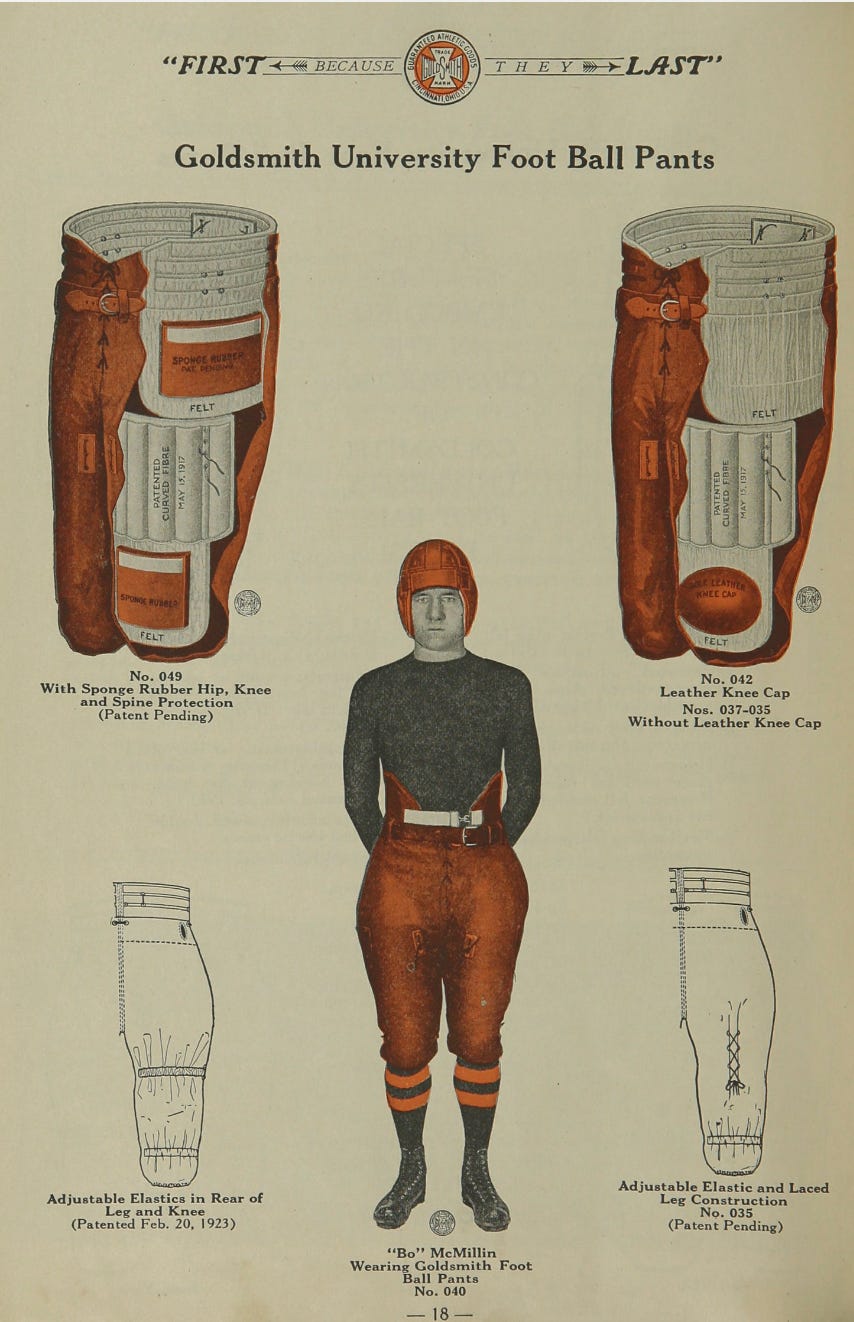
Goldsmith’s football pants also used sponge rubber to supplement felt padding. They also had built-in high kidney and hip pads, plus the cinch or drawstring system to keep their thigh pads in place.
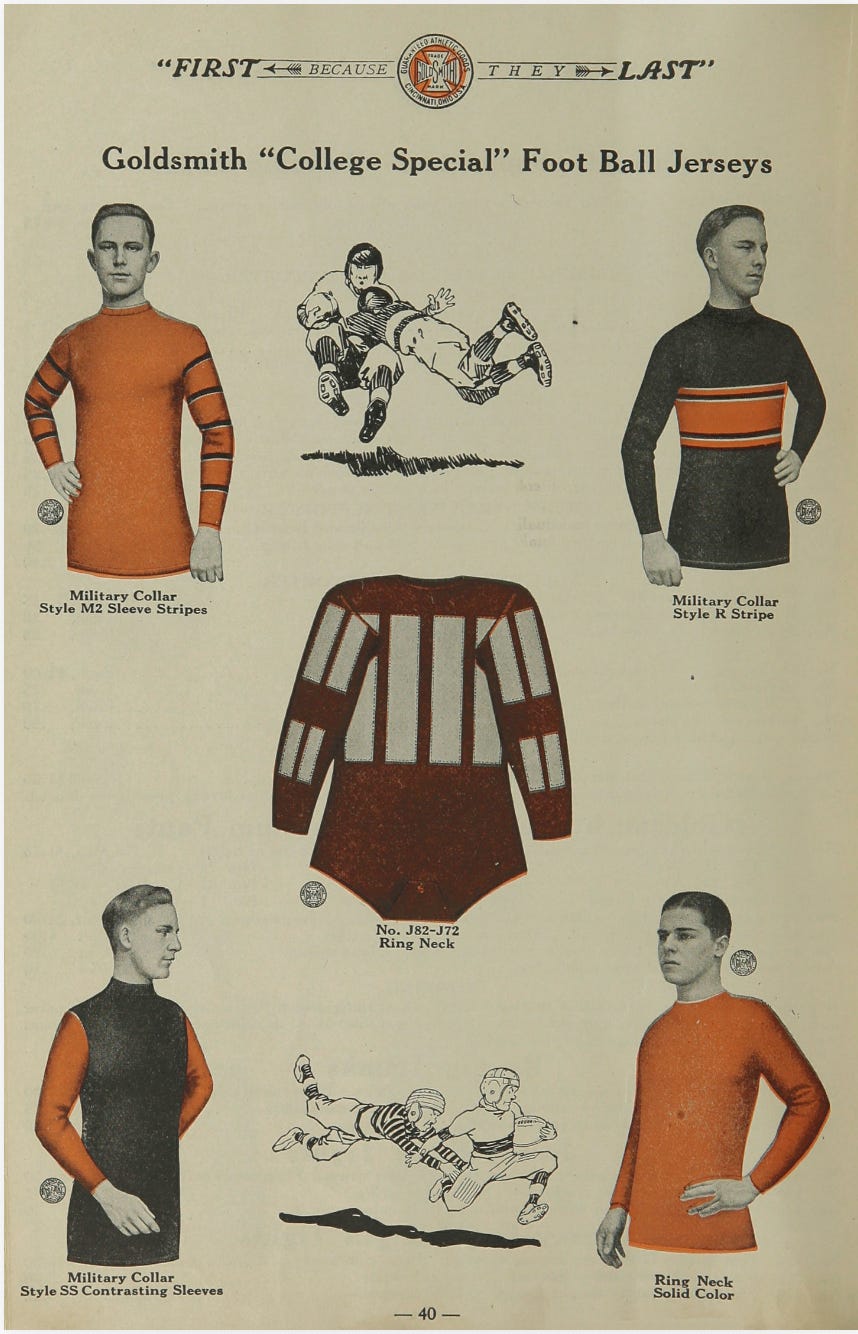
Goldsmith’s jersey offerings were not particularly exciting. However, the friction strip model was widely copied and modified until numbers on the front of jerseys came along. The Style R horizontal stripe version resembles those worn by Centre, Army, and a few other teams.
Those of you who take the time to download the beautiful catalog might notice that I omitted the Accessories page from this story. It will “play a roll” in another story I’ll publish shortly.
If you enjoy Football Archaeology and are not a paid subscriber, consider buying me a cup of coffee here and there. You can also buy a paid subscription or purchase one of my books.


I know youve talked previously about the history of the helmet, but do you have an article on kinda the evolution of the leather helmet? It seems to have been common by 1923 but it looks like it was mostly absent from field before WWI. When was the tipping point where leatherheads became the norm?