
Iowa Field: A Railroad Runs Through It

I’ve been running a series about schools that dropped or deemphasized football, and while I haven’t added to it lately, I will get back to it. (The most recent one is linked below. It includes links to the other 16 stories published to date.)

Many schools that dropped football were medium-sized urban schools that struggled to fund the sport as coaching staffs and rosters expanded during the two-platoon era. Sports fans fixating on televised games rather than attending college games in person also hurt the cause. However, as the research for the series has progressed, I’ve become convinced that an underappreciated factor in college football’s urban demise was the cost of land. Schools in more remote settings had land aplenty, but those in concrete jungles were often landlocked, paying a pretty penny for each parcel, including those needed for football stadiums and practice fields.
Even outside the cities, early football teams often played their games on disused pieces of open land that were swampy or in flood plains. Such was the case for the University of Iowa, which played its first football game in 1889 at Grinnell.
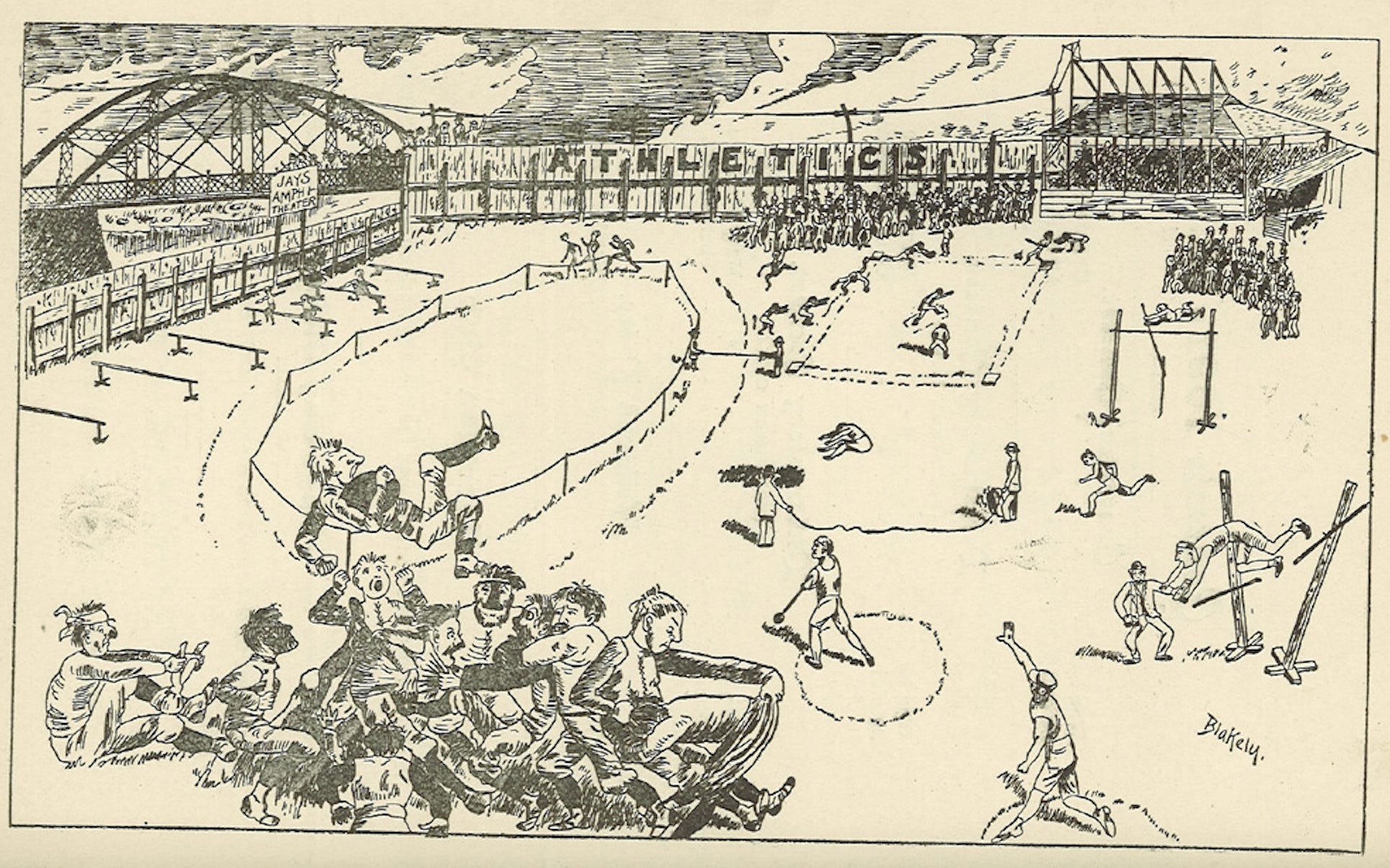
The teams met again in 1890, this time in Iowa City on a narrow open field squeezed between the Iowa River and a railroad track. The drawing from Iowa’s 1894 yearbook below shows the football field in the foreground, the baseball field in the background, and a bridge crossing the river in the upper left.
Over time, they formalized the football stadium as Iowa Field and expanded it several times, ultimately leading to two significant challenges. One was the Iowa River. With the stadium planted right next to the river and unable to move said river, they could only increase the capacity of the west stands by having the uppermost seats overhang the water.

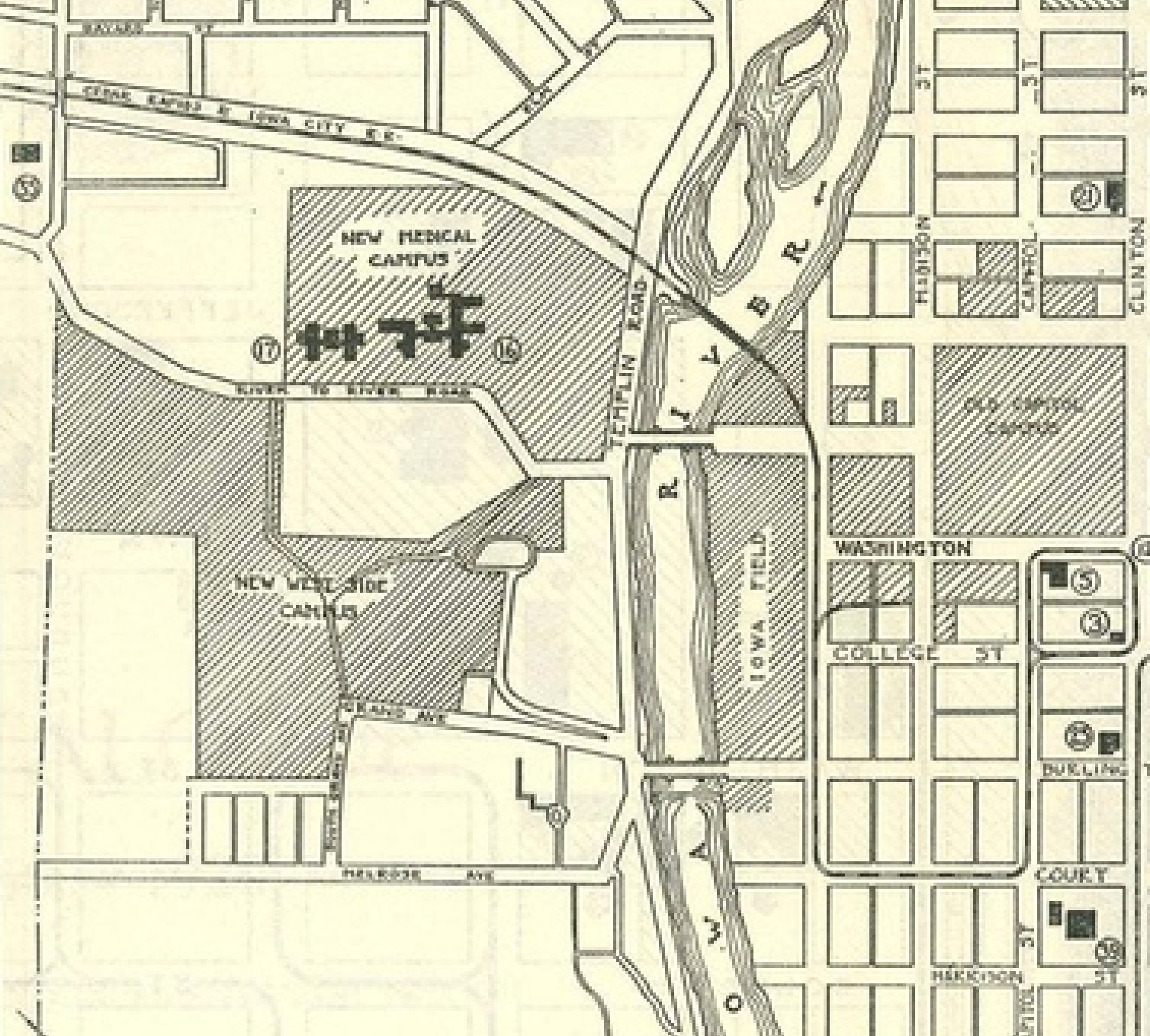
The other problem was the CRANDIC, or the Cedar Rapids and Iowa City Railway. As seen on the cropped version of a 1920 Iowa City map, the CRANDIC interurban line crossed the river just north of Iowa Field, then turned south, running 100 or so yards east of the river, just beyond the eastern stands.
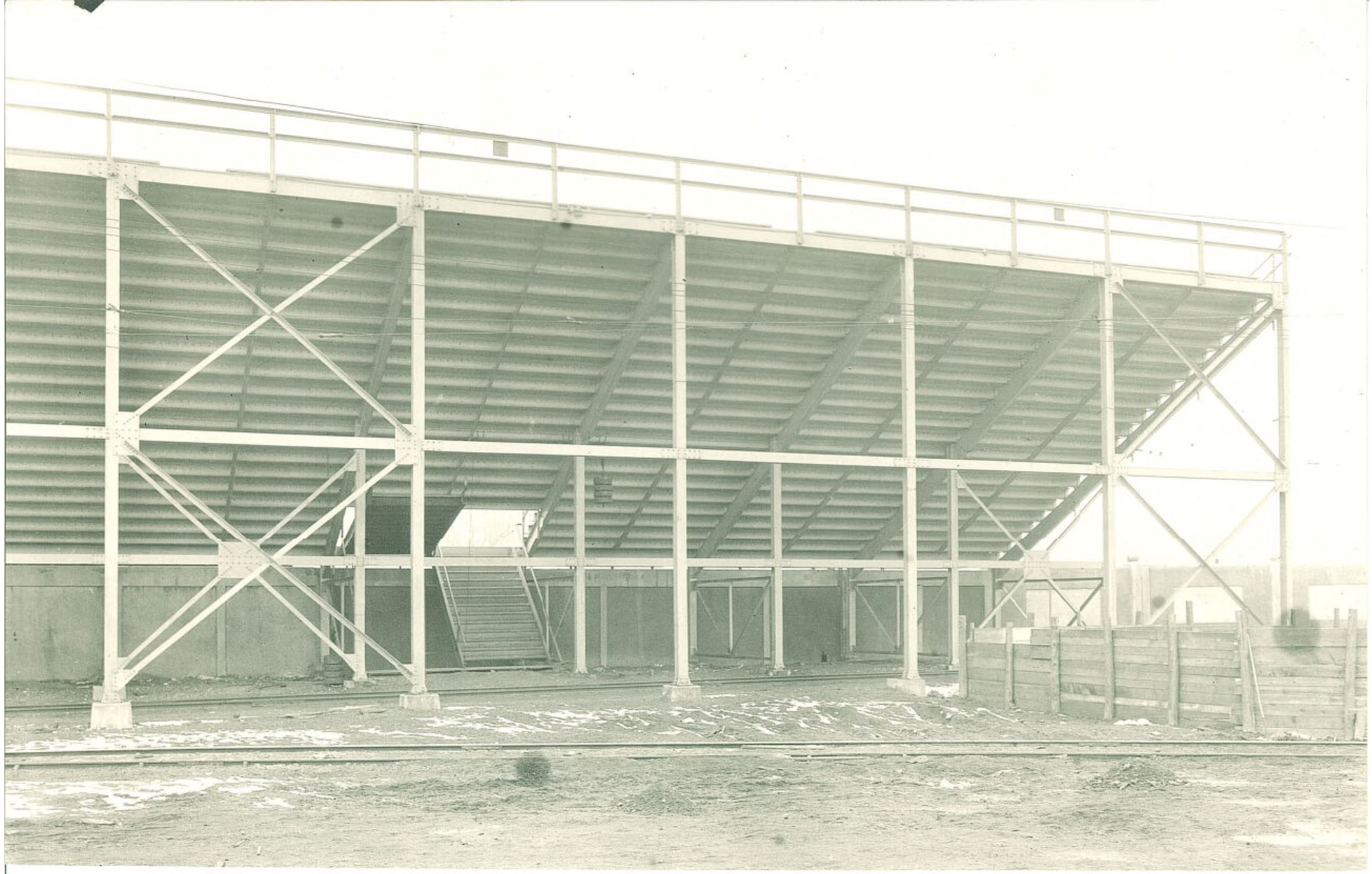
In 1922, with demand for football tickets at an all-time high, the Iowegians decided to expand the eastern stands, railroads tracks be damned. To do so, they moved the tracks farther east in the stadium area, which helped the cause. However, to fully address the problem, they had to build the stands over one line of tracks. Plenty of football fields have been located next to railroad tracks, but few have risen above them. You can see the tracks running under the stands in the 1922 photo below.
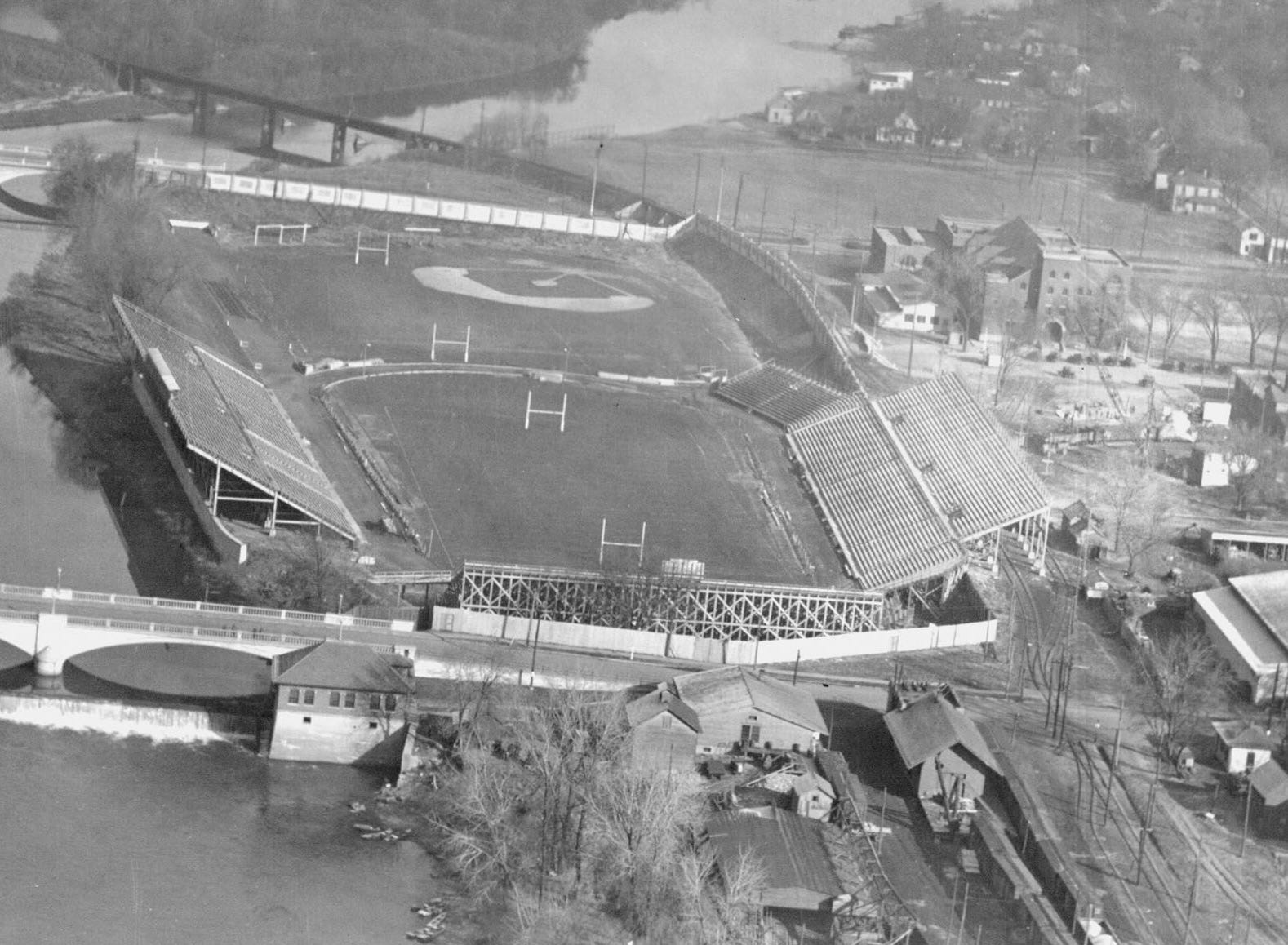
Aerial views from 1923 and 1925 offer a clearer view of the railroad tracks passing under and alongside the stands, suggesting that Iowa should have adopted the Boilermaker name rather than the other black-and-gold folks two states to the east.
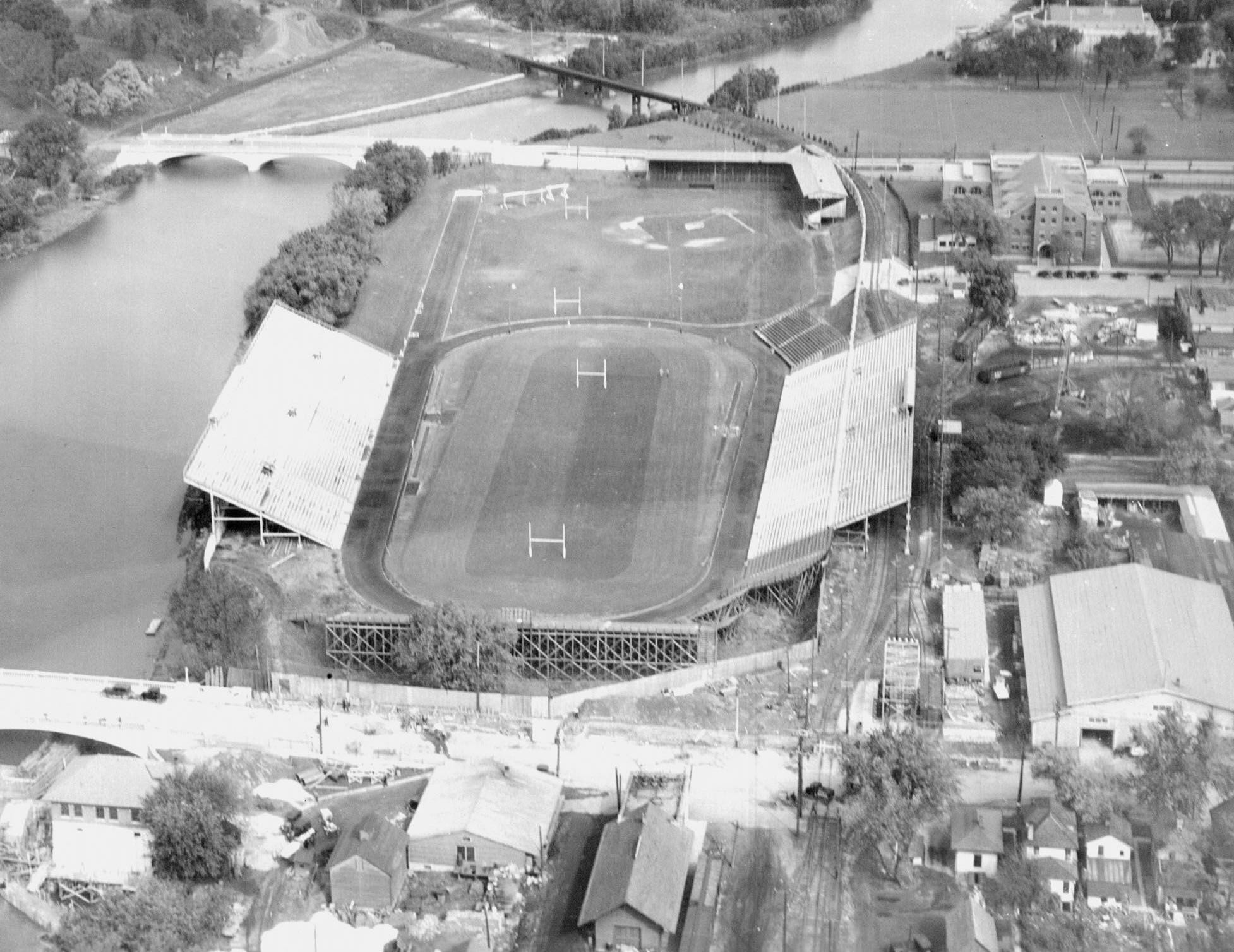
Ultimately, the 1922 expansion of Iowa Field proved insufficient, leading the Hawkeyes, with limited land on the west side of the campus, to build a new stadium atop the former golf course ground on the western edge of campus. Originally called Iowa Stadium, it is now known as Kinnick Stadium.
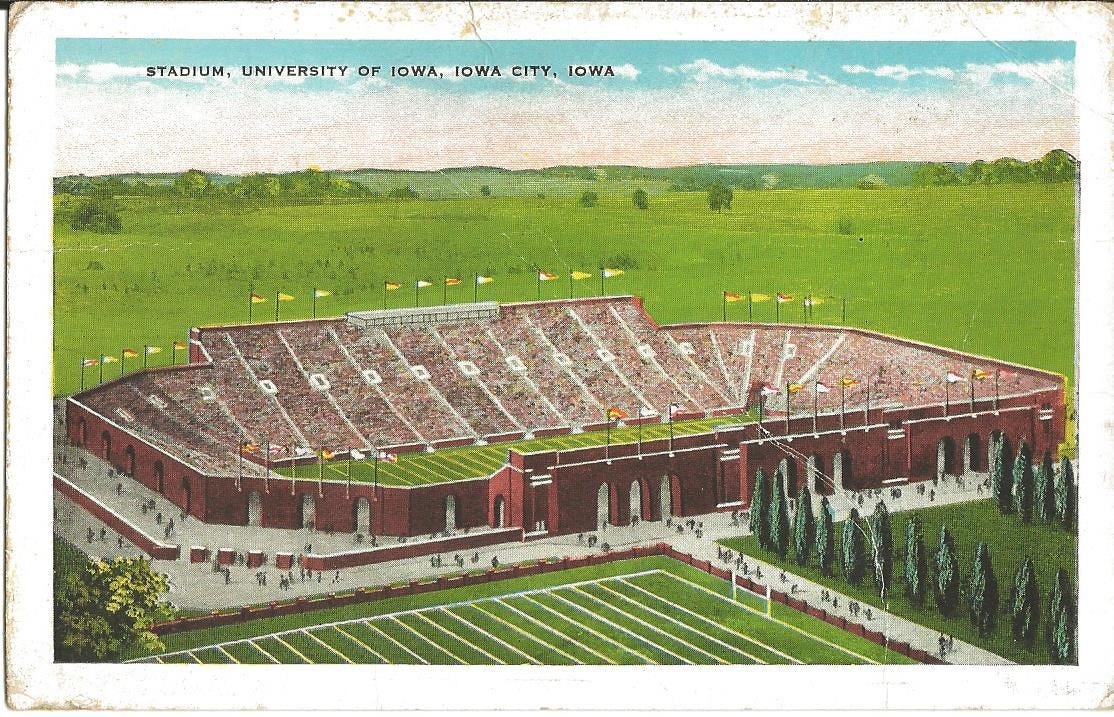
And, as early believers in the Reduce | Reuse | Recycle mantra, my local informant tells me the steel from the dismantled Iowa Field was incorporated into the upper deck seating of the Iowa Field House in the early 1930s.
Postscript: The original article claimed the Iowa-Grinnell game was the first collegiate game west of the Mississippi. A reader pointed out that Minnesota and Hamline played in 1883, which I confirmed in a period publication.
Thanks to Bill Claypool for signing up for a paid subscription and suggesting this topic.
The fundraising effort to have the Library of Congress scan its copy of the 1884 college rule book is approaching its goal but needs a few more pushes. Let’s get down in our stances and push that sled forward.
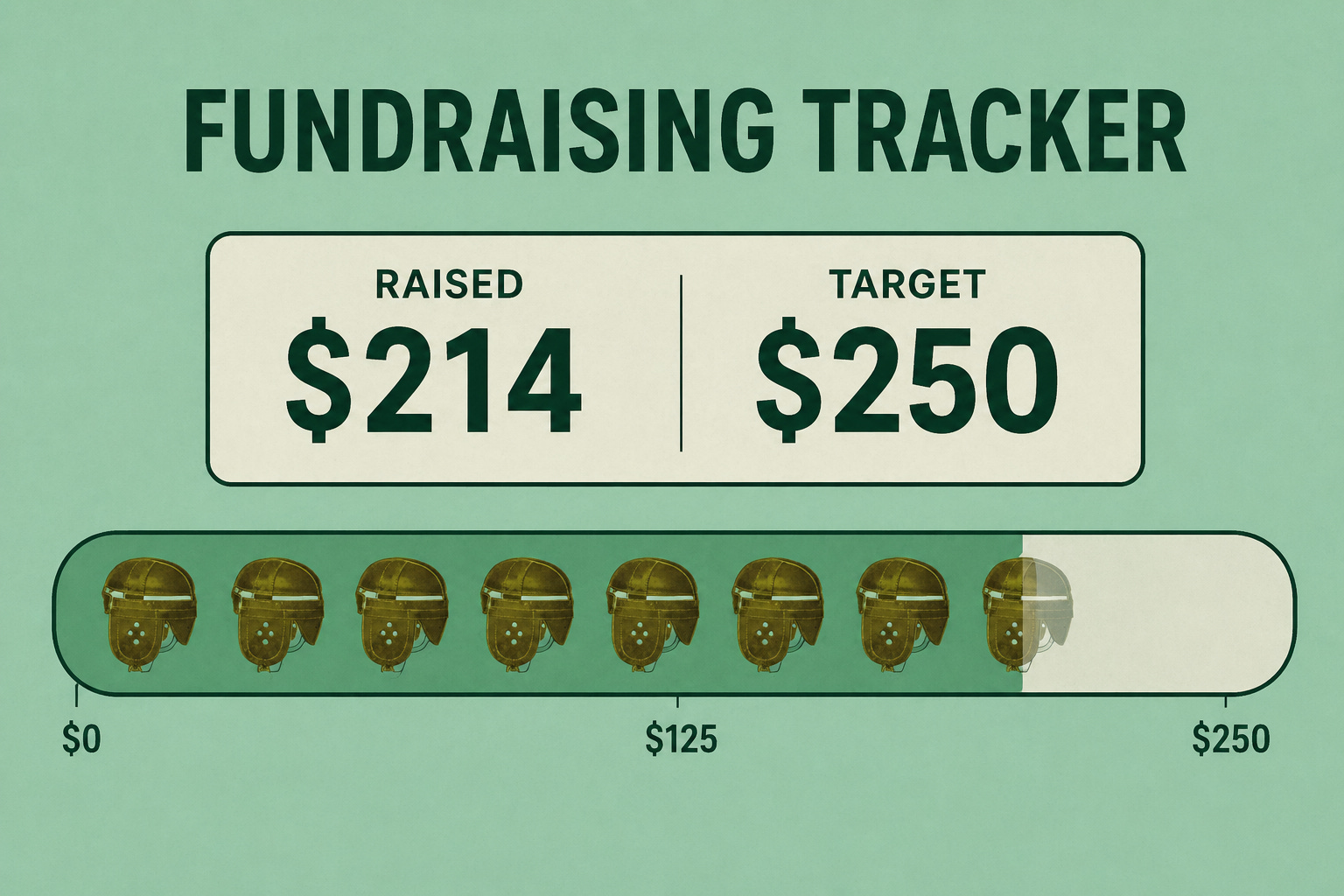
Thanks, Vasav, Andrew, Chris, and Billy, for their paid subscriptions, and to Steve and an anonymous donor for buying a few coffees.
As a reminder, I send a copy of one of my books (your choice) when you acquire a new annual subscription.
Regular readers support Football Archaeology. If you enjoy my work, consider a paid subscription, buy me a coffee, or purchase a book.


Crandic made a lot of stuff possible. Have old relatives who still think it would be a good thing in 2026
They were fortunate that no railroad accidents happened while a game was in progress...