

The college football offseason is upon us, leading to thoughts of what might have been if your favorite team is not Indiana, Montana State, Ferris State, or UW-River Falls, or the various NAIA, JC, and U Sports champs. Of course, you don’t need the offseason to think of what might have been if your school dropped or deemphasized football. That thought lurks all year round.
Football Archaeology previously reviewed the sordid stories of sixteen schools that voluntarily dashed their own dreams of gridiron glory. Today, we tell the story of a seventeenth dropout, the University of California, Santa Barbara (UCSB). An earlier story covering Wichita State benefitted from my acquiring brochures promoting their 1986 season, which turned out to be the Shockers’ last. Likewise, assisting in the telling of this story is UCSB’s 1971 football media guide, which projected optimism as the Gauchos unknowingly saddled up for the last time as a major college football team.
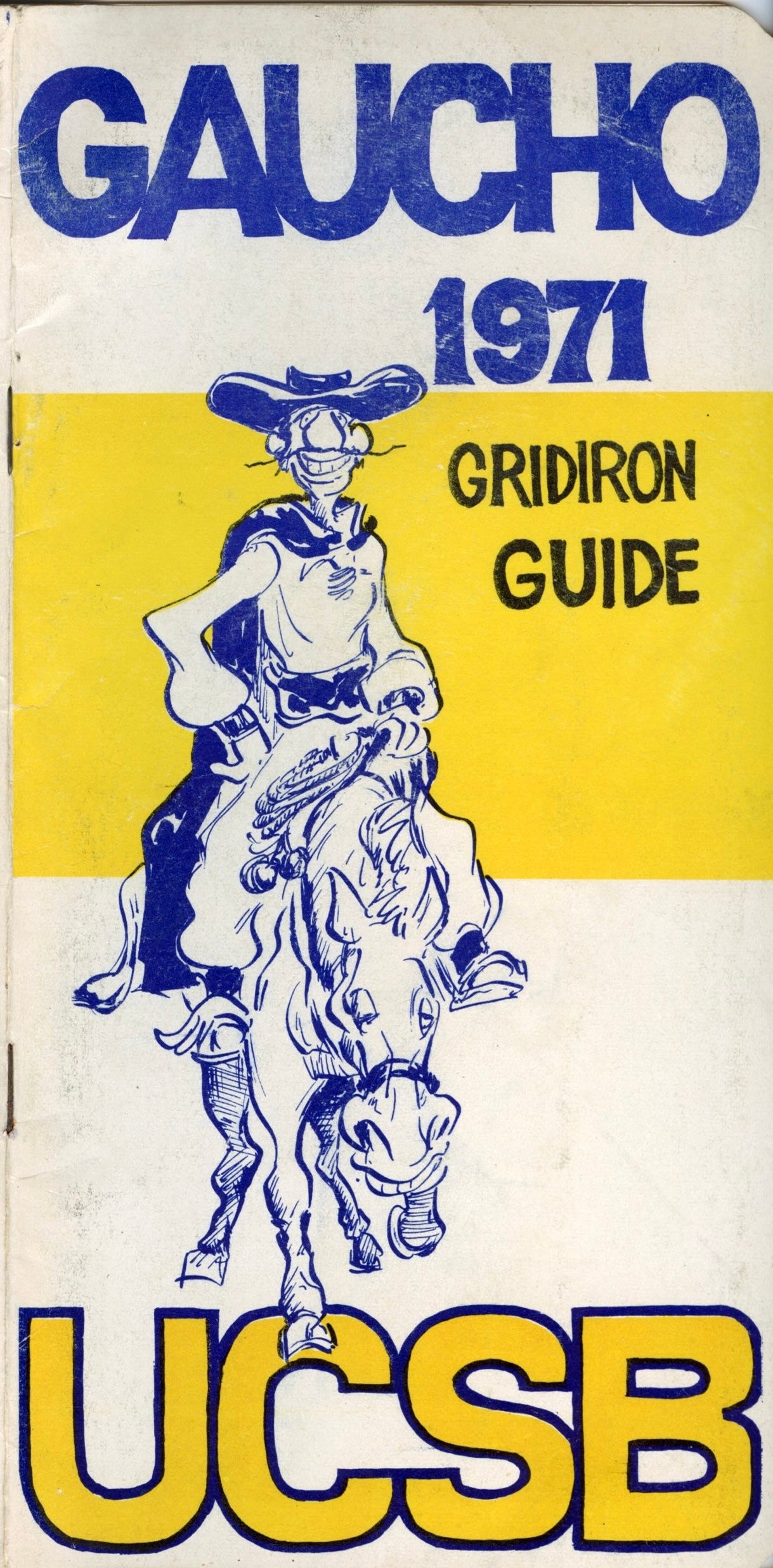
UCSB began modestly in 1891 as a center for domestic arts, transitioned to a normal school, then to a general education university, and is now best known as the least famous of America’s top 50 research universities. Just as UCSB toils in relative obscurity among the general public, I knew little or nothing about the Gauchos football program until the past few days. I knew the program existed, having previously told the tales of other California football droppers (Fullerton, Long Beach, and Cal State Los Angeles), but that was about it.
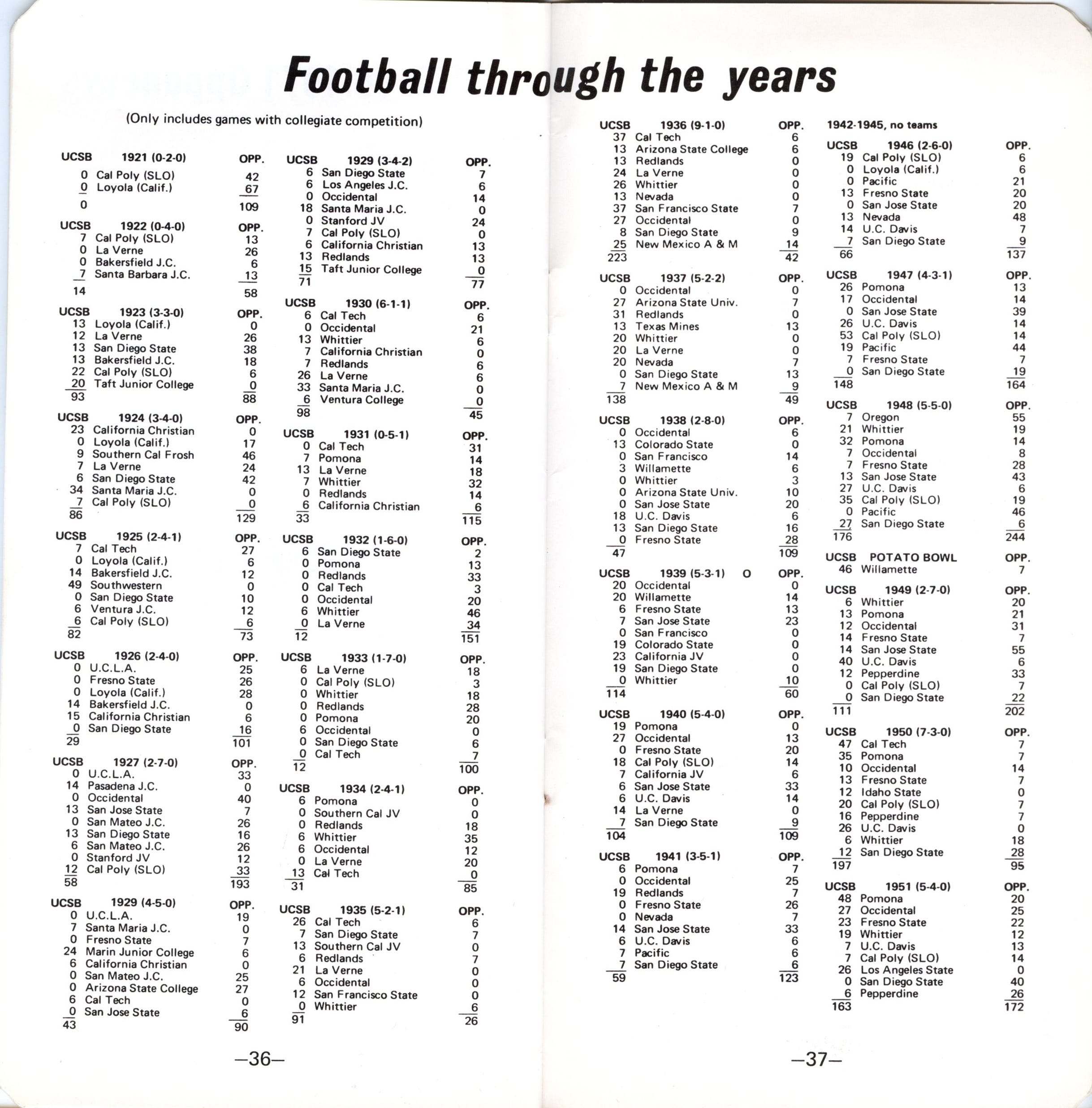
Santa Barbara State Teachers College fielded its first football team in 1921. Known as the Roadrunners, the team changed its identity in 1936 when Spud Harder became coach and encouraged students to choose a new mascot: Gauchos it was. Their 9-1 record in their first season as the Gauchos was the best in school history.
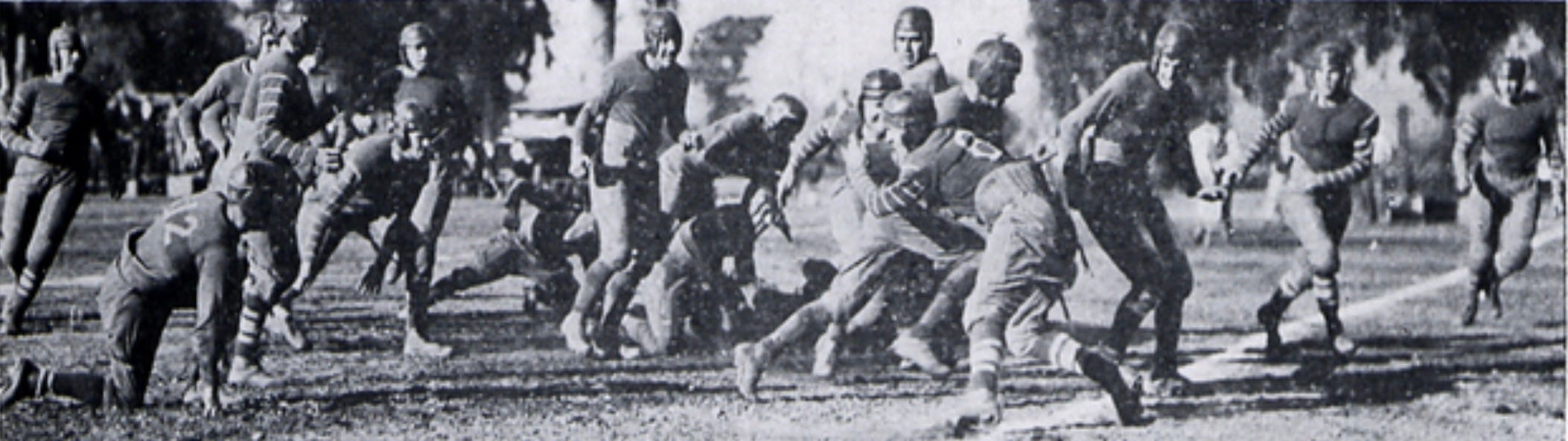
A review of their early opponents shows they played small private schools, state normal schools, a juco or two, and the JV or frosh teams of major colleges. They were members of the California Collegiate Athletic Association from 1938 to 1964, highlighted by a 46-7 victory over Willamette in the 1946 Potato Bowl.
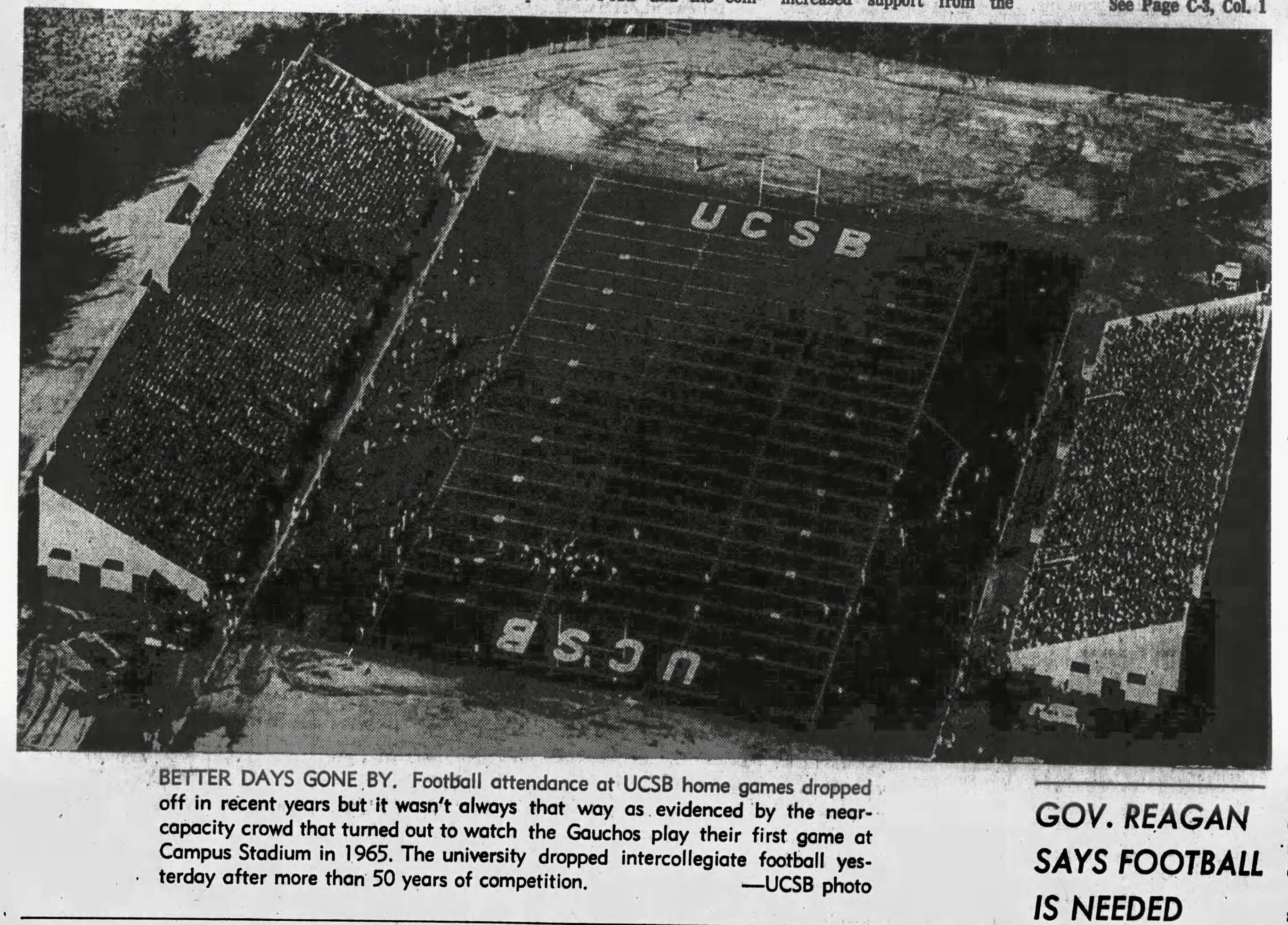
However, as the school and its sibling California public universities, not named Cal or UCLA, grew in enrollment and academic prestige, visions of higher-profile athletics danced in their heads. Chancellor Vernon I. Cheadle supported the school’s move to the West Coast Athletic Conference in 1964 and the Pacific Coast Athletic Association in 1969. Along with the conference moves, they christened the 17,000-seat Campus Stadium for homecoming in 1966 with a 64-3 win over Cal Western.
They also made a big move in 1963 when their head football coach search included finalists Bill Walsh, most recently Cal’s end coach, and the coach they hired, “Cactus Jack” Curtice, the recently fired Stanford coach who’d had a solid 10-year run at Utah. (It was Curtice’s 1955 Utah team that a BYU assistant described as “a cloud of dust and four yards,” which evolved over the next few years into “three yards and a cloud of dust.”)

Curtice got things going in his first game in Santa Barbara by topping Mexico Instituto Politecnico Nacional, and the students tore down the goal posts two weeks later after beating Whittier. More important, they were 8-0 in 1965, qualifying for the Camelia Bowl, where they lost to Cal State Los Angeles.
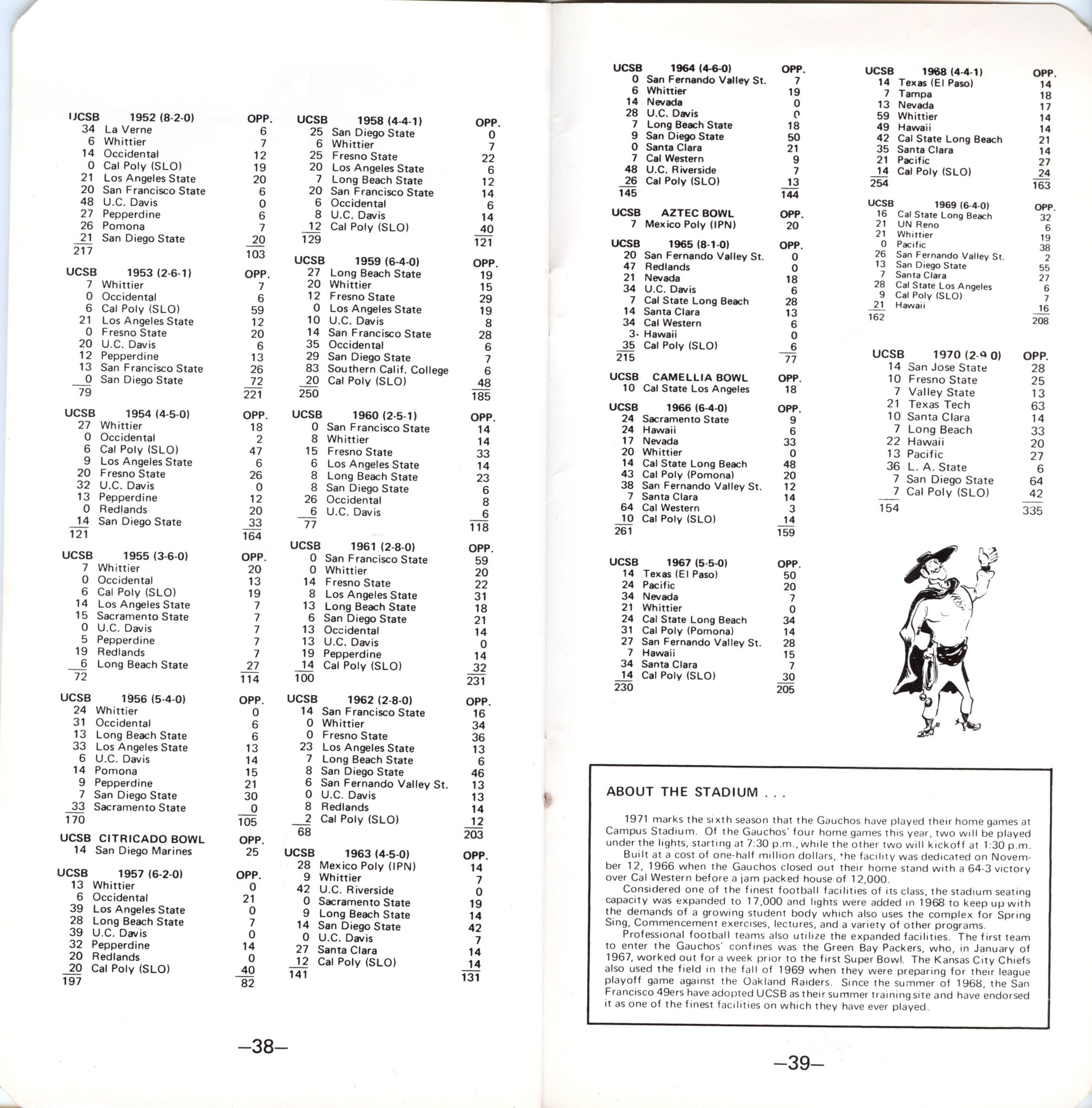
The Gauchos had four more seasons of .500 or so ball under Curtice, the last of which was their first as members of the Pacific Coast Athletic Association. The Pacific Coast Athletic Association, which included UCSB, San Diego State, San Jose State, Pacific, Fresno State, Long Beach State, and Cal State Los Angeles, provided stiffer competition, especially since the Gauchos did not receive increased scholarships or funding. The directive was that the Gaucho football program needed to be self-sustaining by attracting bigger crowds home or away.
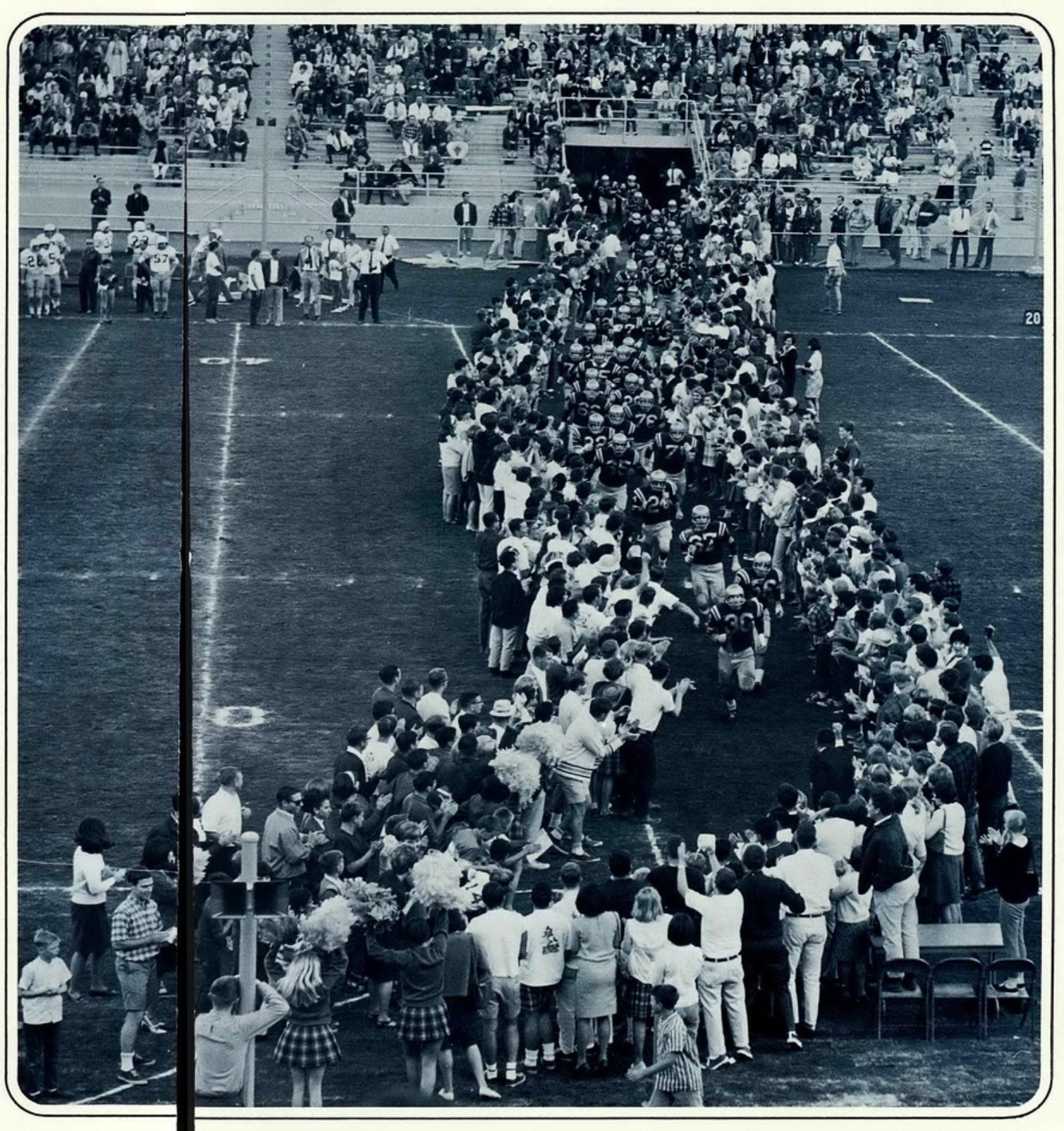
Curtice led UCSB to a 6-4 record in 1969, going 1-3 in conference, before leaving the sidelines to take on the AD role full-time. Taking his place was Andy Everest, who played for Curtice at Texas Western in the late 1940s and was a Gauchos assistant since 1965.
The 1970 team lost a buy game at Texas Tech 63-21 and went 1-5 in conference, getting blown out in most of their games on the way to a 2-9 record. Everest recruited California’s junior colleges more heavily than usual for 1971, bringing in muchos juco Guachos. That led to all sorts of optimism until they earned money the old-fashioned way, as sacrificial lambs playing at Washington and Tennessee to open the season. Washington finished in the Top 20 and Tennessee in the Top 10, so both gouged the Gauchos in unkind ways.
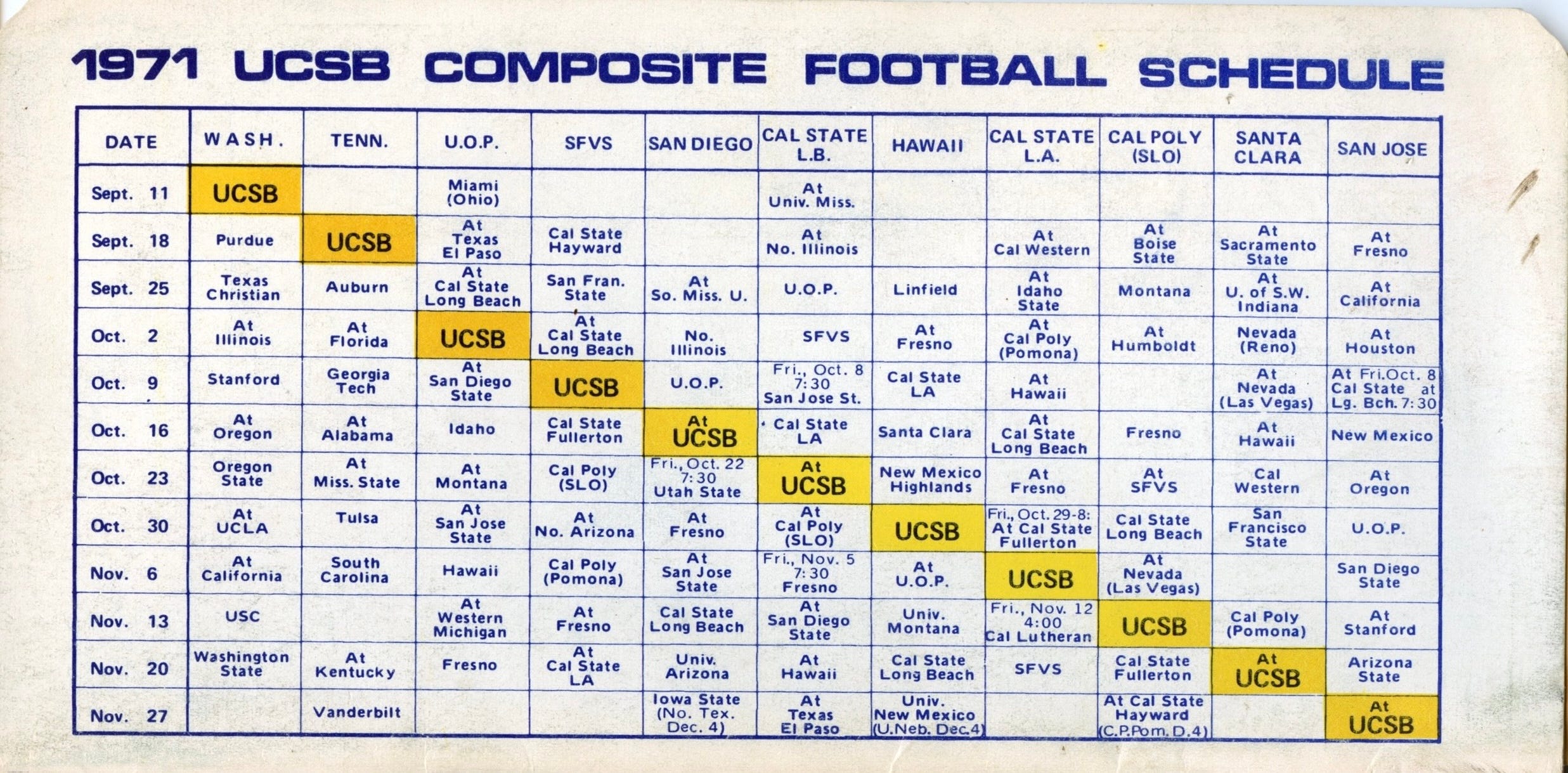
A road win at Pacific brightened the next week, but despite playing most conference opponents tough, they finished the year at 3-8, 2-3 in conference. Despite making progress on the field, they averaged fewer than 6,500 fans per game, and the UCSB Associated Students voted to reduce its funding for football, leaving the program swimming in debt.
Chancellor Cheadle, who had approved the construction of Campus Stadium six years earlier and the move to a more competitive conference two years before, pulled the plug without discussing his decision with AD Curtice or anyone involved in the program. Running a deficit on a program with little student support was not in the cards.
The Gauchos got back on the horse as a DIII program from 1987 to 1991, but an NCAA ruling that Division I schools must field all teams at the D-I level led to the program shutting down a second time.
UCSB has had a highly successful men’s soccer program that set some NCAA on-campus stadium attendance records, but its gridiron days are unlikely to return anytime soon.
Ranking by Stadium Size
Below are the schools reviewed to date, ranked by stadium size. The stadiums’ opening and demolition years (if applicable) are also noted.
Wichita State (Cessna Stadium): 31,500 | 1946 - 2022
Catholic (Brookland Stadium): 30,000 | 1924 - 1985
Denver (DU/Hilltop Stadium): 30,000 | 1925 - 1971
Marquette (Marquette Stadium): 24,000 | 1924 - 1977
UC Santa Barbara (Campus Stadium): 17,000 | 1966 - TBD
Xavier (Corcoran Stadium): 15,000 | 1929 - 1988
Gonzaga (Gonzaga Stadium): 12,000 | 1922 - 1949
California State University, Fullerton (Titan Stadium): 10,000 | 1992 - TBD
Boston University (Nickerson Field): 10,000 | 1915 - TBD
Vermont (Centennial Field): 10,000 | 1923 - TBD
Fordham (Fordham Field / Coffey Field): 7,000 | 1920s - TBD
St. Mary’s (St. Mary’s Stadium) 5,500 | TBD
NYU (Ohio Field): 5,000 (est.) | 1897 - 1947
San Francisco (St. Ignatius Stadium): <5,000 (est.) | c. 1909 - c. 1930
Carnegie-Mellon (Skibo Bowl): 4,500 | 1960 - 1987 | Gesling Stadium: 3,900 | 1990 - TBD
Sewanee (McGee Field): 3,000 | 1891 - TBD
Long Beach State (none): 0 | Not applicable
Schools to Review
Case Western | Chicago | Creighton | DePaul | Detroit | Drake | Loyola (Chicago) | Pacific | St. Louis | Santa Clara | Tampa | Washington University in St. Louis
Regular readers support Football Archaeology. If you enjoy my work, get a paid subscription, buy me a coffee, or purchase a book.


Was Spud Harder the coach when the Gauchos went to the Potato Bowl?
When UCSB football shut down the second time in 1991, their quarterback, John Barnes, transferred to UCLA. After starting the year as QB5, injuries led him to start the final game against USC to lead an all time great comeback that I witnessed in the Rose Bowl. Eliminating football at UCSB led to my favorite college football game memory with his fourth quarter 90 yard TD pass to JJ Stokes