

Among all university elevens, Stanford has had one of the stranger associations with airplanes. In 1919, they pioneered using an airplane in football drills by having their linemen push against a biplane’s wings, much like we use blocking sleds today.

While the airplane drill involved the team itself, the school, its fans, and those of rival teams got into the action in the late 1920s and early 1930s through the Palo Alto School of Aviation and its associated airport.
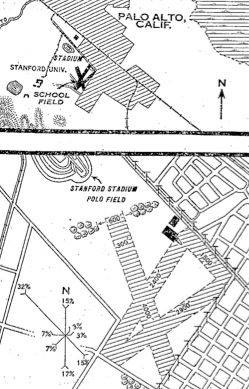
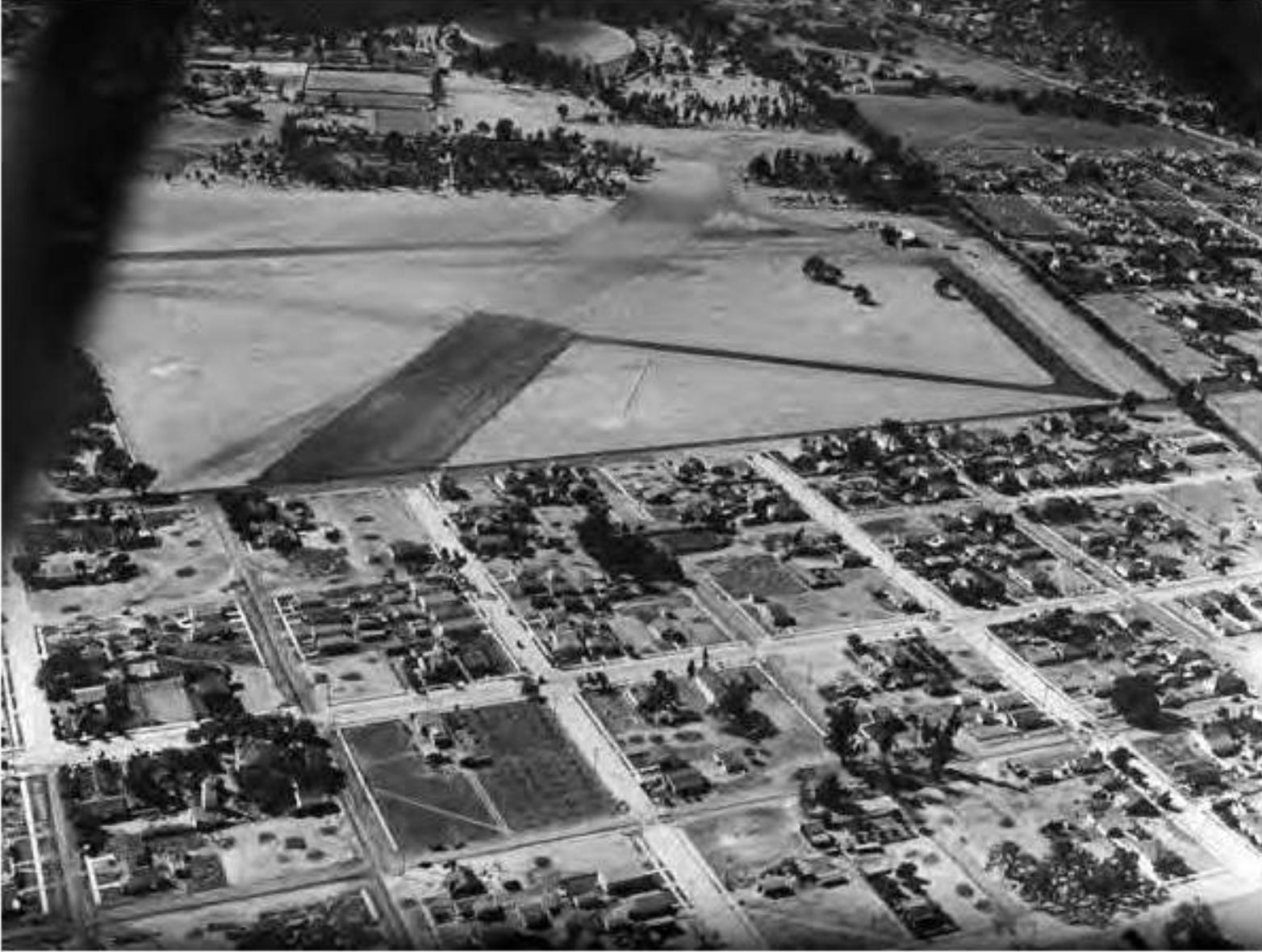
During the 1920s, it was unclear whether commercial airlines would dominate air transport or whether everyday consumers might have airplanes to take them from place to place. Ever on the cutting edge of innovation, Stanford also had plenty of empty land on the 8,000-acre farm that ol’ Leland Stanford donated in 1885, which allowed them to lease land to Lt. Norman A. Goddard and the Palo Alto School of Aviation in January 1928. An airport with its associated buildings soon appeared on campus, only a long forward pass from Stanford Stadium, which then sat 89,000 fans.
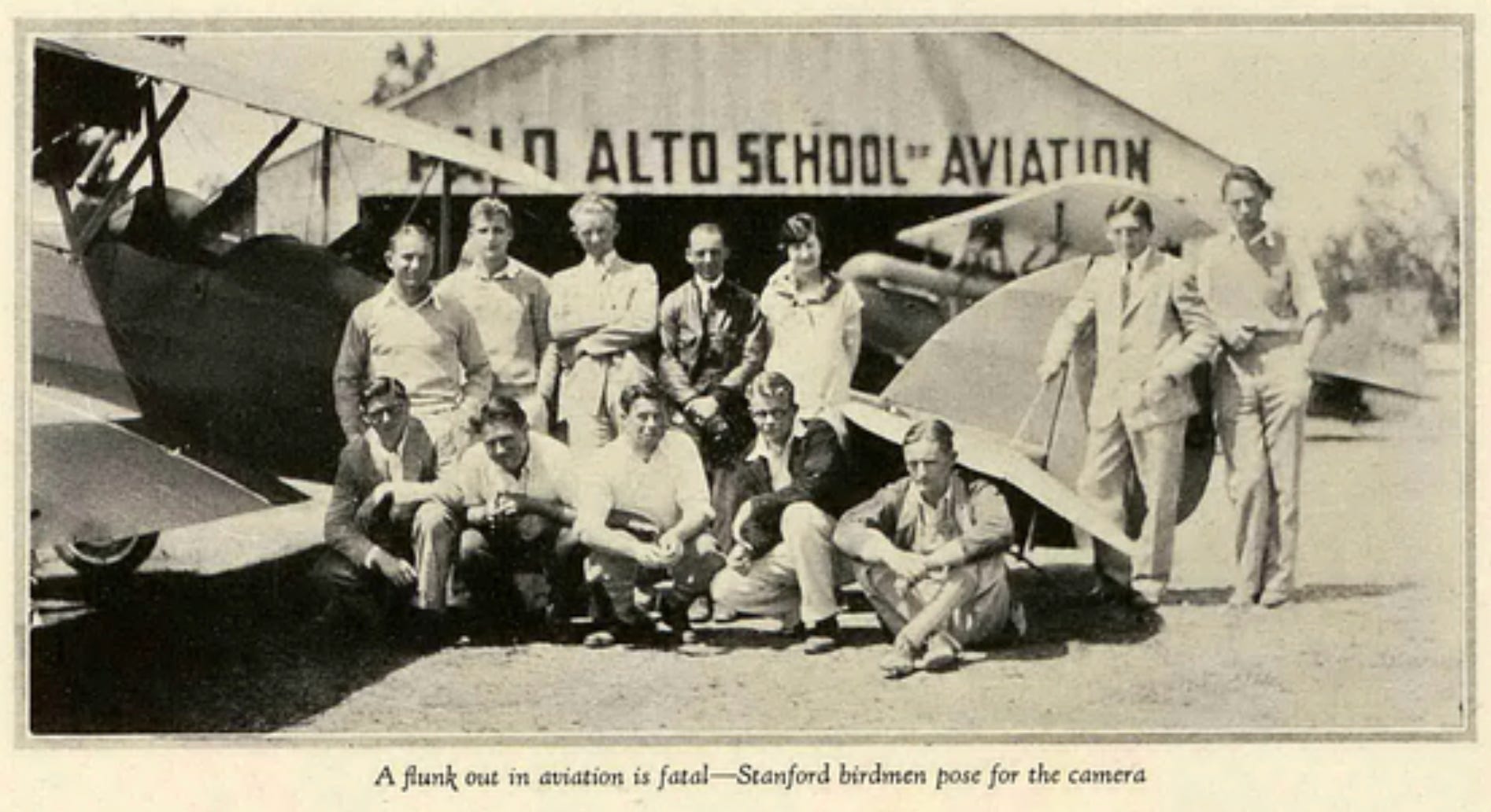
While not legally affiliated with the university beyond the lease, some Stanford students treated flying lessons with Goddard and his wife as an extracurricular activity.
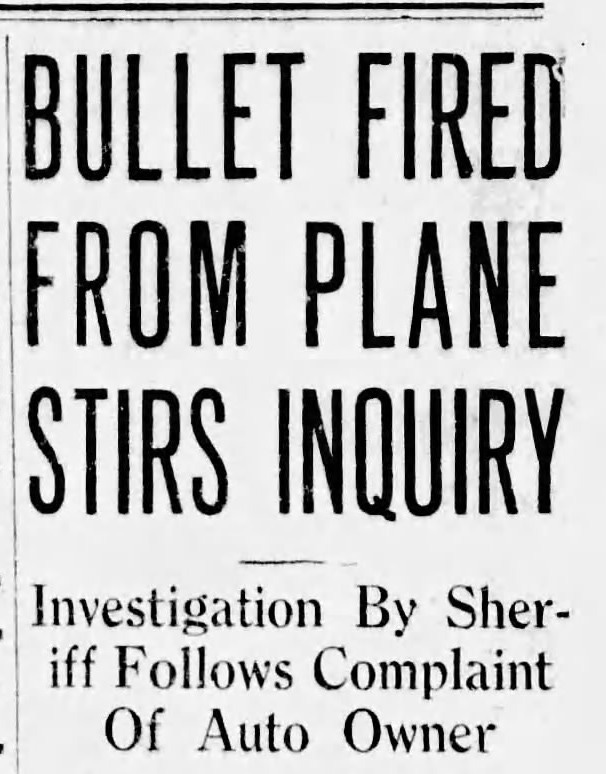
Despite student interest in aviation, it was not the students who found the airport so convenient. Instead, it was Stanford and rival alums who found the airport handy on fall Saturdays to figuratively jet over for a game. The 1928 USC game attracted a sizable number of fly-ins, but it was the Big Game that caused all the excitement. Apparently, an enterprising marketer got the idea to send aloft tethered balloons with hanging advertising near the stadium. Lt. Goddard found their encroachment on his personal airspace annoying, so he reportedly took off in his plane with a pistol to shoot down the balloons, only to miss and hit an earthbound car.
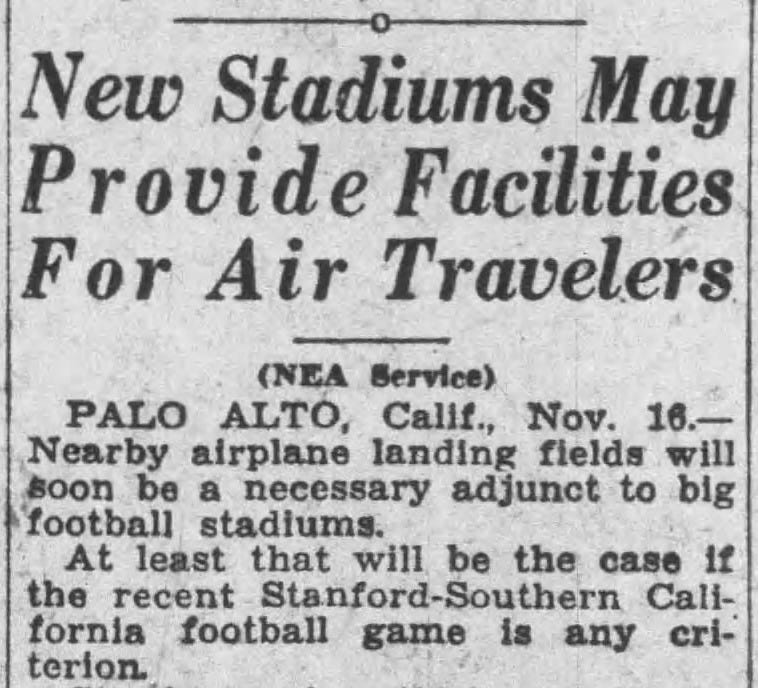
The 1929 USC game saw the airport visited by 150 to 200 airplanes, most of which parked there during the game before returning to LA. Airport officials estimated demand for landing slots at 500 planes, fueling speculation that stadiums of the future might include nearby facilities for private planes.
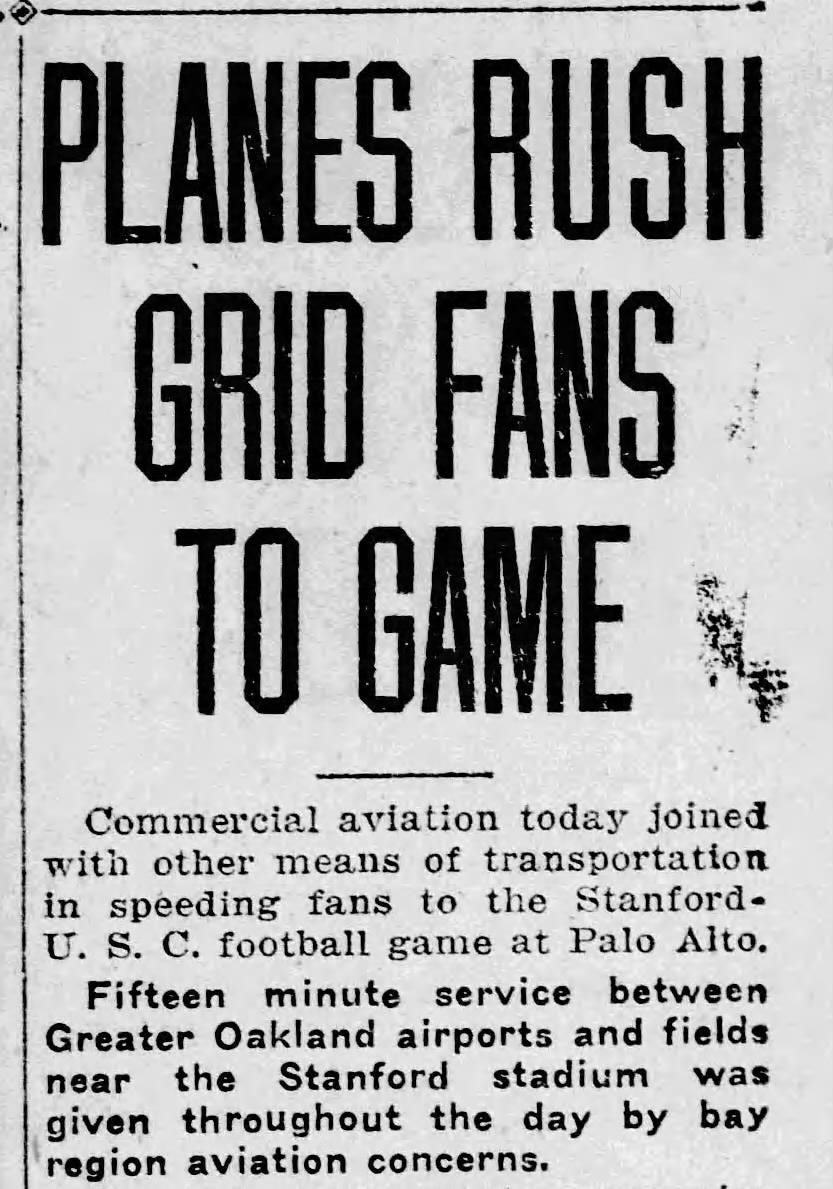
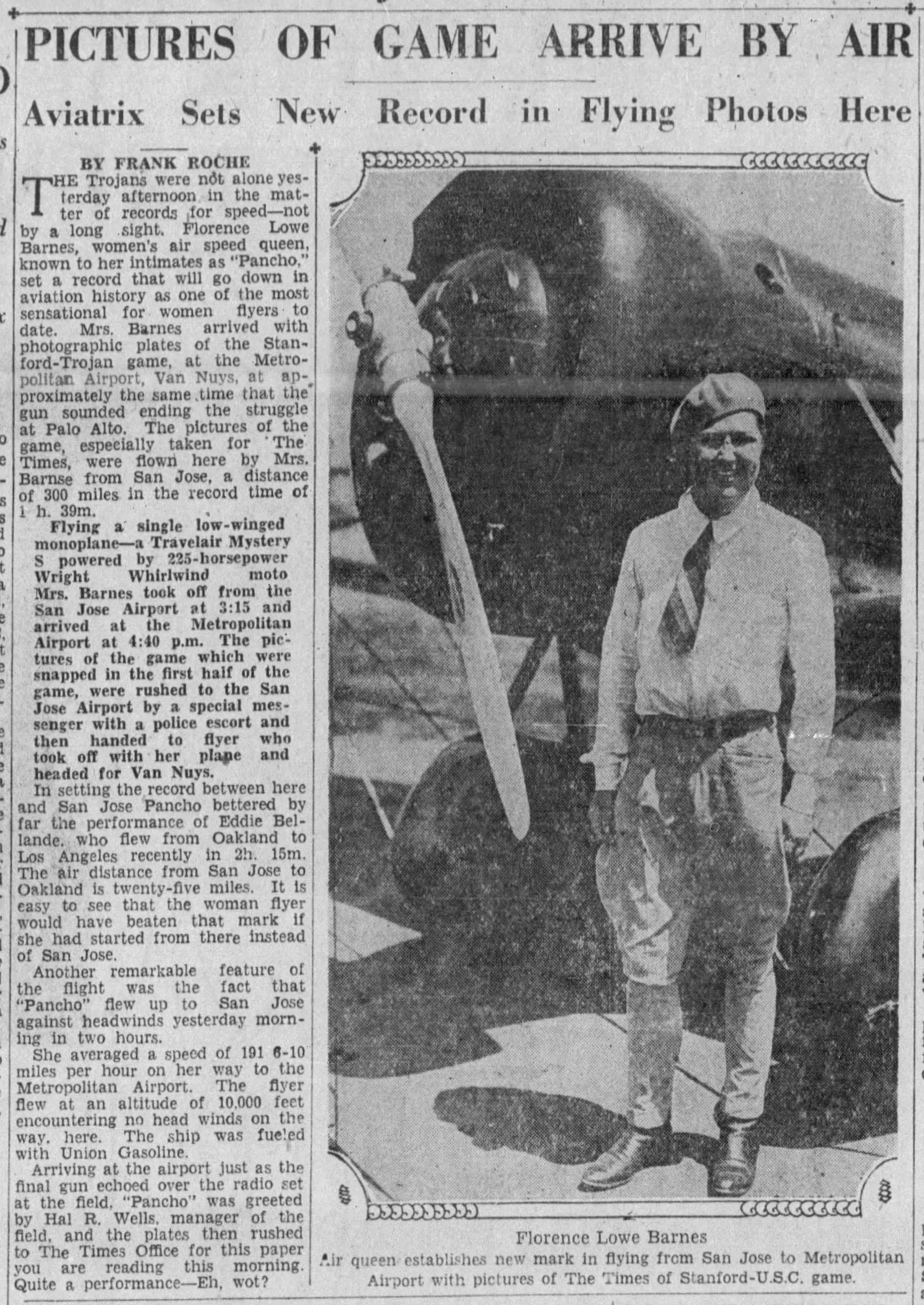
The 1930 season saw fans from Oakland and San Francisco avoid earthly traffic by shuttling to the game by air. Not only did fans take advantage of the neighboring airport, but so did the Los Angeles Times. The Times had pictures taken during the first half of the 1930 USC game and had them flown south by aviatrix Florence Lowe Barnes, who traveled the 300 miles to Van Nuys in 1 hour and 39 minutes, allowing the pictures to appear in Sunday morning’s newspaper.
Of course, all good things come to an end, and folks soon realized that an airport located near a huge football stadium, schools, and surrounding neighborhoods might not be a great idea. While a large number of planes came and went for games through 1933, the 1930 death of Lt. Goddard in a glider accident did not help the Palo Alto School of Aviation’s prospects; those flying to Stanford games soon found more distant landing spots.
More broadly, private aviation airports near football or other athletic stadiums never really took off as people found other ways to get to games. What once seemed like the future of aviation proved to be little more than a pie-in-the-sky idea.
The research for this story turned up a YouTube video of Lt. Goddard flying a glider in 1929. He lands safely in the end, but it provides some sense of the sketchiness of private aviation and gliding at the time.
Regular readers support Football Archaeology. If you enjoy my work, consider a paid subscription, buy me a coffee, or purchase a book.


Stanford's stadium held 89,000?! ..