
The World Cup and Football Shoe Branding

In days gone by, American football players appeared on the field with few, if any, manufacturers’ brand logos. Some brands put logos on helmets and balls, but jerseys, pants, and shoes were devoid of logos; that all changed due to the Dassler brothers and, eventually, Pelé and the World Cup.

The Dassler brothers began making athletic shoes in Germany in the 1920s. Their business was successful, but the brothers feuded, eventually leading them to split it into separate companies after WWII. Rudolph Dassler’s portion became Ruda, then Puma, while Adolf “Adi” Dassler formed adidas.
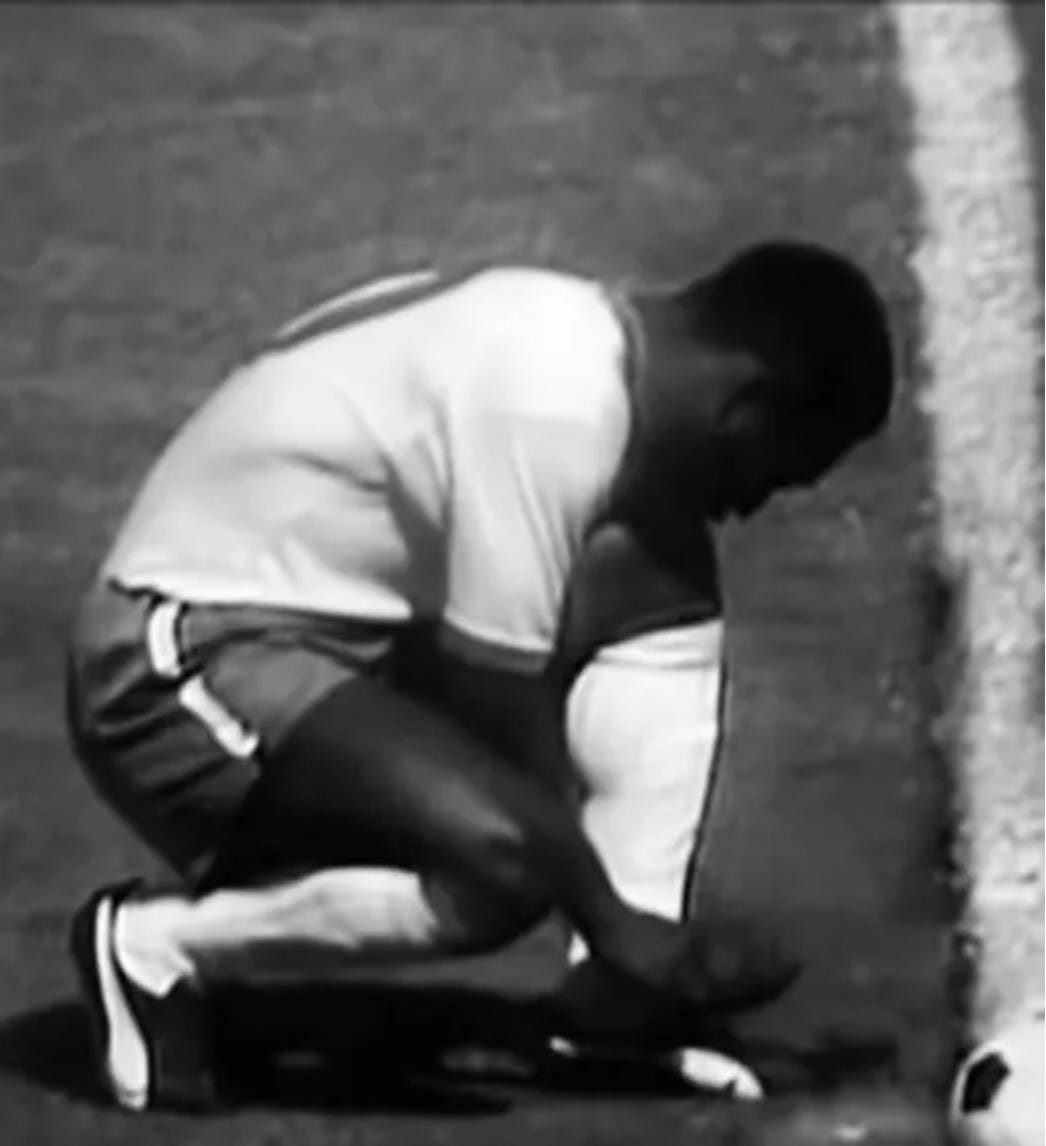
By the 1960s, both companies had distinct logos on the sides of their shoes and promoted their brands by paying Olympic athletes and soccer players to wear shoes bearing those logos. Puma even paid Pelé to stop and tie his shoes immediately before the 1970 World Cup started, leading millions to see him on TV tying his Puma-branded shoe.
American brands began adopting the Dassler brothers’ strategy of putting logos on their shoes and paying influencers to wear them. There was a bit of a scandal when some American amateur athletes were paid to wear specific shoes for the 1968 Olympics. Later, another scandal arose when we learned that college basketball coaches were paid to have their teams wear a particular shoe brand. Once scandalous payments are now the norm, and I don’t need to tell you how brands have invaded every stitch of clothing we own.
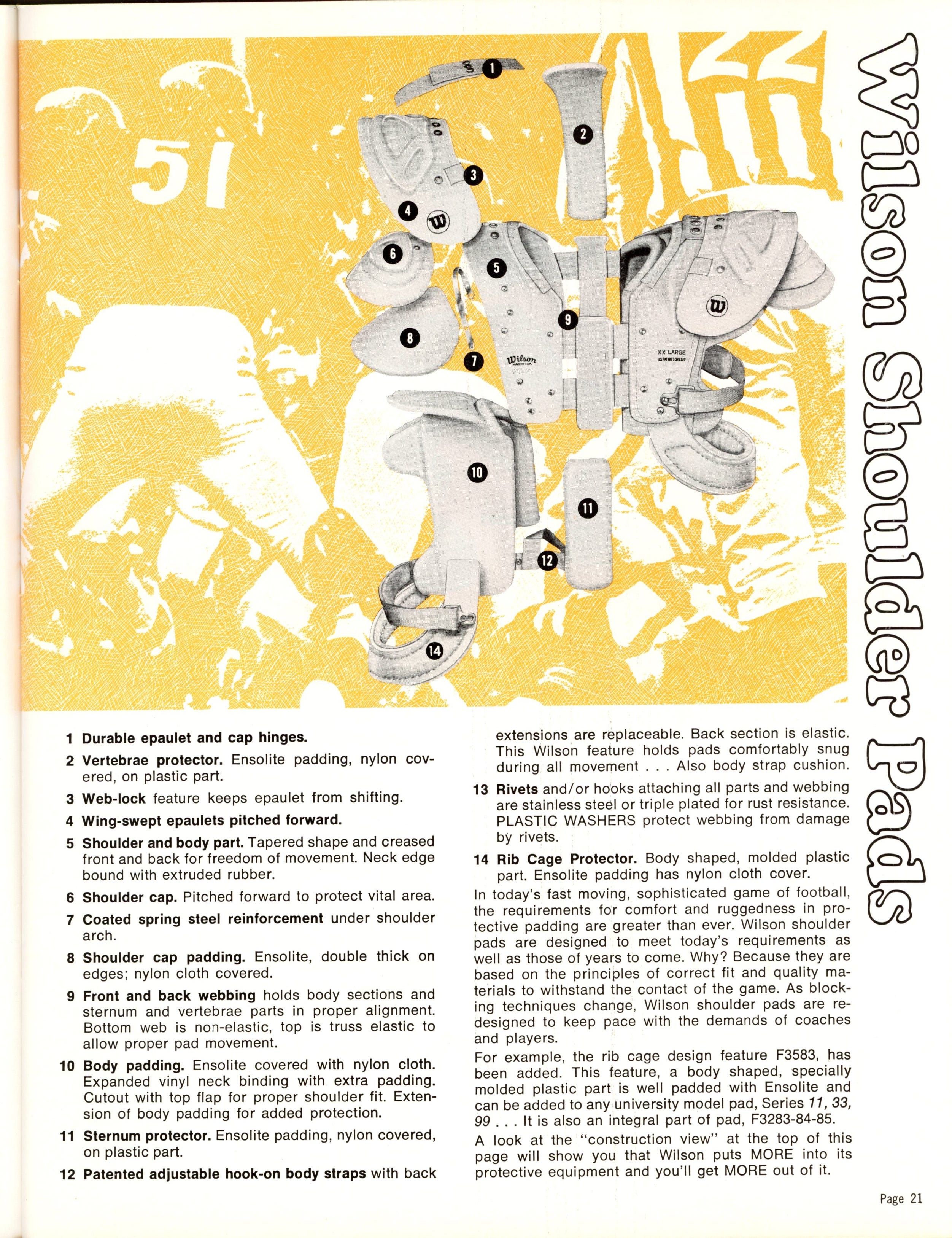
But, to bring the discussion back to Futball Americano, let’s take a look at a few pages from Wilson’s 1971 catalog, which shows Wilson was a little late to the branding game. According to Wilson’s website, they only make tennis shoes today, while their only gridiron products are footballs. Back in 1971, they sold footballs, helmets, shoulder pads, hip pads, rib pads, jerseys, pants, stockings, dummies, sideline gear, and other items listed in 60+ pages of their 122-page catalog. Of those products, only the footballs and shoulder pads prominently displayed the Wilson W logo. The logo on the shoulder pads would have been covered by the jersey anyway.
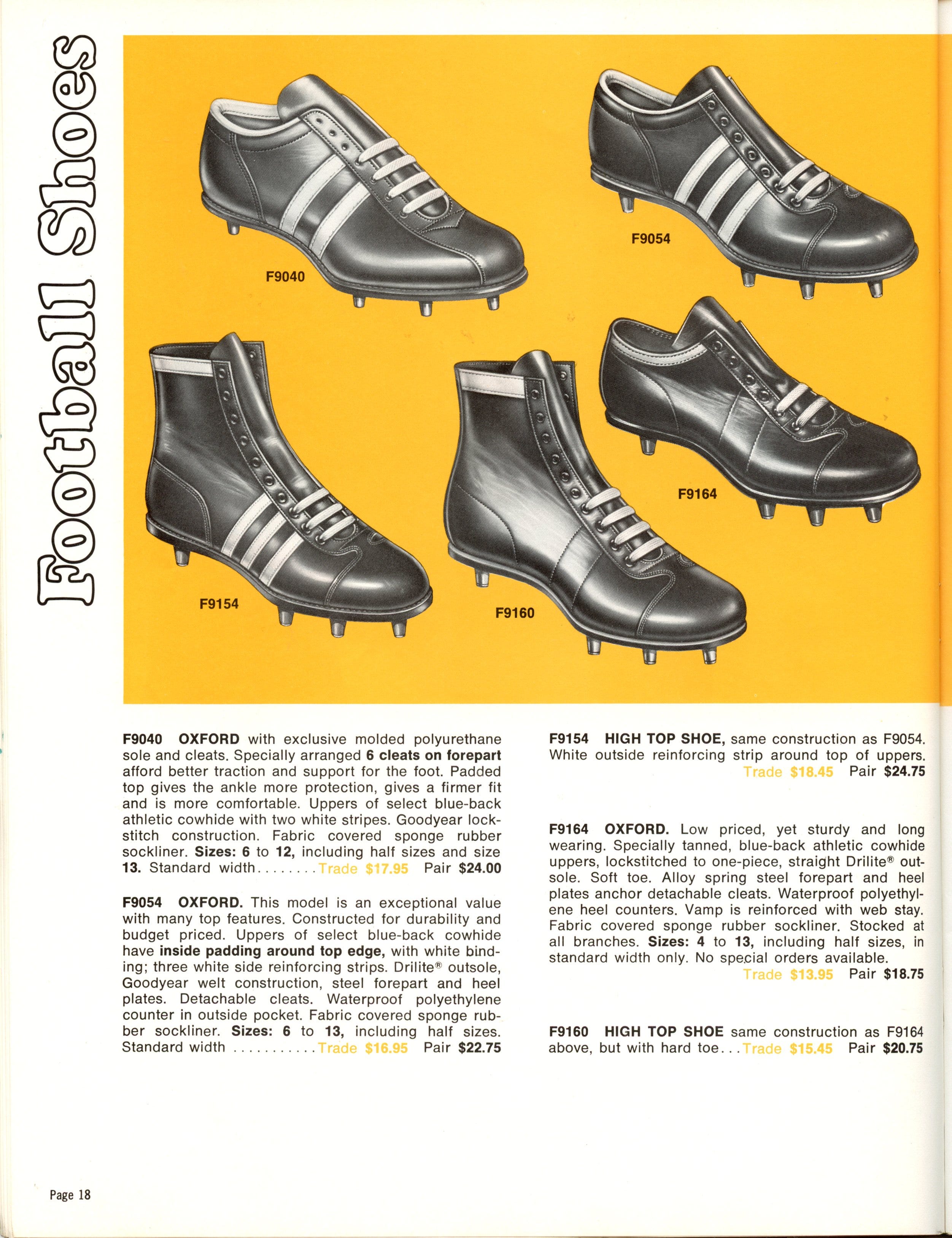
What about Wilson’s shoes? A review of the four pages displaying shoes reveals that Wilson did not place the W logo on the outside of their shoes. Worse, they appear to have misread the room by placing varying white stripe patterns along the sides of some all-black shoes. Nothing consistent. Nothing screamed Wilson.
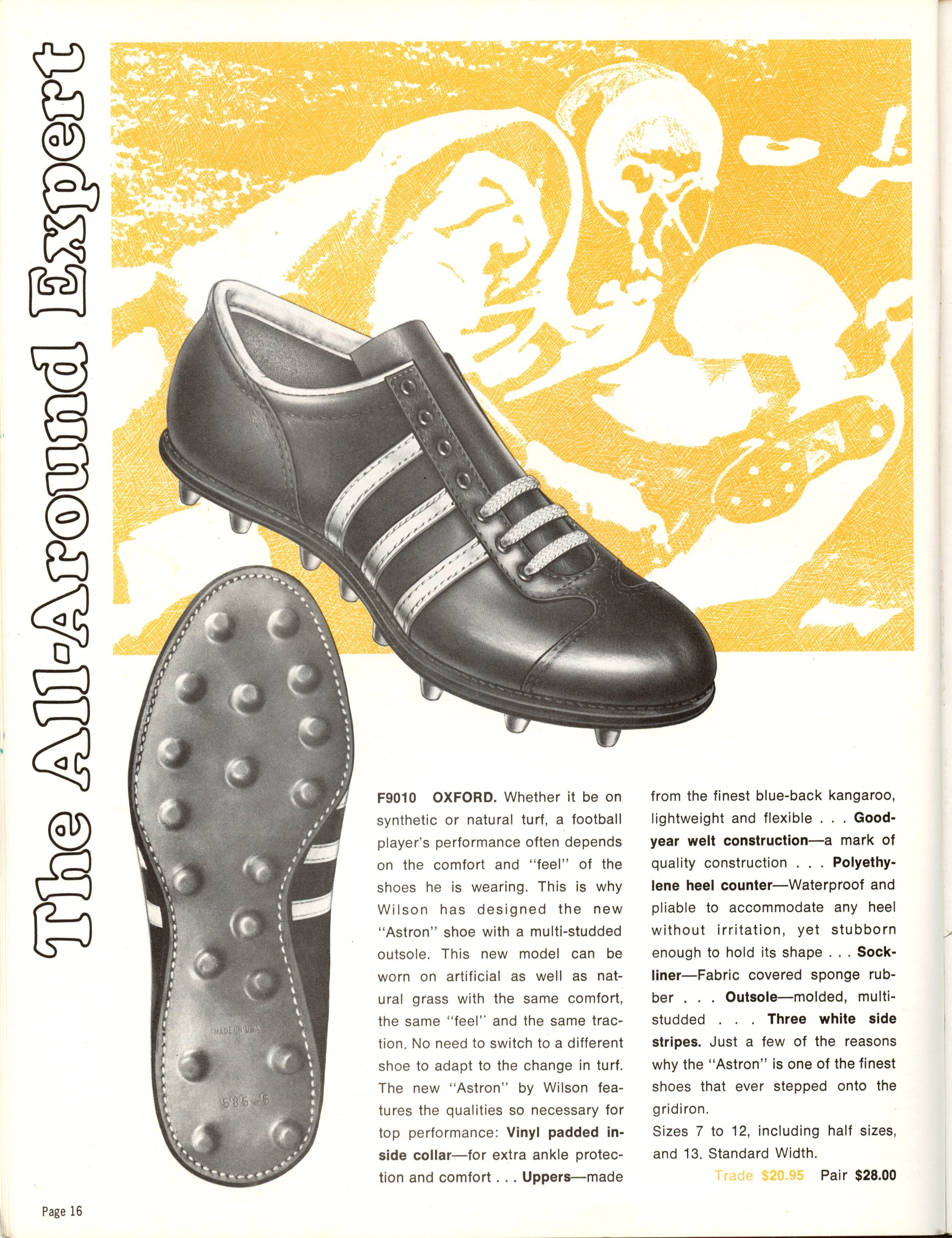
Wilson sold all-black shoes for years, but a few striping patterns appeared on some shoes by 1967. For Wilson, the stripes appear to have been mere decorations rather than branding elements. For example, the fancy molded-bottom, three-striped shoe below does not scream Wilson; instead, it looks like an adidas shoe.
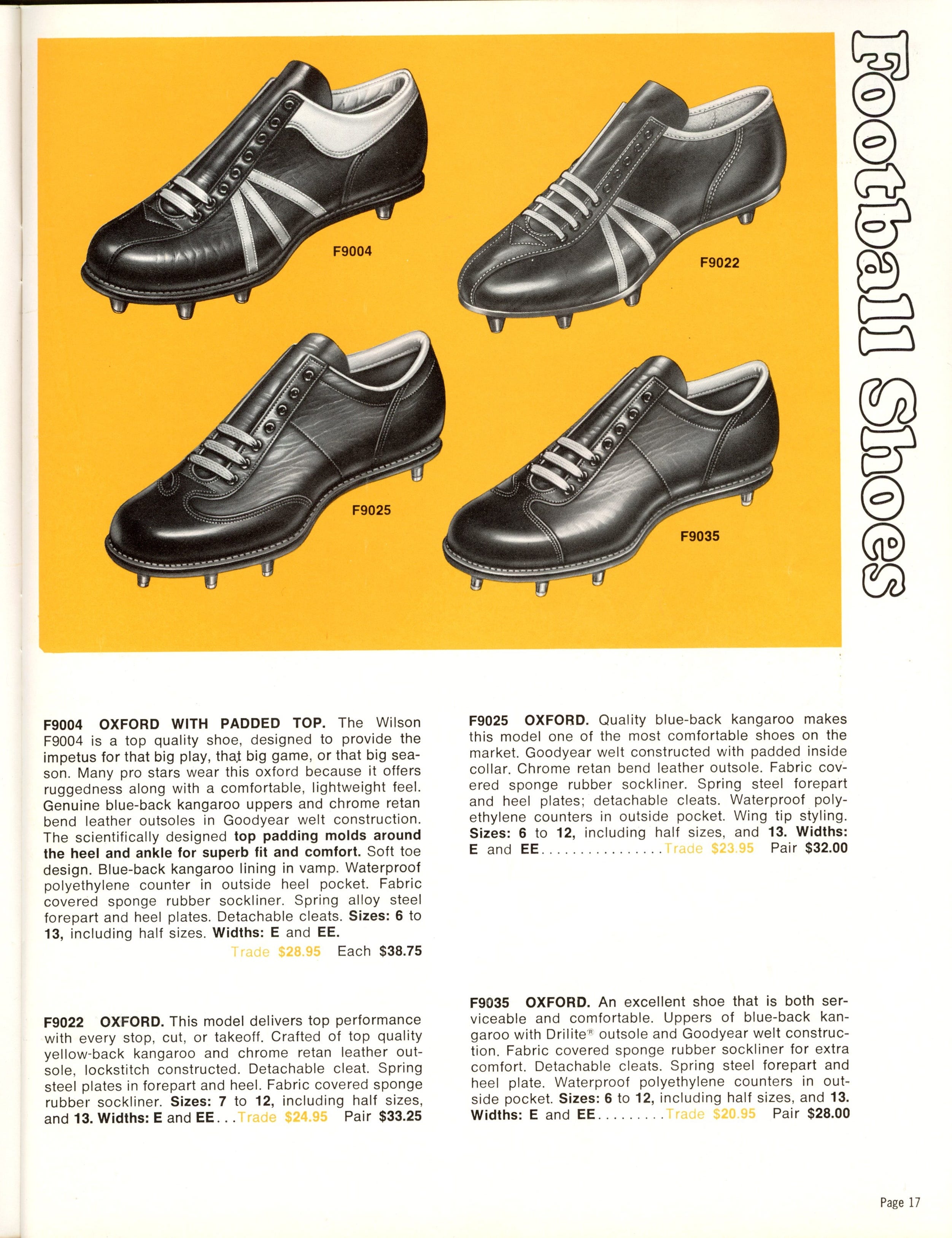
The next page shows four shoes: two with a three-stripe triangular pattern, and one with gorgeous white padding at the top. The other two are plain Jane.
The third page of shoes features two- and three-striped models, including a stunning three-striped high-top. Both high-top models include a magical white stripe atop the boot.
Finally, their less expensive and specialty shoes on the fourth page include only two-striped models, though the kicking shoe features a white Strap-Lock. Notably, Wilson sold the kicking shoe only for the right-footed among us, so all those left-footed, straight-ahead kickers could either buy another brand or learn to kick soccer-style, like Pelé.
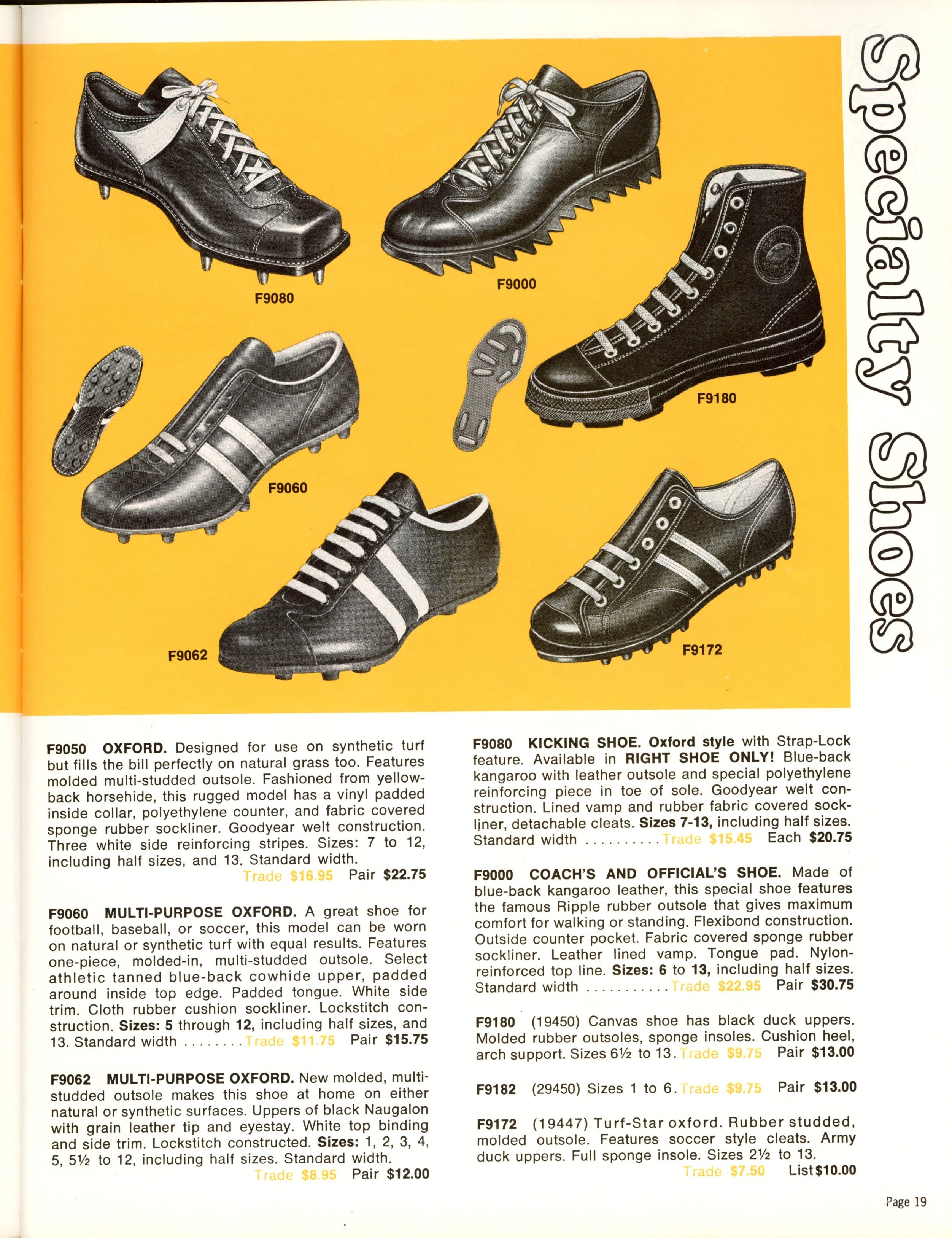
The 1971 Wilson catalog is the most recent Wilson catalog I own, but a newspaper archive search suggests Wilson used varying striping patterns until they exited the football shoe business in the 1980s.
Manufacturer brand logos are now strewn across uniforms, while decorations are seen on many shoes, Oregon’s uniforms, and those who model themselves after the Ducks. We once lived in a simpler world with fewer logos, and if you long for those simpler times, feel free to blame soccer and the World Cup for ripping those days out of your hands, and feet.
And, Happy Canada Day, to my northerly-enhanced subscribers.
If you enjoy Football Archaeology and are not a paid subscriber, consider buying me a cup of coffee now and again. You can also buy a paid subscription or purchase one of my books.


Another great story! Recently, I mentioned the origin of studs, for the 1954 FIFA World Cup, ref. https://substack.com/home/post/p-205035473