
Today’s Tidbit... Centre’s Lockstep Shift of 1922

Centre College made a lot of noise in the late 1910s and early 1920s, most famously by playing Harvard tough in 1920, before losing 31-14 on their way to an 8-2 season and a blowout of TCU on New Year’s Day in the Fort Worth Classic. The next year, the Praying Colonels beat Harvard 6-0 and finished 10-1, including a win over Arizona in the East-West Christmas Classic and a loss to Texas A&M in the Dixie Classic.
The Centre men started the 1922 season by beating Carson-Newman, Clemson, Ole Miss, and Virginia Tech before returning to Boston for the rubber match of the three-game series with Harvard. Having lost Bo McMillan and others from the 1921 team, Centre coach Charlie Moran figured he needed something up his sleeve to take down Harvard again, and prepared his men accordingly.
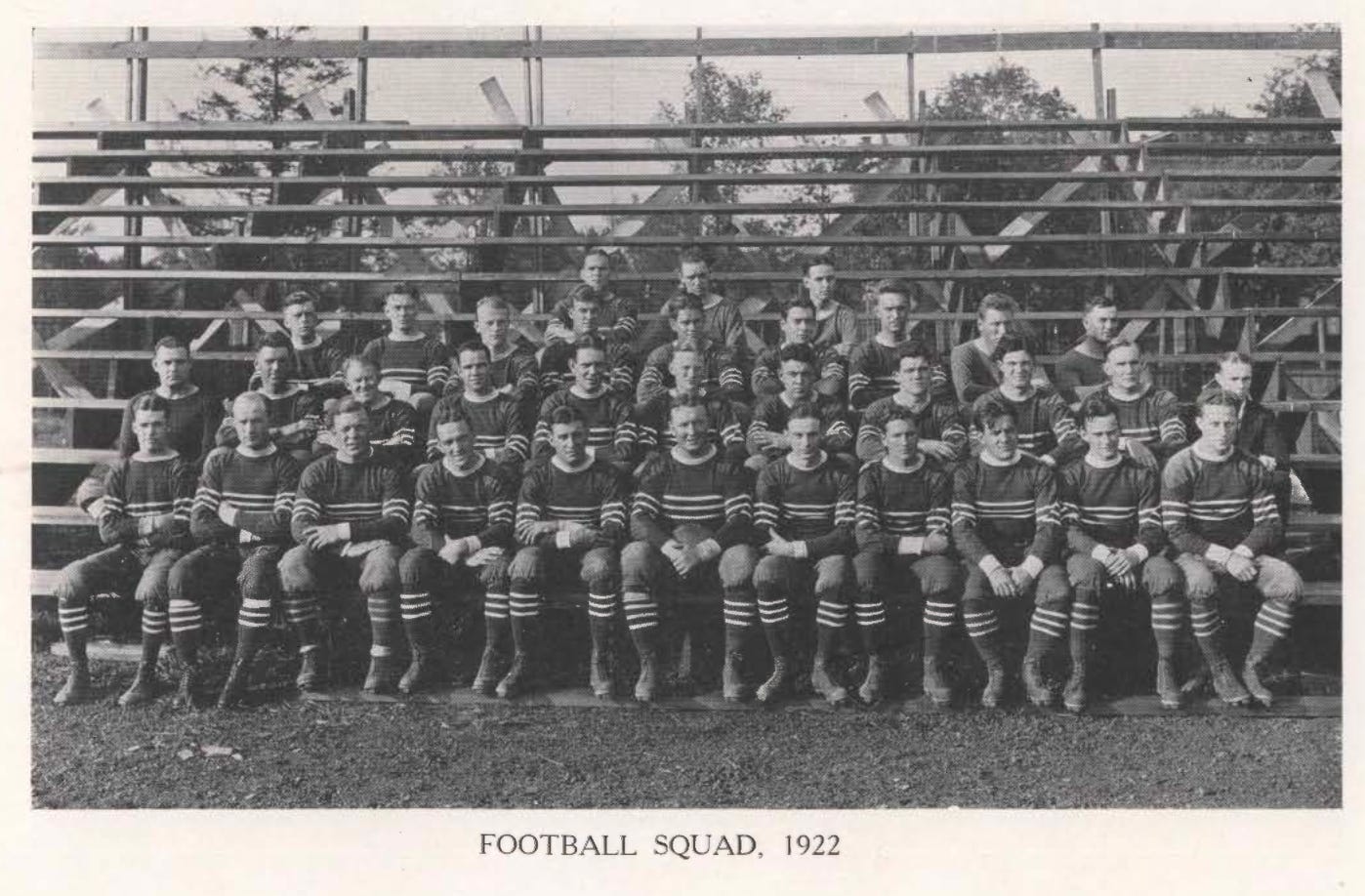
A crowd of 50,000 expected another spectacular game that October day, wondering if the Colonels might become the first team to beat Harvard at home two years in a row. Unfortunately for Centre, their prayers went unanswered in the first quarter, as they fumbled on their first offensive play, setting up a Harvard touchdown. Centre threw an interception shortly thereafter, leading to Harvard’s second touchdown and conversion. Soon, another Centre fumble set up Harvard’s third TD to give them a 21-0 lead at the end of the first quarter.
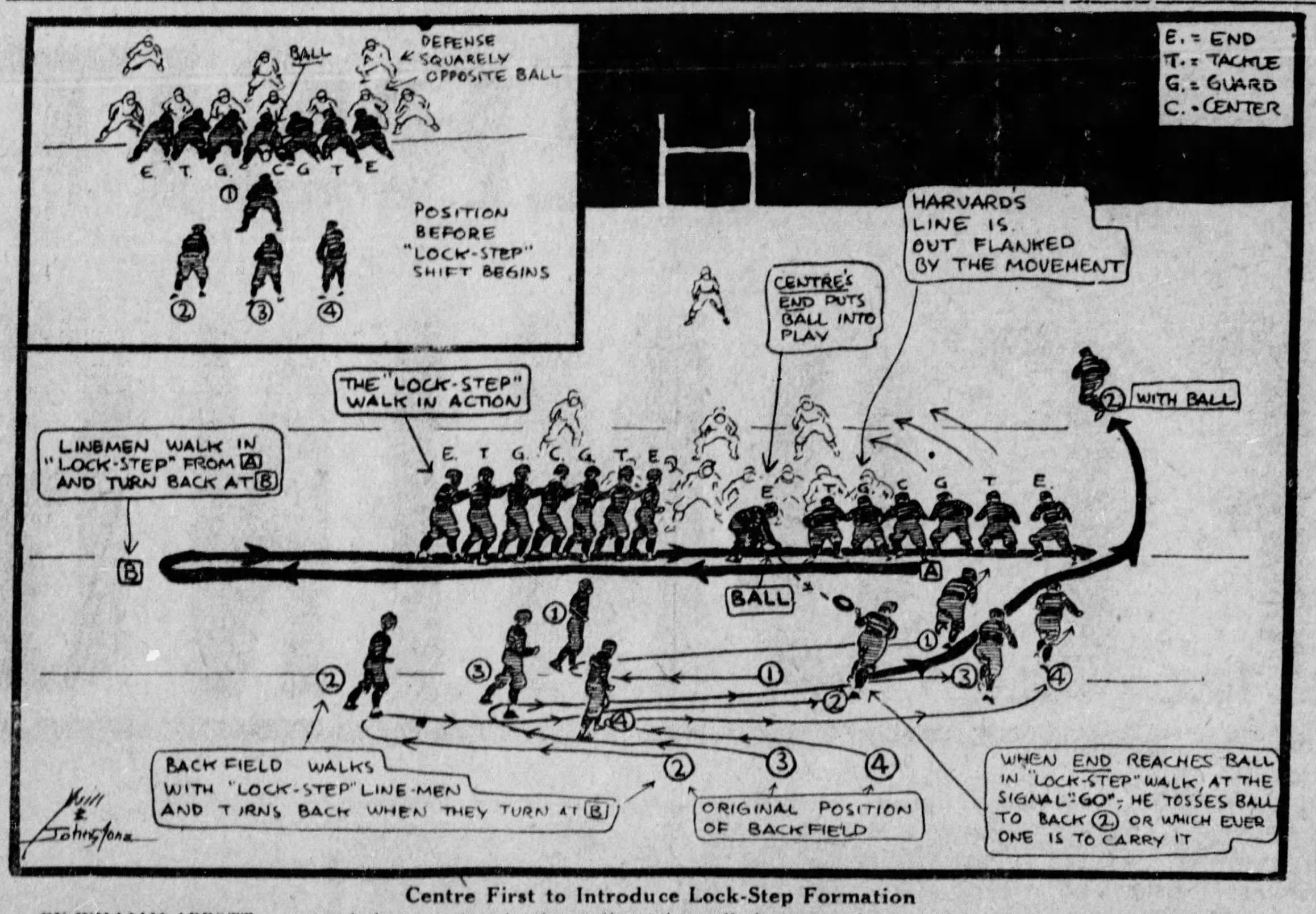
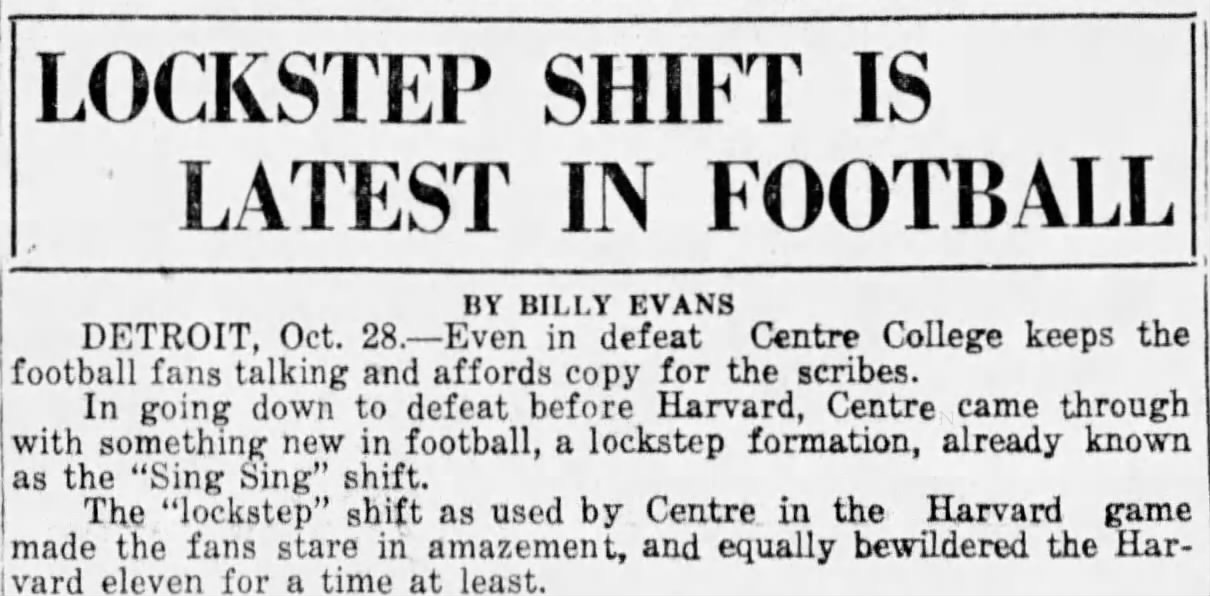
At that point, Centre threw caution to the wind and unveiled its lockstep, or Sing-Sing, formation, which started with the team aligning in their standard Single Wing formation. As the quarterback barked out the signals at the line, the entire front seven slowly walked to the right or the left behind the line of scrimmage, with one arm on the shoulder or back of the man in front of them. The backs also moved about, though seemingly in random patterns.
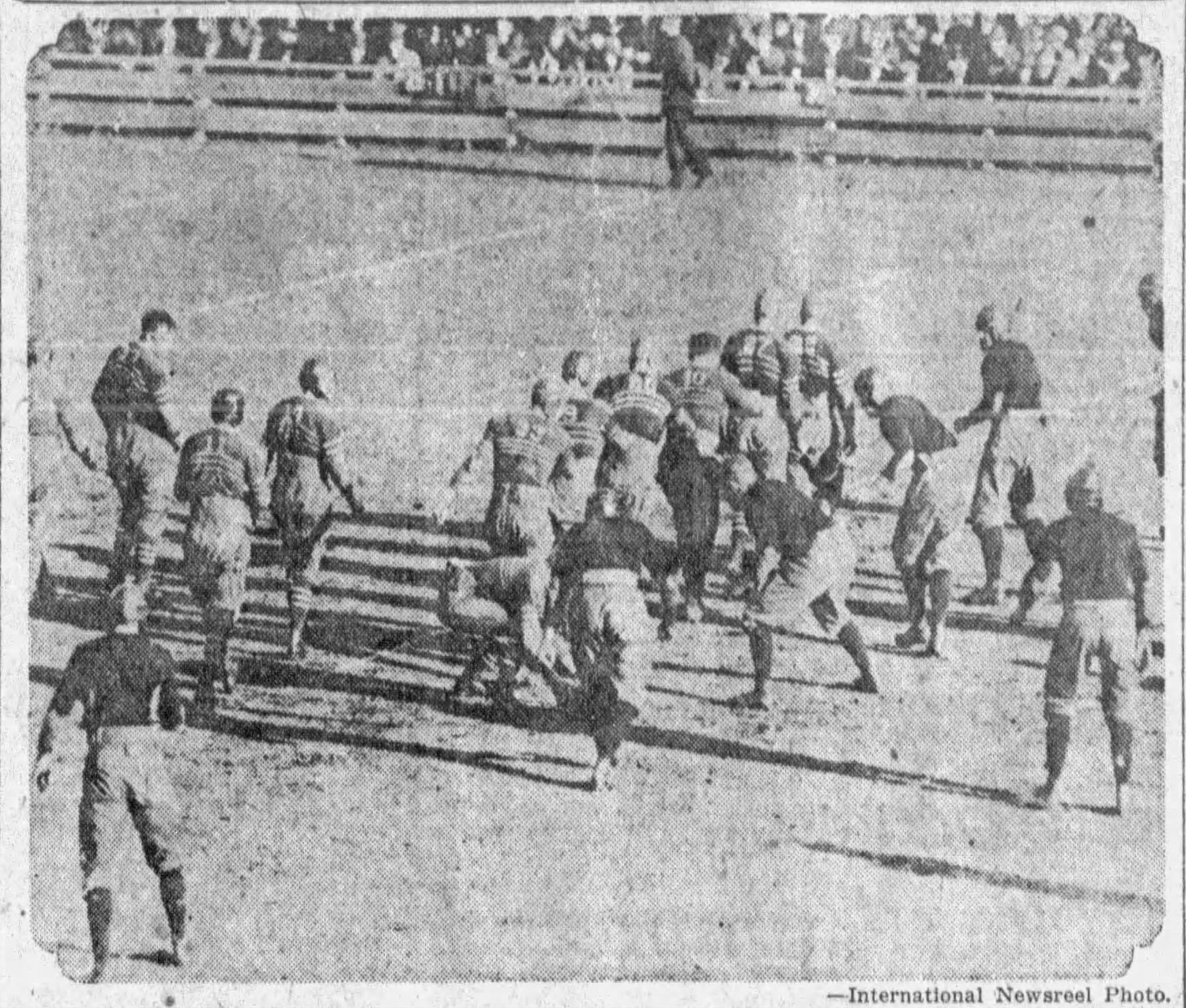
When the pre-snap shift involved walking to the left, the right end ended up on the ball with all his teammates unbalanced to the left. When the team stopped walking, the right end snapped the ball to a back who ran behind the wall to the left. Other times, the team walked left, reversed course, and the left end snapped the ball as the team ran to the right. At other times, the Centre men reversed directions two or three times during the pre-snap motion and even threw forward passes from their unbalanced end-snapping formation.
Amazingly, the lockstep formation worked as Centre outplayed Harvard for much of the rest of the game, gaining 17 first downs to Harvard’s seven, but the scoreboard showed a 24-10 advantage for Harvard at the end.
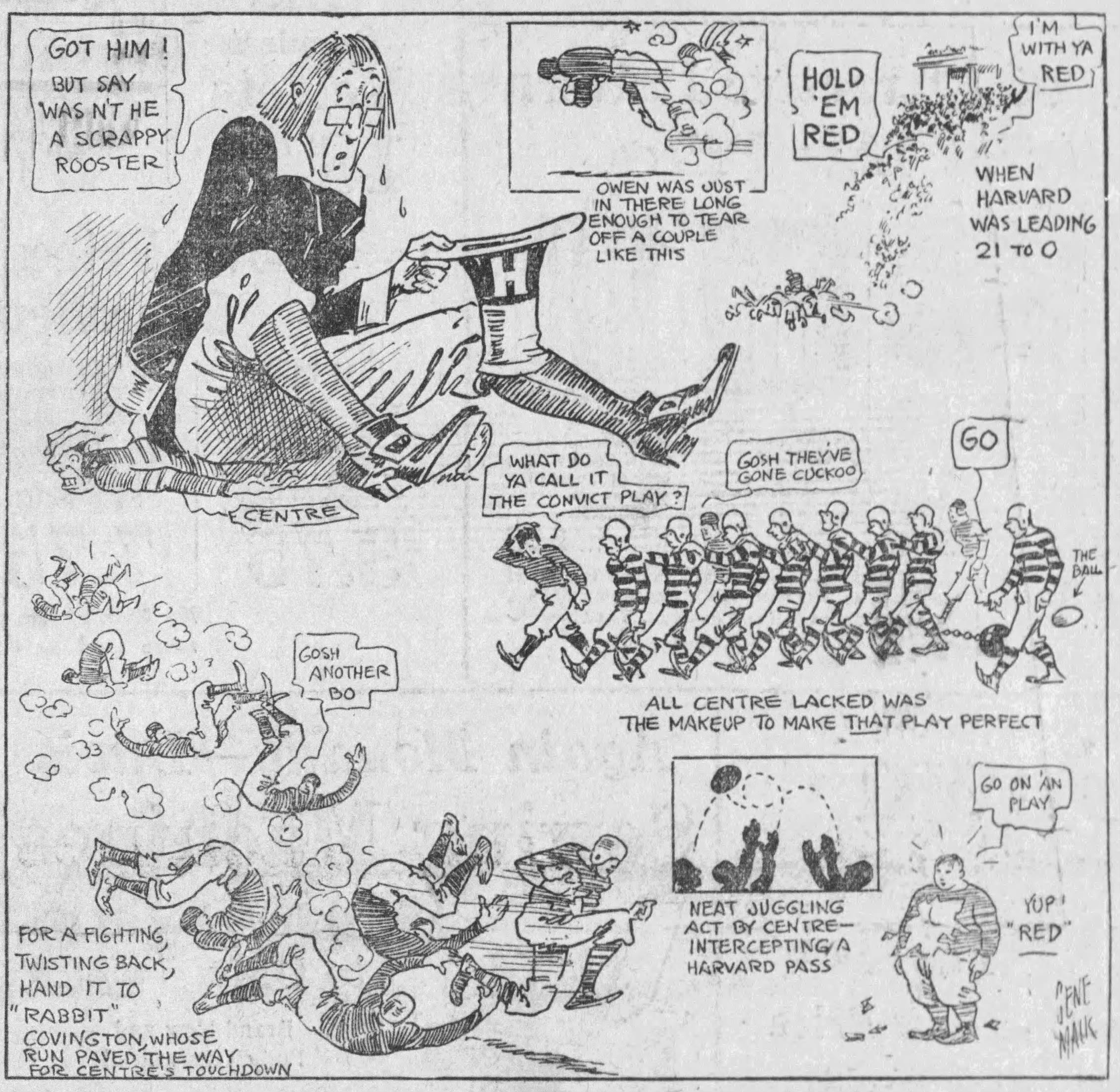
Centre’s crazy new formation and pre-snap shifting sent the football press aflutter for the next week or two, with speculative articles appearing across the nation. Did the formation and pre-snap movement portend a new direction for football? How might others adapt it, and could it force the rulemakers to limit the time teams had to snap the ball?
Of course, the fact that you likely have never heard of the lockstep or Sing-Sing formation suggests it did not stick around for long, and it didn’t. Centre boasted solid wins over Louisville, Kentucky, and Washington & Lee over the next three weeks. Still, they ran the lockstep formation only twice against Kentucky, gaining a combined negative 2 yards. A 6-0 loss to Auburn and a blowout win over South Carolina resulted in a solid 8-2 record.
Rather than using Centre’s lockstep formation, the football world moved toward huddling, which Bob Zuppke’s Illinois team popularized the year before.

Zuppke’s huddle eliminated the pre-snap shifts teams used at the line of scrimmage. Instead, his team huddled to call the play before quickly lining up and snapping moments later. That approach gave defenses little time to realign compared to the slow-paced lockstep formation, so huddling became the norm, even after the rulemakers forced teams to pause for one full second before snapping the ball.
Centre’s lockstep formation proved to be a gimmick. It had success in a losing effort on the big stage before disappearing as fast as it had come onto the scene. Still, it appears to have remained legal until 1968, when college offensive interior linemen were barred from moving after placing a hand on the ground.
Regular readers support Football Archaeology. If you enjoy my work, get a paid subscription, buy me a coffee, or purchase a book.

