

I sometimes recognize my failings as a father when my children show they have not learned important life lessons. However, today is the first day of the rest of Football Archaeology, so this Tidbit offers a second chance to pass on one of those lessons to my children and the rest of the known world.
Last week, I published a story about shoe branding that included five images from the 1971 Wilson Fall and Winter catalog, one of which caught the eye of one of my two sons, who sent me the following message:
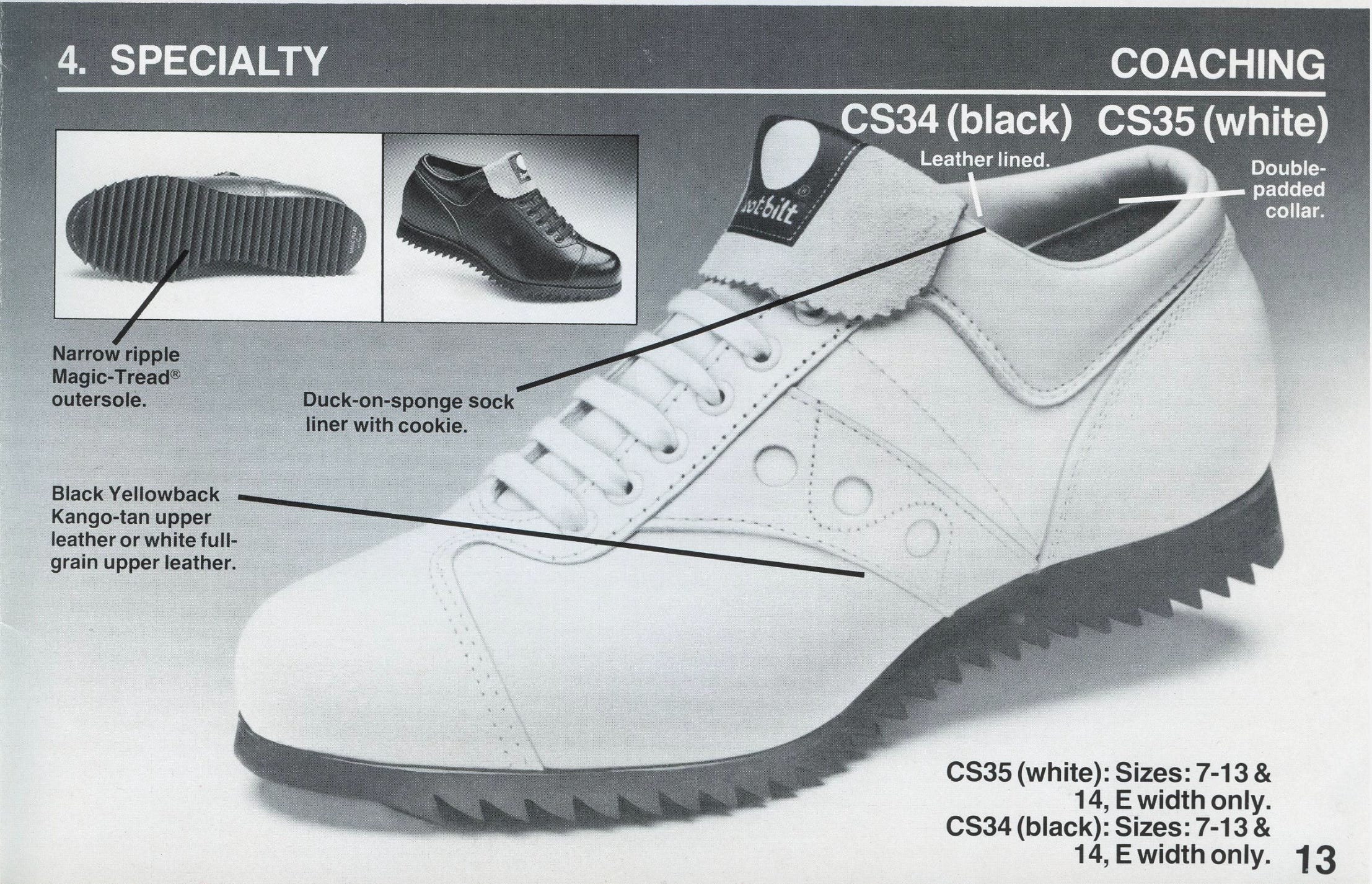
Really enjoyed the shoe branding tidbit from a few days ago. What was going on with that sawtooth cleat in the last image?
Here’s the image he referenced:
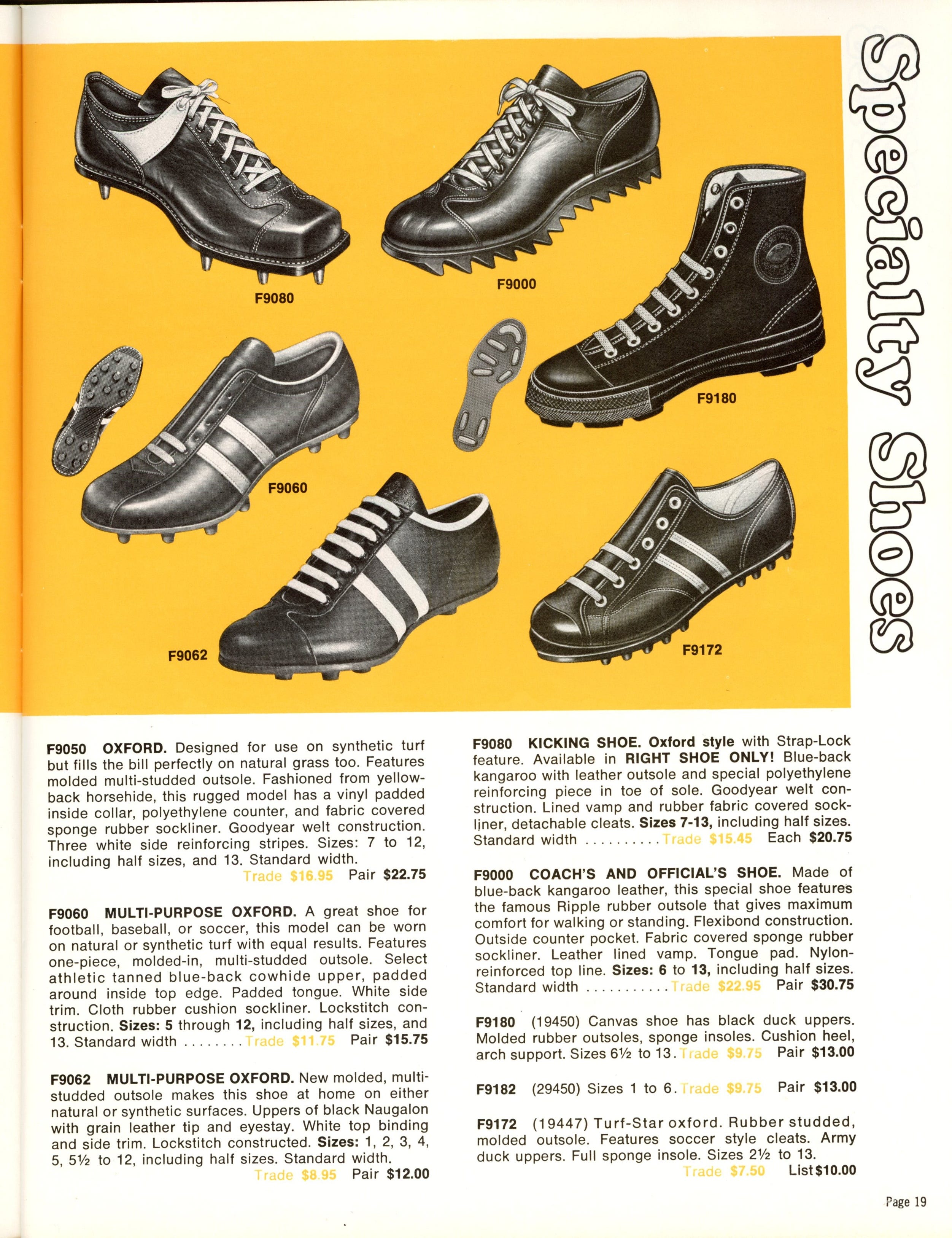
His question about a seemingly innocuous catalog item revealed my failure to convey a meaningful element of football’s past to him. Then, as I began researching the history of ripple shoes, I realized I was not alone in this failure, as my research showed how little documentation exists about this vital element of football history.
Ripple-soled shoes, or ripple shoes, should be recognized by anyone who played football or had gym class in the 1960s, 1970s, and parts of the 1980s. During that time, they were the quintessential coaching shoe, and game officials wore them as well. They symbolized coaching, so my failure came in not passing on to my son the thrill I felt when I landed my first paid coaching gig, which led me, nay, required me, to buy the finest pair of ripple shoes I could find. That is just what coaches did back then.
Ripple sole shoes were the brainchild of Nathan Hack, who led a Detroit-based shoe manufacturing company before retiring to Santa Monica. In SoCal, he continued tinkering and collaborated with former USC faculty member Laurence Morehouse to develop a boot suitable for paratroopers and those with leg wounds who needed extra cushioning. A patent emerged from the research, allowing Hack to sell his sole, or a license for the same, to many shoe companies.
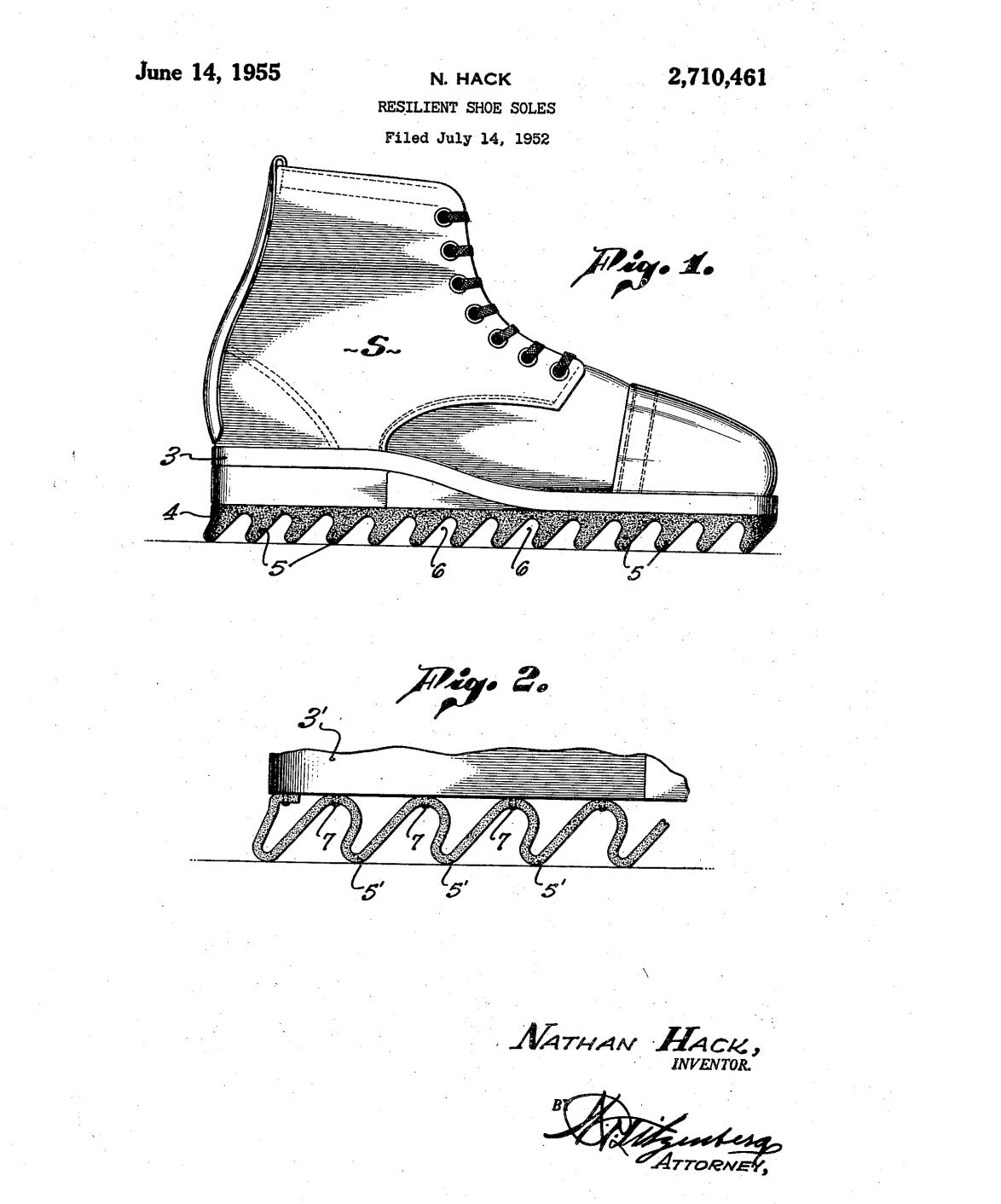
Hack touted his ripple soles as the first innovation in shoes since Julius Caesar put heels on his Legionnaires’ sandals 2,000 years before, saying the ripples reduced shock by 40 percent and extended the wearer’s stride by pushing them forward. They pitched the shoes as ideal for postal workers, nurses, and others who spent much of the day on their feet.
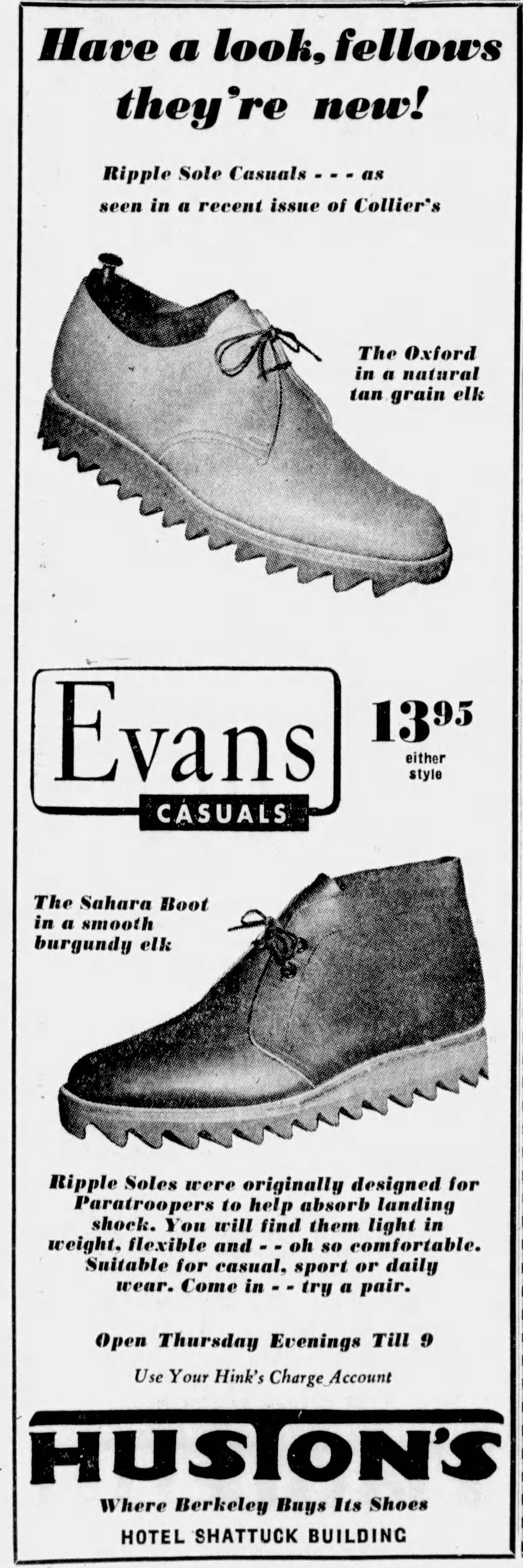
In the sports world, they were seen as a potential aid for a BYU runner looking to break the 4-minute mile barrier, and Los Angeles State’s basketball team, which wore versions with up to six-inch-tall ripples.
The first reference to ripple soles on a football field came in 1959 when UCLA’s Billy Kilmer wore them to reduce pain from ankle injuries. Despite Kilmer’s early use, the earliest I could find in a sporting goods catalog was in 1962, when they were positioned as coaches' and officials’ shoes.
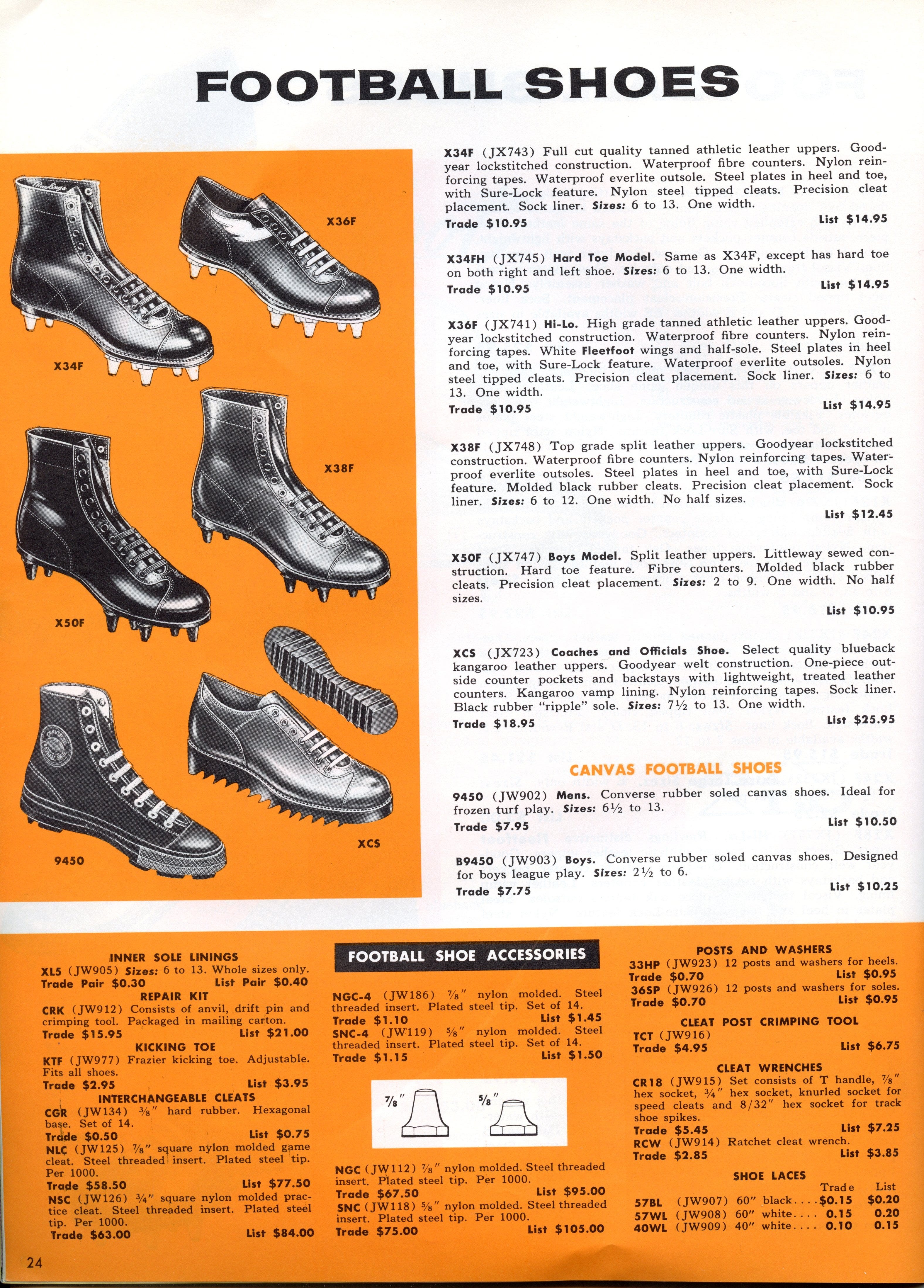
Over the next 20 years, many catalogs listed ripple shoes for coaches and game officials, and while I recall them being nearly ubiquitous among football coaches, little was written about them, at least in the newspapers. Consumer advertisements for casual ripple shoes were everywhere, but their use by coaches went largely unmentioned in the press.
Ripple shoes received coverage before the 1963 NFL title game, when New York Giants coach Allie Sherman brought them as an option for players to wear in the expected icy conditions. Sherman is also mentioned in 1968 for wearing ripple shoes while giving a pre-game speech. A 1969 article profiling NFL officials noted that the league supplied game officials with all their gear except their shoes. As the author noted:
The officials have to provide their own shoes, usually the ripple sole variety.
Hand, Jack, ‘Weatherman Is Key Figure In NFL Title Game, Newark Advocate, December 28, 1963.
Another spate of press coverage came in the late 1960s and early 1970s, when players wore ripple shoes for games played on the new artificial-turf fields. That idea was novel enough in 1971 that West Virginia’s Bobby Bowden had his team try them after seeing the Texas and Arkansas backs wearing them during a televised game.
Although some players wore ripple shoes, the only listings in my catalogs are for shoes intended for coaches and officials, so I have some apparent gaps in my collection.
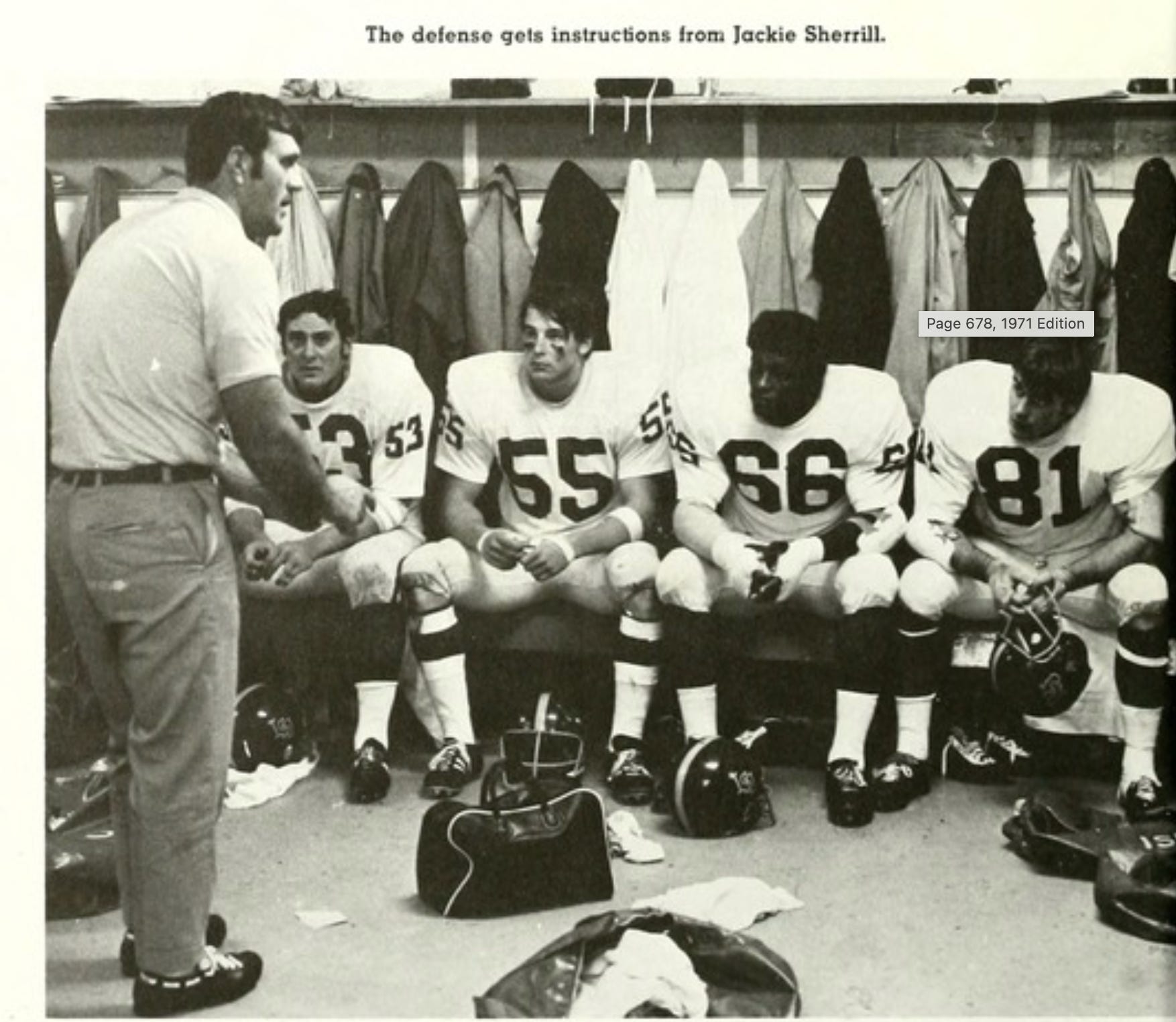
Although catalog images of coaching shoes are great, I wanted to find game-action images of famous coaches wearing ripple sole shoes. That required some digging, but eventually, I found a picture of Jackie Sherrill during his coordinating days at Iowa State wearing a pair of Riddell ripple-sole shoes.
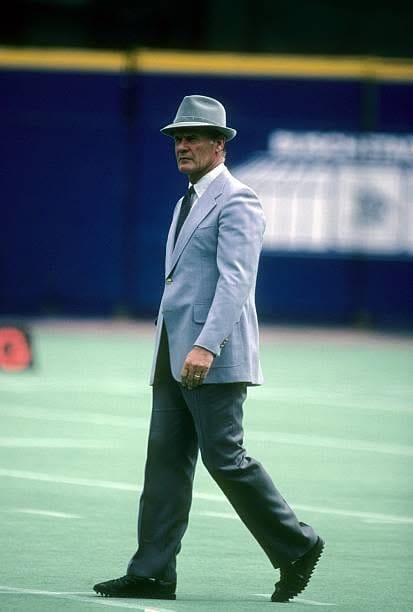
Still, I was sure there were others, and the search led to Tom Landry, who, like Sherrill, favored Riddell’s ripple-sole coaching shoes. After additional searching, I found this picture of ol’ Tom taking an extra-long stride in those magical shoes.
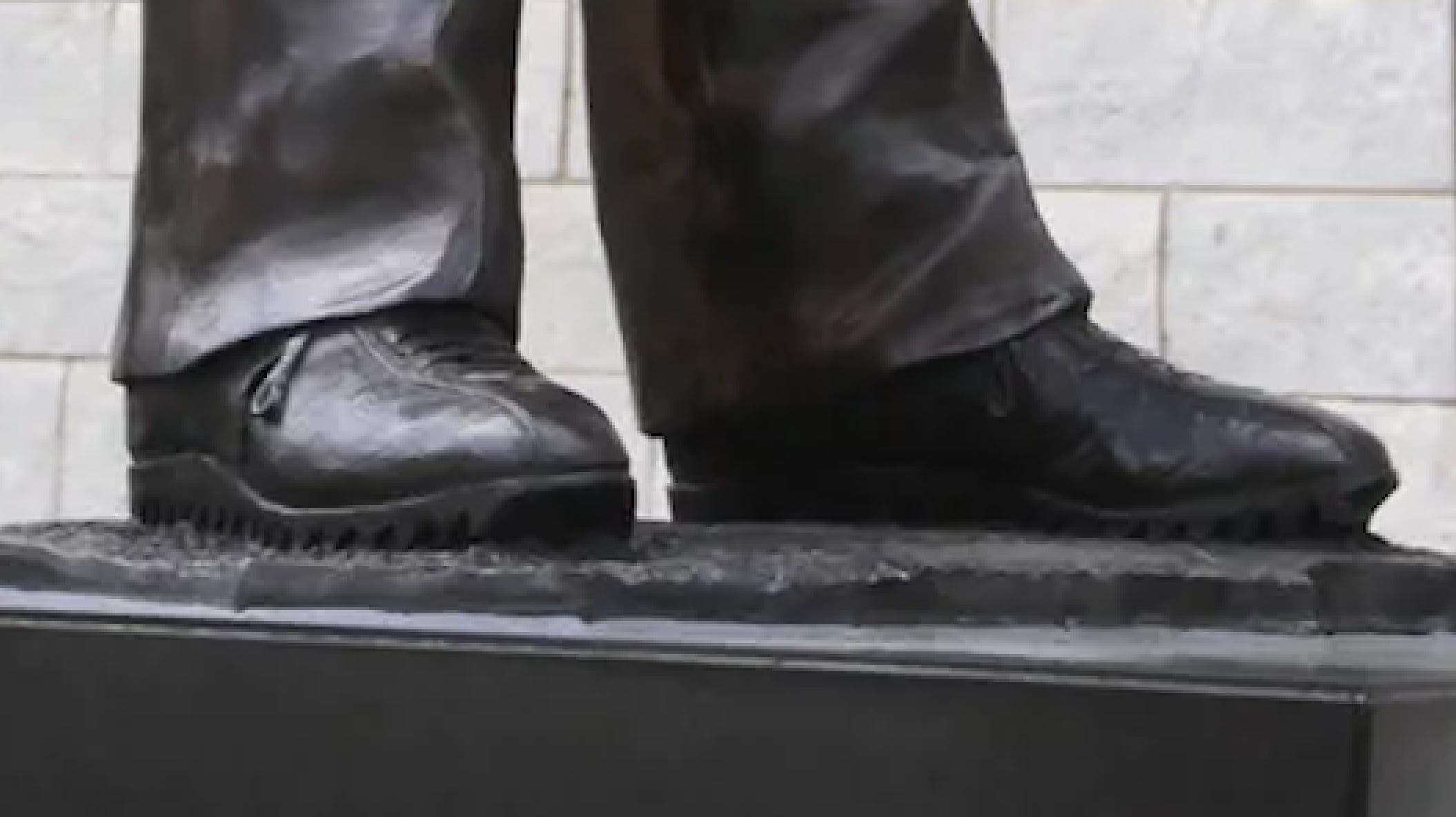
While that picture shows the real, live Landry wearing ripple shoes, the pièce de résistance is the statue of Landry that stands outside AT&T Stadium in Dallas today.
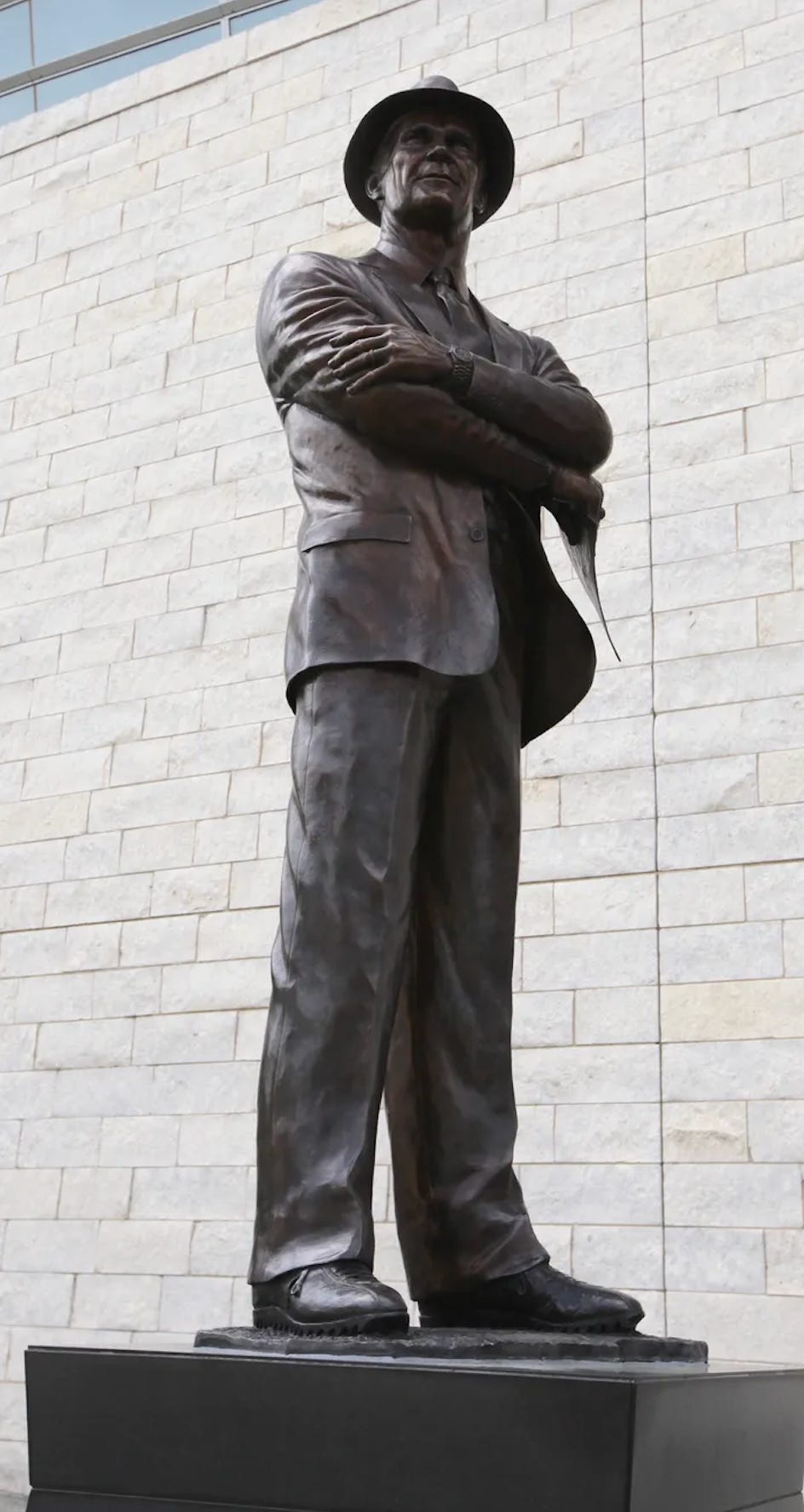
Check out the close-up of ol’ Tom’s kicks as he stands forever on the sidelines, knowing his comfortable ripple-sole shoes will keep him there longer than all the other neighborhood statues.
I feel better now, knowing that ripple-sole shoes have found a place in the pantheon of American football, and I believe that by documenting this fact in a Tidbit, I have once again fulfilled my fatherly duties.
If you enjoy Football Archaeology and are not a paid subscriber, consider buying me a cup of coffee now and again. You can also buy a paid subscription or purchase one of my books.


Ah! The old coach ripple shoes. My gym teacher Mr. Mayer wore them. We played first period deck hockey for an entire year! Guy was the best. He played too and it was serious. Every morning it was a game.
These look vaguely like some styles of golf shoes. Hmmm…will they improve my game? Nah…nothing can!!