
Today's Tidbit... When Ankle Taping Went On A Roll

I enjoy stories like this one, since it covers an element of football both narrow and universal. The subject is narrow, as it takes a true geek to figure out when football players first started taping their ankles. Yet it has broad application, since everyone who played high school football or beyond had their ankles taped or witnessed teammates being taped.
The impetus for this story came while reviewing the 1923-24 Goldsmith catalog, which included a page displaying an ankle protector.
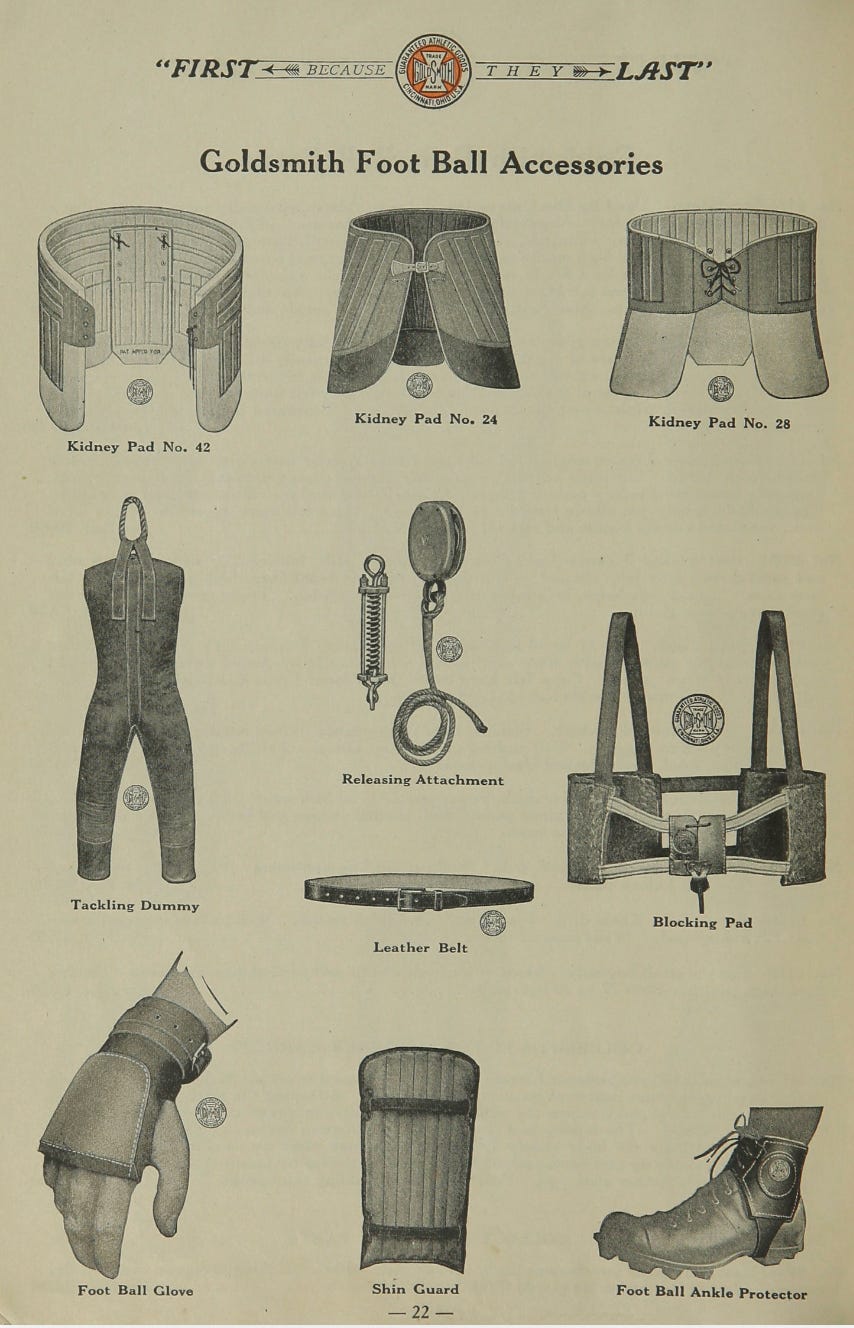
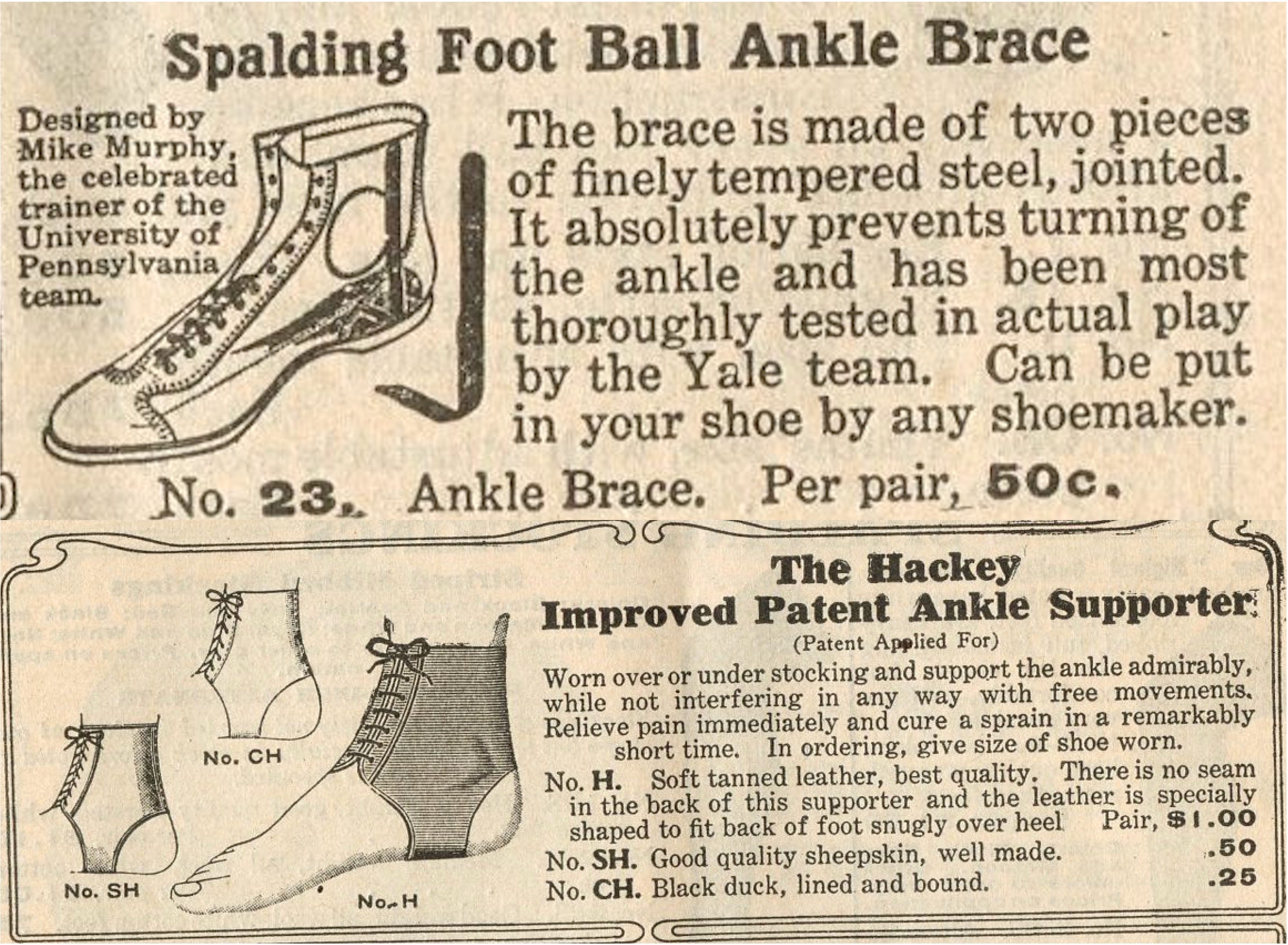
The appearance of ankle protectors and braces was not unusual at the time. They appear in Spalding catalogs by 1905, and several versions are in the 1908 catalog, so they were nothing new in 1923. Still, seeing the item led me to ask when players started taping their ankles rather than using lace-up braces or supports.
The ancients understood the value of using zinc oxide in salves and bandages, and they saw its use in the 1890s to create plasters or bandages to treat certain injuries. Johnson & Johnson introduced their Zonas Adhesive Plasters in 1899, which saw a variety of applications for treating injuries.
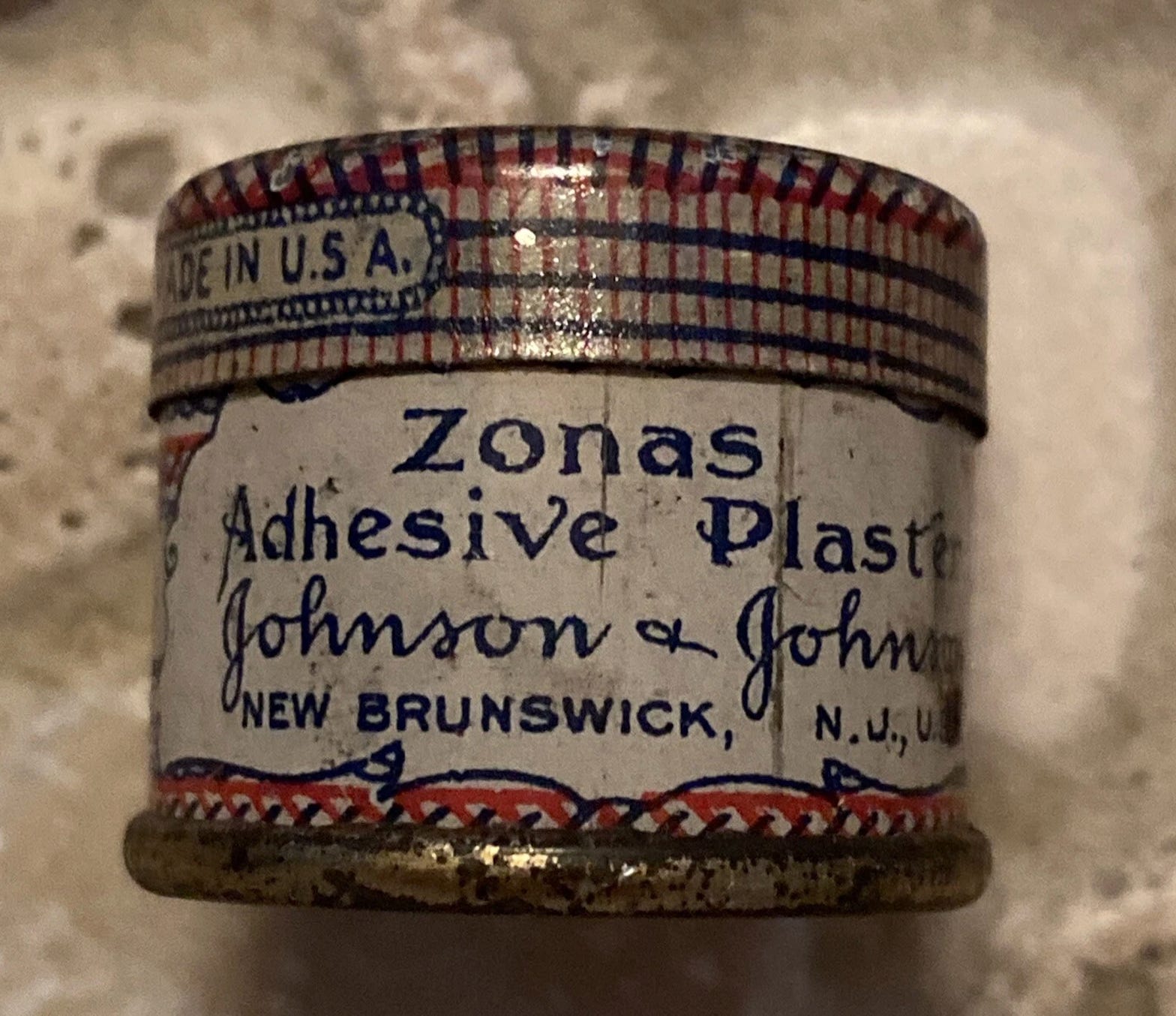
The history of almost all football padding and gear shows that their initial use was among injured players before they were adopted to prevent injuries. With Johnson & Johnson’s Zonas Adhesive Plasters and similar products available by the turn of the century, surely some trainers used them to treat injured players’ pain and allow them to return to the field. Still, the record is bare until the mid-1910s.
The earliest references I find to ankle taping among athletes are from 1914, when Boston Braves shortstop Rabbit Maranville turned his ankle and resorted to ankle tape and cold-water soaking to continue playing. The same year, participants in a San Francisco road race were advised to tape their ankles to prevent sand from getting into their shoes and causing chafing.
The first mention of ankle taping among football players came in an article describing Brown and Washington State players getting taped for the 1916 Rose Bowl, from which football’s postseason effectively descends.

Ankle taping resurfaced in 1920 in several accounts from the APFA, the forerunner of the NFL. Tackle Dewey Lyle sprained his ankle during a November game with the Chicago Tigers, and, while time was out, he had his ankle taped on the field. Under the limited substitution rules of the time, injury timeouts lasted 2 minutes, allowing trainers to come onto the field for a quick tape job. Meanwhile, the Decatur Staleys credited Windy Lotshaw, their trainer, who was adept at taping ankles, knees, and shoulders, with keeping the team healthy and playing the full season. A former minor leaguer, was the Bears’ and Cubs’ trainer into the early 1950s.
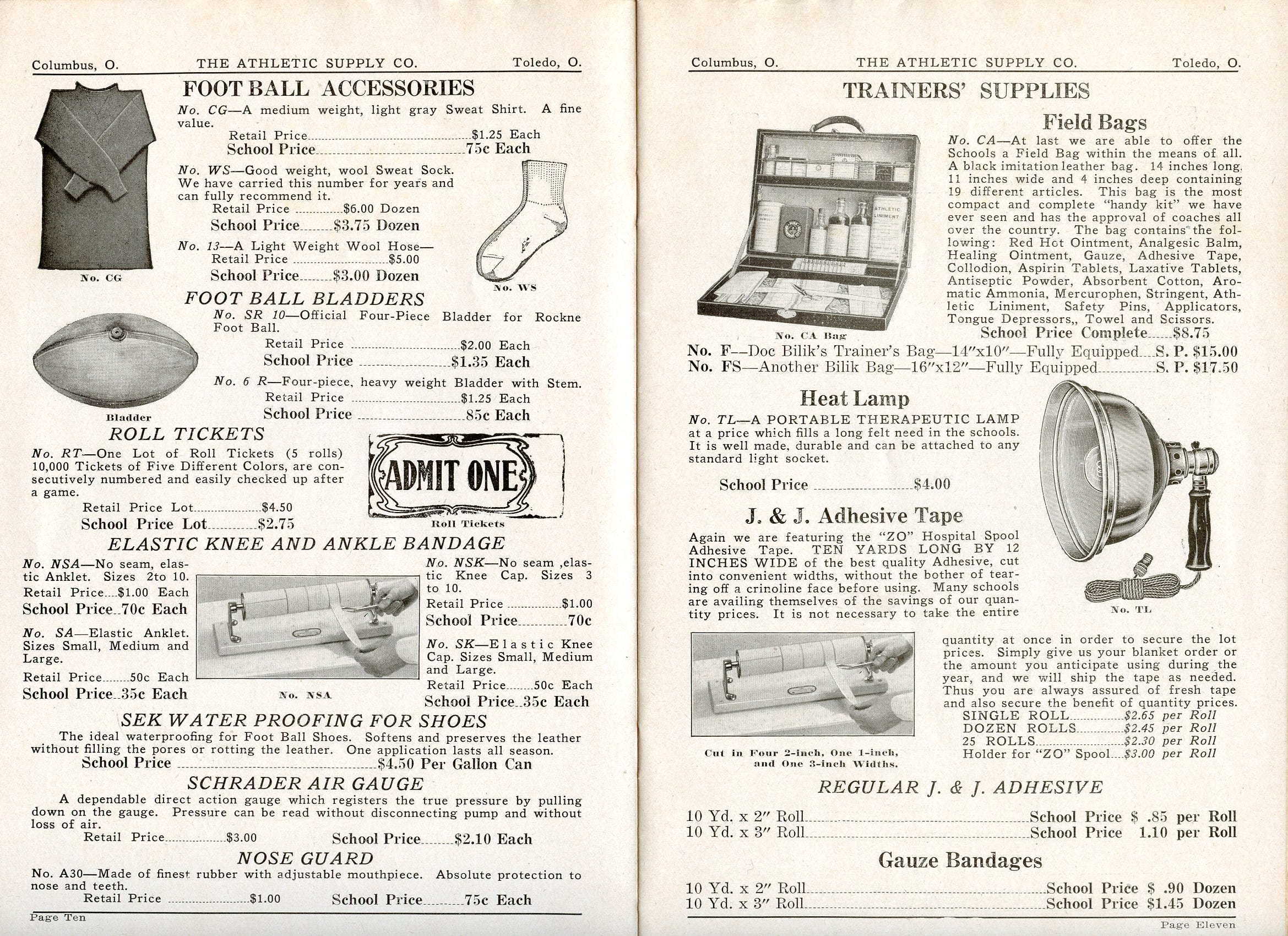
Taping ankles became increasingly common in the 1920s and 1930s, particularly for preventive use. The catalog pages below show a tool for cutting elastic bandages to various widths, while Johnson & Johnson adhesive tape rolls were available in 2- and 3-inch widths.
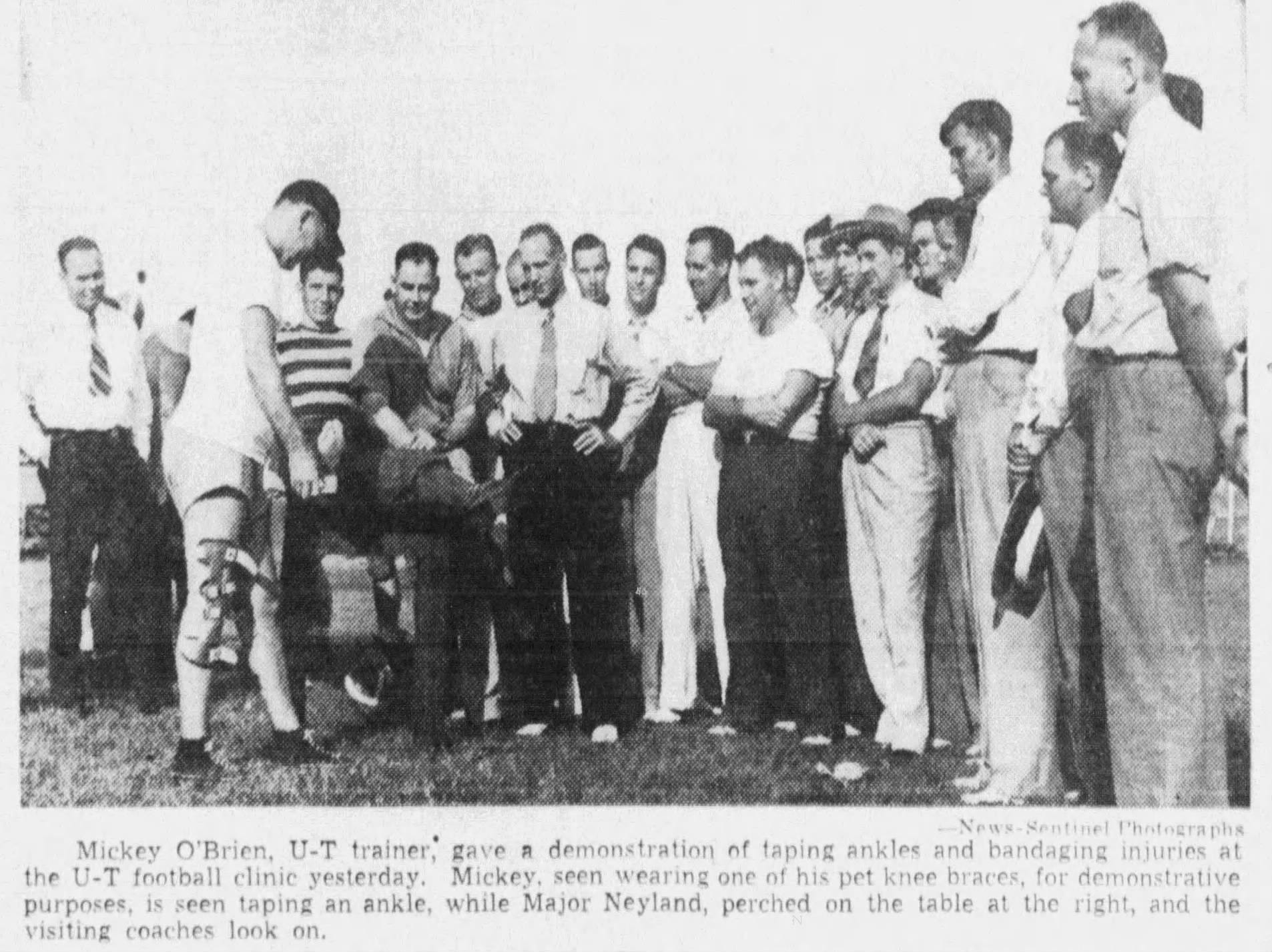
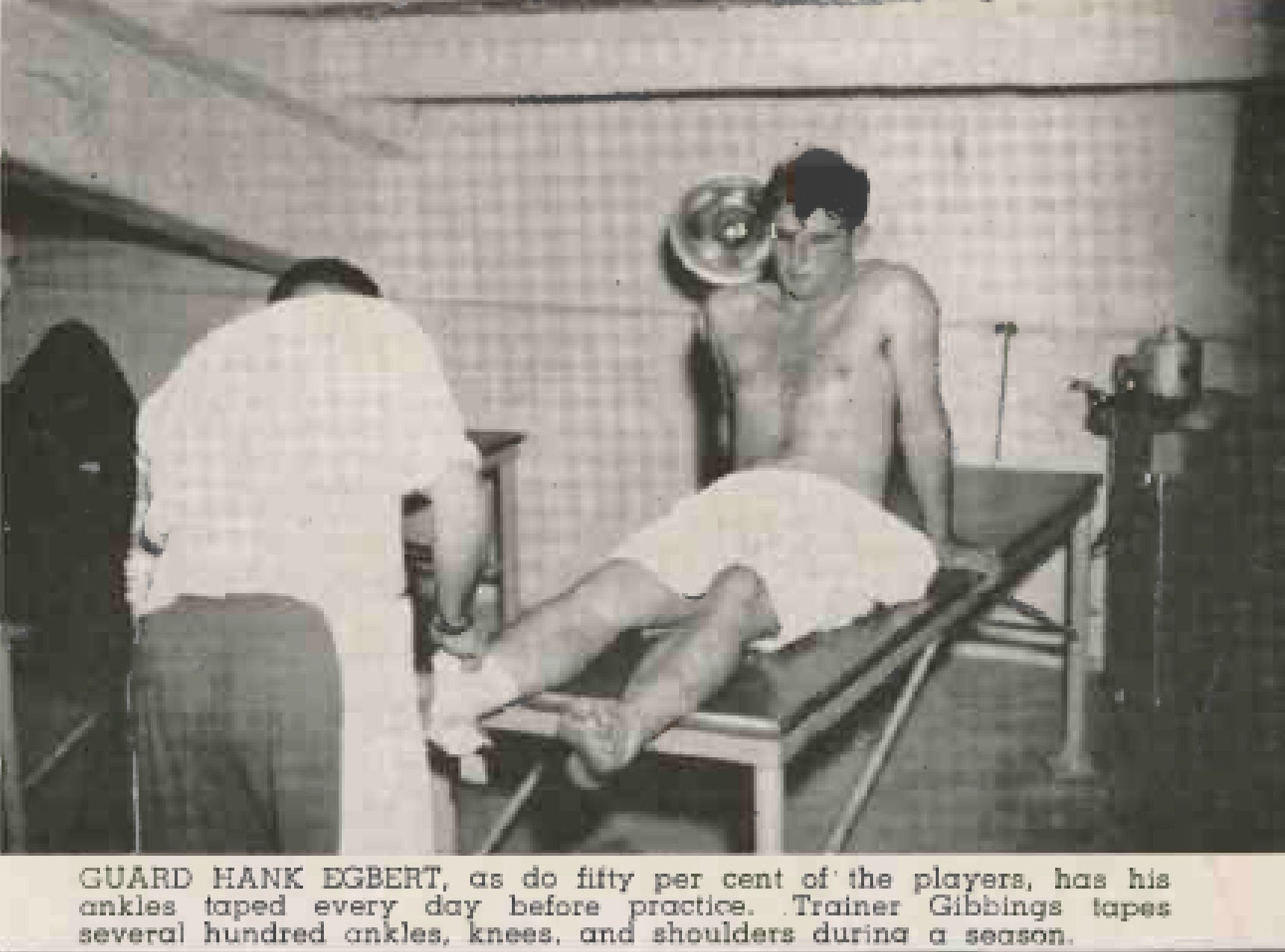
Taping ankles was among the techniques taught to coaches at football clinics in the late 1930s, and by the 1940 season, a team like Arizona had about half its players have their ankles taped for every practice and game. The late 1930s also saw the introduction of low-cut or oxford shoes for football players, so the trend toward low-cut shoes may have also encouraged increased taping.
Ankle taping or bracing is nearly universal among players in well-resourced programs today, and it is unlikely to go away unless new shoe designs or other approaches replace it. It just shows that what goes around comes around.
If you enjoy Football Archaeology and are not a paid subscriber, consider buying me a cup of coffee here and there. You can also buy a paid subscription or purchase one of my books.


Would love some research on the 70s flak jackets worn by Dan Pastorini and others. What happened to those, and why do modern QBs not consider them?
One of my fictional characters (who is a multi-sport athlete) regularly has ankle tape on her feet. It helps...