
What Might Have Been: Harvard’s Football Challenge of 1856

I’m actively researching my next book, and, like all moderately good chroniclers of things past, I’ve chosen to begin at the beginning. That is, I’ve gone back to the days before American football became American football, and even to those before English football established standard rules and became the soccer/Association game (in 1863) and Rugby Union (in 1871).
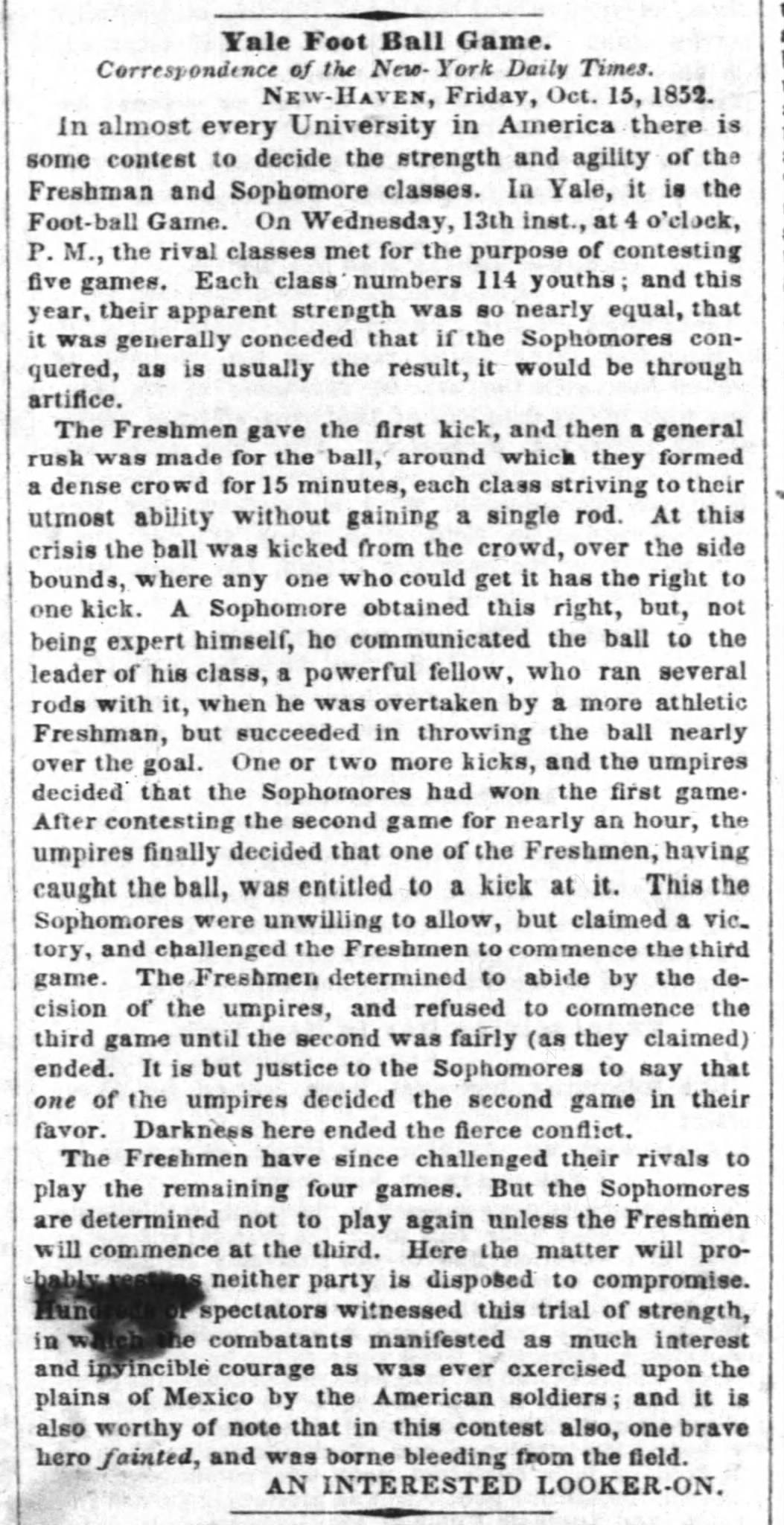
As in England, the games known as football in pre-Civil War America were a mishmash of folk kicking games, most often played on college campuses as part of class hazing rituals. Generally, the freshmen and sophomore classes played one another on or around the first day of classes. There were deviations, such as Brown’s 1854 game when the freshmen and juniors faced the sophomores and seniors. The mob games were rough-and-tumble affairs. Bruises and bloody noses were common under rules that are difficult to disentangle 175 years later. To illustrate, I provide the full newspaper articles covering the madness below. The first article addresses Yale’s frosh-soph battle of 1852.
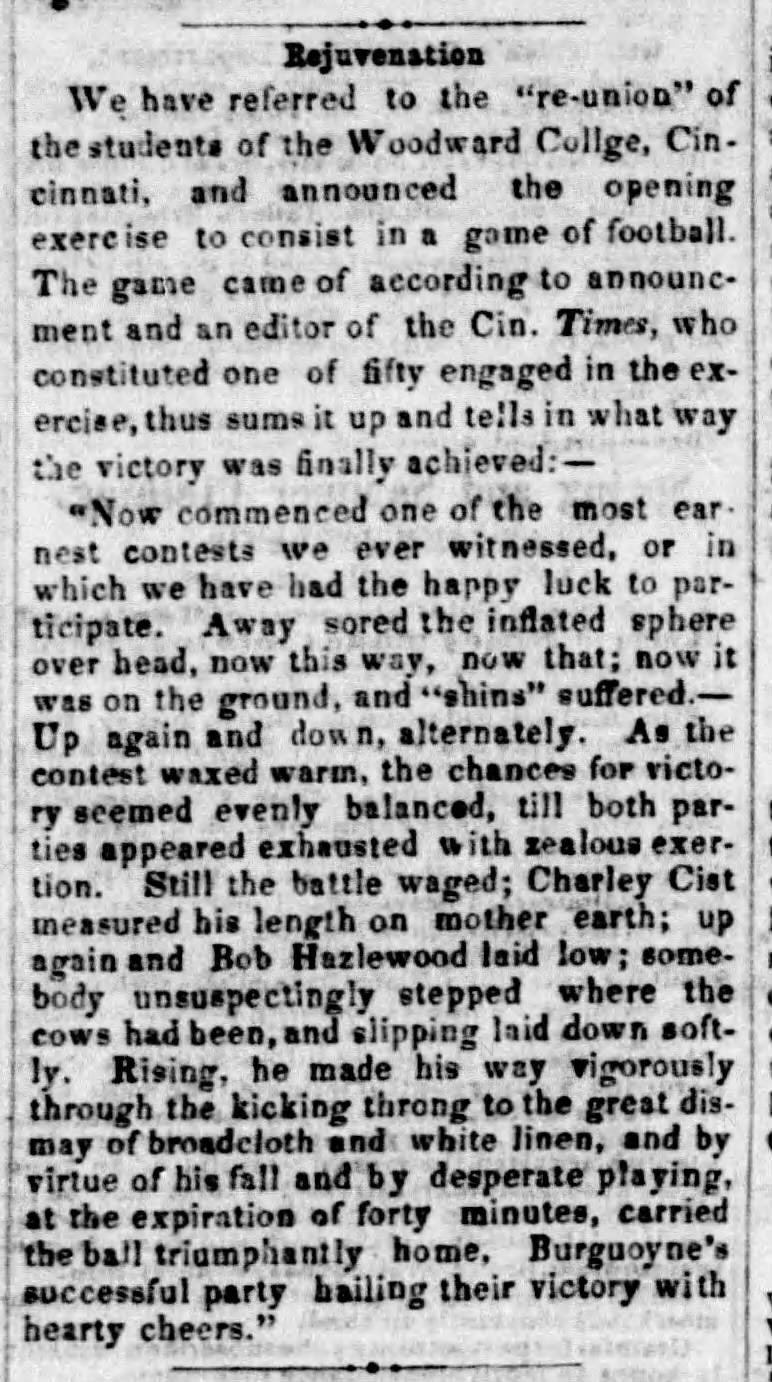
Even the yokels out at Woodward College, now part of the University of Cincinnati, played football. Their game saw alums playing and slipping in cow patties during a 1854 reunion.
Although it is difficult to identify the games’ rules, they share elements with football and soccer. Both involved large numbers of players kicking, carrying, and tossing a ball around, with points scored when it crossed a line. However, because the rules varied from place to place, it was difficult for one college to play another. Not so in other sports. American intercollegiate athletic competition debuted in 1852 with a crew (rowing) competition between Harvard and Yale on Lake Winnipesaukee in New Hampshire. Seven years later, Harvard and Yale met on the diamond in the first intercollegiate game of nines.
Knowing that American colleges competed in other sports before the Civil War, one wonders how football and intercollegiate sports in America might have changed had two schools played each other in football during the antebellum years.
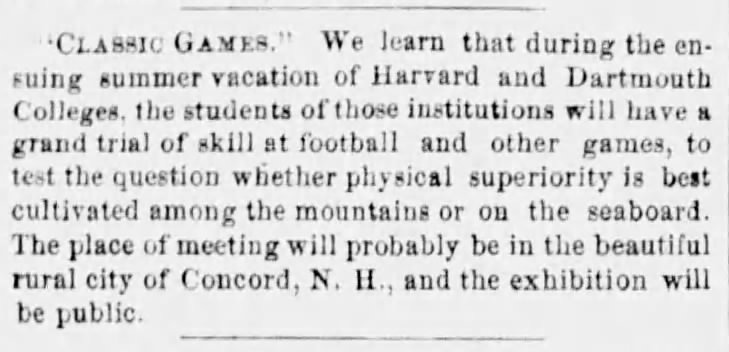
The idea is not inconceivable, as Harvard challenged the students at “any three colleges to beat them at foot ball” in April 1856. Whether Harvard was open to playing three schools separately or an ensemble cast from three schools is now unclear. Whatever their intentions, only the boys at little Dartmouth in New Hampshire’s north woods were open to playing Harvard, and they were willing to go it alone.
Newspapers in the Northeast, even Washington, D.C., and Indiana, carried blurbs about Dartmouth and Harvard likely meeting that summer in Concord for a football game and other athletic contests, but the event never took place.
Instead, things went in a different direction. Yale’s freshmen class declined to play the sophs in the fall of 1856 before the faculty banned the game in 1857. Harvard played their frosh-soph game in 1856, with the juniors and seniors joining the fray, a contest that ended with all joining in with a hearty rendition of Auld Lang Syne. Despite the students’ singing prowess, Harvard’s faculty banned the mob-style game in 1860.
Following the Civil War, students began playing similar kicking games with fewer players, making it easier for the games to transfer to intercollegiate play, provided two schools could agree on a set of rules. The 1869 soccer-like games between Princeton and Rutgers featured 25 players per side, while Harvard and Yale favored 15 or 11 per side in the 1870s.
As covered elsewhere, the Harvard games with McGill and other Canadian teams pushed rugby to the forefront, eventually leading to the IFA’s establishment in 1876 as the governing body and the adoption of a set of rules, modified annually ever since, that define today’s game.

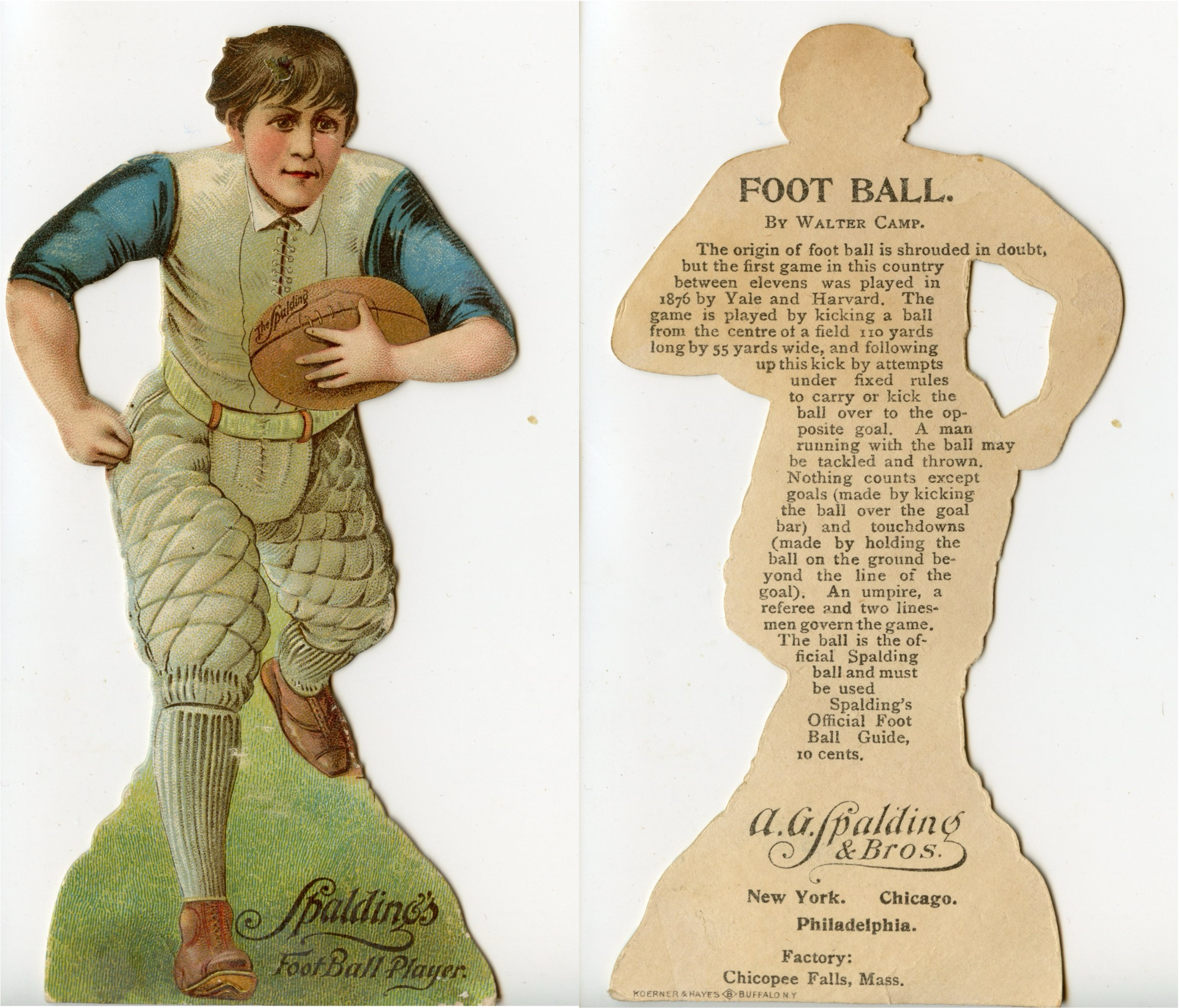
For me, 1876 marks the start of American football, a point Walter Camp dances around in his American Football of 1891 and other period writings. And, since it is always fun to illustrate a point with an attractive visual, here’s Camp and Spalding’s splendid little advertising die cut from 1896 of a Yale football player. The back side includes a history lesson that falls just short of calling 1876 the start of football:
The origin of foot ball is shrouded in doubt, but the first game in this country between elevens was played in 1876 by Yale and Harvard.
Regardless of the date of football’s origins, many schools continued playing mob games as part of hazing rituals, but those games never translated into intercollegiate play. Instead, they went the rugby route, which turned into football.

Still, while mob football never moved beyond a game tied to individual campuses, it might have gone in a different direction. What if Harvard and Dartmouth had gotten together in 1856 and played a mob-style game? Had they continued playing, other schools might have joined the fun. Even if mob-style intercollegiate games did not become popular, Harvard’s position at the center of the collegiate sporting world might have led to elements of the Harvard-Dartmouth mob-style game becoming part of the intercollegiate rugby/football rules.
In any event, it’s fun to think about what might have been if Harvard and Dartmouth had followed through with their plans in 1856.
Good News: The fundraising effort to have the Library of Congress scan its copy of the 1884 college rule book was successful. I’m waiting for the LOC’s final proposal and will place the order once it’s received.
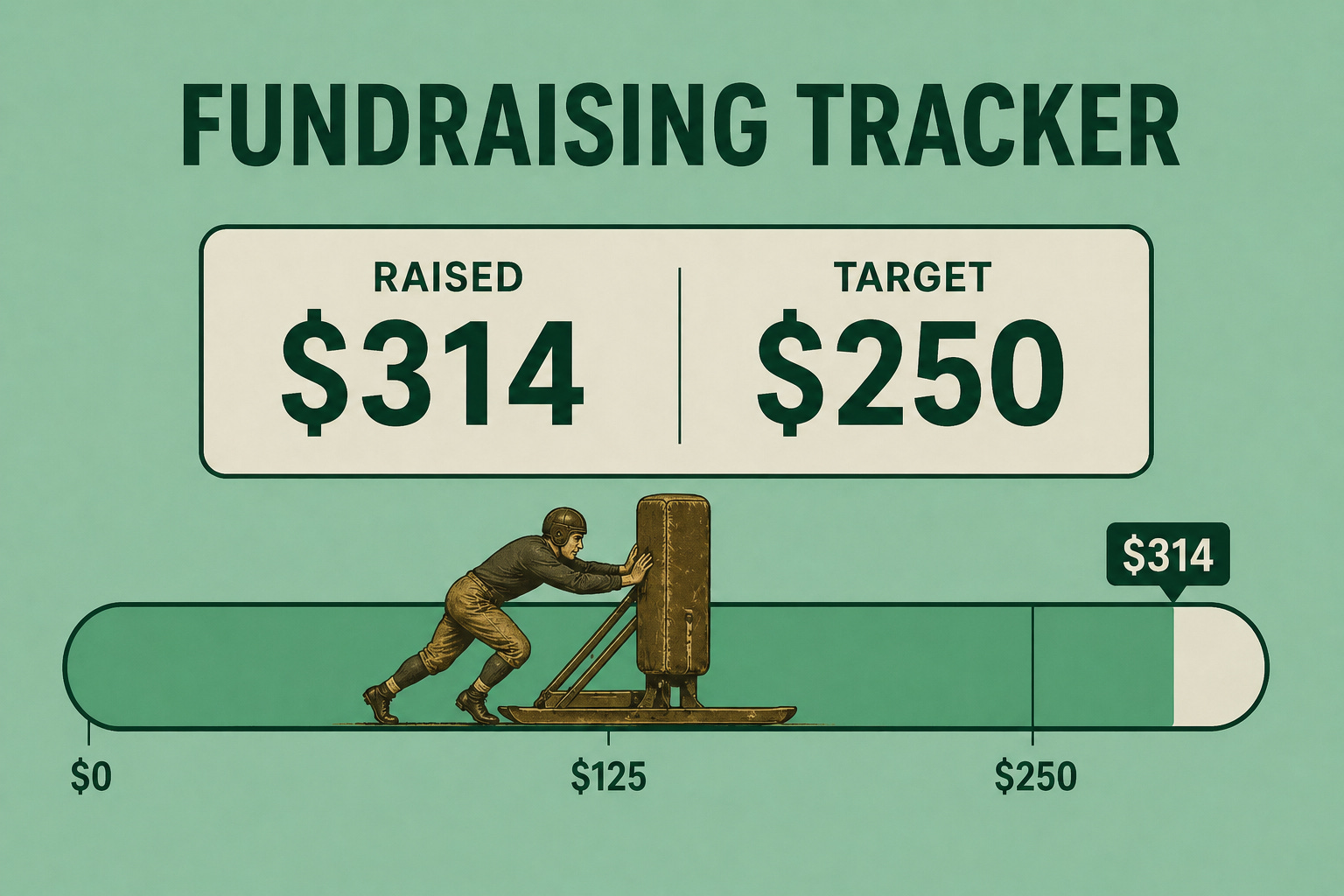
Thanks to Vasav, Andrew, Chris, Billy, and Mike (x 2) for their paid subscriptions, and to Steve and an anonymous donor for buying a few coffees.
If you are a regular reader and not a paid subscriber, please consider supporting Football Archaeology with a paid subscription, buying me a coffee (or ten), or purchasing a book. All new paid annual subscribers receive a free copy of one of the books below.


Nice wry dig at Franklin Pierce in NY Daily News article.
I remember college football celebrating its centennial in 1969, with many schools sporting football shaped “100” helmet decals. Can you elaborate on your distinction between 1869 and 1876? I presume it has something to do with the rules. Thanks.