
Which Came First: Zone or Man-To-Man Pass Defense?

I mail one of my books to new annual subscribers and always ask what topics they would like me to cover. Recently, Greg Marn raised the following issue:
One topic I’ve always been interested in and for which I’ve found little information is the history of the zone defense. When did it appear? What drove its adoption? Was it derived from basketball? What has driven its evolution?...etc.
I provided some history of zone defense in my books, but here’s a bit more about its origins.
Before WWII, football coaching books that covered theory and tactics often devoted three to four times as much space to offense as to defense. Defensive theory was simple and focused on player alignment and honing player skills and techniques, such as tackling.
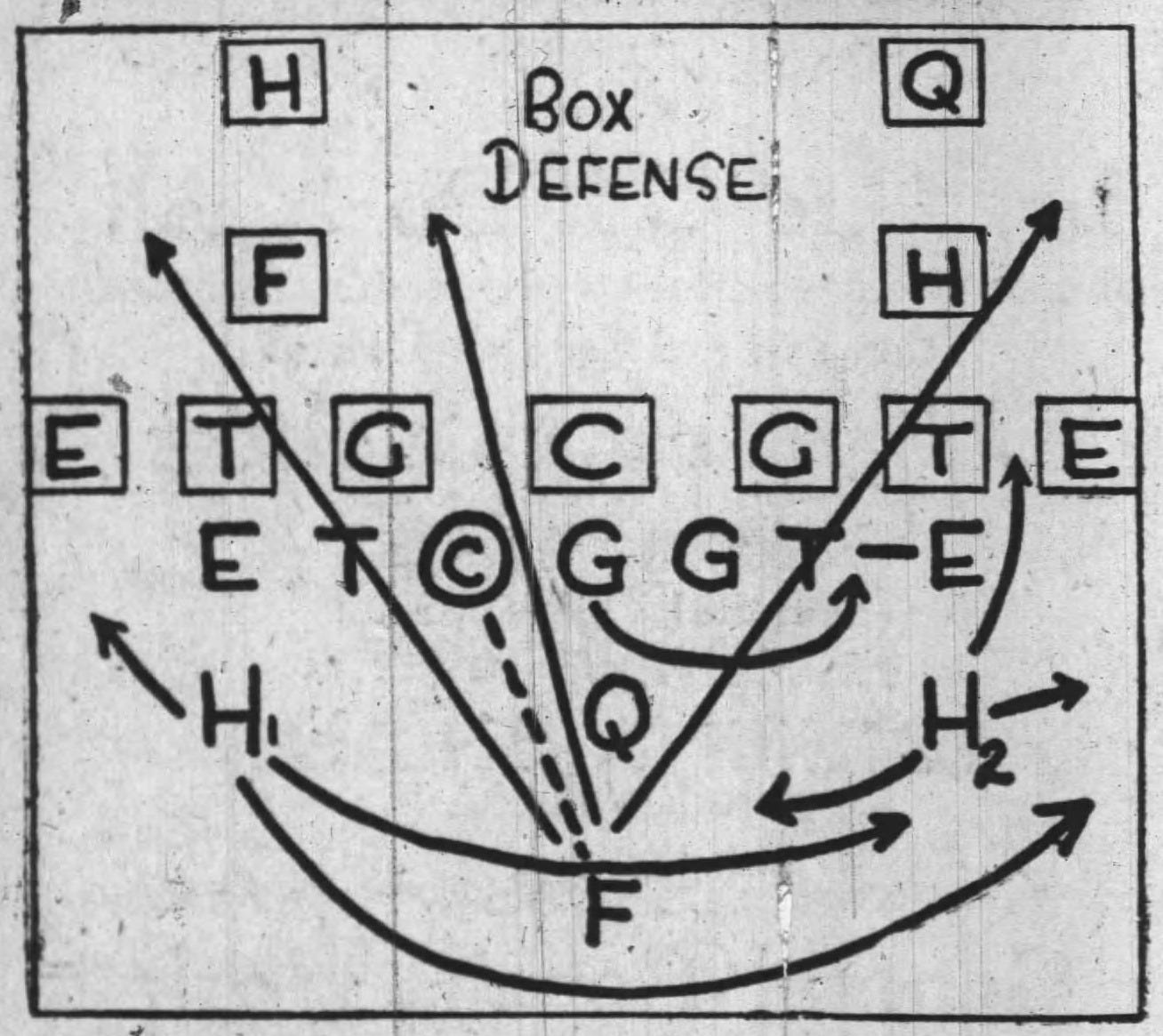
The introduction of the forward pass in 1906 did not initially alter defensive designs, though it did shift some positioning. Nearly everyone relied on a seven-man line, aligning their backs in a diamond or box formation. The diamond, or 7-1-2-1 defense, had the fullback several yards off the line behind the center, the halfbacks 5 to 6 yards off the ball just outside the offensive ends or wings, and the quarterback 20 to 30 yards deep to field punts and cover long passes. The box defense, or 7-2-2, had two defenders a few yards off behind the line of scrimmage and two others 10-15 yards deep. Teams playing the diamond formation often moved the defensive ends further out to protect their flanks.
The adoption of the forward pass forced the second line of defense farther back. Later defensive centers stepped back a yard or two as roving centers, especially against direct-snap offenses such as the Single Wing. However, since effective passing attacks were few, defenses largely aligned as they always had and relied on the defensive back to cover zones or territories. Man-to-man coverage came 15 years later.
Early passing plays involved one or two receiver routes run to one side of the field. That began changing in 1910 when the rules required passes to be thrown from five yards behind the line of scrimmage rather than five yards to the right or left of center, leading to multi-receiver routes spread across the field, and early flood patterns. The common use of the patterns suggests that defensive players largely covered territories rather than individuals. Likewise, Charles Daly, Army’s coach at the time, wrote in American Football in 1919 that receivers can find open spaces...
...in the center territory between the wing backs or to the outside flanks of the wing backs. Open territory exists in the rear of all the defensive backs. It also exists close to the line of scrimmage in rear of the charging end and tackle. Open spaces can be made by deception. For instance, both ends, by leading out into the open, may draw the wing backs away from their territory. A halfback may then receive in the vacated territory.
Likewise, when two receivers are sent outside and behind the defensive end:
... the defensive wing back is in a serious dilemma if the two receivers run at him, one turning out and the other downfield.
The situations Daly described involve zone defenses, and, while Daly mentions one receiver cutting to the outside, there was little discussion until the 1920s of named routes with precise cuts, which you would expected against man coverage.
Only after passing attacks became more sophisticated around 1920 did football distinguish zone and man defenses, as basketball had in the early 1910s. (Numerous top football coaches, such as Ralph Jones and Andy Kerr, also coached basketball, so there was substantial interplay between the two sports.)
Eddie Casey, who played for Harvard in 1919 and coached Mount Union in 1920, distinguished zone and man defenses.
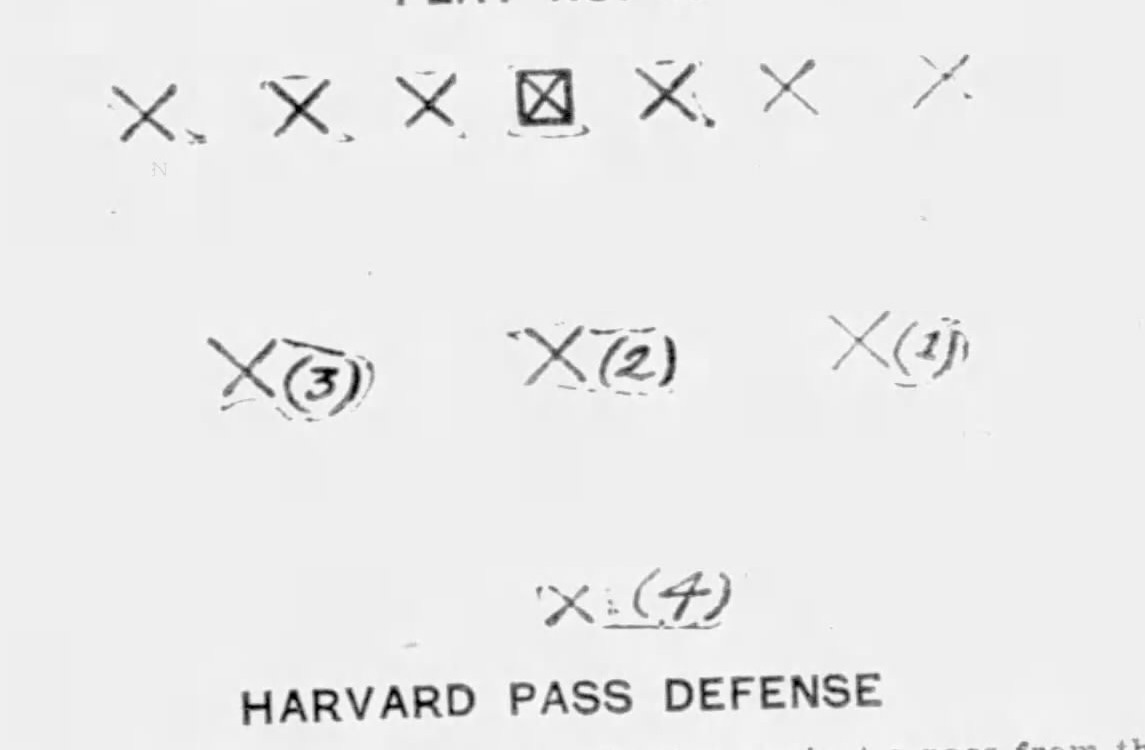
In the middle of the field, the best defense against the pass is the so-called zone system. Every backfield man on the defensive has a certain territory to protect.
…The short zones, which defend against the short passes, should be taken care of by the defensive fullback and the centre. The deep zones to protect against longer passes are covered by the two halfbacks. And an exceedingly long pass, which is a rarity now, is usually taken care of by the quarterback, which can come up from his position very quickly as he sees the play develop.
…Nearing the goal line of your own team, the defenders should change their positions from zone to individual-men defenders.
Casey, Eddie, ‘The Forward Pass Defense,’ Charlotte News, October 28, 1920.
The 1912 rule change allowing forward passes to be caught behind the goal line likely helped push for man coverage, as did flood and other patterns that stressed the simple zone defenses of the day.
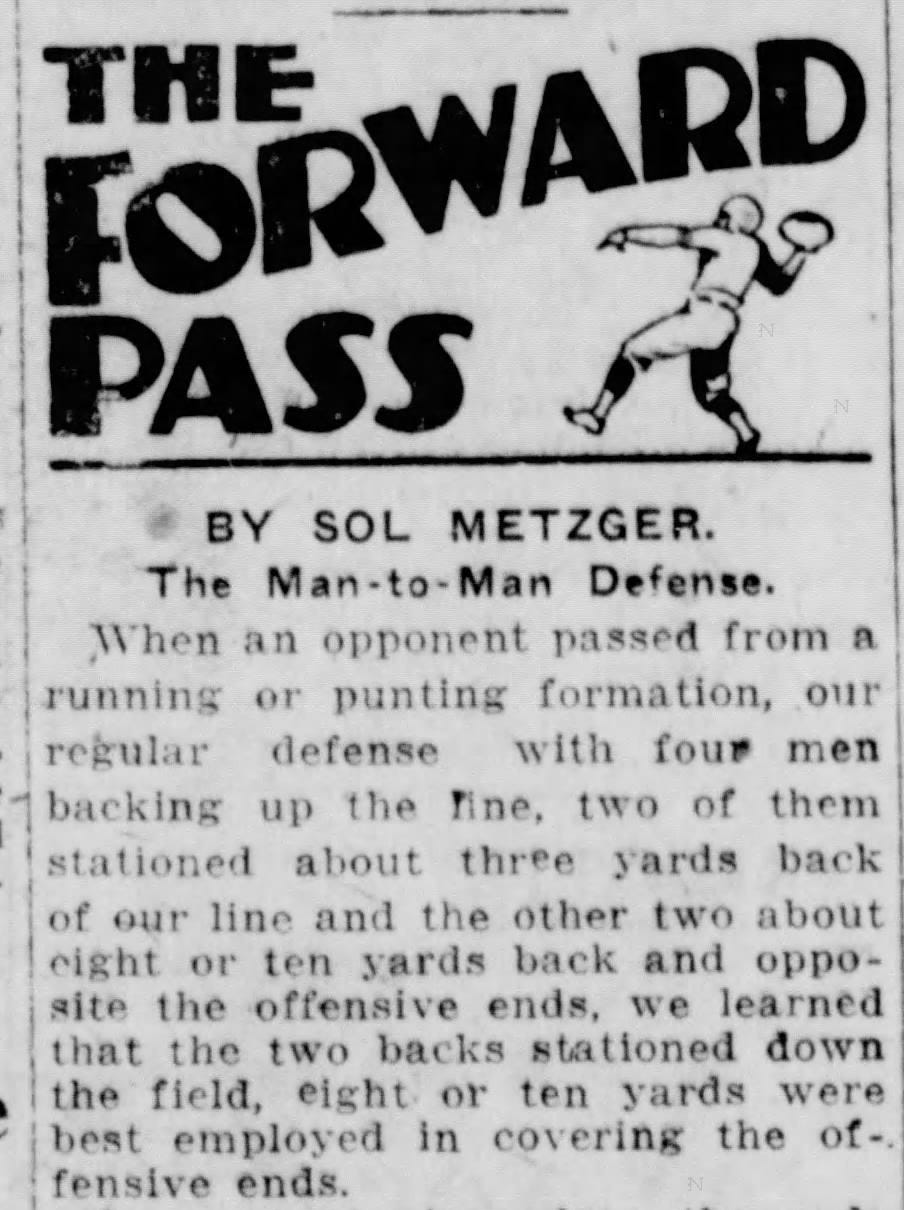
Among the first man defenses were those resembling today’s spy tactics, such as when Ohio State assigned two players to cover Red Grange wherever he went. Around the same time, man-to-man defense became rule-based. For example, Sol Metzger described in 1923 how teams running the box formation on defense had the deep back to each side cover the end when he went downfield, while the front back in the box formation covered the first back who went out for a pass on their side of the field.
Rule changes that reduced restrictions on the forward pass and made the ball slimmer made the forward pass more effective and heightened the need for more sophisticated pass defenses. Nevertheless, since football was a single-platoon game at all levels until the 1940s, offenses remained simpler than today, and so did the defenses’ zone and man coverage.
Also, while I didn’t outline the progression of zone and man-to-man defenses over the years, I’ll remind readers of an earlier story that argues the game’s development is reflected in the expansion of officiating crews. The duties of each new official covered a part of the game considered under-officiated, which tended to result from changes in the offense or defense.

Football Archaeology is reader-supported. If you enjoy my work, get a paid subscription, buy me a coffee, or read When Football Came To Pass.


Great piece. The defensive QB is clearly the precursor to the safety, and the half backs are either proto OLBs or CBs. The defensive FB is, I guess, an early MLB or ILB? As is the "roving center?"
When did the sixth linemen drop into the backfield as well? and Im guessing the DLs of that era had position names that corresponded to offensive positions until the platoon system took over - so based on DL naming conventions sounds like the "halfbacks" became corners, and the centers and guards (along with the FB) became LBs whereas the tackles and ends remained on the line.
Thanks so much for this terrific piece. Super interesting and much appreciated!