
The First Forward Pass Revisited, Again

Given the role of the forward pass in football today, the football world should know when the ball was first passed forward legally. Although it clearly happened sometime in 1906 following rule changes, the date, location, and involved teams have been hard to pin down.
For decades, nearly everyone agreed that St. Louis U. threw the first forward pass against Carroll on September 25, 1906. However, two years ago, I showed that five football games were played on September 22, 1906, several days before the SLU-Carroll game. In one of them, New Hampshire threw an incomplete pass against Maine, which made UNH the earliest documented forward passing team, though St. Louis could continue claiming the title as the first team to complete a forward pass.

Of the four other games played on September 22, available newspaper accounts indicated that passes were not thrown in three games, and detailed accounts of the fifth game proved elusive. At the time, I promised to continue searching for other forward passes thrown that day, or earlier, but since it takes significant time to pore through newspaper archives searching for potential forward passes, I did not return to the effort until recently. Recently, I upped my game by enlisting the services of Claude, who I tasked with handling the finger work for me.
Lo and behold, Claude scanned the newspaper archive in ways I had not and found evidence of forward passes thrown in the game whose coverage I had previously been unable to locate. It also found forward passes thrown in a Michigan high school game one week before the September 22 games. So, let’s look at the evidence for those games.
Bates College-Fort Preble
Two years ago, I knew only that Bates College in Maine played a team described as the U.S. Artillery of Portland. The opponent’s name seems to have sent my search down the wrong path, since Claude found articles showing Bates’ opponent that day was Fort Preble, a coastal artillery installation, which led to finding another story indicating the artillery team included players from Forts Preble, McKinley, and Williams.
More important, the articles covering the game included passages telling us the soldiers played traditionally while Bates tossed the pea downfield several times. Key passages include:
Two styles of playing were seen at this game. The Artillery plugged away at the old old-fashioned line plays with the occasional end run, while Bates endeavored to work out plays which were made possible under the new rules.
Bates did better than that, covering [its] ten yards by the forward pass several times,...
The prettiest work of the whole game, however, was the new forward pass which was tried by Bates a number of times, some of which were successful.
It was tried several times in the first half and when Quarter Back Cobb sprung, the surprised crowd was enthusiastic over the result.
‘The New Forward Pass,’ Lewiston Evening Journal (ME), September 22, 1906.
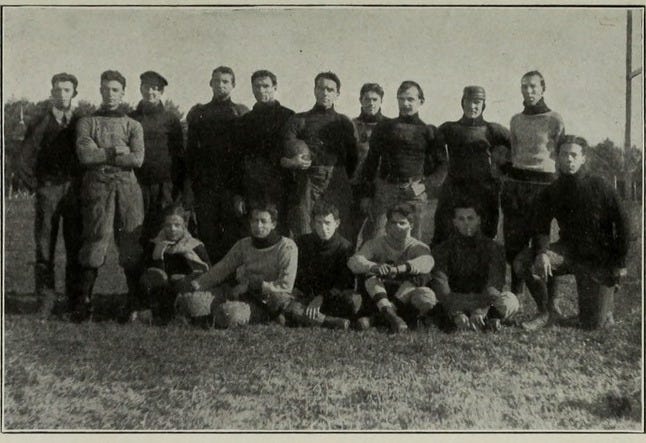
Thus, Bates threw several completed passes in the game, though none went for a touchdown. They also threw an interception, which a soldier named Sheridan quickly return kicked back to Bates, leaving Bates with negative field position on the play. (Until the mid-1960s, teams could punt the ball back to their opponent after receiving punts or on other changes of possession, a tactic that remains legal in Canadian football.)
The new information, combined with the previous information about New Hampshire throwing a forward in their game against Maine, means that the State of Maine hosted two games with confirmed forward passes on September 22. New Hampshire’s Phillips Exeter prep school also threw the ball versus Chelsea AA that day.
Claude failed to find other games that included forward passes that day, but it uncovered forward passes thrown in a previously-unidentified game played one week earlier between Michigan’s Lansing and Charlotte high schools.
Lansing High-Charlotte High (MI)
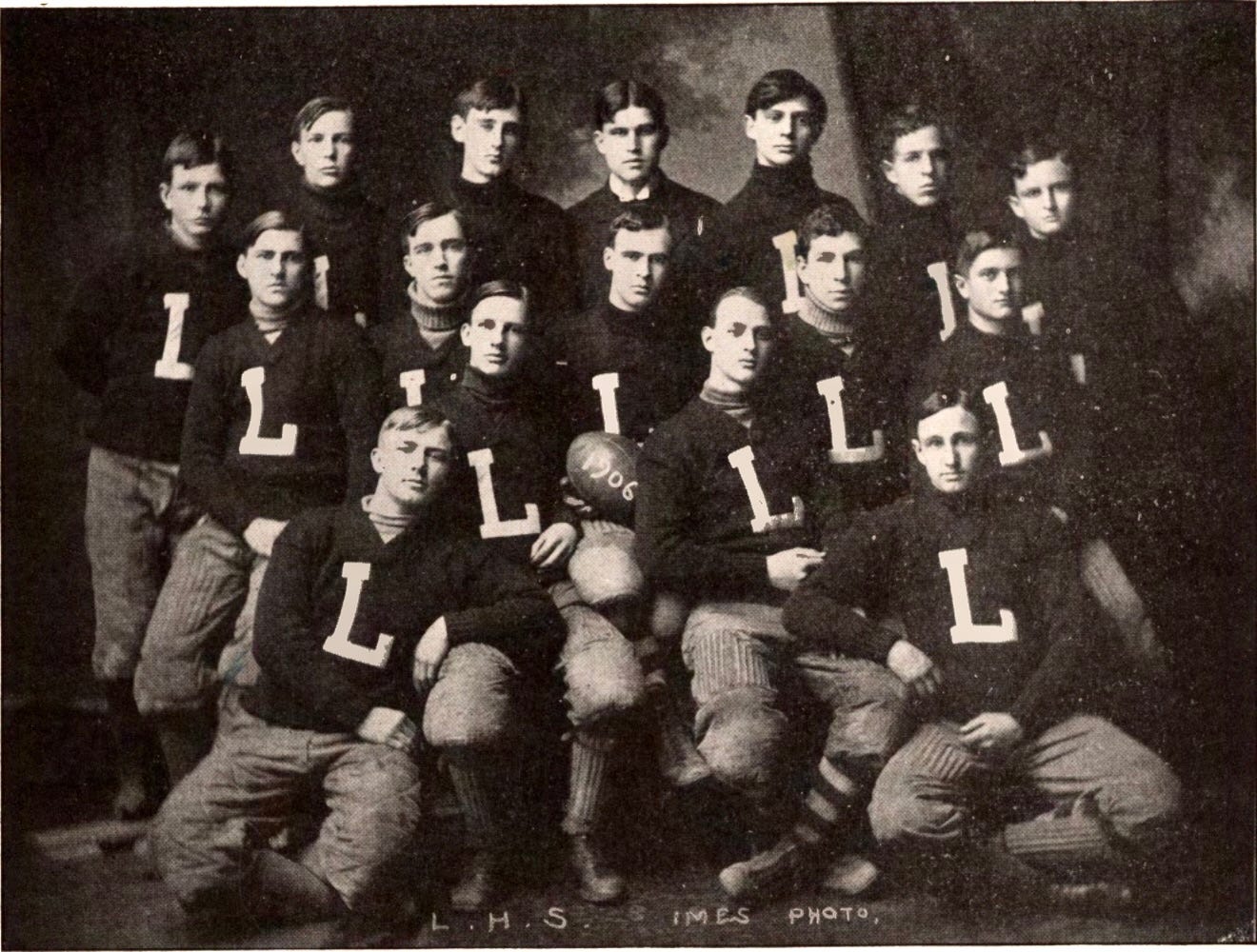
Lansing, or Lansing Central High, opened in 1875 and had played football for a few years before the 1906 season. Lansing’s coach to start the season was Fred Close, who had experience coaching high school football and also umpired college baseball games. Close held the Lansing job despite having been arrested in June for stealing letters containing cash in his duties as a mail carrier. Close resigned his coaching role after the second game of the season, purportedly to focus on work.
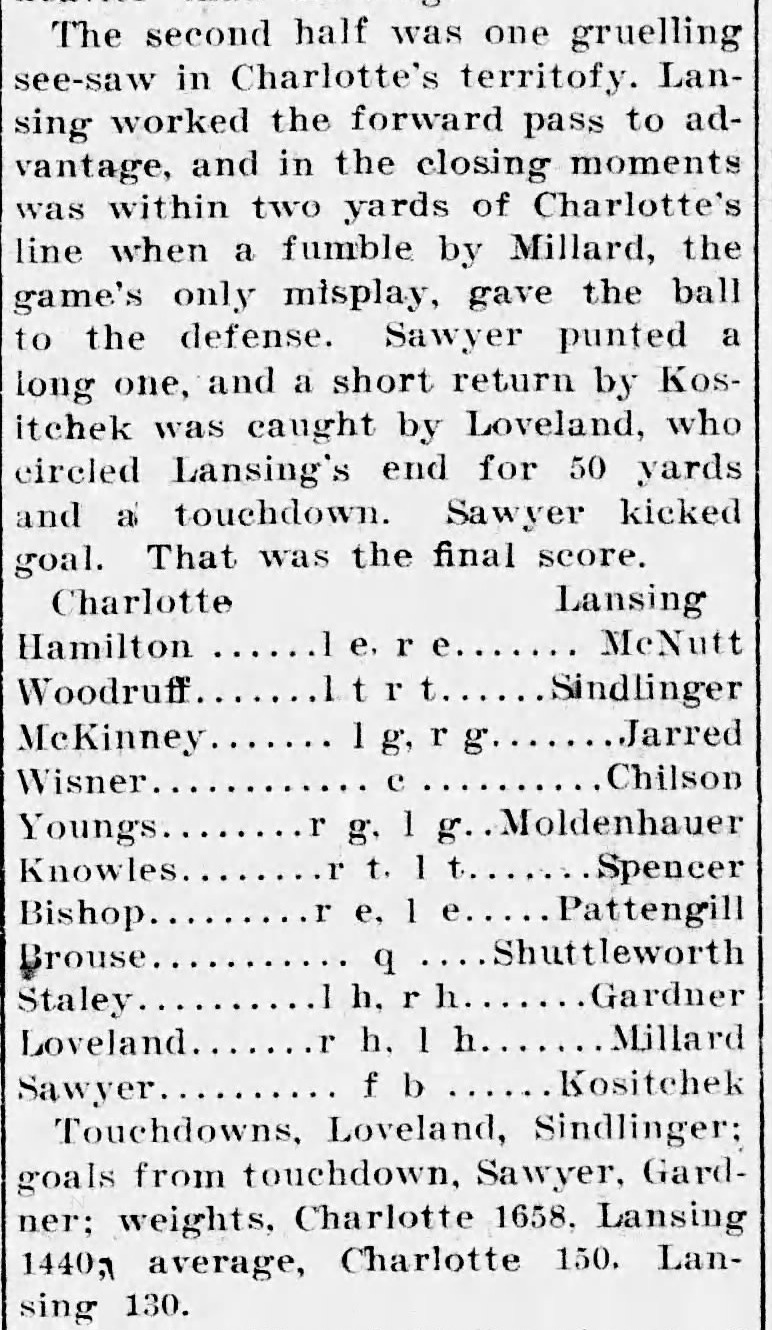
Nevertheless, in the first two games of the season under Close’s direction, Lansing threw forward passes. The first came in their September 15 game at Charlotte, during which the reports tell us “Lansing worked the forward pass to advantage.” That’s it.
A week later, on September 22, Lansing played Mason High and threw the ball again. This time we get a bit more information:
As in the Charlotte game Lansing’s freak and trick plays were used to good advantage, the new forward pass in which Gardner and Passengill figure being a good ground gainer. (Gardner is listed in the Charlotte box score as the right halfback and Passengill as the left end.)
‘Won From Masonites,’ Lansing Journal, September 24, 1906.
So, until we identify another team that threw a forward pass on or before September 15, 1906, Lansing High School stands as the first team to throw a forward pass in a game and they also threw the first completed forward pass. Unfortunately for them, they did not score a touchdown by forward pass in either game.
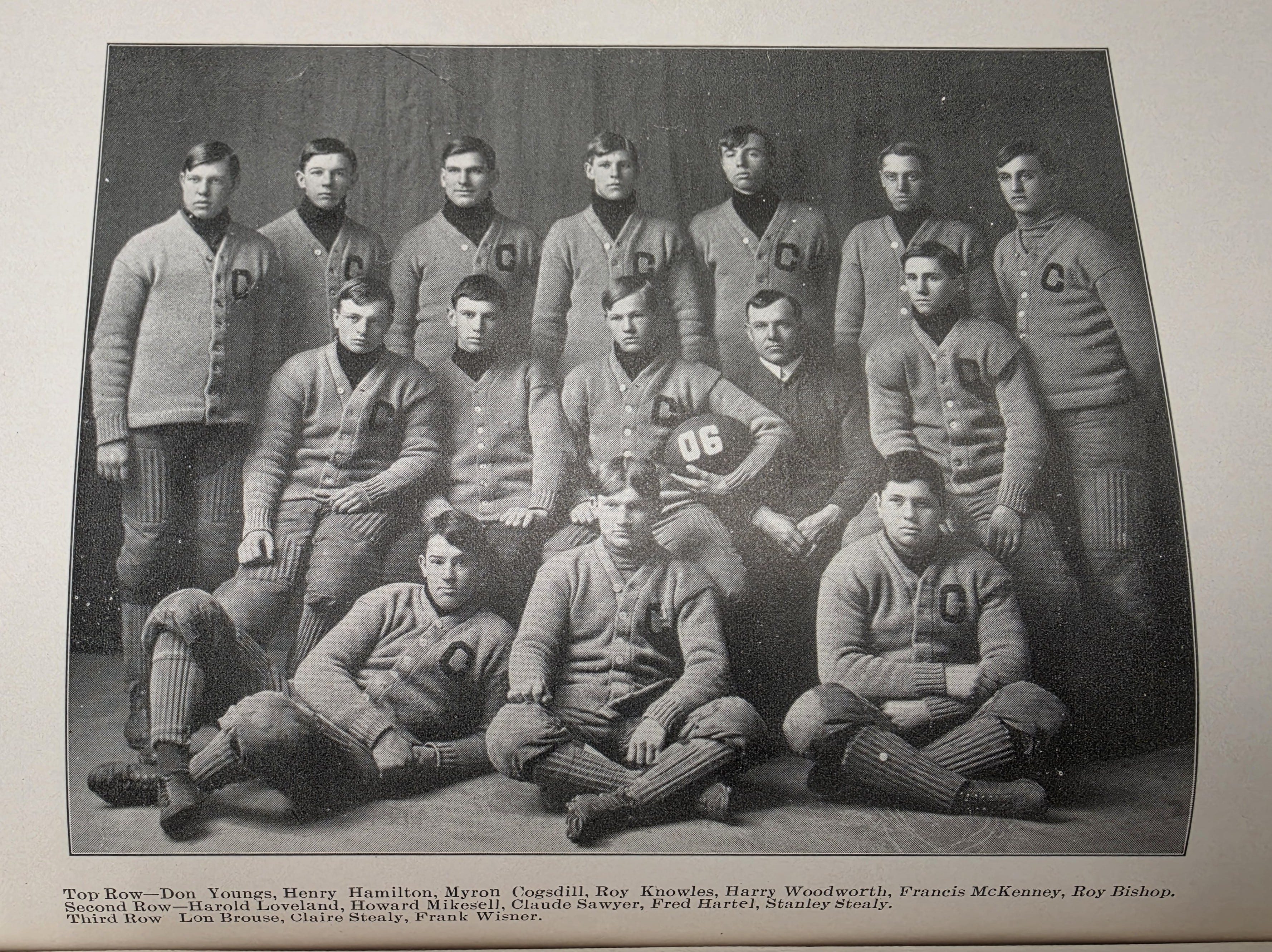
Charlotte High School, Lansing’s opponent in the first game of the year, can claim they invented pass defense, since, by definition, they were the first to play it.
The new information means two college football teams threw forward passes in games before St. Louis U. New Hampshire and Bates fit that bill. In addition, Phillips Exeter and Lansing High preceded SLU, with Lansing throwing the first forward pass.
So, where does that leave St. Louis U? As of today, they are the fifth team known to have thrown a forward pass in a regular season game, and based on a 20-yard Bradbury Robinson to Jack Schneider strike against Carroll, they can claim they threw the first touchdown pass.
Shout out: Thanks to Sara Horn of the Charlotte Community Library for locating and providing an image of their team.
If you enjoy Football Archaeology and are not a paid subscriber, consider buying me a cup of coffee here and there. You can also buy a paid subscription or purchase one of my books.


Who would have thought that new technology would uncover forgotten treasures of the past? Great job, Tim, in taking football research to a whole new level.
Not counting the Fairmount-Washburn game the preceding December? Coach Nelson sure thought that was the first one.