

I published Factoid Feast IX the other day and soon came across another factoid I thought might end up in Factoid Feast XX. The new story concerned unusual field markings devised in 1927 by Arthur “A. W.” Briggs at Springfield Teachers College, now Missouri State.
Other than during the 1906-1911 checkerboard era, football fields before 1927 were barren expanses, with no markings beyond the sidelines, yard lines, and end lines. However, when they moved the goal posts from the goal lines to the end line that year, many believed players and fans would be confused about the goal line’s location since they were used to the goal posts being the marker.
Folks developed many creative solutions to distinguish the goal lines from the field’s other parallel stripes. Decorated end zones and today’s pylons descend from those efforts, as detailed in an earlier story.

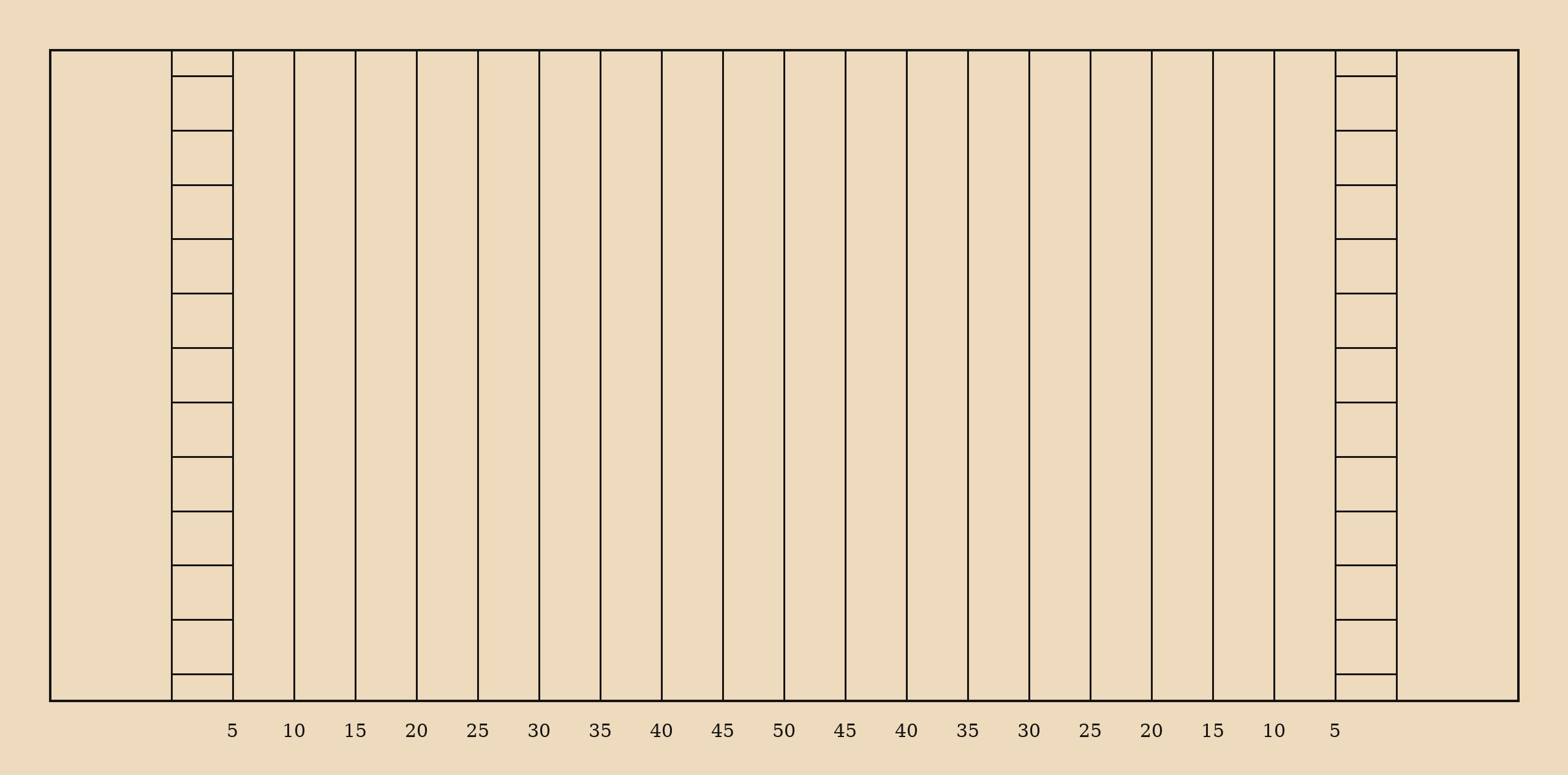
A. W. Briggs developed a unique solution I hadn’t encountered when I wrote the article above. He added stripes running perpendicular to the yard lines between the goal lines and 5-yard lines, so his markings looked like this:
The only thing keeping this story from becoming a Factoid was my looking into A. W.’s background; perhaps he did something else of interest that would be worth describing to readers. When I looked into A. W., I found that some claimed his daughter was the youngest swimmer in the country at 20 months old during the summer of 1913.
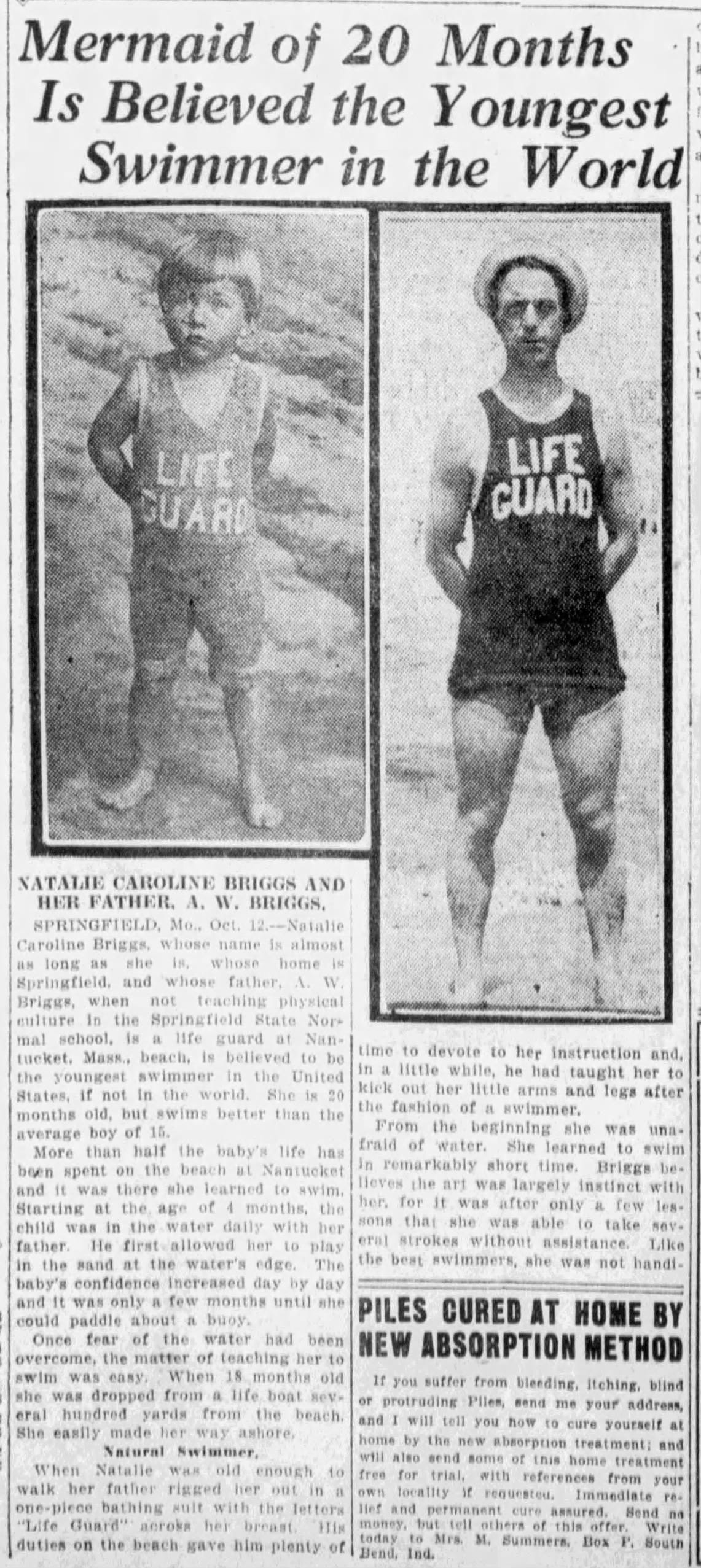
Beyond that, Briggs arrived at Springfield Teachers in 1912 and started the Physical Education department, coaching football, basketball, baseball, track, and fencing, and serving as the athletic director and department head. He was the foundation of the department, which led the school to name its football stadium in his honor, until they renamed it after someone else gave a lot of money. They did rename a nearby street after Briggs as a substitute of sorts.
While it all sounds like A. W. Briggs was a fine man and influenced the growth of Missouri’s second-largest university, one that will become a full FBS member for the 2026 season, that’s not a story worth telling you, the readers, who have far loftier expectations.
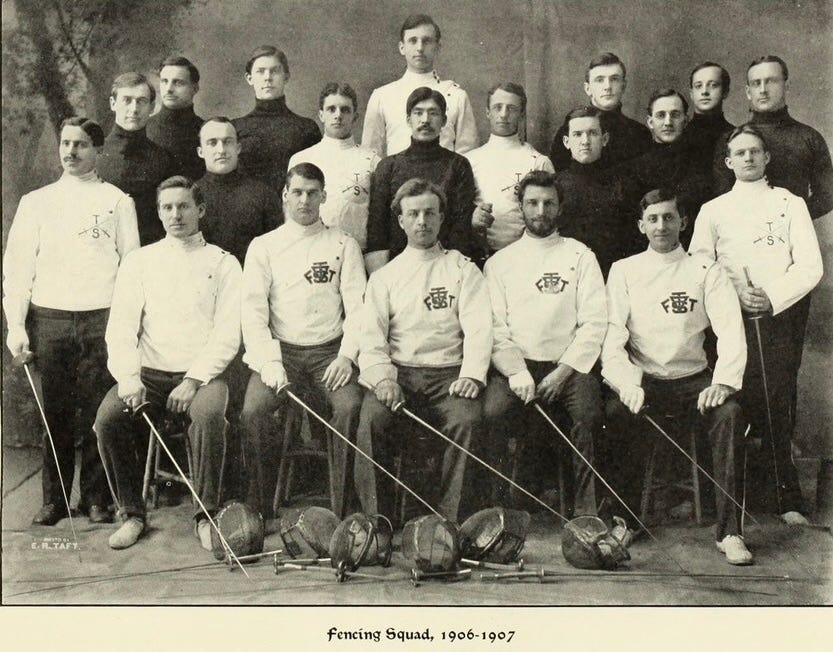
No, my look at A. W. Briggs’ past revealed that he graduated from the Springfield YMCA Training School in Springfield, MA (not MO), where he played football and captained the fencing team.
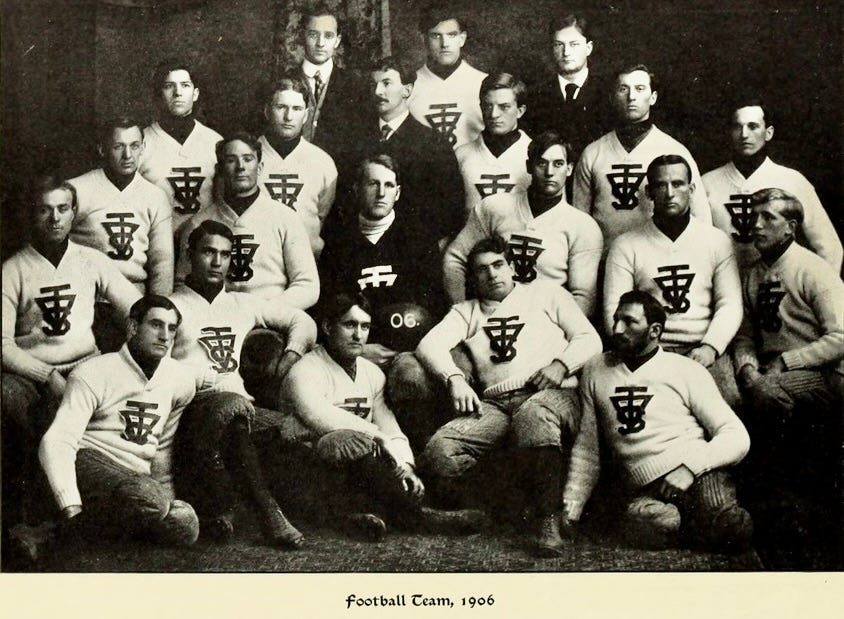
Since I recently published a book about the first decade of the forward pass, I was familiar with the passing innovations that occurred at the Springfield YMCA Training School under James H. McCurdy, Springfield’s long-time coach. One of those innovations did not involve the forward pass per se, but the backward snap from center, which came to Springfield in 1910 through a player named Harrison R. “H. R.” Briggs. The story goes that H. R. began spiral-snapping in high school in Salem and brought the technique with him when he arrived at Springfield in 1910. The technique was important to Springfield because, like many early passing teams, they threw the ball from their punt formation, and the spiral snap allowed the ball to reach the passer faster than with the traditional end-over-end technique.
Was there a connection between A. W. Briggs and H. R. Briggs, beyond their surname and playing football at Springfield? Indeed, there was. H. R. was A.W.’s substantially larger little brother.
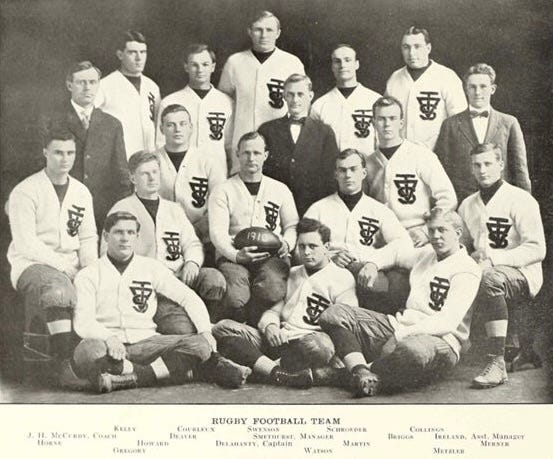
I know that several others lay claim to having originated the spiral snap, but I find the Griggs story the most convincing. Unfortunately, H. R. was injured in Springfield’s 1910 game with Army, forcing him out of action for the rest of that and the 1911 season. However, he returned to the gridiron in 1912, during which he was one of the team’s best players. A highlight came in their last game of the season against Carlisle when he intercepted a Jim Thorpe pass before being tossed from the game in the 3rd quarter for slugging.
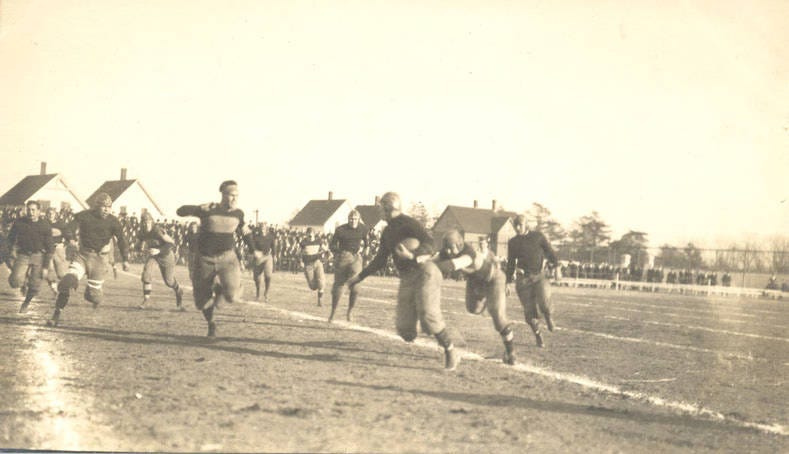
So, if you are a Missouri State football fan, a long snapper, or appreciate those who helped move the game forward, give thanks to the Briggs family for their contributions to your football joy.
Football Archaeology is reader-supported. If you enjoy my work, get a paid subscription, buy me a coffee, or read When Football Came To Pass.


At UNC stadium's 1927 dedication (and second) game, the endzone was marked with "horizontal" stripes, but they weren't centered. Only one goal line that year, and the horizontal stripes never returned. Subsequent seasons saw a second goal line added. https://flic.kr/p/25n7Lfx