

Recently, I wrote about the 1893 West Point football team and, specifically, about Ralph W. Drury, a plebe who wore an early football headgear. Army’s coach in 1893 was Laurie Bliss, left halfback for the 1892 Yale team that outscored its opponents 429-0 and was recognized as the national champs.

Laurie spent the summer of 1893 in San Francisco tutoring the San Francisco Athletic Club on the latest in Eastern football, where he was willing to coach six days per week but refused to do so on the Sabbath. He left San Francisco around August 20, heading to Chicago, where he would meet the West Point cadets near the end of their two-week encampment at the World’s Fair, the farthest west the Corps of Cadets had ever ventured.
America was beginning to flex its muscles in 1893, and what better place to flex than Chicago, the City of Broad Shoulders, which hosted the World’s Columbian Exhibition or World’s Fair along the Midway.
Every gadget you could imagine was on display. The Fair debuted the Ferris Wheel, consumer products such as Juicy Fruit gum and Quaker Oats, and, most important, Frederick Pabst’s beer, which they renamed after it won the blue ribbon. (Many doubt the veracity of that story, but it’s one of those lies that is worth retelling.)
Still, if there was one gadget or innovation that dominated the 1893 World’s Fair, it was electricity, and particularly electrical lights. Westinghouse and Edison/General Electric battled over the right to light, with Westinghouse emerging victorious. Incandescent lights hung everywhere you might look; they were in the trees and lit the building interiors.
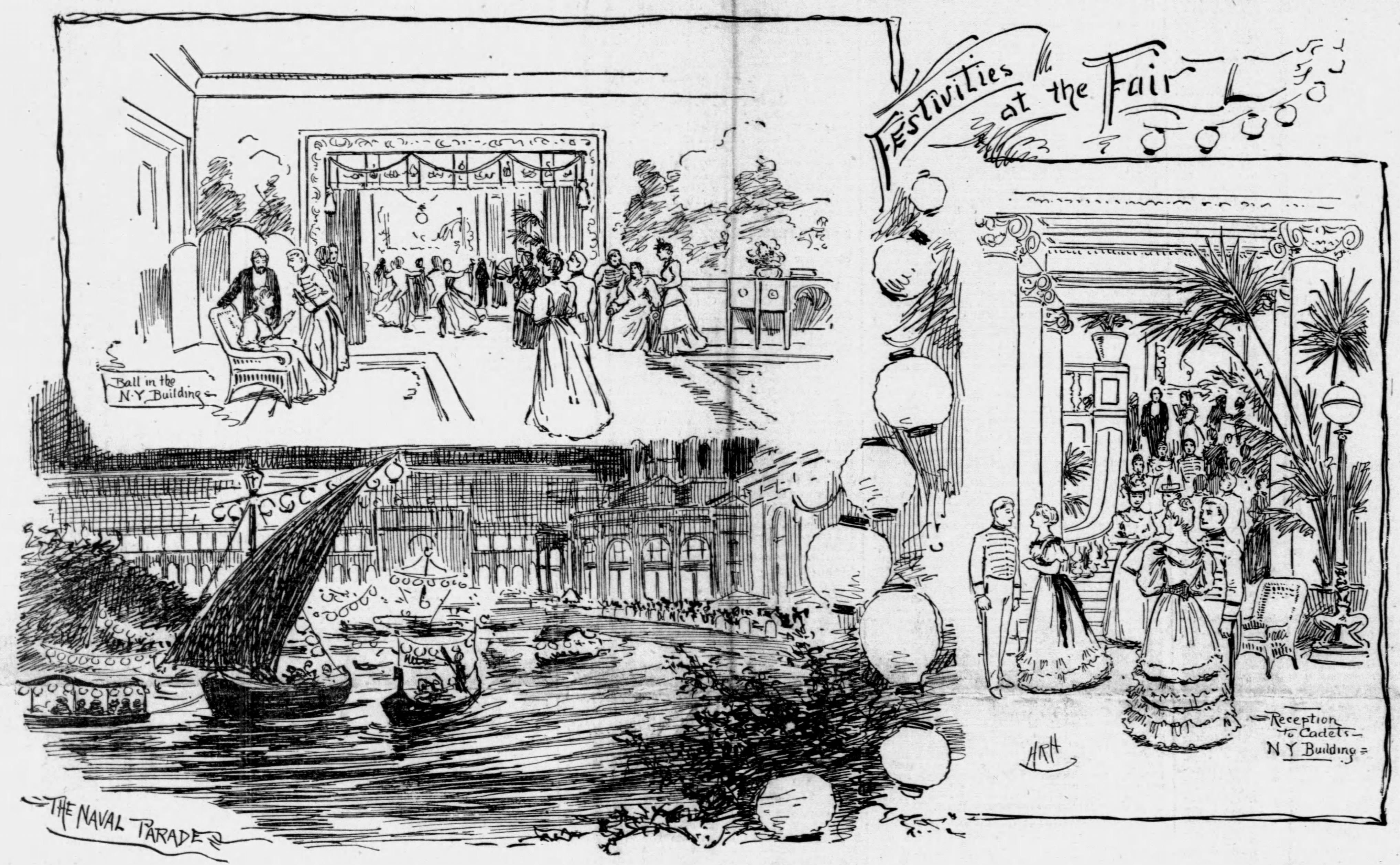
The cadets were in Chicago to be seen and to see. Encamped in front of the Government Building, they performed a daily horse mount and dress parade, and one evening were feted with a ball in the New York Building.
That was all well and good, but the key event for our purposes was their football game against the Chicago Athletic Club. You won’t find the game listed on West Point’s 1893 schedule, and while the sponsors touted it as the first football game played under the lights, at least two other artificial-light games preceded it.

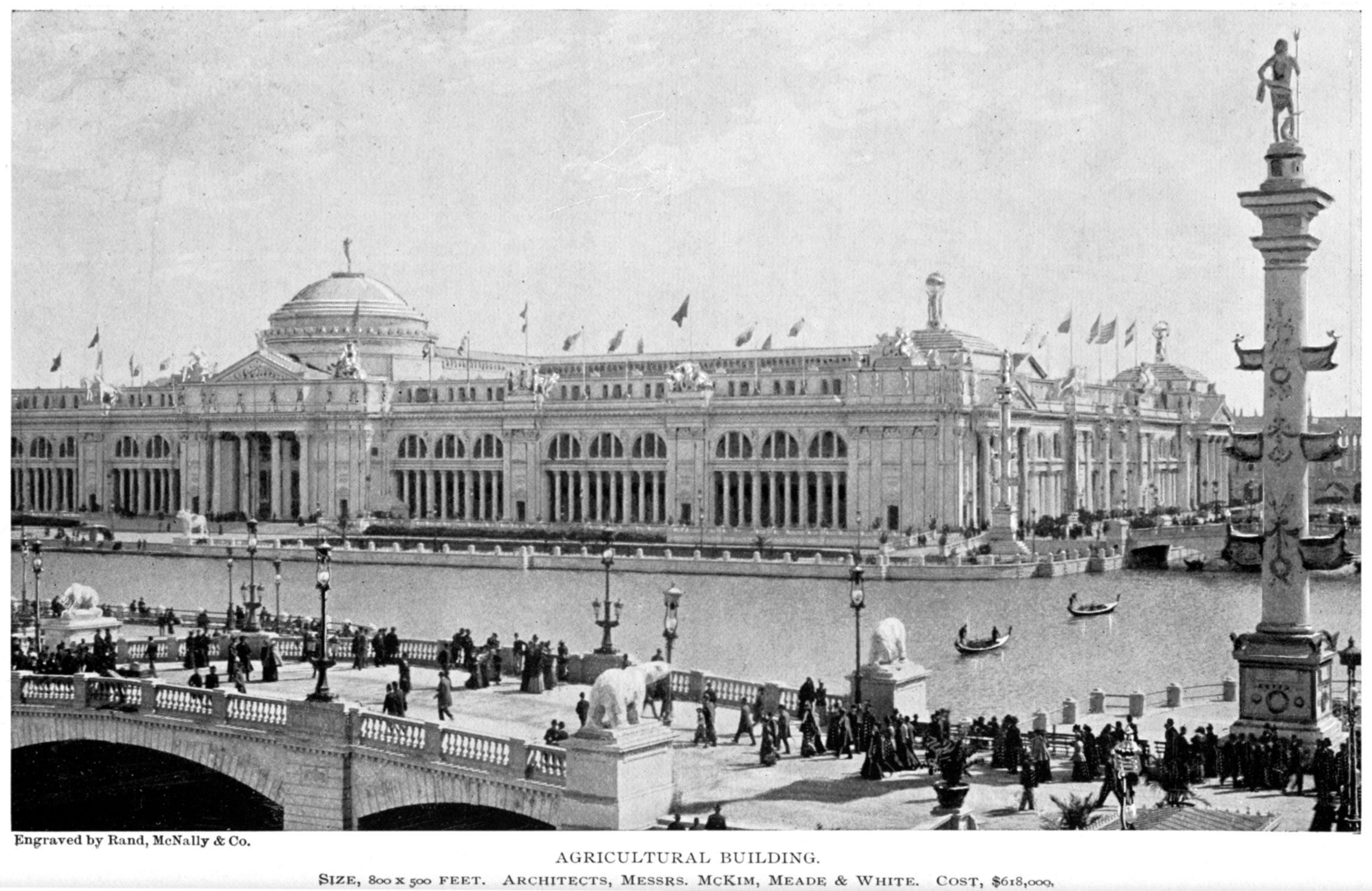
Played in the cavernous Agricultural Building or Stock Pavilion, the cadets faced a formidable foe.
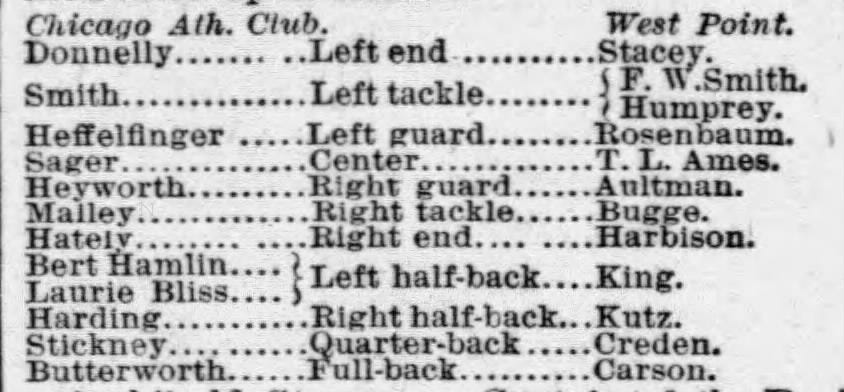
The Chicago Athletic Club team was filled with Eastern stars and a few Midwesterners, including.
Heffelfinger, Yale
Ames and Donnelly, Princeton
Alward, Stickney, Harding, and Remington, Harvard
Camp, Penn
Heywork, local to Chicago
Malley, Michigan
Sanger, Wisconsin
Fans of various college teams entered the pavilion early, announcing themselves with their college yells. Then, the Corps of Cadets marched in, 300 strong in those days. Finally, the teams entered the building and spent a few minutes warming up before starting the game of 20-minute halves.
The cadets held their own, sort of. Chicago planned to run the ball up the gut, and their plan worked. A punt, followed by a West Point fumble deep in their territory, led to a safety and Chicago’s first two points. Later in the half, Chicago’s Hamilton scored, and Butterworth’s kick made it 8-0.
Showing once again that truth can be stranger than fiction, West Point’s coach, Laurie Bliss, entered the game in the second half. While coaches playing with college teams was not unheard of at the time, Bliss entered the game at left halfback for Chicago AC, not Army. By scoring the only touchdown of the second half on a 1-yard run, Bliss’ score had to be one of the few times a coach scored a touchdown on his own team, or, at least, his soon-to-be team.
Besides the touchdown, a few moments of fisticuffs highlighted the remainder of the second half, though everyone seemed to have enjoyed themselves otherwise.
The Chicago Athletic Club went on to an 8-0 season, including the Army game, while Army finished the season at 4-5, excluding the Chicago AC game. Chicago AC stopped play after the 1898 season, while Army’s caissons continued rolling along, playing in Chicago again when they met Navy at Soldier Field in 1926.
If you enjoy Football Archaeology and are not a paid subscriber, consider buying me a cup of coffee now and again. You can also buy a paid subscription or purchase one of my books.


What a great piece of gridiron history you have reminded us of here. I have added it to our ever-growing timeline on Pigskin Dispatch with credit to Football Archaeology.
How did Army play Army in Soldier Field? Scratching my head on that one.