
Football’s 1884 Rule Book: Referee's Duties & Rules Interpretations

This article is the fourth in a series covering the 1884 Intercollegiate Football Association rule book. The first three articles provided background on the series and Sections I through III.
Today’s article covers the Duties of the Referee and the first part of the Interpretation of Rules.
The Referee’s Duties
The Referee’s Duties are covered on pages 17 and 18, amounting to about one page of text, so while the referee was the game’s absolute ruler, his duties were few. He:
Called time out
Decided disputes between teams
Warned players of impending doom
Kept the game score and time
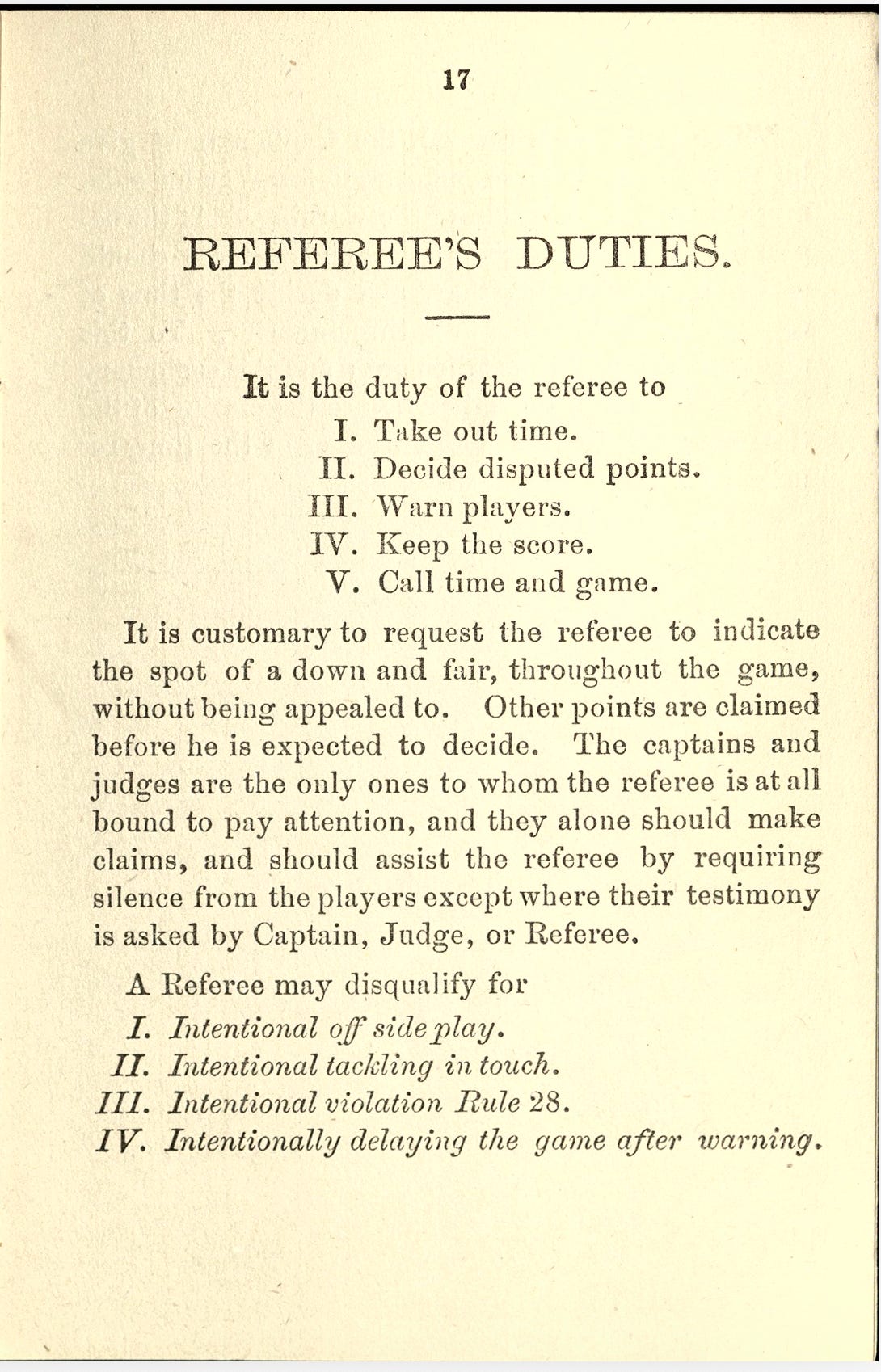
He also spotted the ball and spoke only with the judges and captains. The referee also could disqualify players for intentional offside play, tackling out of bounds, unsportsmanlike conduct, and delaying the game.
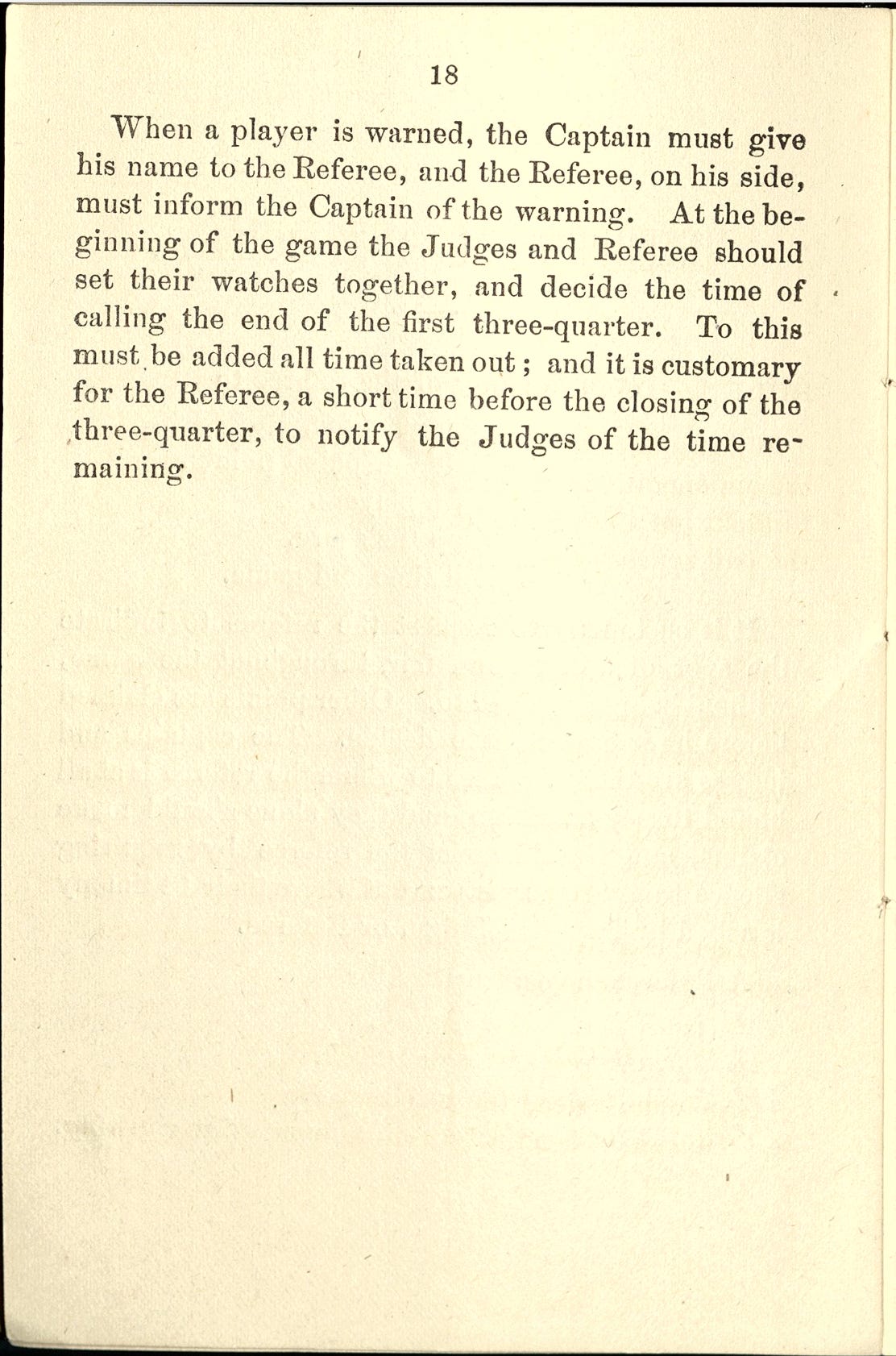
Football had a running clock in 1884, so the ref and judges synchronized their watches before each half, kept track of stoppage time, and near the close of each three-quarter-hour-long half, the ref informed the judges that the period was nearing its end.
Interpretation of Rules
Whereas the rule books of 1876 through 1883 followed the Laws of Rugby approach, with a long list of rules that intermixed definitions, rules, officials’ duties, and interpretations, the 1884 rule book placed each topic into sections. The approach made sense in theory, but less so in practice, given that many elements of the Interpretations section might have been better placed in the rules.
The following review of the Interpretation of Rules section covers selected rules/interpretations, focusing on interesting items. For example, take a look at Rule 2’s interpretation.
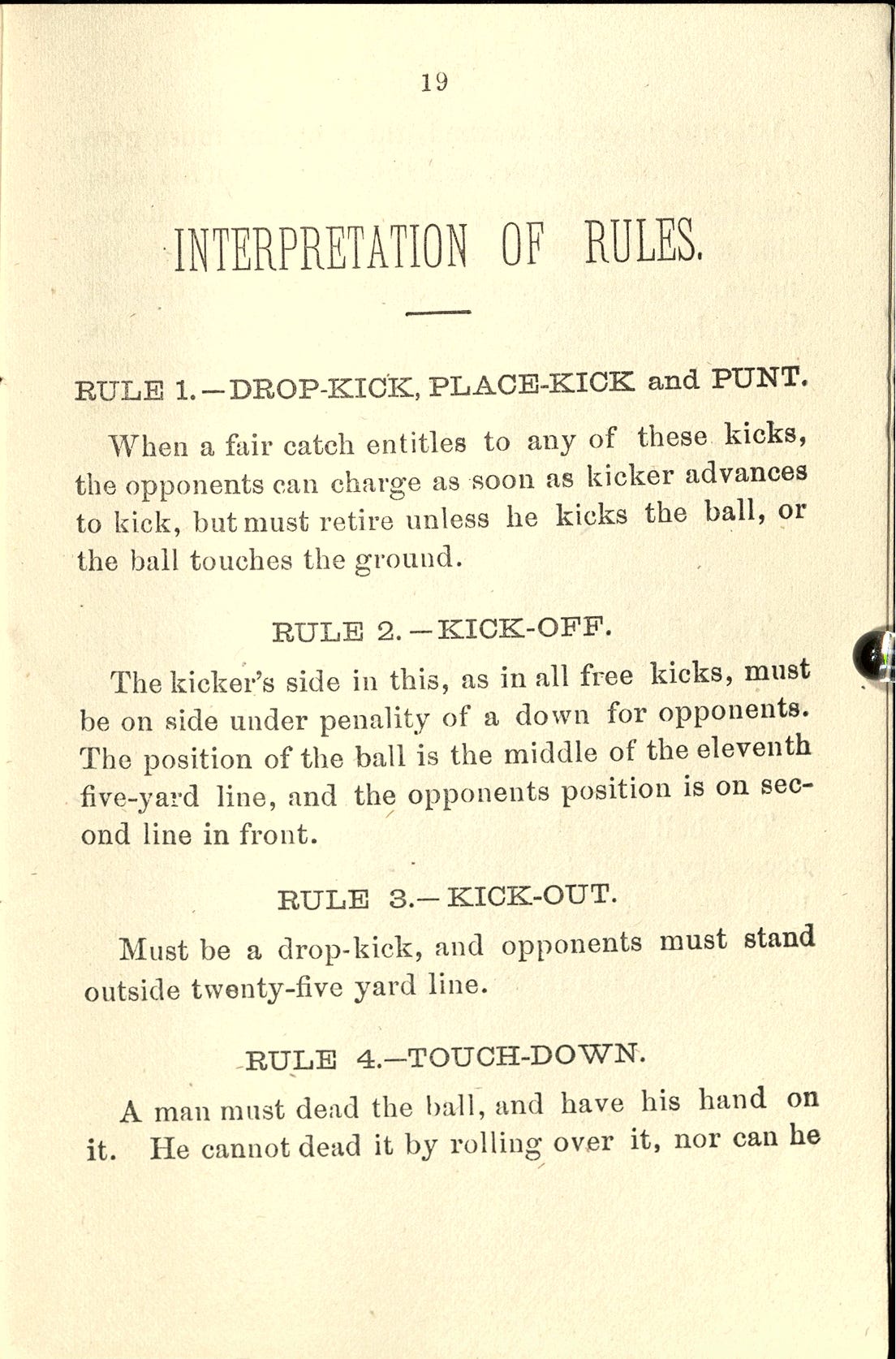
The wording seems rather awkward, since it tells us kickoffs occur from the middle of the eleventh five-yard line and the opponent must align at least two lines back. The awkward wording resulted from the fact that, other than the 25-yard line, where kickouts occurred, the football community did not yet identify yard lines by number. (A newspaper search shows yard lines described by number very occasionally in the 1880s, before becoming common in the 1890s.)
The interpretation of Rule 5 tells us that the try at goal (aka the goal after touchdown) must be a bona fide try, not a dribble. Before this rule tweak put a stop to the practice, some teams dribble-kicked or deliberately missed the kick attempt because the missed kick remained live, giving them the chance to recover the ball and score another touchdown.
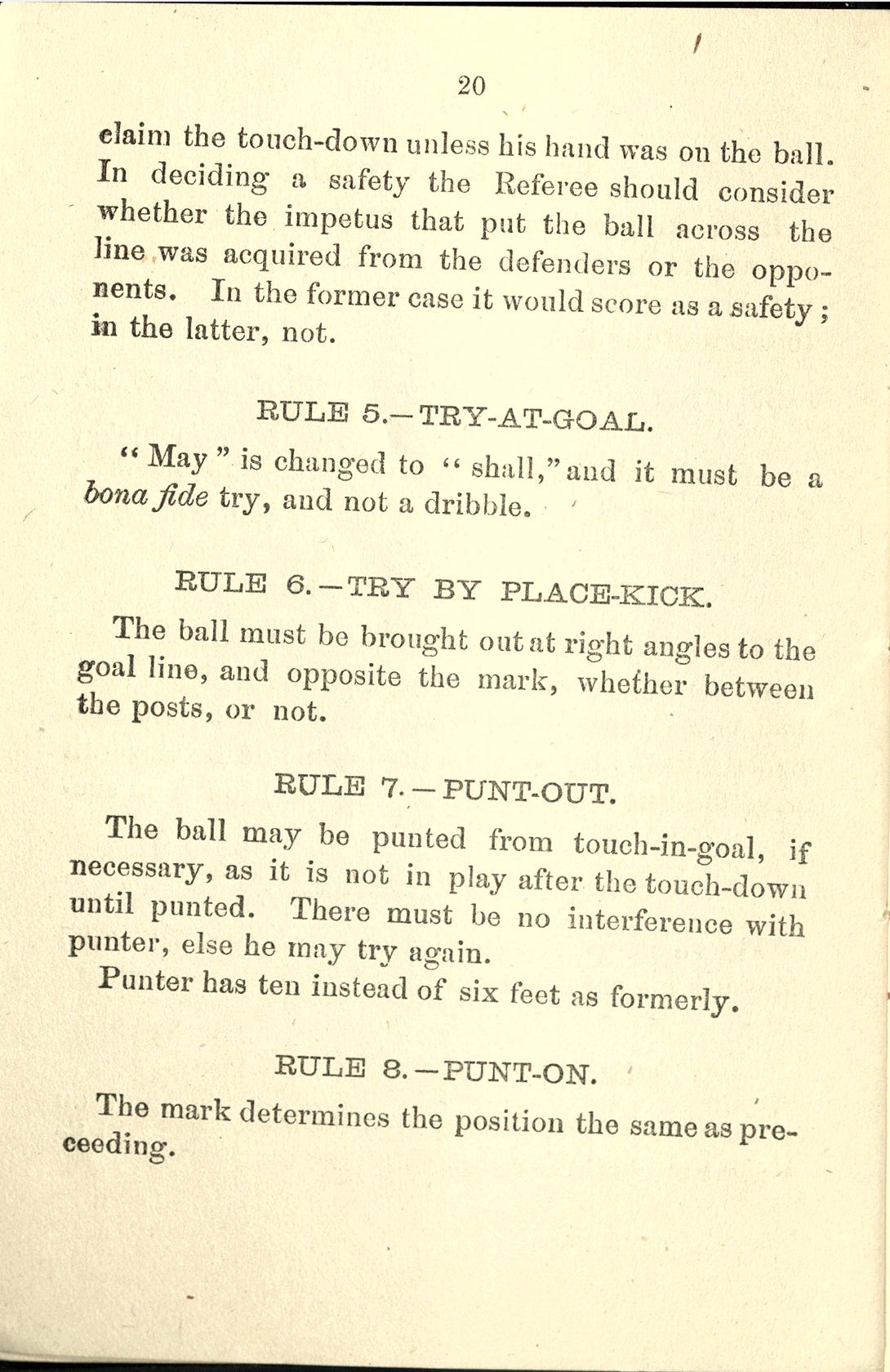
Rule 7’s interpretation concerns the puntout, when the scoring player punted the ball from behind the goal line to teammates on the field. Touchdowns scored close to the sideline might require the player to punt the ball from the area behind the goal line and out of bounds (in touch). “Touch-in-goal” was the period term for that area of the field.
The interpretation for Rule 9 reminds us that offside was a contemptible offense to the football community back then. If the kicking team was offside on a free kick following a fair catch or a try after goal, they lost the ball and the opportunity to take another free kick. As mentioned in a previous article, football did not yet have distance penalties.
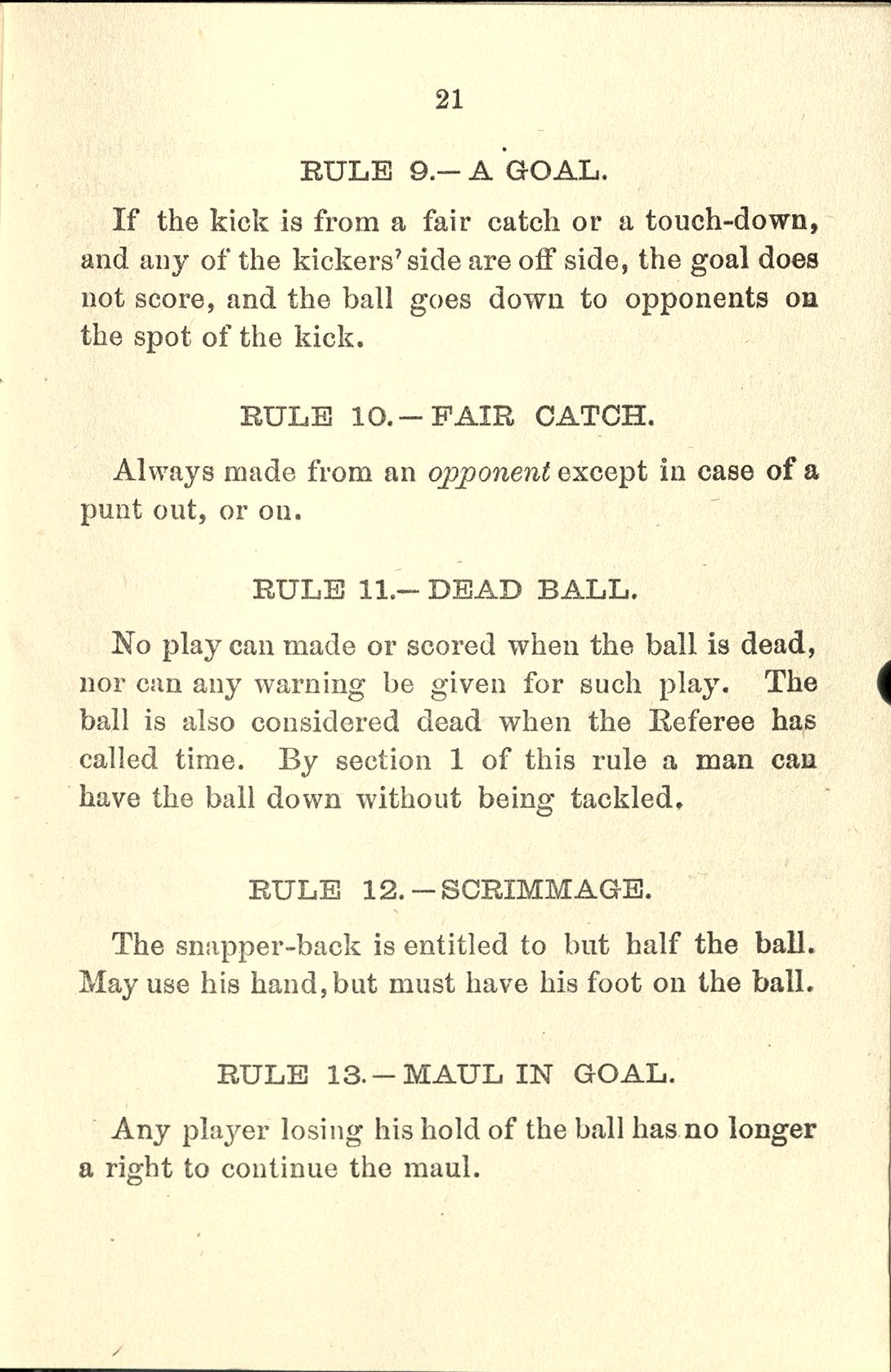
Early football lacked the convenience of stadium clocks. Only the referee and judges knew the time left in a half, which is why the referee had to issue what would later become the two-minute warning. In addition to being unaware of the time remaining on the clock, Rule 11’s interpretation tells us that if the clock ran out during a play, the play became dead at that moment. Touchdown runs and field goal attempts did not count unless the score occurred before the clock ran out.
Football did not have a neutral zone until 1906, and Rule 12 notes that the snapperback (center) could not have amny part of his body on the defensive side of the ball.
We’ll cover the interpretations of Rules 13-38 and finish this series in the next installment.
If you enjoy Football Archaeology and are not a paid subscriber, consider buying me a cup of coffee here and there. You can also buy a paid subscription or purchase one of my books.


Between 1876 and 1884, did folks call the american game "rugby?" Was there ever any serious movement around, say, 1905, to say "hey we have really downplayed the kicking in this game maybe we should call it freedom ball instead?"
Appears “touch-down” required control of the ball. Should adopt today for rushing TDs.