
Today's Tidbit... U.S.S. Oklahoma Football Between the Wars

Buying RPPCs on eBay is like a box of chocolates; you never know what you’re gonna get.
I’ve spent a lot of time researching football played by active-duty military teams over the years. It started with the 1918 and 1919 Rose Bowl teams (1, 2, 3, 4). Another big effort came for the West Point Cavalry Detachment teams of the late 1920s and early 1930s, which included the earliest all-Black team known to have won a championship in an otherwise all-White football league. I’ve documented lots of other stories of military football, including the East Coast President’s Cup and the West Coast Armistice Day games.
So, I took immediate interest in an undated Real Photo Postcard (RPPC) on eBay showing a football team practicing on the battleship U.S.S. Oklahoma’s main deck, port side. It’s not every day one finds such an image, so I bought it, figuring I’d research the team’s history, find an interesting anecdote or two, and tell the tale here, which I have done (or am doing).
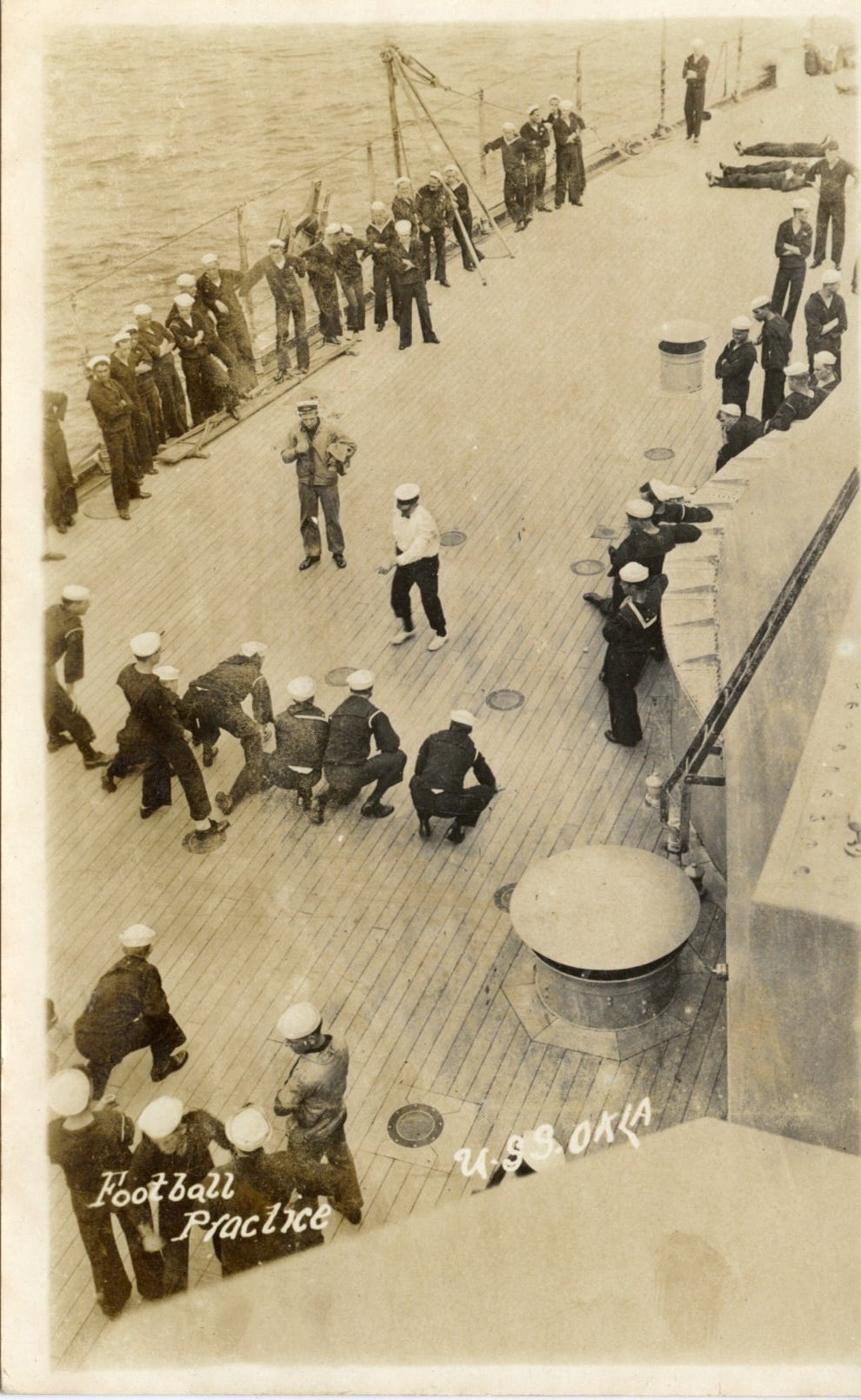
Things took a bit of a turn when the seller informed me that the RPPC came from her grandfather’s collection, as he served on the Oklahoma during WWI and perhaps later, after reenlisting.
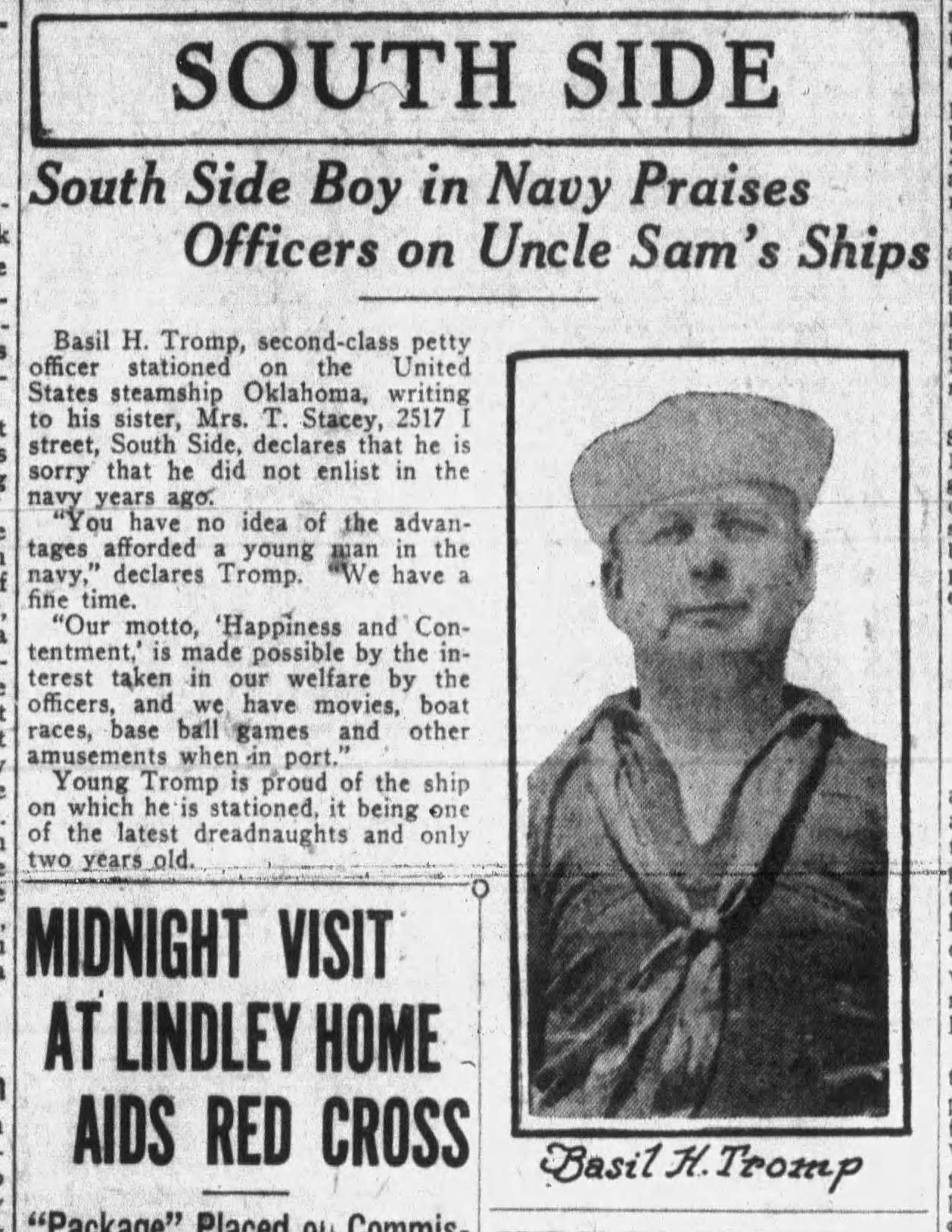
Family histories fade with time, so it was unclear whether Tromp played on the battleship team. However, I found no information about him playing in his hometown, Omaha, so I suspect he also didn’t play for the Oklahoma.
One family story the newspapers corroborated was that while serving on the Oklahoma, Tromp received a sweater through the Red Cross that was knitted by a young lady from New York. After the war, the two met, married, and the union eventually resulted in their granddaughter, who today is dispersing an RPPC collection documenting Tromp’s time aboard the Oklahoma.
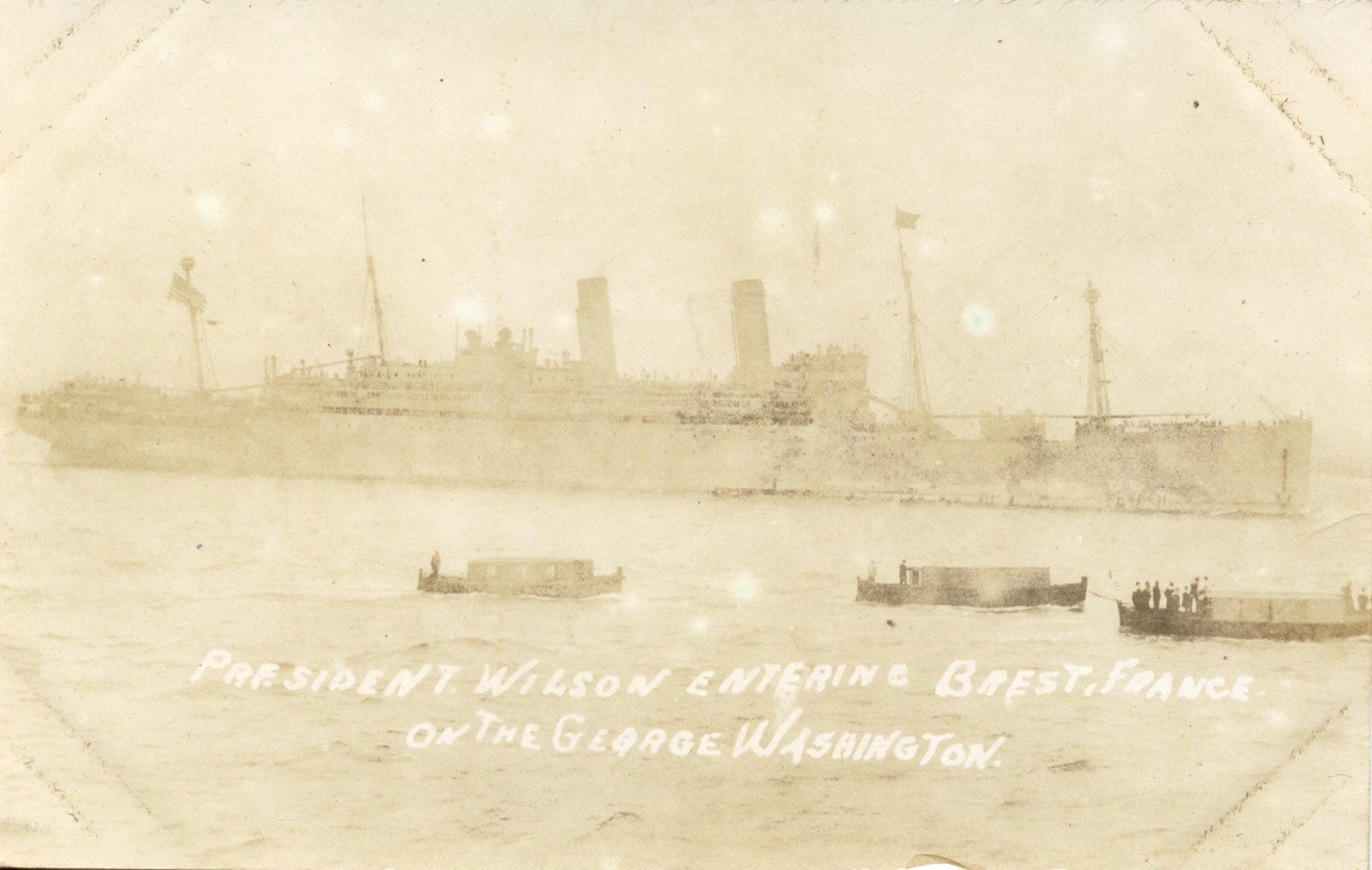
Commissioned in 1916 as America’s first oil-burning battleship, the Oklahoma served in the Atlantic through WWI, providing convoy support, including escorting President Wilson to the Paris Peace Conference, when he became the first sitting U.S. President to visit Europe.
In 1922, the Oklahoma transferred to the Pacific, where it remains today, at the bottom, after it sank, for the second time.
Naval ships commonly had football teams in those days, and with 860+ sailors aboard, the Oklahoma had the numbers to field a fair team. Battleship teams mostly played other battleships when in port, but they also played college, semi-pro, and town teams.
I did not find documentation of the Oklahoma’s football team playing before 1922, but surely they did, even if intramurally. In 1922, they played numerous games against other battleships at Trona Field, in Los Angeles-San Pedro harbor.
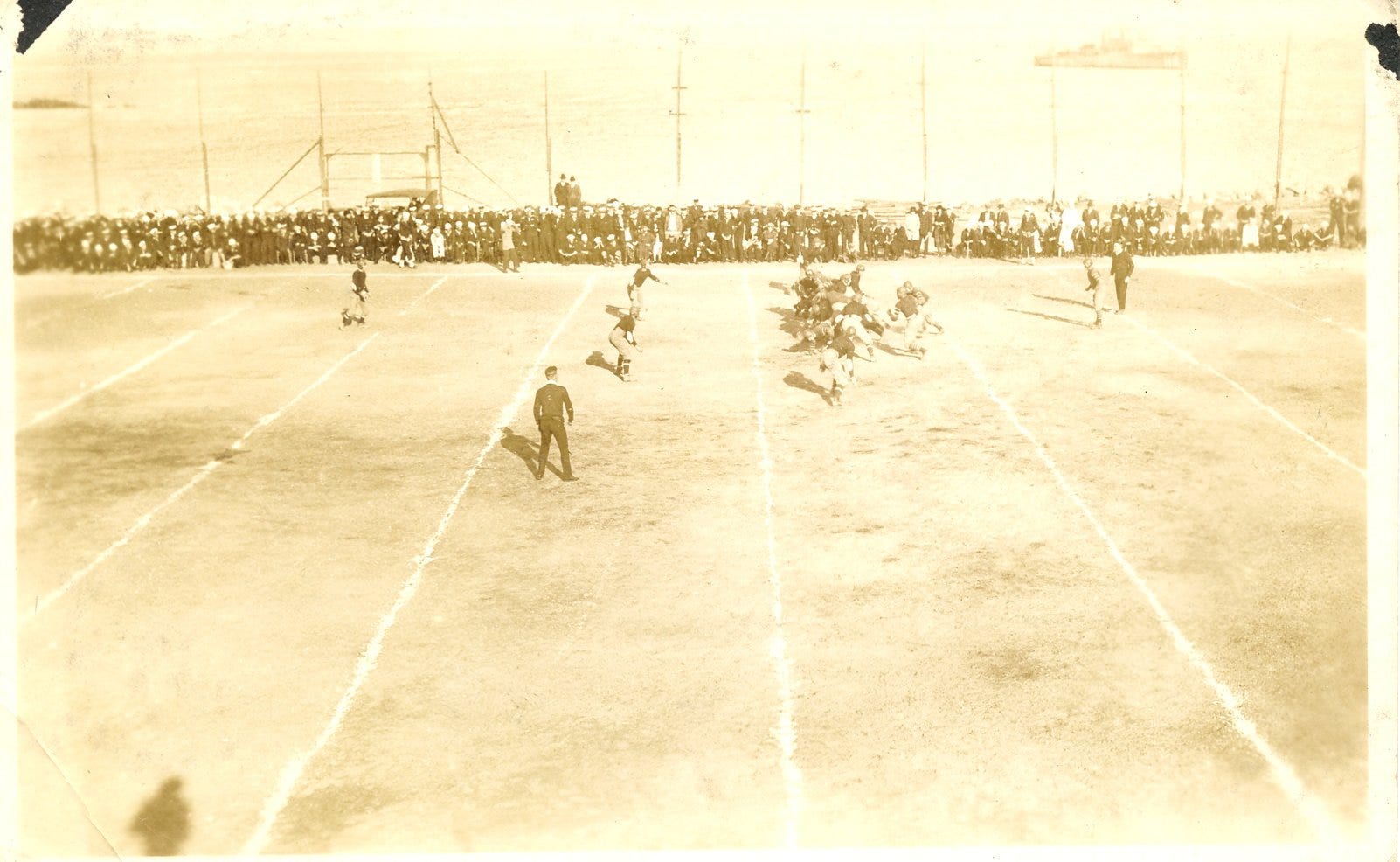
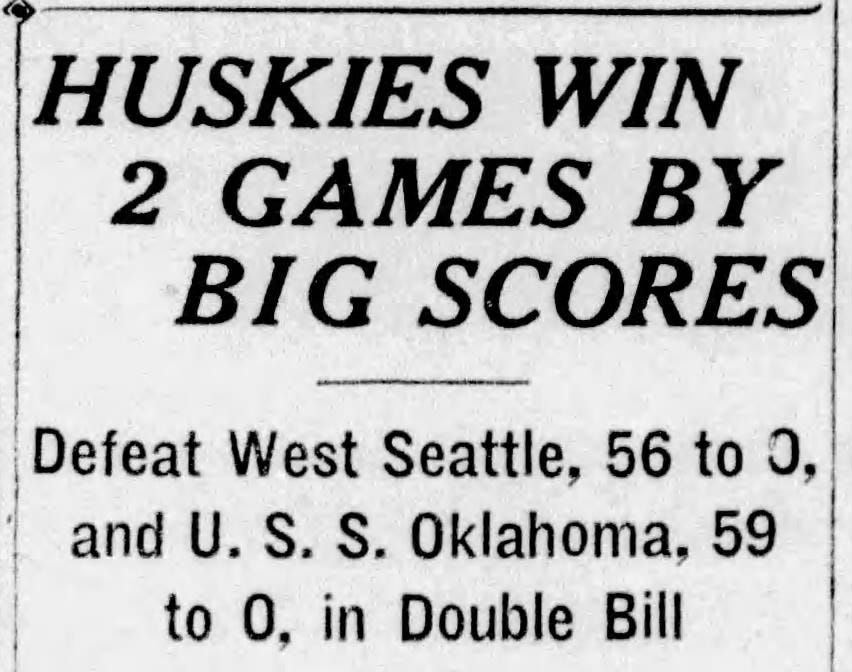
They also played in 1924, though they were not contenders for the fleet championship. Despite not being competitive with other battleship teams, they opened the 1925 season against the University of Washington in a doubleheader when the Huskies faced the sailors before dealing with the West Seattle Athletic Club in the nightcap.

Washington, playing with a split squad, dominated both games, though it’s worth noting that the Huskies went undefeated that season until Alabama beat them 20-19 in the 1926 Rose Bowl.
The Oklahoma played college teams in the early 1930s, including two games with Whittier College during the years Richard Nixon was a reserve for the Poets. A game with Pacific Lutheran rounded out their games against the academically inclined.
The next time that the Oklahoma and football intersect came the morning of the 1941 Pacific Fleet football championship game. The Oklahoma team was not among the championship contenders. Instead, the U.S.S. Pennsylvania and Arizona were slated to play for the title at 1:00 PM on December 7, 1941.
The Pennsylvania was in dry dock, slightly removed from Battleship Row, from which the Keystoner team planned to leave for the game at 8:00 AM. One player, Mickey Ganitch, stood topside in his football gear, ready to leave when the first wave of Japanese airplanes arrived at 7:55. His battle stations position was up in the crow’s nest, so he climbed up in his football gear and spent the next few hours directing anti-aircraft fire.
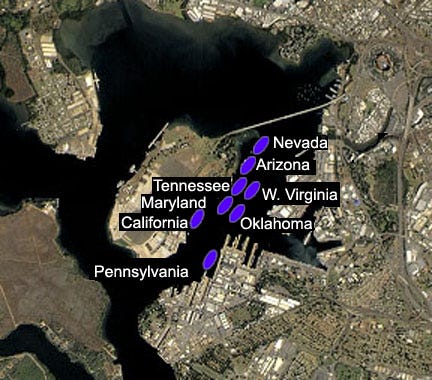

A bomb hit the Pennsylvania, penetrating a level or two before exploding, killing others but saving Ganitch’s life. Despite the damage, the ship returned to service quickly, as did five other damaged battleships over the next year or two, including two that sank that day.
As we all know, a bomb penetrated the Arizona’s powder magazine, causing a massive explosion. It has rested in place ever since.
At least 5 torpedoes hit the Oklahoma before it capsized, leading to 429 Oklahoma sailors, or half its complement, being among the 2,403 killed in the attack.
They raised the outdated Sooner in 1943, but it never returned to service. In 1947, while being towed to San Francisco for scrapping, it sank in a storm 500 miles from Hawaii.
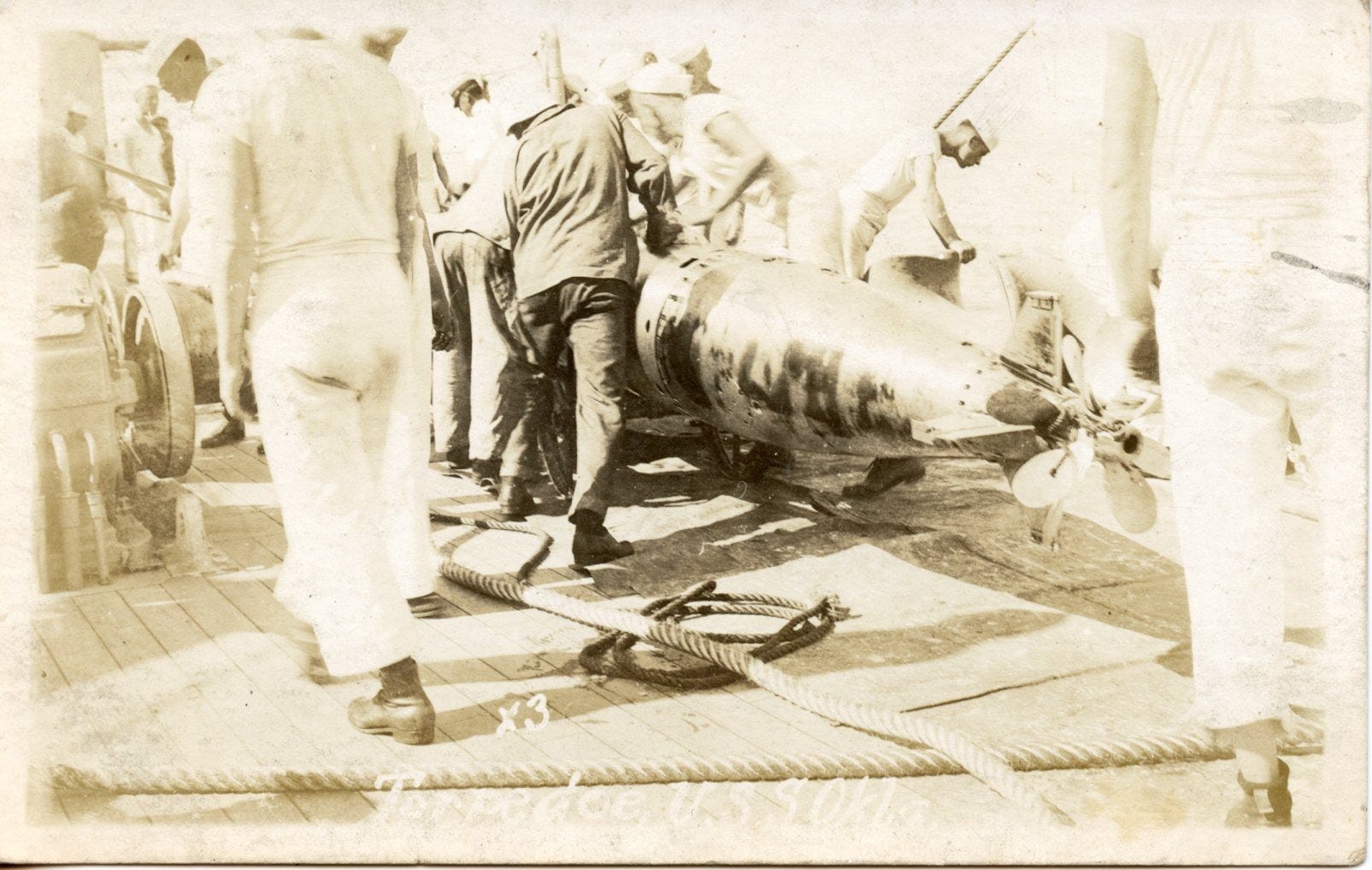
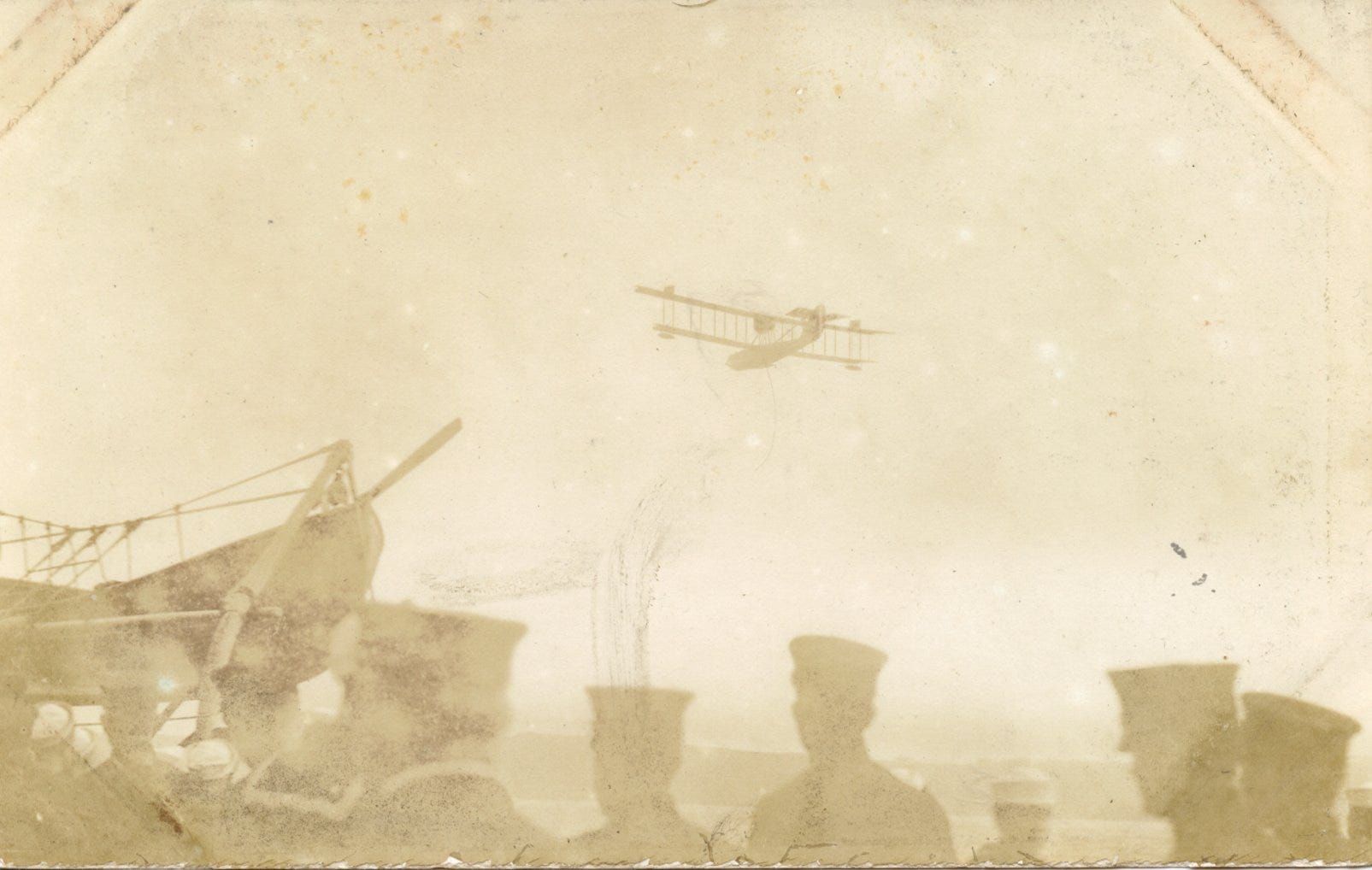
Below are additional U.S.S. Oklahoma RPPCs from Basil Tromp’s collection during his time serving aboard.
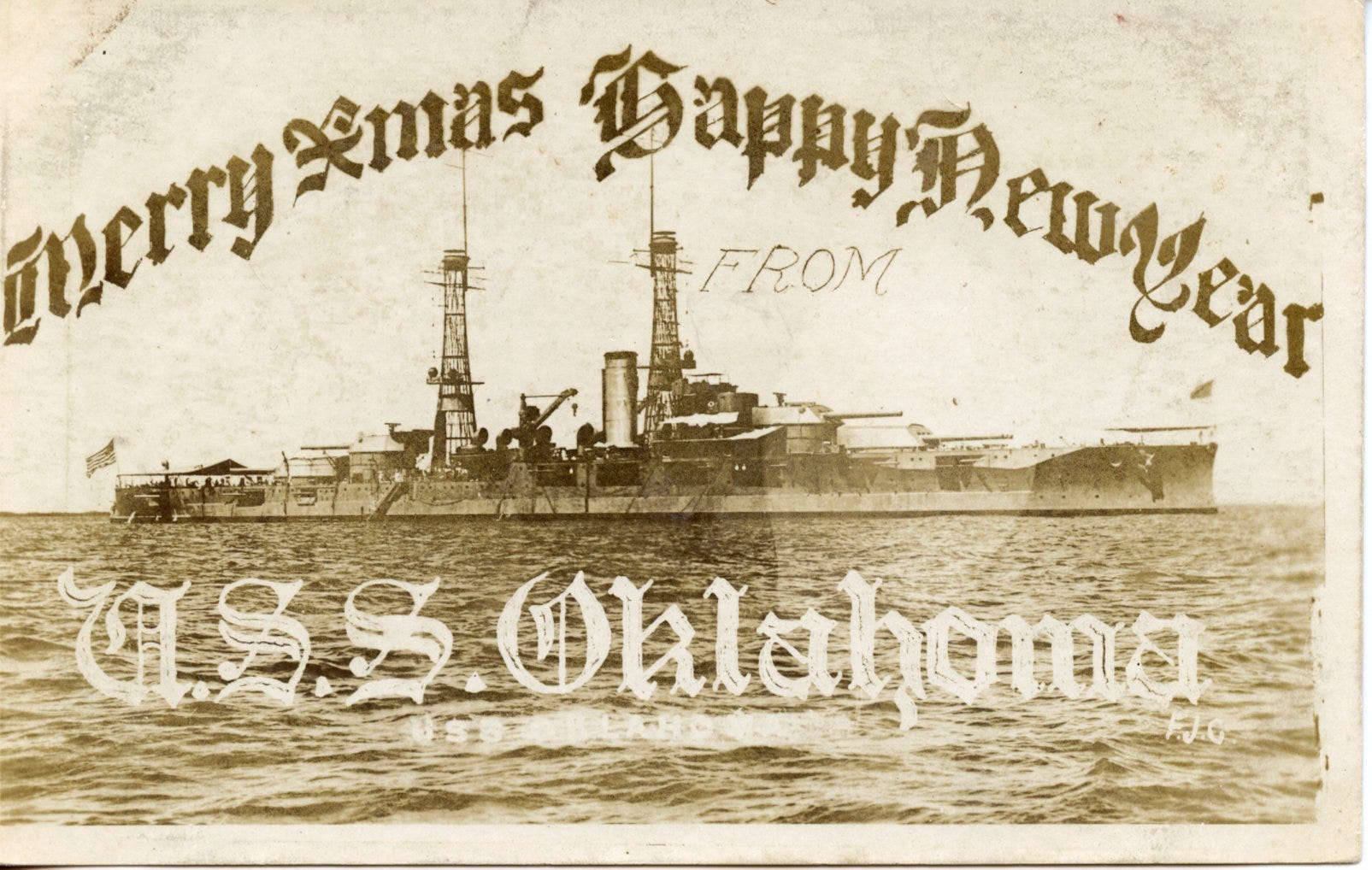
As noted at the beginning, telling a story based on an old RPPC is like a box of chocolates; you never know what you’re gonna get.
Football Archaeology is reader-supported. If you enjoy my work, get a paid subscription, buy me a coffee, or buy Fields of Friendly Strife.
