
Factoid Feast XX

As discussed in Factoid Feasts I, II, III, IV, V, VI, VII, VIII, IX, X, XI, XII, XIII, XIV, XV, XVI, XVII, XVIII, and XIX, my searches through football history sometimes lead to topics too important to ignore but too minor to Tidbit. Such nuggets are factoids; three get shared today.
Unconscious Play
There were folks in 1908 who supported the 1906 rule changes and the move to a more open game, but they liked pointing out that more changes were needed since football remained a dangerous game. As evidence, they pointed to the Naval Academy team, which, two days after its game with Harvard, could field only two regulars for practice, with the rest too injured to participate.
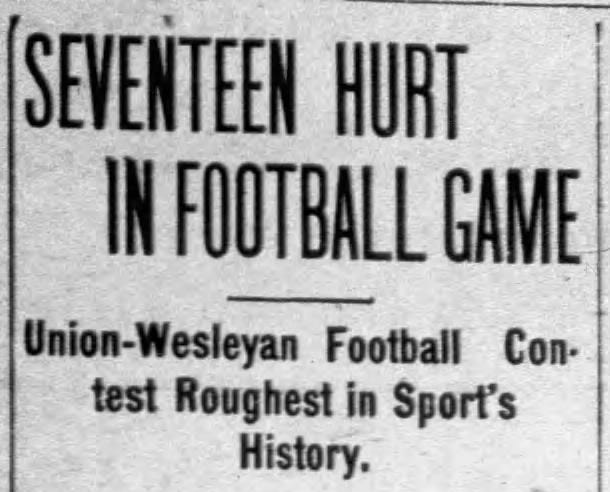
However, their best example of the game’s continued danger was the Union College-Wesleyan University contest that saw both captains carried from the field in the game’s first ten minutes. Union’s captain, Cedric Potter, was not only knocked unconscious, but also broke his collarbone. By the end of the game, seventeen players had been knocked unconscious, with five sent to the hospital, all in a game ending in a scoreless tie.
Decorated Goal Posts
While sponsor logos and decorations are slapped all over college football stadiums nowadays, the goal posts are largely exempt from such frivolity. The NCAA’s 2025 rules require the crossbar and uprights to be white or yellow and free of decorative material, while the required six-foot pads on the post or posts can include one logo.
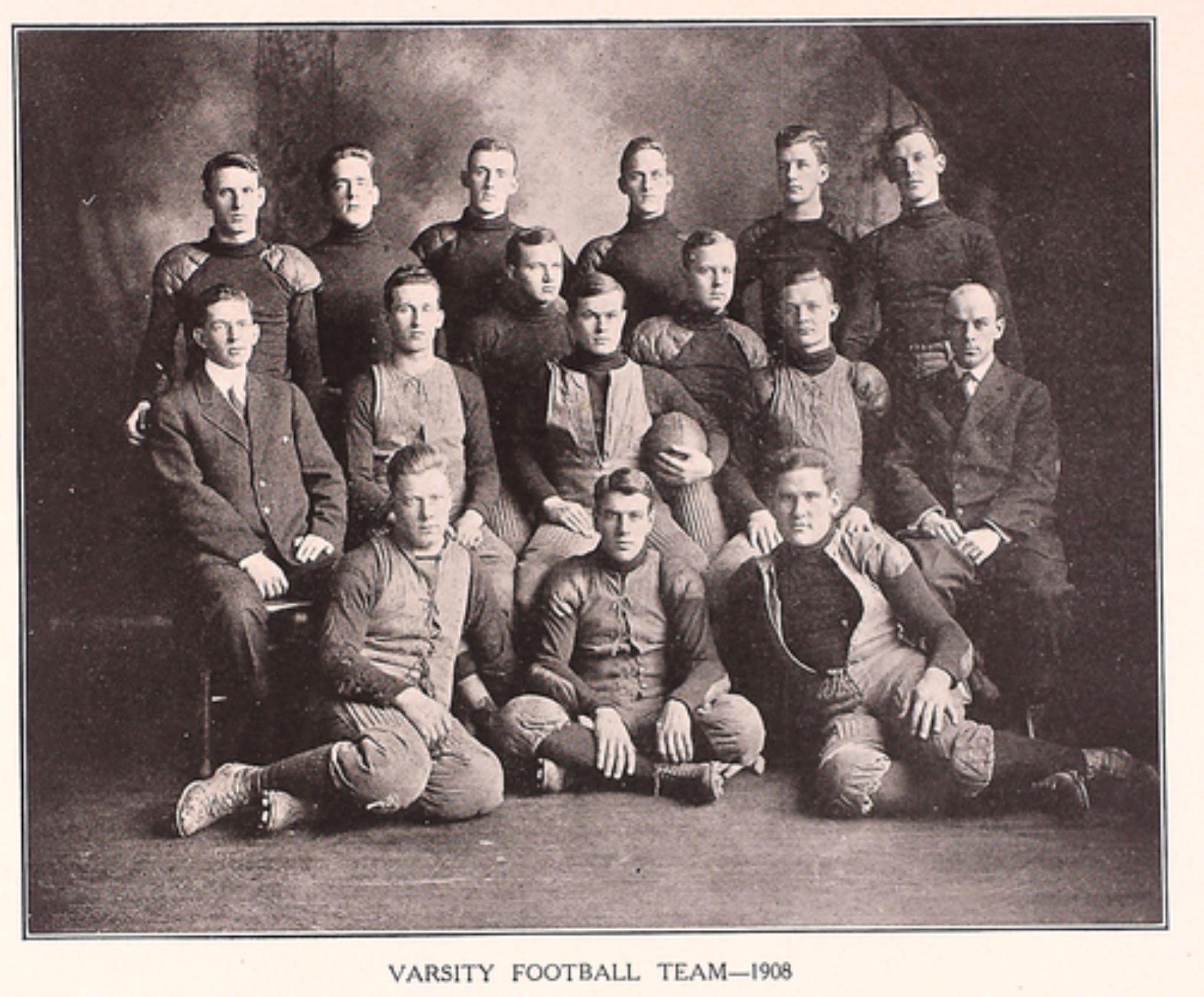
For many years, fans decorated the goal posts. There was even a report before the 1895 Chicago-Michigan game indicating that pennants flying on the goal posts would indicate the game score, though it is unclear just how that happened.
Most decorations were simple, involving streamers wrapped around the posts.
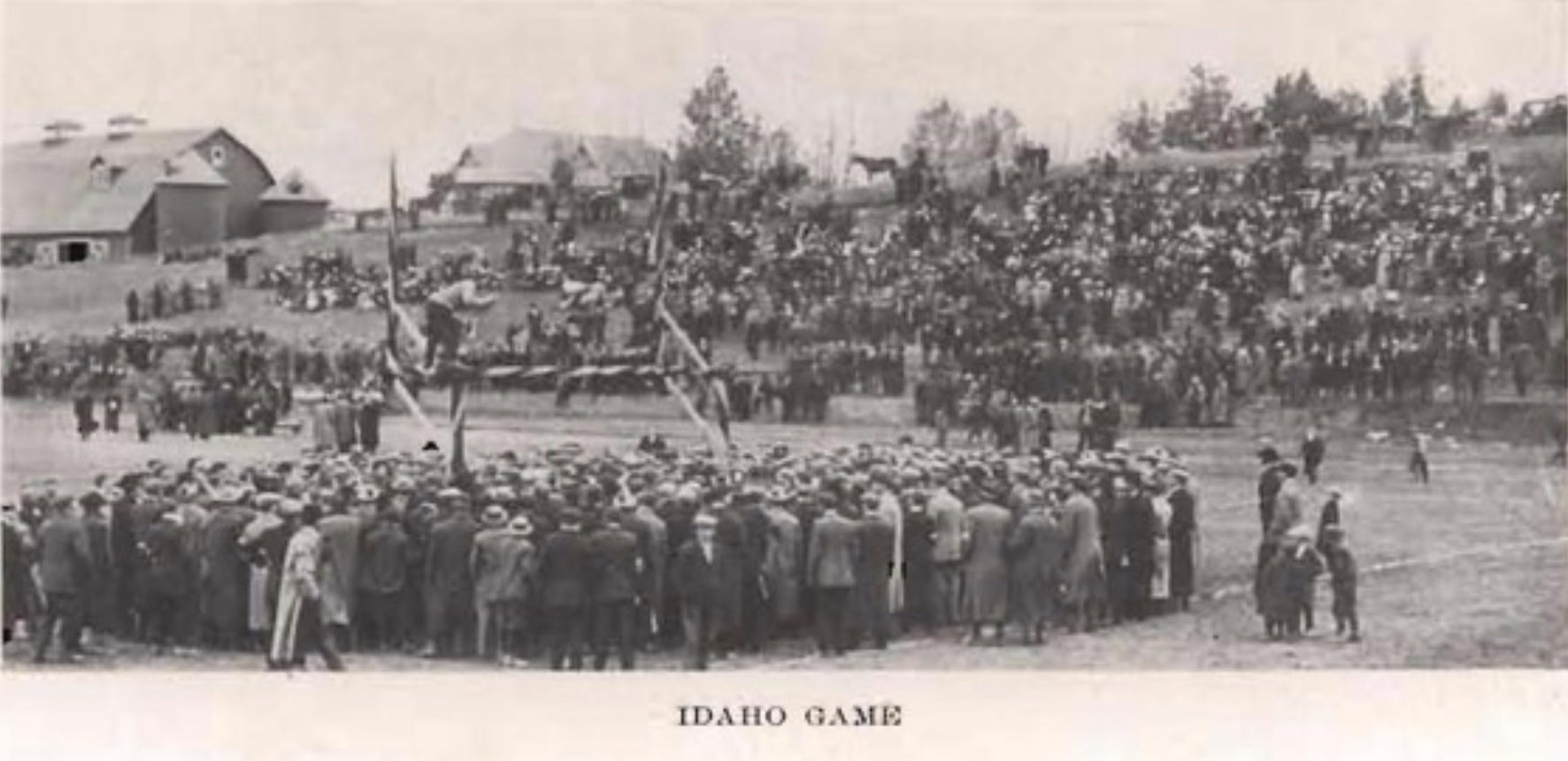
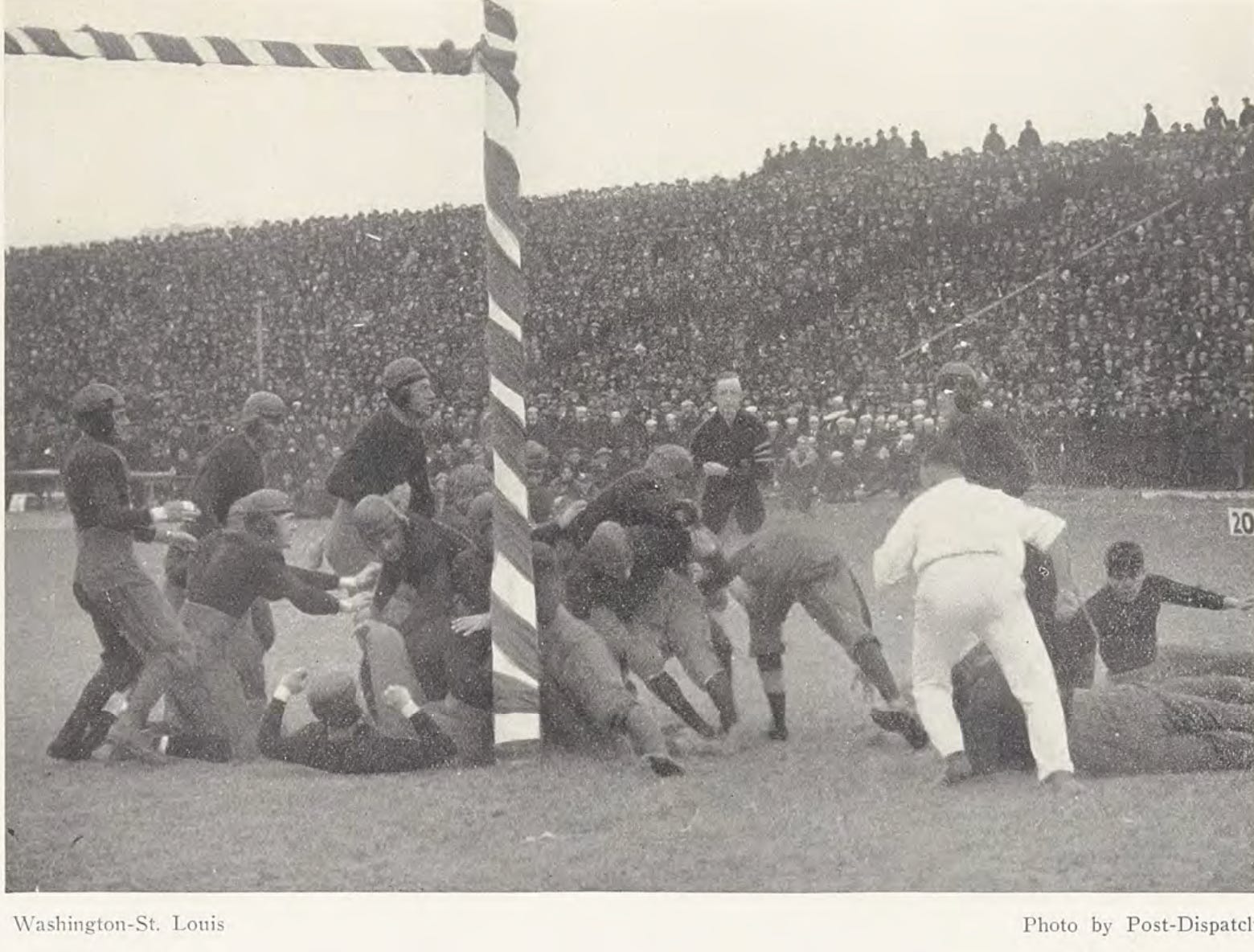
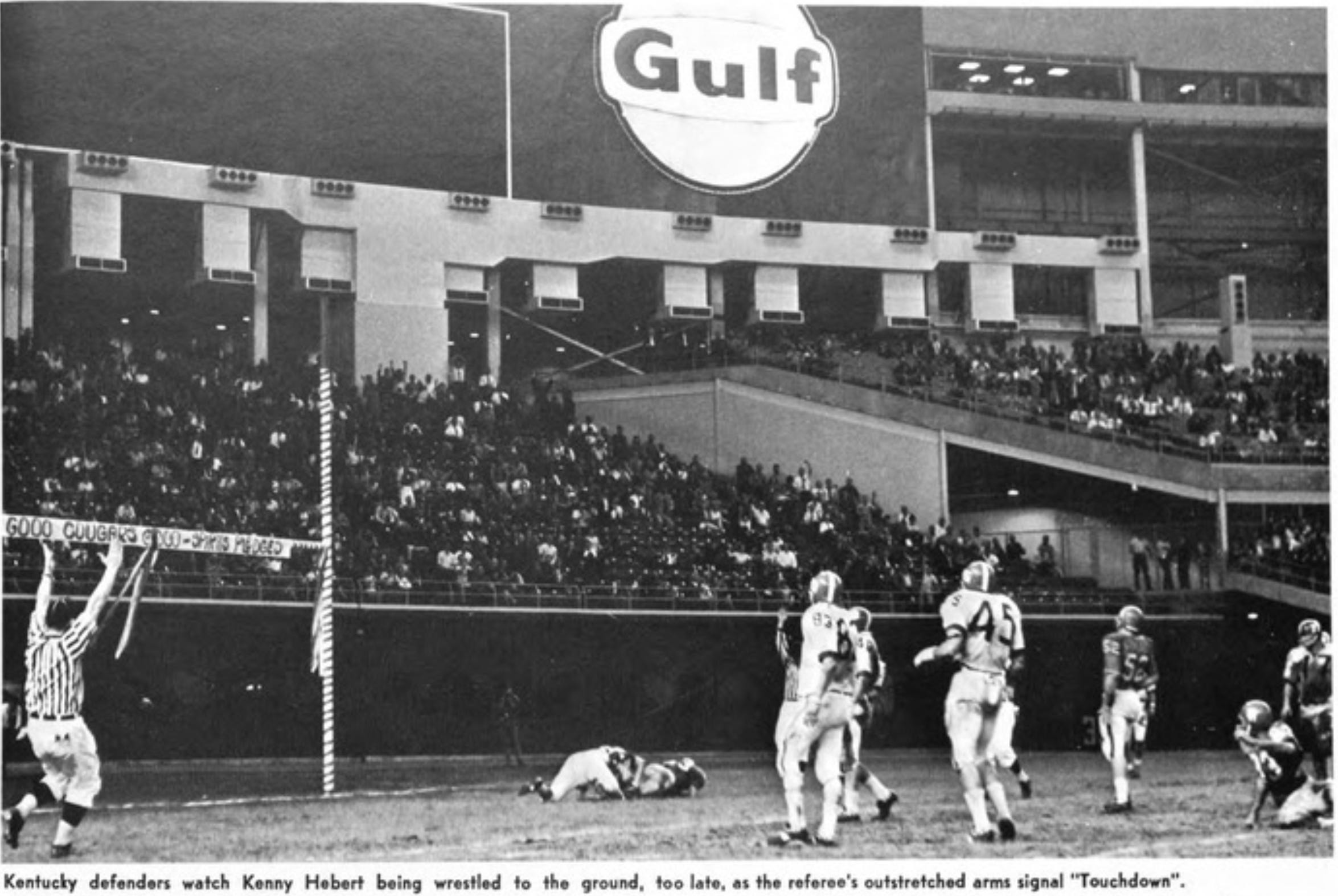
Lest you think that decorated goal posts went away long ago, the prohibition only came in 1971, though it is unclear whether a specific event spurred the change. Perhaps it was a delayed reaction to Houston fans hanging a sign from the Astrodome crossbar in 1965.
A Tree Grows in the End Zone
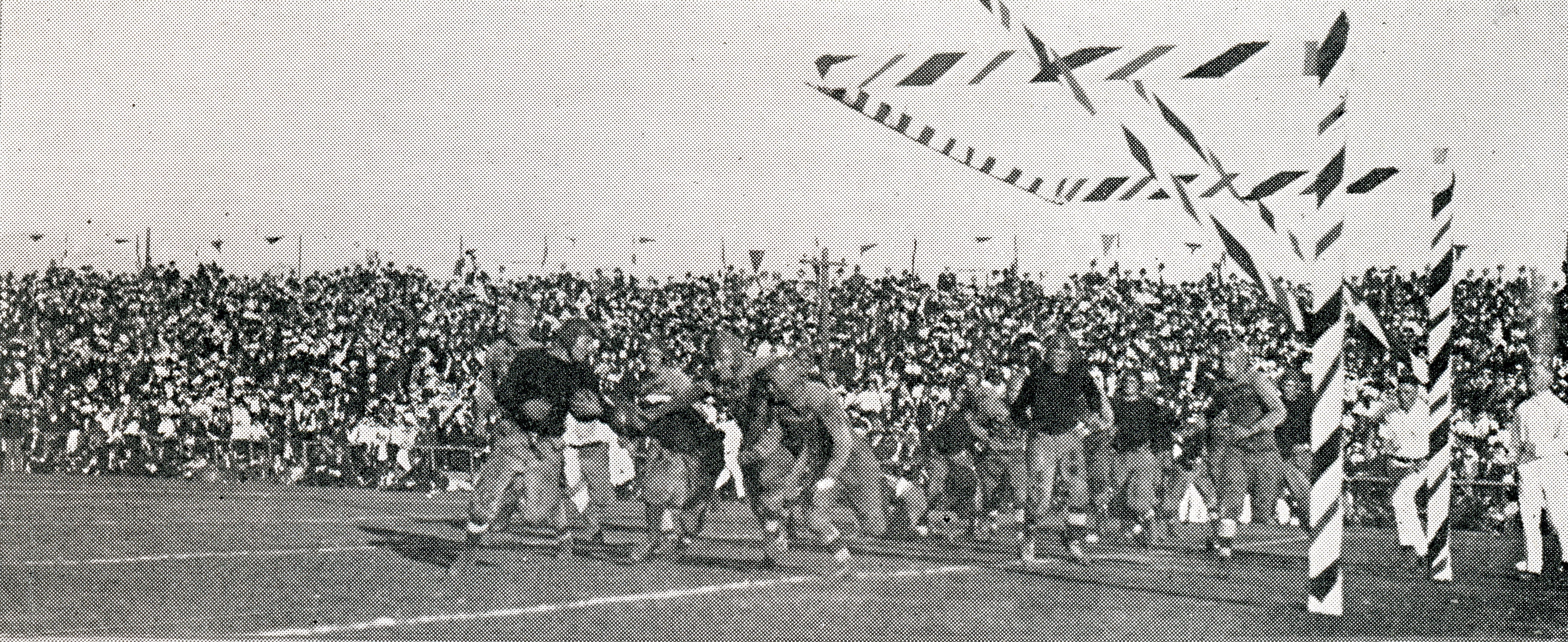
Some factoids are nearly impossible to find information about. A few years ago, James Gilbert sent me the image below, showing an extra-point attempt in a 1922 game against Elon or Virginia Tech on Davidson College’s Sprunt Field. (Those were Davidson’s only opponents at Sprunt Field that year.) Try as I might, I have been unable to find any information about two oddities seen in the image.
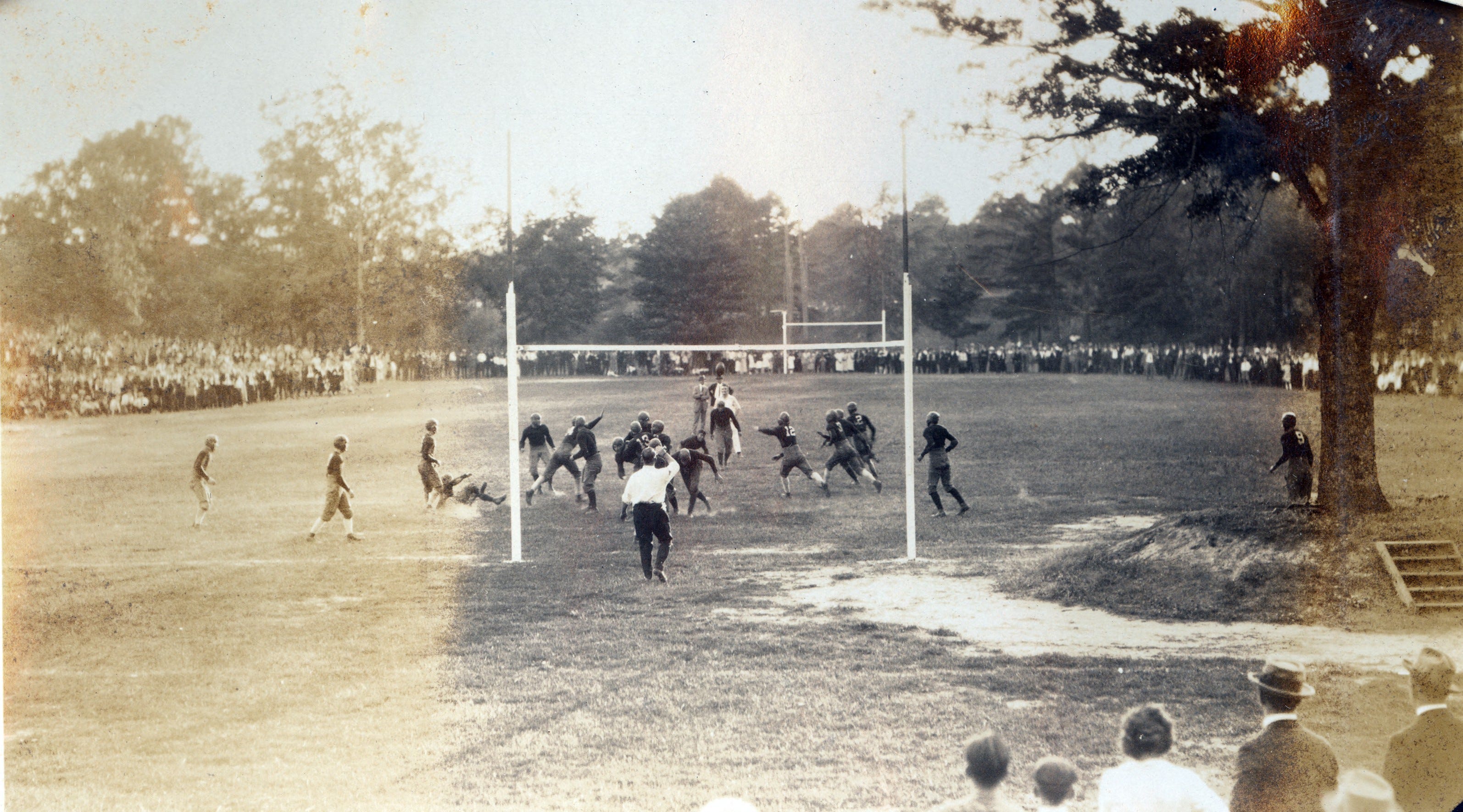
One oddity is the presence of two men in suits standing behind the holder, kicker, and referee. Who let them on the field, and what are they doing?
More concerning is the sizable tree sitting just behind the goal line. The goal posts stood on the goal line in 1922, and you can see the end line crossing the image, so the full tree and mound were in the end zone. Did Davidson lack the resources to cut down that tree, or did it hold special meaning to those on campus?
While I do not care too much about the guys standing on the field, I will be eternally grateful to anyone who can find information about that stupid tree and why the Davidsonians didn’t bother to cut it down.
Regular readers support Football Archaeology. If you enjoy my work, get a paid subscription, buy me a coffee, or purchase a book.


I didn't realize goal posts could be decorated until the 1970's. I don't recall seeing such in my Kenan Stadium field design research.
When the Olmsted Brothers designed possible permutations of Davidson's new athletic fields in the 1920s, a tree on Sprunt Field is not shown. https://flic.kr/p/2gALwtv
The tree may have held symbolic value for the school- there are some trees on campuses that do hold that distinction. I can't remember the exact details, but there have been some incidents where such trees have come down, and uproars resulted.