
Football’s 1884 Rule Book: Rules Interpretation Finale

This article is the fifth and final in a series covering the 1884 Intercollegiate Football Association rule book. The first four articles covered:
Today’s article finishes the Interpretation of Rules section of the rule book.
The interpretation of Rule 14 is interesting, though it’s a bit unclear to me. The rule addresses when the ball goes into touch (aka out of bounds) and states that only the ball and the foot constitute being out of bounds, not the hand. Why they had such a rule is anyone’s guess. The interpretation goes on to say that when a ball hits a spectator standing out of bounds, it must be brought back in from touch (following the prescribed procedures). Since the ball remained live when out of bounds and could be recovered by either team, I assume this interpretation precluded spectators from interfering with play or helping one team or another recover the ball.
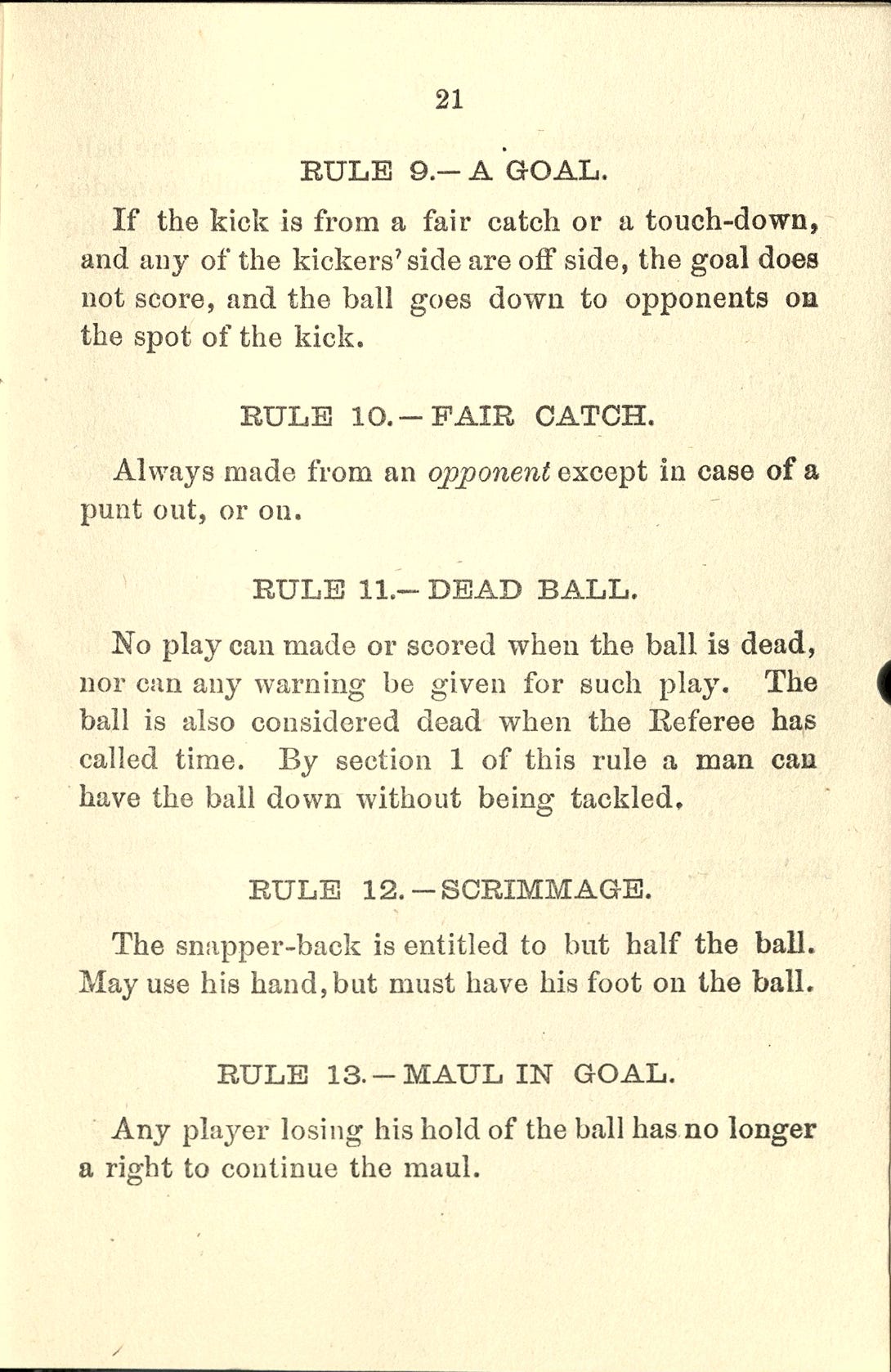
The interpretation of Rule 15 foreshadows a key turning point in American football. In a scrimmage, offensive players could stand in place with extended, but non-interlocking arms to “block” defenders. By rule, they could not yet run in advance of the ball carrier, so they could not “block” as we think of it today. On the other hand, the rules also did not allow touching opponents who did not have the ball -a rule that applied to the offense and defense- so defenders had to avoid the extended arms of offensive players. They could not go through the blockers and had to go around them.
As active warding/interfering/blocking became accepted over the next few years, the football rule makers made a tradeoff: defensive players could freely use their arms and push through offensive players, while the offense was restricted from using their hands when blocking until the 1970s.
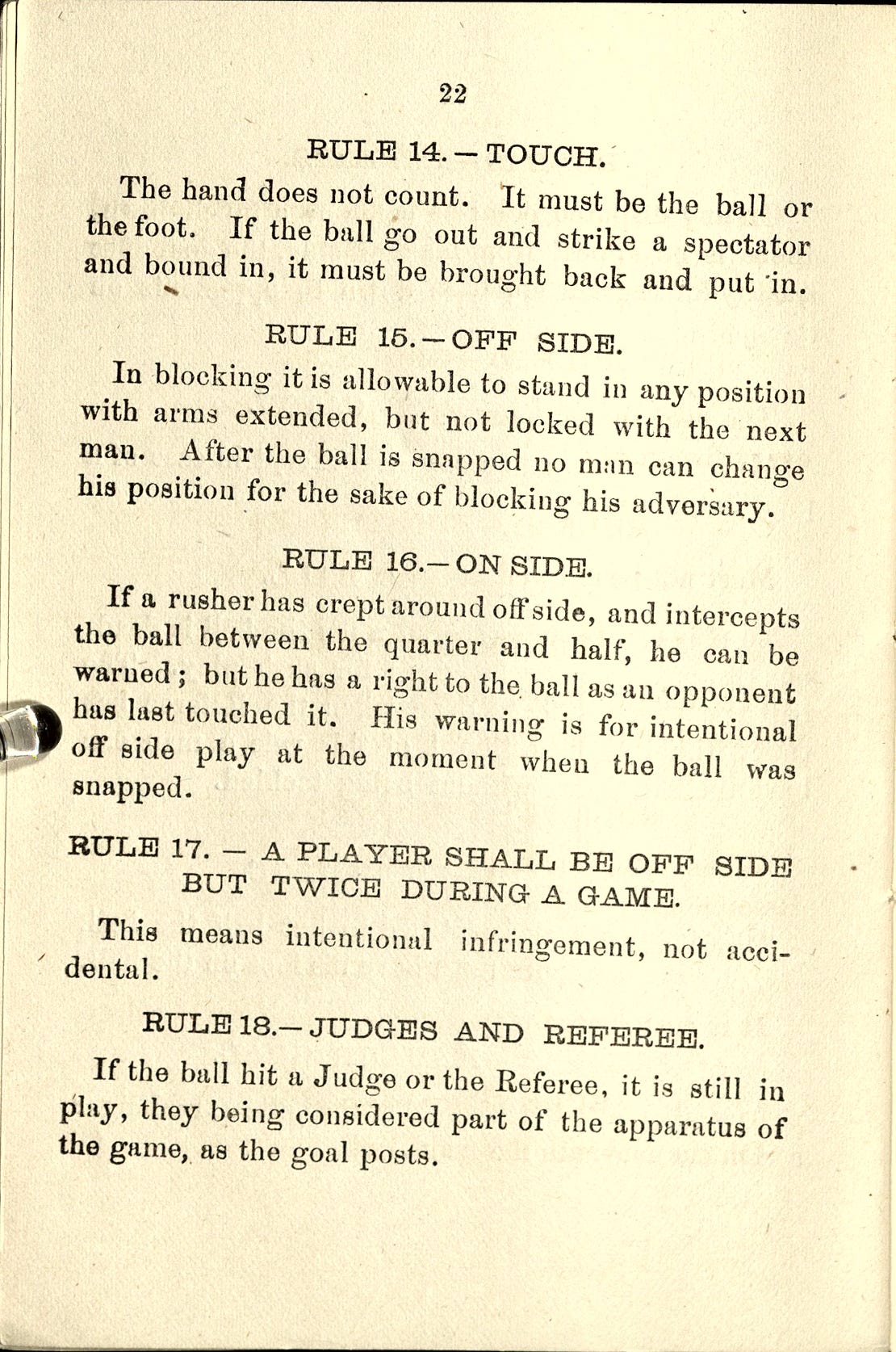
I have often wondered about football’s early toss up or coin flip procedures. We take it for granted that the referee tosses the coin, but the rules of 1876 through 1883 had the captains flipped the coin. Yet, the interpretation of Rule 24 in 1884 says the judges flip the coin. I don’t have the 1885 through 1887 rule books, but by 1888, the captains regained flipping responsibility. The 1895 rule book indicates the captains were to toss up, though an article covering that year’s Penn-Harvard game tells us the referee performed the coin toss, so perhaps the pre-game custom was transitioning at the time.
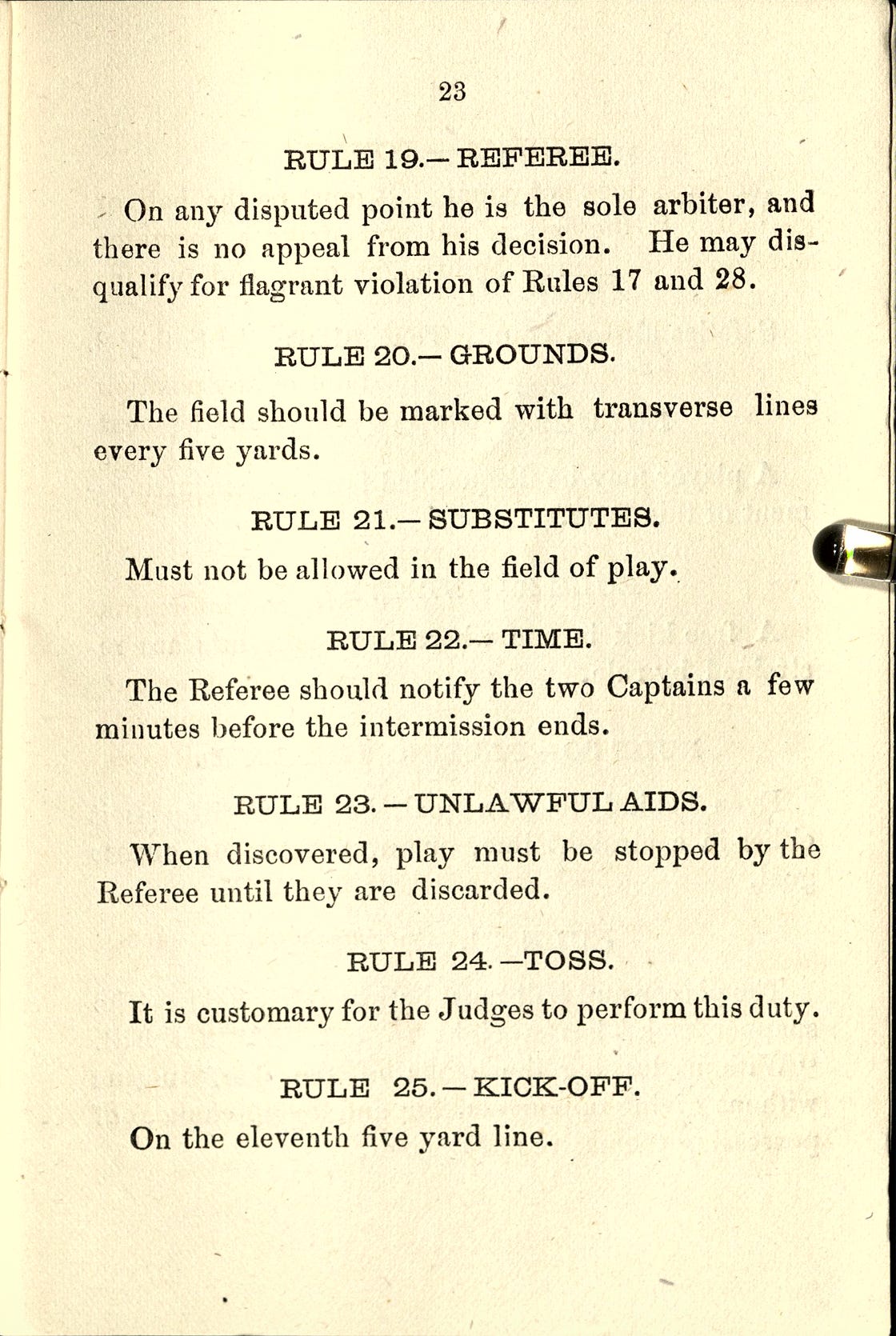
In football’s early days, safeties were known as safety touchdowns (they safely touched the ball down in goal and then kicked out) and affected scoring only in unusual situations. To address the block game issue, safeties became worth one point for the other team in 1883 and two points in 1884.
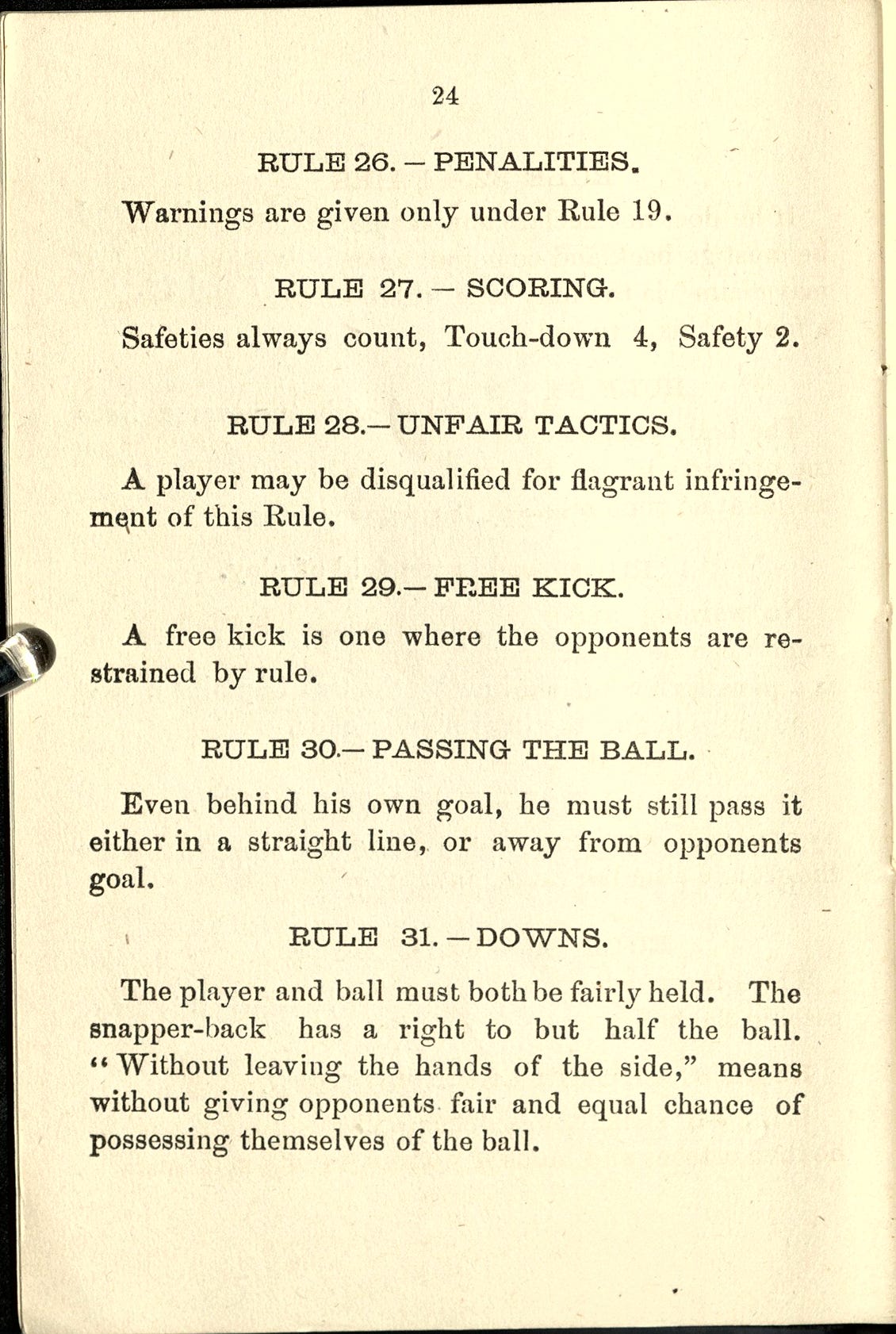
As discussed in the third article in this series, there were five ways to bring the ball back onto the playing field from out of bounds. One allowed the team in possession to walk the ball back onto the field up to 15 yards before putting it down for a scrimmage play. The interpretation of Rule 31 tells us that the player bringing the ball in had first to declare how far he would walk in, presumably to eliminate the potential for trick plays in which he snapped the ball while walking it in. While four of the five processes for bringing the ball onto the field fell away over time, the notification and walk-in process remained in football until the arrival of hash marks in 1933.
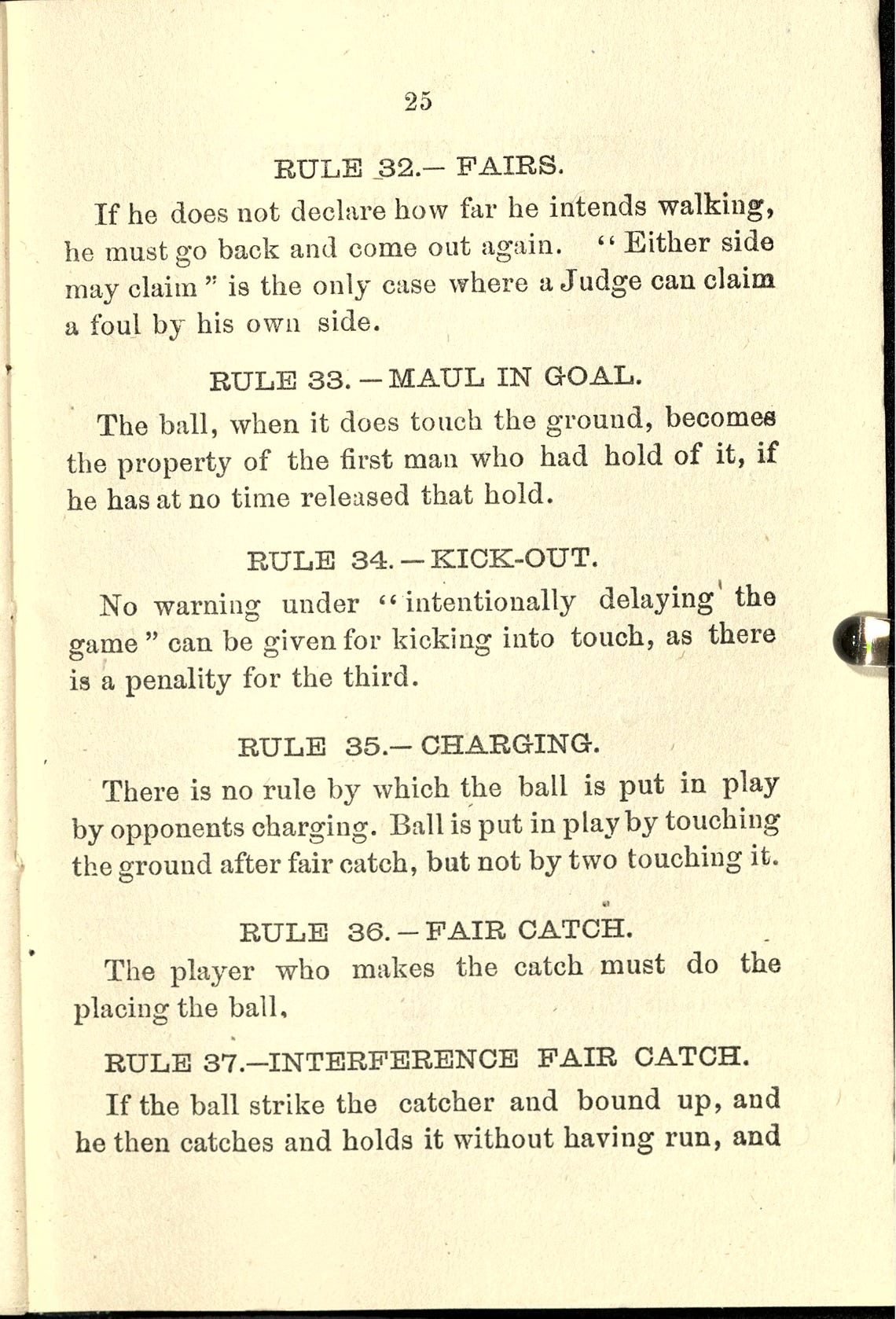
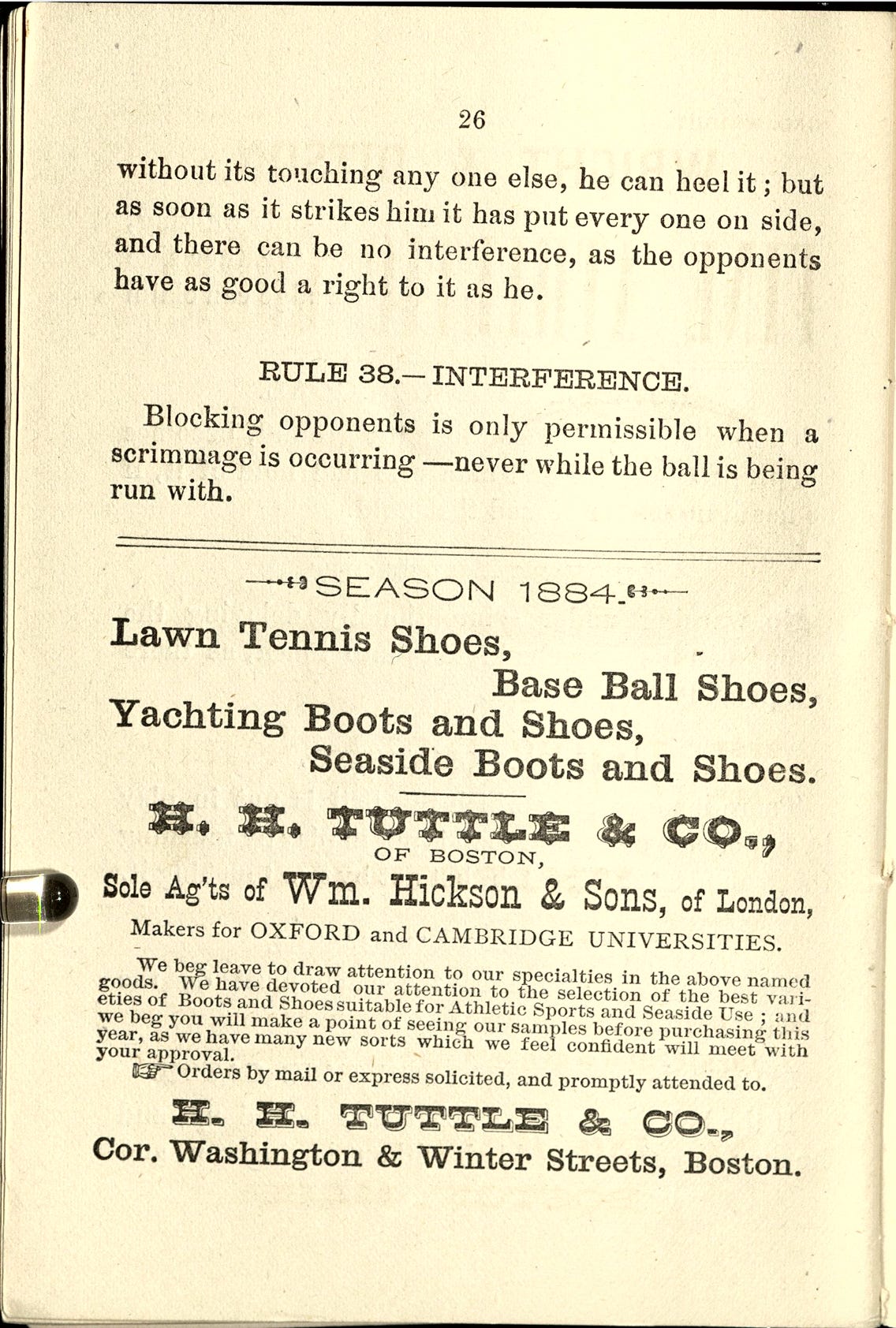
That’s it for the contents of the 1884 rule book, but we cannot leave the topic without showing the Wright & Ditson ad on page 27. The obvious item to point out is the wonderfully proportioned melon ball.
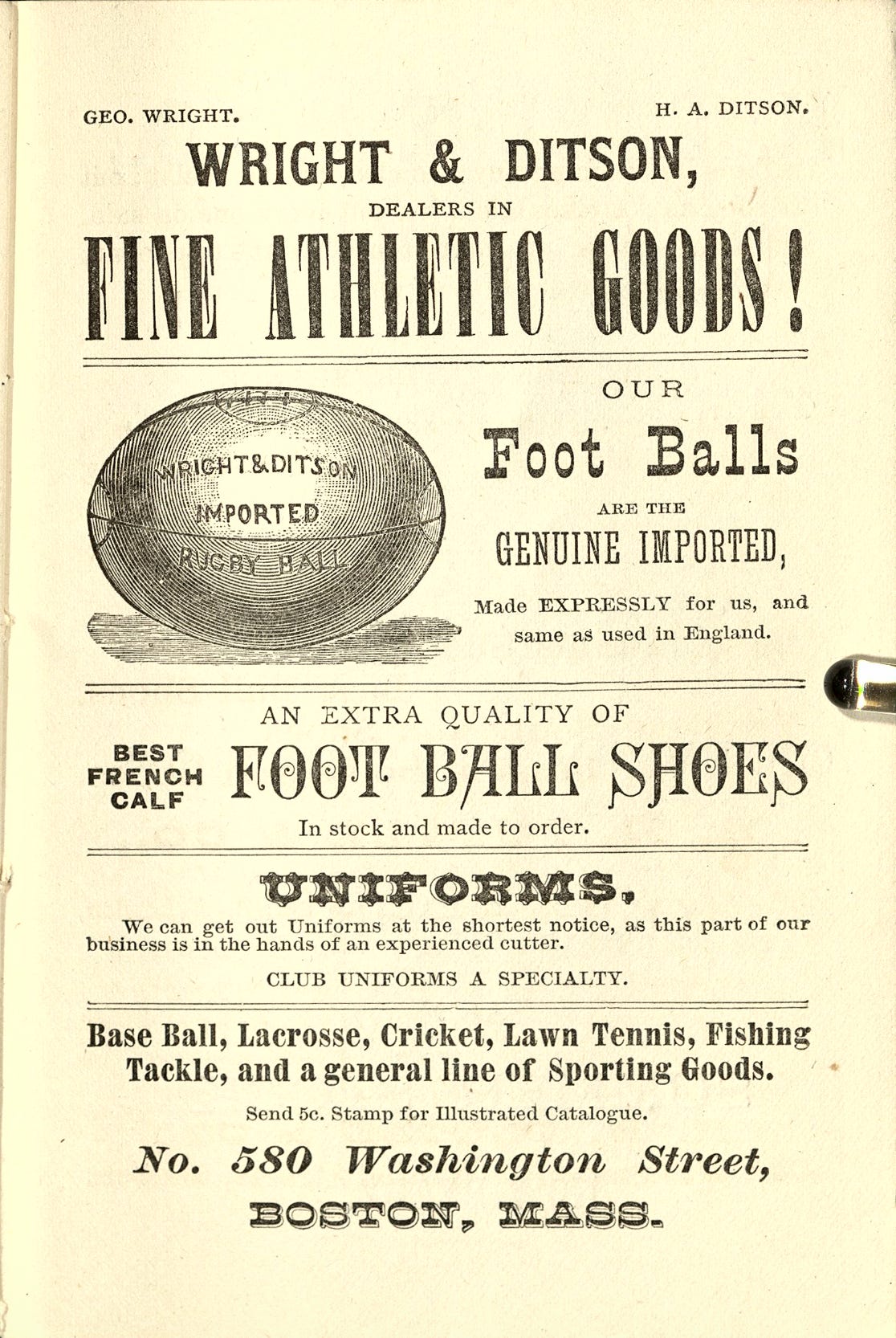
Further down the ad, Wright & Ditson touts their uniforms, which they could provide at the shortest notice. Despite being a prominent athletic supplier, Wright & Ditson did not yet stock uniforms. Uniforms were custom-made, so having an experienced cutter was a selling point to customers in 1884.
To wrap up this series, you can download a copy of Camp, Walter (Ed.), Foot-Ball Rules and Referees’ Book. American Intercollegiate Association. Boston: Wright & Ditson, 1884. Clicking the link takes you to another page with a downloadable version of the full rule book as provided by the Library of Congress.
Thanks once again to those who funded the scanning of the 1884 rule book by the Library of Congress!
If you enjoy Football Archaeology and are not a paid subscriber, consider buying me a cup of coffee now and again. You can also buy a paid subscription or purchase one of my books.


Very interesting. I'm really intrigued by the whole who conducted the coin toss and when now may need to dig into that whole tradition a bit deeper