
Factoid Feast XXI

As discussed in Factoid Feasts I, II, III, IV, V, VI, VII, VIII, IX, X, XI, XII, XIII, XIV, XV, XVI, XVII, XVIII, XIX, and XX, my searches through football history sometimes lead to topics too important to ignore but too minor to Tidbit. Such nuggets are factoids; three get shared today.
Girls Will Be Girls
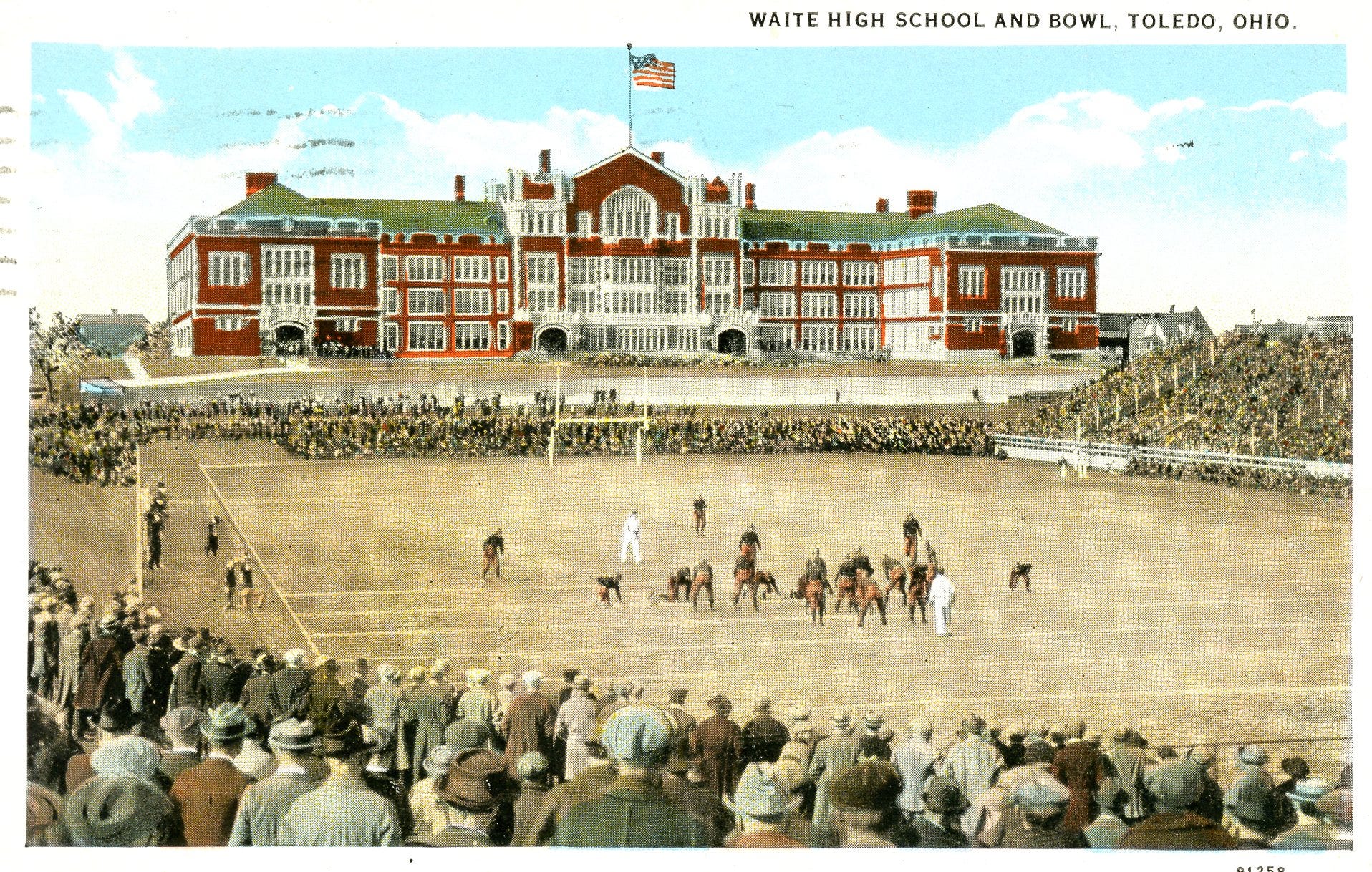
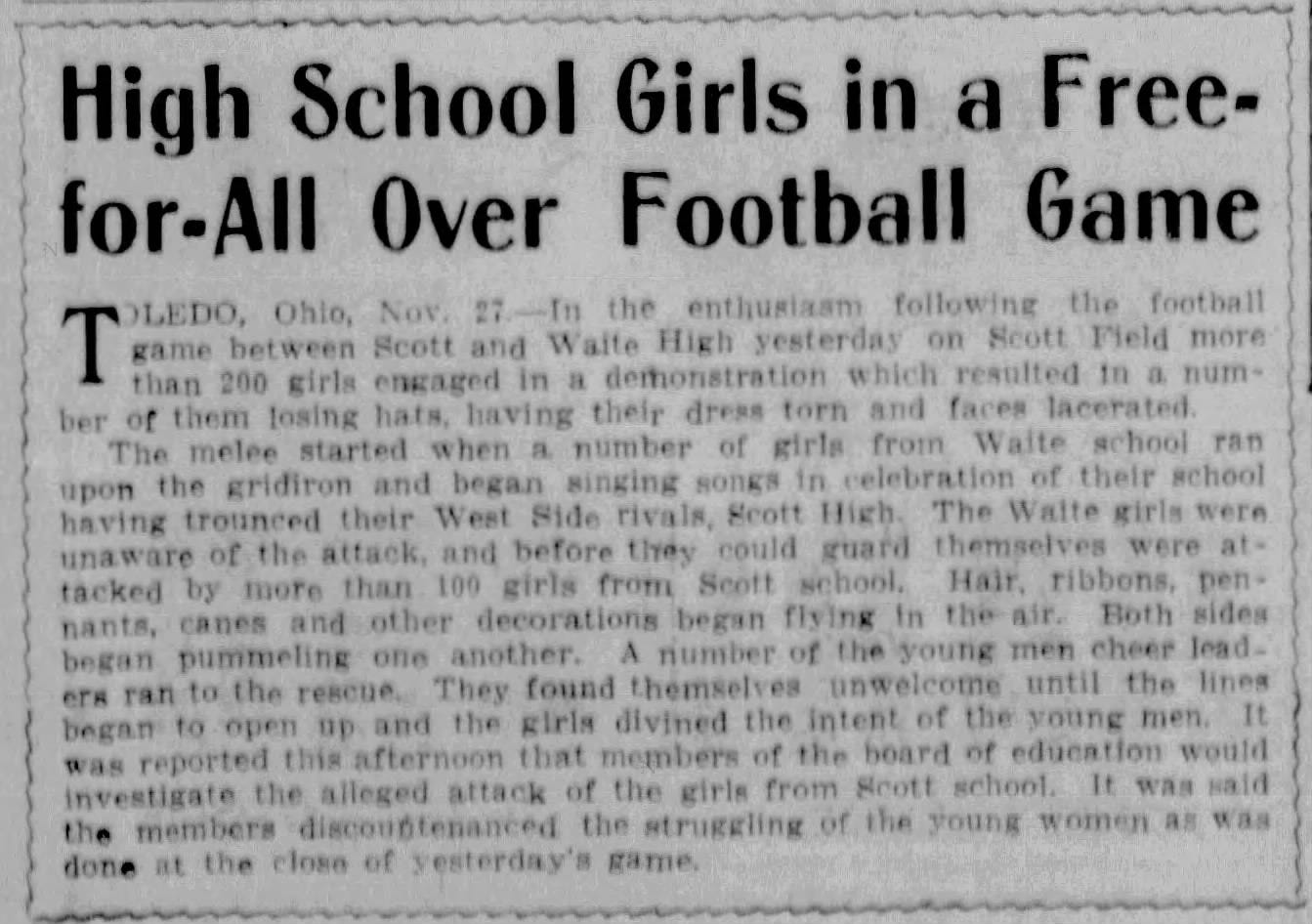
Lest you think that high school girls of 1914 were delicate little flowers, let’s consider the events following the Toledo Scott-Toledo Waite high school football game. Waite won the game, leading some of their coeds to celebrate on the field after the final gun sounded.
After taking offense, a sizable number of Scott girls went on the offensive, leading to pulled hair, missing ribbons, and a few knuckle sandwiches. The mail cheerleaders helped break things up, and while an investigation was promised, none occurred, at least based on the lack of follow-up in local newspapers.
Pinstripes in Football
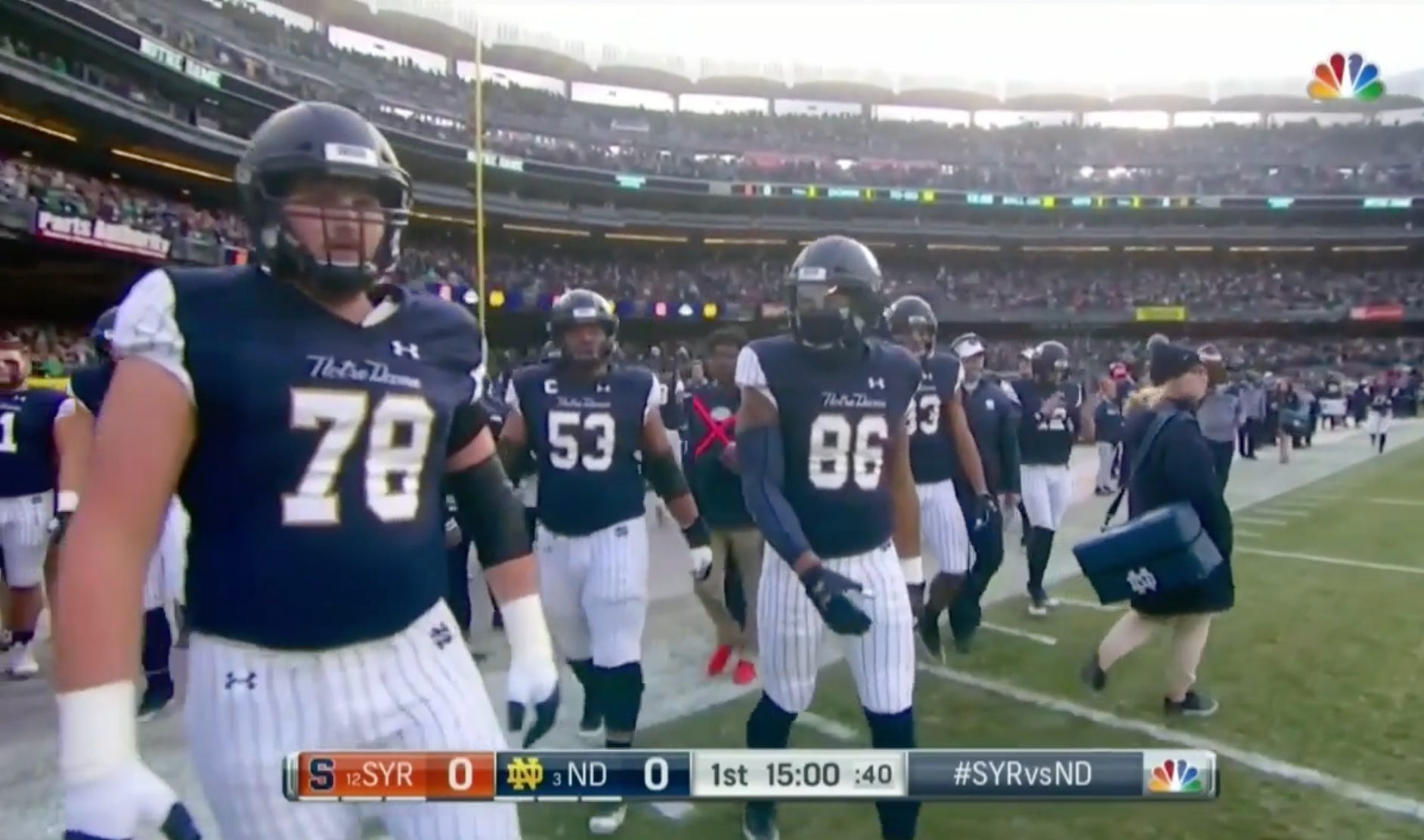
A reader, J David Holt, recently asked whether football teams have worn pinstripes. Despite all the stripe variations that have appeared on the sleeves, shoulders, chests, pants, stockings, helmet, and shoes since football began, it was not until the 2018 Notre Dame team that someone in a position of authority thought it was a good idea to put pinstripes on a football uniform, for their Shamrock Series game at Yankee Stadium.
As seen below and in the YouTube video of the game, putting pinstripes on a football uniform was not a good idea.
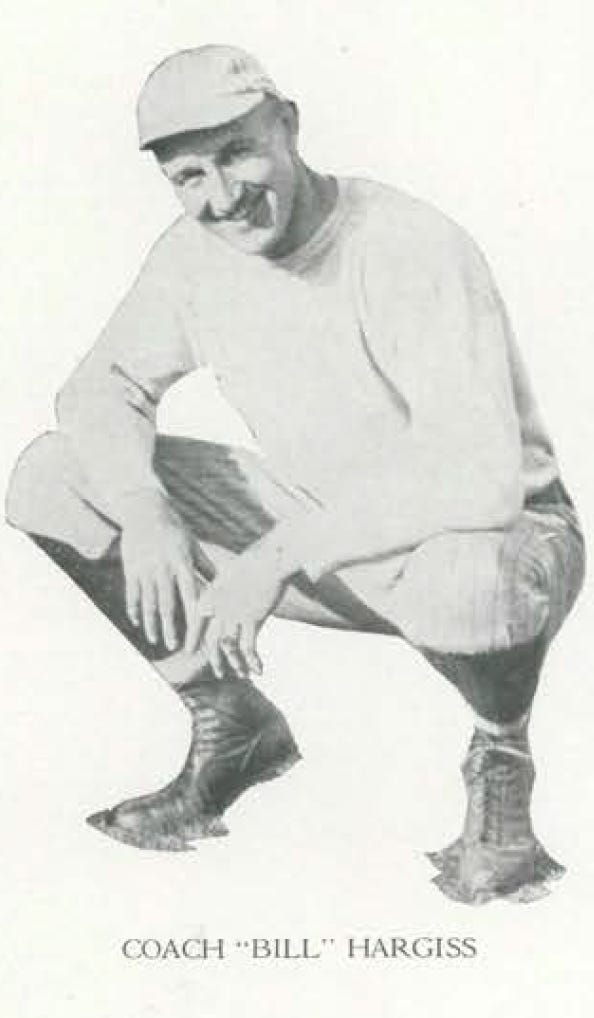
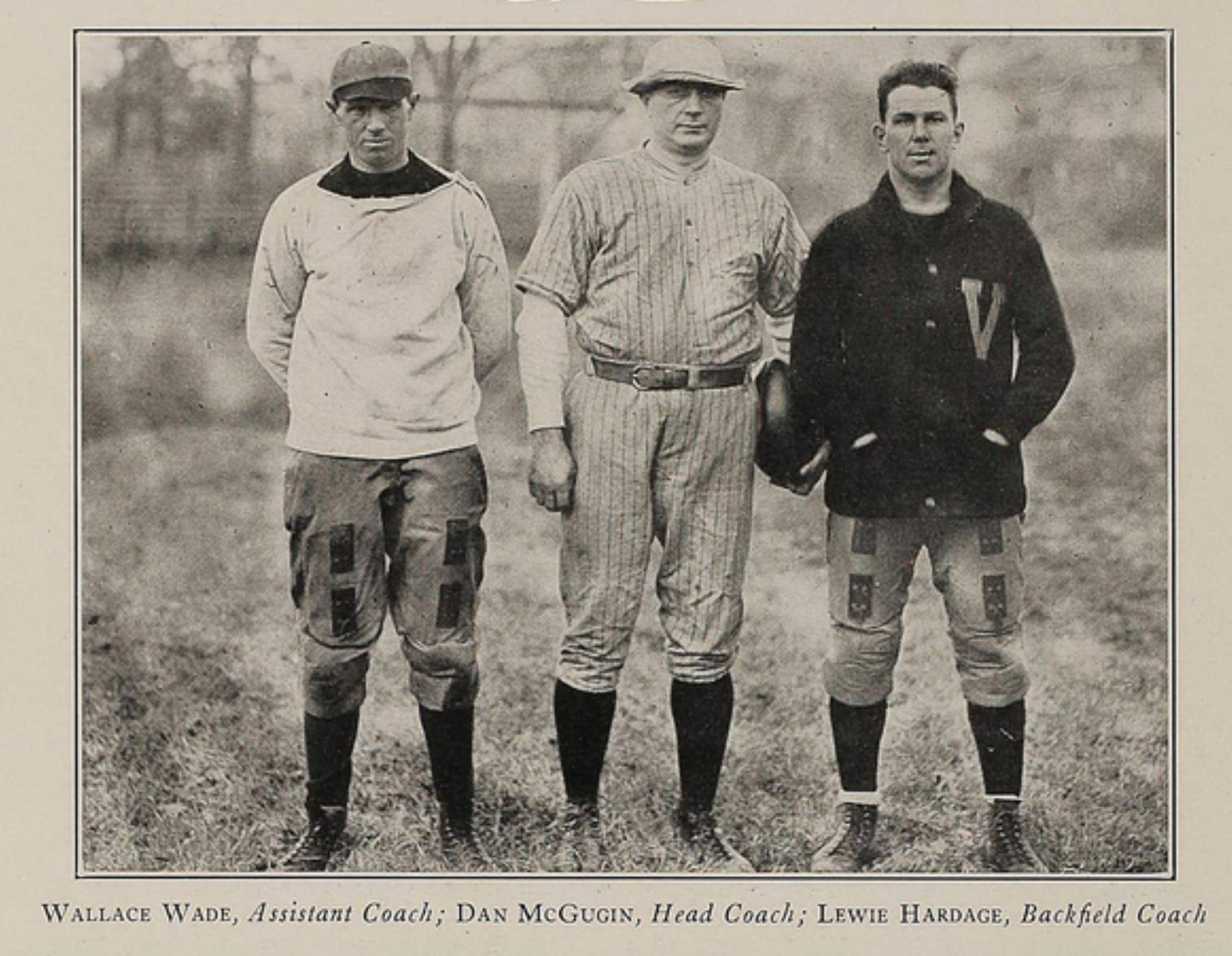
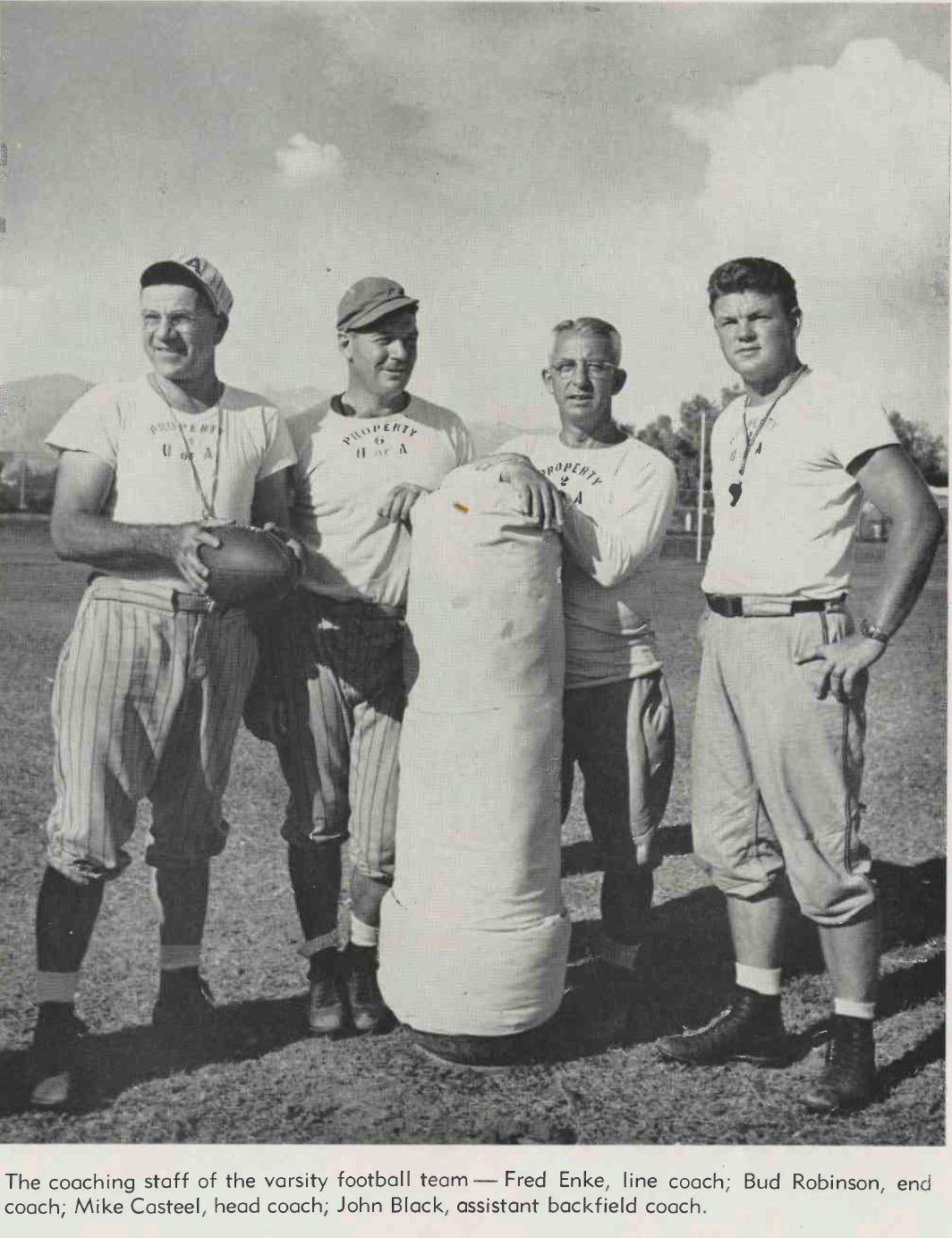
Pinstripes have appeared on football practice fields in the past when various coaches wore them. Back in the day, coaches often wore football pants and other gear on the practice field. A few wore baseball pants, either because they coached baseball as well or found them comfortable.
Below are images of coaches rocking pinstripes on the gridiron.
Guards Back Formation
Mass and momentum plays ruled football from the late 1880s until 1905. American football did not yet require a certain number of offensive players on the line of scrimmage. Neither were there rules that kept players from being in motion at the snap or from running toward the line.
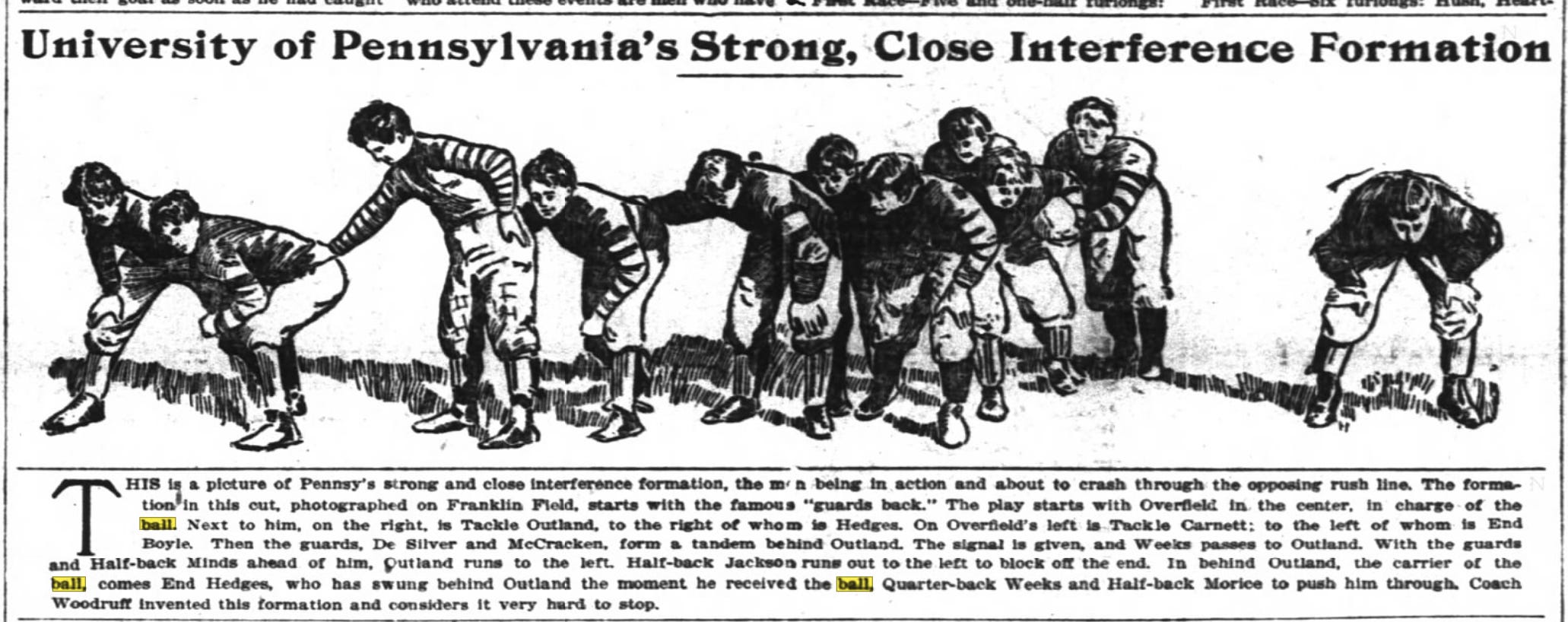
To take advantage of those rules, Penn’s coach, George Woodruff, devised the “guards back” formation shown below.
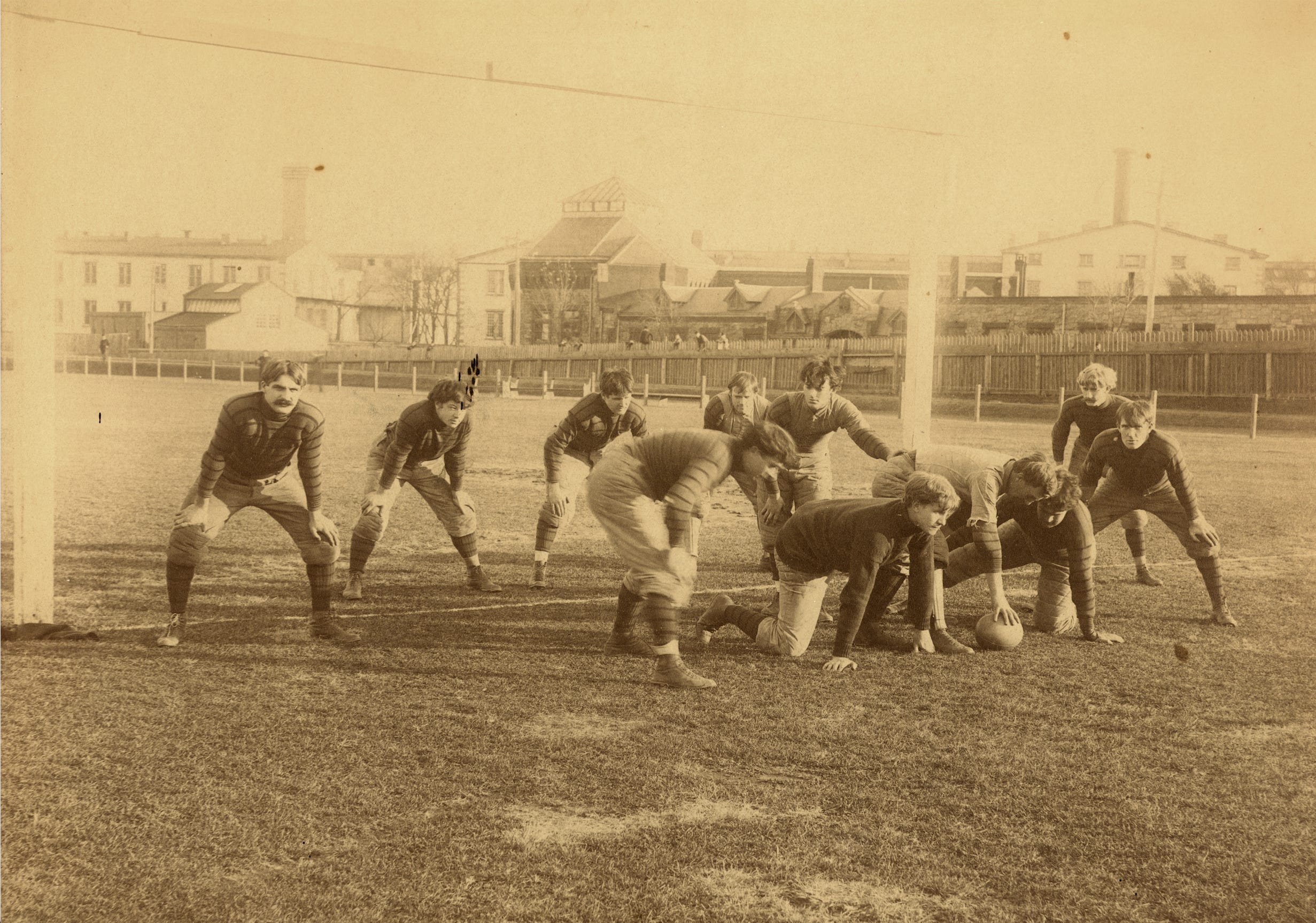
Positioning the guards in the backfield and the ends aligned at angles allowed all kinds of movements with several players leading the ball carrier through the hole and others pushing him from behind.
Rather than diagramming the play, as football coaches had begun to do, the newspaper boys illustrated how the players were positioned midway through a play. I can’t make heads or tails of it, but perhaps you can.
Mass and momentum play proved dangerous, leading to rule changes that:
Allowed only three men in motion at the snap in 1894,
Required seven players on the line of scrimmage in 1903,
Prohibited pulling, lifting, carrying, pushing, or charging into the ball carrier to assist his forward progress in 1910.
If you enjoy Football Archaeology and are not a paid subscriber, consider buying me a cup of coffee now and again. You can also buy a paid subscription or purchase one of my books.


High school girls are not and have never been "delicate little flowers". The Scott-Waite conflict proves that long before they first got called "teens" in the 1920s.